If it doesn't agree with experiment, it's wrong.

Status
Not open for further replies.
www.ing.unitn.it/~bigoni/flutter.html

ROOSD does not exactly describe what happened to this Columns, it was not just Slinderness,
But vibration and flutter that destroyed them and the connections.

ROOSD leads to the column collapse... the facade peel and the core. The mechanism which caused the core to collapse was that the columns were left too slender to stand... they collapsed because of that and the mostly broke apart at the end to end splices... the weakest section of the multi story columns. Whether it was wind pressure... vibration... jostling from impacts, or self buckling or from falling debris or all of the above... columns of that slenderness ratio cannot stand (without bracing or guys)
 
Whether you like or even given a rats left testicle about the ROOSD acronym, it is a detailed and pretty accurate description of the progression phase of WTC Twin Towers collapse based on observation. It has nothing to do with collapse initiation and therefore is agnostic to what caused the buildings to fall in the first place. So why is it wrong - because a person who is commonly identified as a Truther came up with it?

My problem with ROOSD is the OOS part -- not because it's "wrong" but because that's only part of the story, and because it seems to often lead to the idea that a building with "normal" floor spans would have resisted collapse, so OOS was a design flaw. Short spans didn't help Skyline Towers, because buildings simply aren't designed to withstand that sort of dynamic load. The WTC design details, including the OOS, are certainly at the root of collapse initiation, but I think it made very little difference for the collapse progression once it started.

(I also think that Major_Tom's personality and attitude were more responsible for how ROOSD was received around here, rather than the simple fact that he is a "truther." As has been repeatedly pointed out, it doesn't really add anything that structural engineers didn't already know -- e.g. the infamous Bazant & Zhou paper describes the same thing without erroneously attributing it to the OOS design -- but it seems M_T desperately wanted recognition for a major breakthrough in understanding the collapse.)

I suspect that a traditional lattice structure could isolate a collapse to the area / bay(s) where the collapse initiated. The column free - no bay or one huge bay would favor or lead to wider and wider involvement of the entire floor (OOS) footprint.
 
Originally Posted by WilliamSeger
My problem with ROOSD is the OOS part -- not because it's "wrong" but because that's only part of the story, and because it seems to often lead to the idea that a building with "normal" floor spans would have resisted collapse, so OOS was a design flaw. Short spans didn't help Skyline Towers, because buildings simply aren't designed to withstand that sort of dynamic load. The WTC design details, including the OOS, are certainly at the root of collapse initiation, but I think it made very little difference for the collapse progression once it started.

I suspect that a traditional lattice structure could isolate a collapse to the area / bay(s) where the collapse initiated. The column free - no bay or one huge bay would favor or lead to wider and wider involvement of the entire floor (OOS) footprint.

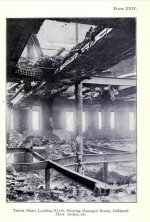
That is in fact what happened to the Parker Building, New York, in 1908. There was at least one penthouse-to-ground floor collapse, and others besides, but the lattice structure isolated the collapses and the building did not collapse as a whole, but was still a total loss, of course.
 

Attachments

  • Parker Building 10th Floor.jpg
    Parker Building 10th Floor.jpg
    73.2 KB · Views: 5
Originally Posted by tfk
An enormous permutation of NIST’s assertions could be argued to be correct or incorrect.

So you support a real, independent investigation to resolve all these issues, right? I mean 3 buildings collapsed and thousands died. Don't you think we should be 100 percent correct about every single aspect of the collapse, no matter how minute?

You don't understand forensic engineering, FF. In building failures, it's very difficult to be 100% sure of everything.

There are cases of structural failure where one can be almost 100% sure. Take the notorious crashes of the ill-starred DeHavilland Comet jetliner. Three of them crashed for no obvious reason, with many lives lost. The problem was resolved when an actual production jetliner was subjected to thousands of hours of laboratory stress testing to the point of failure. After the design was changed, there were no more failures.

Since aircraft are built as identically as possible, we can be pretty damn sure they found the cause. But skyscrapers aren't production-line items. No exact copy of the Twin Towers will ever be built, much less subjected to destructive testing. Therefore, we will never be "100% sure of everything" regarding the details of the collapses. We are, however, sure almost to the point of absolute certainty that fire and/or jetliner impacts were the sole causes of destruction.

BTW, Nevil Shute, who was a former DeHavilland executive, wrote a novel, No Highway in the Sky, with a similar scenario to the Comet crashes which happened years later. Spooky? Sort of like the RMS Titanic coincidences, or the pilot episode of The Lone Gunman which featured a plot to crash an airliner into the Twin Towers. Another example of "predictive programming" by the Vast Conspiracy? :eye-poppi
 
I suspect that a traditional lattice structure could isolate a collapse to the area / bay(s) where the collapse initiated. The column free - no bay or one huge bay would favor or lead to wider and wider involvement of the entire floor (OOS) footprint.

The thing that doomed the towers was that the entire top began falling, which was a result of the rigidity of the design more than the OOS aspect. Bazant noted that if the top had been able to shear vertically along column planes, the building might have been able to absorb the impacts. But with everything headed down, I don't believe the OOS design made any difference except in the details.
 
I suspect that a traditional lattice structure could isolate a collapse to the area / bay(s) where the collapse initiated. The column free - no bay or one huge bay would favor or lead to wider and wider involvement of the entire floor (OOS) footprint.
Simply stated - yes. That design feature is why progression was "inevitable" for both Twin Towers - for different reasons to Bazant's 2002 version BTW. Bazant's conclusion was possibly correct. So was NIST's version of the same thing. But there are two fundamentally different paths of reasoning no matter how hard some people keep trying to conflate them.

1) Limit Case - Bazant and NIST - energy was overwhelming in the all columns in line limit case which did not happen BUT is a valid limit case provided Bazant and/or NIST got their sums right.

2) The real event - with or without the ROOSD label
- the actual mechanism of collapse - once started - was unstoppable. And that had three mechanisms working in near parallel - (A) shearing off the outer - office space - floors whether or not we label it "ROOSD" THEN (B) Perimeter Peel off - and - (C) Core strip down bt beam shearing.

Then the silly arguments start:
(i) ROOSD must be wrong because an alleged truther coined the acronym;
(ii) ROOSD is only part - it doesn't include the core therefore it is wrong. (AKA cannot be a true explanation of one third of the mechanism unless it incorporates the other two thirds. :boggled: If a truther tried that logic.....)

And the linguistic cartwheels
(iii) It doesn't need a specific or descriptive name because we have a generic name. Therefore "ROOSD" == "collapse". (Same as "we don't need "apple" or "orange" because they are both "fruit".)

(iv) and the engineering lie by innuendo - the implied "There is nothing specific/unique/special about the WTC Twin Towers collapse. It is only "progression". And it is engineers who do not distinguish the engineering difference underpinning the misuse of language. Part of the price of disagreeing with a "truther"???

etc etc
 
Last edited:
At this point it should be noted that although the details of how it was structured is different, WTC7 was also mostly a Open Office Space building.
IMHO that is one contributor to why the failures were not confined to a bay or two.
 
At this point it should be noted that although the details of how it was structured is different, WTC7 was also mostly a Open Office Space building.
IMHO that is one contributor to why the failures were not confined to a bay or two.
True - WTC7 was OOS but not as extreme.

I tend to avoid WTC7 discussion - probably for the same reasons truthers prefer WTC7.

More than enough data available visually for the Twins - not so for WTC7 where the details were hidden inside. So WTC7 a playground for both truthers and those debunkers who accept reversed burden of DISproof. Not my scene.
 

2) The real event - with or without the ROOSD label
- the actual mechanism of collapse - once started - was unstoppable. And that had three mechanisms working in near parallel - (A) shearing off the outer - office space - floors whether or not we label it "ROOSD" THEN (B) Perimeter Peel off - and - (C) Core strip down bt beam shearing.

Why do you believe that is some unique behavior of the OOS design? I do not, which is precisely why I think the OOS part of that label is misleading.

Then the silly arguments start:
(i) ROOSD must be wrong because an alleged truther coined the acronym;
(ii) ROOSD is only part - it doesn't include the core therefore it is wrong. (AKA cannot be a true explanation of one third of the mechanism unless it incorporates the other two thirds. :boggled: If a truther tried that logic.....)

You keep saying things like that, but I have yet to see anyone claim ROOSD is "wrong."
 
Whether you like or even given a rats left testicle about the ROOSD acronym, it is a detailed and pretty accurate description of the progression phase of WTC Twin Towers collapse based on observation. It has nothing to do with collapse initiation and therefore is agnostic to what caused the buildings to fall in the first place. So why is it wrong - because a person who is commonly identified as a Truther came up with it?

First, it would really help a lot if EUTPA*.
IHWYAS**, but IMRD***.
We've got a DOOOADF.****
I've analyzed this in some detail, and IFTMES.*****

I've put forth my MES (see IFTMES) in order to eliminate confusion & enhance clarity, so it'll really help if EUTPA*.

I'll be reminding you often to credit me with this important discovery. I'm thinking of writing my Big Book about it.
__
* Some people think that this is "Everyone Uses The Proper Acronyms".
. That's wrong. It's "Everyone Uses Tom's Proper Acronyms".
. Since we've not been formally introduced, "Hi, I'm 'Tom'."

** I hear what you are saying.
*** I must respectfully disagree.
**** Difference Of Opinion On A Debate Forum.
***** I've found the most elegant solution.
​
__

These guys, including Major Tom & femr, can create any nonsense they want. I don't care.

My consistent position is that the terminology ("terms of art") & opinions of the experts matter. Amateurs' writing on the collapse is irrelevant.

And, be utterly assured, these guys are 100% amateur. Last time I checked, there was not one single engineering class, much less a degree, amongst the lot of them.

Yet they've Rah-Rah'ed themselves into thinking that they've "corrected" and/or "proven wrong" Zdenek Bazant, Gene Corley, John Gross, Therese McAllister, et al. I've found their claims along these lines to be a continuing source of amusement.

And, as far as I can see, their only imagined contribution has been the fabrication of a few acronyms ... that not one real structural engineering expert has ever heard of, much less used.

If Major Tom wants to step into the professional ring, by submitting something to JEM, Structures, or some engineering journal, let him introduce his term & see if it sets the SE world afire. I presume that he can figure out how to submit a paper.

If he does that, I'll give him a begrudging tip of my hat.

I am seriously curious if they are still trying to pull off the "stealth Truther" charade. If Oz (or you) could give me an answer on this, I'd be grateful.

I'd give them a sincere hip of my hat if/when they come out and publicly admit, "We were wrong all those years. We were arrogant to think that we knew as much as, or more than, PhD & Pro Engineers. We see now that they were right, and we were wrong. And we were especially wrong to accuse those honest, dedicated NIST engineers of incompetence, fraud & cover-up."

I'm 63 years old. I do NOT expect to live to see THAT event seeing the light of day.

Until then, my GiveADamn about acronyms, including TPAs*, is just plain busted.

Until then, I kinda wish that they'd ST******U.

****** F

JMO, of course...

 
Last edited:
Why do you believe that is some unique behavior of the OOS design? I do not, which is precisely why I think the OOS part of that label is misleading.
The part of my post you quoted included two assertions which I stand by. They were this one:
The real event - the actual mechanism of collapse ...... - once started - was unstoppable.

..and this one:
And that had three mechanisms working in near parallel - (A) shearing off the outer - office space - floors .... THEN (B) Perimeter Peel off - and - (C) Core strip down by beam shearing.

AND two versions of the same qualifying comment - these:
with or without the ROOSD label..
and
floors whether or not we label it "ROOSD"

Those were the thrust of the part of the post you quoted. Do you disagree with:
(a) Progression once started was unstoppable?
(b) The actual mechanism was the three components I identified; OR
(c) What label ANYONE puts on it does not change reality.

Because I hold those three to be true fact.

And I consider the progression stage collapse for WTC1 and WTC2 to be the specific mechanism that occurred for WTC1 and WTC 2 respectively. No other building collapsed by the same mechanism.

So the collapses of WTC 1 & 2 were the collapses of those buildings AND one third of the progression mechanism - the primary and leading sub mechanism - was floor joist connection failure in the office space tube.

AND I don't see how it makes any difference what it is labelled or who assigned the label.

That should leave only one area of clearly stated disagreement between us.

I accept that floor plans with fewer columns - more open spaces - are more prone to progression - less able to resist and arrest progression. You hold that openness makes no significant difference.

You and I discussed that factor some time back - with neither of us persuading the other to change opinion.

In recent posts Redwood and JSanderO have supported a position similar to mine.

So on that single point I suggest that we continue to agree to differ since we have not been able to resolve the difference.
You keep saying things like that, but I have yet to see anyone claim ROOSD is "wrong."
I'll accept that as your position.
 
I believe.. and it doesn't matter because I am a 68 yr old architect who doesn't engineer high rise buildings.... that the ROOSD "work" of Tom is the MOST descriptive and best supported by the visuals of the collapse PROGRESSION. I believe that neither NIST nor the engineering community articulated the collapse in a more understandable to everyone manner. Qualifications don't matter... the person who figures some out deserves credit. If this is in the engineering literature before or prior to the 9/11 work... please cite. I believe Tom did find a paper written post 9/11 about progressive floor plate collapse.

When I tried to conceptualize what was going on in those 15 or so seconds POST initiation... I used the term... a vertical avalanche and sent emails describing this to several people at the time... mostly truthers. I was expelled from their camp and considered a persona non grata, shill and spy simply because I didn't pass their litmus tests and subscribe to their unsupported claims and genuinely wanted to find the explanation for the COLLAPSE phase.

My quest for people who were discussing the collapse was 911freeforums... and it was there in 2010 march that I encountered the the work of Tom who called my vertical avalanche ROOSD. The acronym matters not... but the process was spot on and Bazant did not describe this... nor NIST. I have no idea of Tom's or Femr2's past or politics and it doesn't matter... or their qualifications. Heck... there a plenty of experts with degrees who get things wrong. The Shuttle disaster was an example... not to mention the bone headed work of the engineers who gave us the Deep Water Horizon, Fukushima. Tacoma Narrows Bridge, the NOLA levies and many other project that failed.

Tom's website or book which is the subject or ridicule her aggregates the largest collection of information about the event including the psychology of perception and group think. It includes criticisms of almost every one or institutions who has published on the matter. I don't know Tom or femr2 of OWE from a hole in a wall. I think they have made valuable contributions to my (and others') understanding.

The failure of NIST and the engineering community has been related to explaining and demonstrating how progressive runaway collapses work in complex structures. No lay person will understand and many not accept (on faith) that the failure of one connection or one column at one floor can lead to the complete collapse of a building... or that some sagging trusses on one floor can collapse a 110 story building in less than 20 seconds. It's just not intuitive. And NIST was supposed to demystify this and propose code changes to make buildings safer and perhaps prevent this magnitude of destruction in the future from something as benign as a commercial jet going off course from some sort of failure and hitting it.
 
I believe that neither NIST nor the engineering community articulated the collapse in a more understandable to everyone manner. Qualifications don't matter... the person who figures some out deserves credit. If this is in the engineering literature before or prior to the 9/11 work... please cite.
...
The acronym matters not... but the process was spot on and Bazant did not describe this... nor NIST.

.
I have posted this several times, and I don't believe either you or ozeco41 has ever commented on it.

Bazant&Zhou said:
In stage 1 (Fig. 1), the conflagration, caused by the aircraft fuel
spilled into the structure, causes the steel of the columns to be
exposed to sustained temperatures apparently exceeding 800°C.
The heating is probably accelerated by a loss of the protective
thermal insulation of steel during the initial blast. At such tem-
peratures, structural steel suffers a decrease of yield strength and
exhibits significant viscoplastic deformation (i.e., creep—an in-
crease of deformation under sustained load). This leads to creep
buckling of columns (Bazant and Cedolin 1991, Sec. 9), which
consequently lose their load carrying capacity (stage 2). Once
more than half of the columns in the critical floor that is heated
most suffer buckling (stage 3), the weight of the upper part of the
structure above this floor can no longer be supported, and so the
upper part starts falling down onto the lower part below the criti-
cal floor, gathering speed until it impacts the lower part. At that
moment, the upper part has acquired an enormous kinetic energy
and a significant downward velocity. The vertical impact of the
mass of the upper part onto the lower part (stage 4) applies enor-
mous vertical dynamic load on the underlying structure, far ex-
ceeding its load capacity, even though it is not heated. This causes failure of an underlying multifloor segment of the tower (stage 4), in which the failure of the connections of the floor-carrying trusses to the columns is either accompanied or quickly followed by buckling of the core columns and overall buckling of the framed tube, with the buckles probably spanning the height of many floors (stage 5, at right), and the upper part possibly getting wedged inside an emptied lower part of the framed tube (stage 5, at left). The buckling is initially plastic but quickly leads to frac-
ture in the plastic hinges. The part of building lying beneath is
then impacted again by an even larger mass falling with a greater
velocity, and the series of impacts and failures then proceeds all
the way down (stage 5).
.
If M_T's description helped you to understand what Bazant is saying, that's good, but what exactly did M_T "figure out" that isn't in that one-sentence description of ROOSD?
 
.
I have posted this several times, and I don't believe either you or ozeco41 has ever commented on it.


.
If M_T's description helped you to understand what Bazant is saying, that's good, but what exactly did M_T "figure out" that isn't in that one-sentence description of ROOSD?

Correct Bazant proposed the same mechanism, as seen in ROOSD, and used in the Paper by Greening and Benson. The problem lies not in any of the technical papers but in the adaption of truther think by debunkers, in not understanding that simplification has to be done because computers are very stupid.
People reading an abstract don't realize that aspects of the paper are simplifications do to the limited ability of computer modelings.
Kind of like FF, problem with Scale models.

The Floors the Columns, and everything in the buildings played a part in collapse, but you people will never truly understand it, until you give up your preconceived arguments.

The top block only existed at first fracture, after that it doesn't matter if it is building, or gravel, or water it will act downward and the buildings structure will react to it by disunification.

The resistance of the lowers structure is 36% the resistance of the upper structure is unimportant as even it's disunited parts will cause failure.

The same failure can happen in any steel structure, it the top is dropped on the bottom suddenly the only difference that matters is extent of top mass.

I tried a logical discussion of this and failed because people can get over the Banzant vs ROOSD fallacy.
 
.
I have posted this several times, and I don't believe either you or ozeco41 has ever commented on it.


.
If M_T's description helped you to understand what Bazant is saying, that's good, but what exactly did M_T "figure out" that isn't in that one-sentence description of ROOSD?

First I did not join JREF until March 2013. And I have bothered to go back and read the entire set of discussions.

Second, I don't want to start up another "debate" about what the mechanisms were, the likely sequence and so on for the twin towers.

My belief/understanding is that the runaway progressive collapse phase termed ROOSD was not primarily about or driven by failure of truss to truss seat connections. For sure these sorts of failures took place amongst others related to the "collapse" of the floors.

However, in my conception and more significant was the PARTIAL breaking and fracturing of the floor plates... which lead to local collapse of chunks of floor slabs... which fell and then further broke apart... and the entire "avalanche" was a debris drive "crushing" and fracture of the slabs. Obviously the areas of the slabs adjacent to the truss connections would likely in some or many cases destroy the connections freeing the chunk of slab to drop.

The progressive runaway and unstoppable avalanche of mostly floor bits / debris did not involve any facade or core columns and did not buckle them. It did destroy the bracing... the axial structures did become increasingly unstable as their unbraced length grew and their slenderness ratio increased. And they massive aggregating floor collapse debris DID as in the grain in a silo does... exert lateral forces on the unbraced axial structures causing the facade to fall outward and the core columns to collapse from self buckling, jostling from the descending debris... and even the wind... The core column "buckling" of the multi story too slender columns took place at the weakest part... the splice plates which sheared or suffered weld failures.

++++

There has been no comprehensive... and to my mind... sensible work done to explain the "initiation sequence." I find NIST's sagging trusses woefully inadequate. Were there sagging trusses? Seems likely. Did they cause the top to collapse by pulling enough of the facade columns out of alignment? NO (IMO) I am not sure that the IB was caused by sagging trusses in the first place.

Notably in 1WTC the IB was seen before the collapse in the SE quadrant and the face for the "corners" (4 quadrants) were spanning between the facade and a fairly "weak" transfer truss. Which end would fail first? The transfer truss side or the facade? ANSWER: not the facade.

What caused the SE quadrant's IB"? ANSWER buckling from redistributed loads. I suspect that the facade column/panels... were actually configured with the stronger ones OPPOSITE the core... and the weaker ones on the two sides of the 4 corner quadrants. Those corner quadrants had the smallest loads per column... And so these could not handle the redistributed loads as well. This is just a guess because we don't have the information about the facade columns.

++++

As Ozzie has correctly stated... for top to drop... it means columns are not doing their thing... lost capacity... or were destroyed by the planes... or pushed out of alignment by expanding braces. NB with a fair amount of shafts... the columns did not have the benefit of positional stability because there were no slabs. It's more than reasonable that the columns surrounding vertical shafts and risers where there were no floor slabs were getting pushed out of alignment with the more stable cold structure below the uncontrolled fires. Long story short... the initiation IMO was driven by loss of core column alignment... pushed and pulled by expanded warped beams and girders inside the core... leaving fewer and few core columns to carry the hat truss which was redistributing axial loads from the 360 ton antenna atop the 3 weakest columns in the core... And those 3 columns were around the very large shaft that extended from the sub basement to the upper mech floor.... and their collapse led to the hat truss buckling in the center... the antenna plunged into the core which collapsed inward with too few columns to carry the hat truss.... they DID buckle and in so doing caused the entire structure which was still barely holding together...much of it had collapsed inside... to shift enough that there was no axial alignment and it dropped with almost no resistance for 1 or perhaps 2 column lengths.

If the top drop was all about "buckled columns" there would have been at least 47 of them from the core and a few hundred from the facade. There is only evidence in the debris of probably less than a few dozen if that many of buckled core columns from the plane strike zone.

That's my theory and I am not a PE...

That's also Banzant's theory with modifications, people are neglecting the effect that vibrations induced in floor stripping, have on the columns and the effect those vibrations have on connection sheer.
But who am I to judge this just the only person here who actually modeled the connections and experimented on them to see how induced vibrations would lead to increased sheer, and decreased resistance!
But because I haven't self published a book, or am interested in press and puffing my own ego no one wants to listen, so I am done trying to even discuss it with people who have mental models and argue them, and are wrong on both sides.
 
Correct Bazant proposed the same mechanism, as seen in ROOSD, and used in the Paper by Greening and Benson. The problem lies not in any of the technical papers but in the adaption of truther think by debunkers,
clap.gif
Thank you sir. That was exactly the scenario I met when I first came to JREF and it still continues.

The Floors the Columns, and everything in the buildings played a part in collapse, but you people will never truly understand it, until you give up your preconceived arguments.
clap.gif
YES - definitely. Stop changing the topic to accusations that members do not understand what Bazant wrote. Forget Bazant until you agree thr actual mechanism of progression collapse. Which was by three sub-mechnaisms of:
1) Material failing down the tube space sheared off the floor joist connections;
2) The perimeter columns peeled away as sheets - not having been failed by buckling under the loading from the falling top block; AND
3) Something similar happened to the core - probably shearing of horizontal beams as indicated by the spires plus a simple bit of applied thinking.

The top block only existed at first fracture, after that it doesn't matter if it is building, or gravel, or water it will act downward and the buildings structure will react to it by disunification.
clap.gif
And - from the time "Top Block" started falling it was concurrent mutual destruction of BOTH Top Block AND Lower Tower. Which happens to prove why "crush down" FOLLOWED by "crush up" did not happen at the Twin towers.

I tried a logical discussion of this and failed because people can[not] get over the Banzant vs ROOSD fallacy.
:thumbsup: Go to the top of the class.

Well stated Crazy Chainsaw. An excellent and concise overview of the nonsense that has been perpetuated for many years.
 
[qimg]http://conleys.com.au/smilies/clap.gif[/qimg] Thank you sir. That was exactly the scenario I met when I first came to JREF and it still continues.

[qimg]http://conleys.com.au/smilies/clap.gif[/qimg] YES - definitely. Stop changing the topic to accusations that members do not understand what Bazant wrote. Forget Bazant until you agree thr actual mechanism of progression collapse. Which was by three sub-mechnaisms of:
1) Material failing down the tube space sheared off the floor joist connections;
2) The perimeter columns peeled away as sheets - not having been failed by buckling under the loading from the falling top block; AND
3) Something similar happened to the core - probably shearing of horizontal beams as indicated by the spires plus a simple bit of applied thinking.

[qimg]http://conleys.com.au/smilies/clap.gif[/qimg] And - from the time "Top Block" started falling it was concurrent mutual destruction of BOTH Top Block AND Lower Tower. Which happens to prove why "crush down" FOLLOWED by "crush up" did not happen at the Twin towers.

:thumbsup: Go to the top of the class.

Well stated Crazy Chainsaw. An excellent and concise overview of the nonsense that has been perpetuated for many years.

The point I have been trying to make for years is vibrations induced, in the collaoses cause
denting of bolts, and micro fracture of welds even before the collapse front impacts them and leaves the core column welds weaker and more susceptible to Eular buckling, but everyone doesn't think I understand the collapses, it is quite frustrating.:boxedin:
 
Well, I'll make one more (but probably my last) attempt to get at my point: What does "open office space" have to do with anything being said, other than the circumstantial details? I'm quite willing to be proven wrong, but my contention is that if the entire top 12 stories of WTC1 began falling, then the entire building was doomed, regardless of design details. If that's a conceded point, then excuse me for wasting time, but if it's a disproved point, I must have missed it.
 
Status
Not open for further replies.

ISF - Join now!

Every member here is approved by hand. No bots, no spam, just people who care about evidence and honest debate.

Membership is free!

Create your free account

Back
Top Bottom