Obviously this static analysis can only identify issues with the NIST orientation, not the trajectory, though of course it is an important part of the process of determining more correct impact parameters.
However, trajectory has also been looked at and errors identified.
NIST has quite slight difference between the orientation and trajectory.
Analysis reveals trajectory parameters to be almost indistinguishable from orientation...the aircraft is going at quite a rate of knots after all, and as the trajectory obviously changed quite significantly mere moments before impact, determining trajectory from earlier motion (as NIST did) produces erronious results.
There's very little difference between trajectory and orientation for UAL175 impact.
Estimating the effect of using more correct impact parameters is not really within the scope of this thread, but suffice to say...
[qimg]http://femr2.ucoz.com/draft175_files/image083.gif[/qimg]
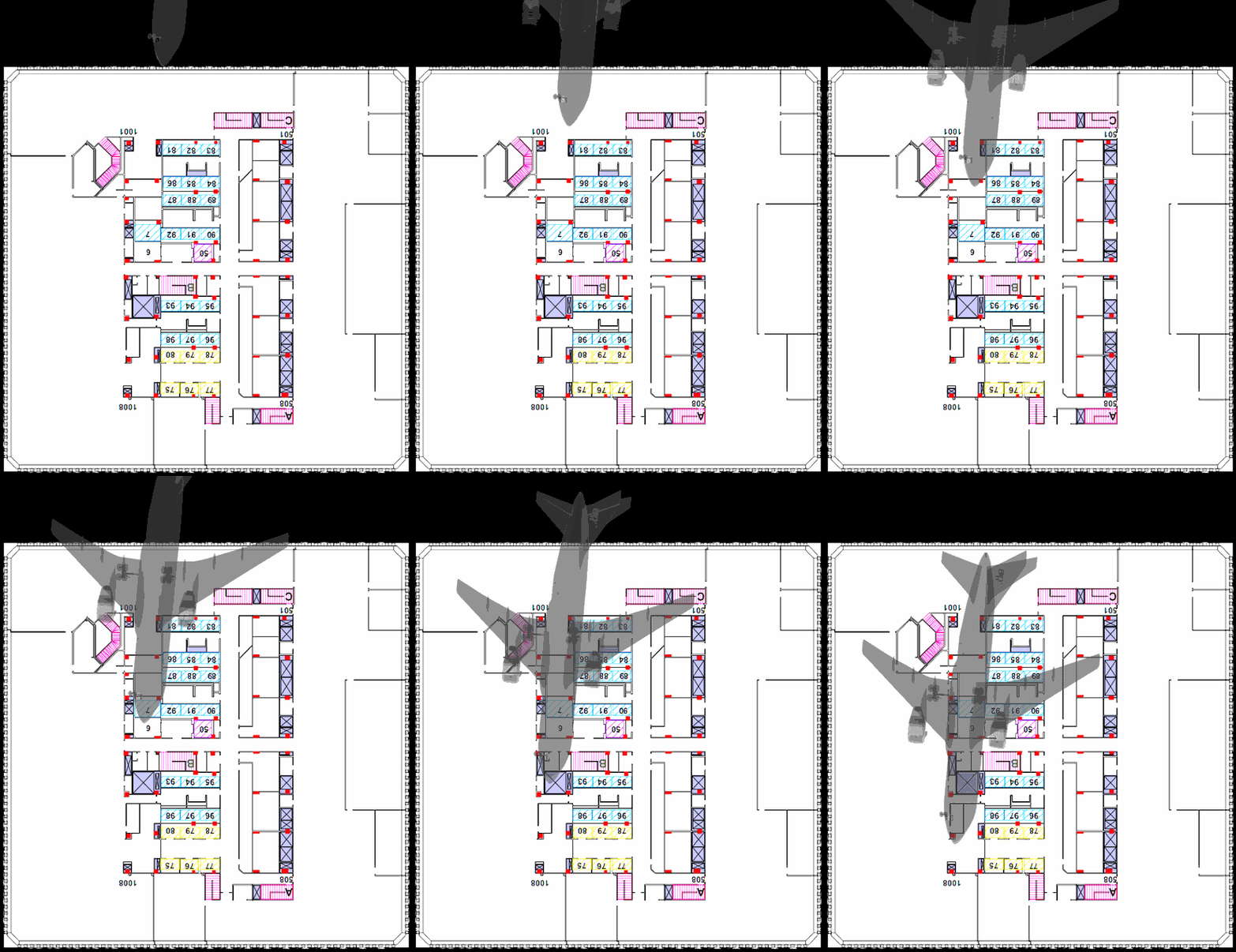
...it is probable that the first two core column rows from the East would be affected quite differently than was the case within the NIST simulation with their differing impact parameters.





 )


