Merged DDWFTTW in a “Real” Wind

Status
Not open for further replies.
Humber, should I notify the National Aeronautics Association to take back their1948 Collier Trophy, which they awarded to the X-1 rocket plane for "breaking the sound barrier" on Oct. 14, 1947?

X-1: 807.2 mph max speed on that date
But it was launched from modified B-29, top speed 400 mph!

807.2 minus 400 = 407.2 mph, slower than a World War II P-51 Mustang!
Oh, smart, and so wrong, but why explain to you?
But I have one for you. Multistage rockets can't work, because the capsule can't gain from the acceleration provided by the earlier stages.

And yes, sometimes I am just so precious and cute I can barely live with myself!
Try harder, and hope to succeed.
 
Like I said, you have no idea what you are talking about.
None of the fields past 11 are "raw data".

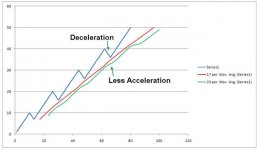
None are raw data, because they are already averaged by the GT31, and the chart proves that averaging can turn deceleration into less acceleration.
The changes are inverted, and that is how they appear on the speed chart. Dill used that data, to calculate the acceleration in the posted Excel sheet.
The are no supporting accelerometers to contradict that data, and he prepared his report July 20th, 17 days later.

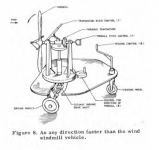
And the TM. Another direct rip-off. This one from 1973. And, it's wrong, and I will prove it. The minimum speed it that necessary to produce the "latched" state.
And notice the remarks about measuring the wind and wind gradients.

attachment.php
 

Attachments

  • jref_chart32.jpg
    jref_chart32.jpg
    62.9 KB · Views: 123
Last edited:
None are raw data, because they are already averaged by the GT31,
Hopelessly wrong.

and the chart proves that averaging can turn deceleration into less acceleration.
Don't need a chart to prove that.

The changes are inverted, and that is how they appear on the speed chart. Dill used that data, to calculate the acceleration in the posted Excel sheet.
That makes no sense.
 
Last edited:
Oh, smart, and so wrong, but why explain to you?
But I have one for you. Multistage rockets can't work, because the capsule can't gain from the acceleration provided by the earlier stages.

As you came around to admitting elsewhere, they gain velocity; they do not gain acceleration. And if the goal was to be the first to place a payload into orbit, then the multistage rocket achieved that goal. If the goal of the cart was to exceed windspeed ddw, then indeed it succeeded.

Your argument against the cart has taken on many guises, but I think it is always based on your (and most people's) intuitive feeling that at wind speed, the cart would be experiencing zero apparent wind and therefore could go no faster.

The "cartiers" cleverly found a way (explained in many prior animations, figures, and equations posted on this thread) to swing an airfoil (the prop) against the air, driven by the wheels, so that it could exploit the difference between the wind speed and the ground, allowing it to continue to extract the energy in the wind and to accelerate beyond wind speed ddw.

You recognize that there is theoretically enough power in the wind to drive the cart beyond windspeed, yes? For example, do you agree that a wind-powered generator of sufficient size, anchored to the ground, could drive the cart beyond windspeed through a long cable and a cart-mounted electric motor? The only difference with Spork's cart is the details of how this power is harvested and exploited.
 

Attachments

  • jref_chart31.jpg
    jref_chart31.jpg
    19.4 KB · Views: 44
Last edited:
wow, how tiresome, arguing both sides of the issue just to be contradictory, but consistently wrong about anything having to do with the cart.
 
Oh, smart, and so wrong, but why explain to you?
But I have one for you. Multistage rockets can't work, because the capsule can't gain from the acceleration provided by the earlier stages.

As you came around to admitting elsewhere, they gain velocity; they do not gain acceleration. And if the goal was to be the first to place a payload into orbit, then the multistage rocket achieved that goal. If the goal of the cart was to exceed windspeed ddw, then indeed it succeeded.

"As you came around to admitting elsewhere, they gain velocity; they do not gain acceleration."
Pure fantasy.

Tell that load to those competing in the luge. They practice push starting and getting into the cart, because it adds to the final speed. If not, why bother?
Acceleration is cumulative. That is why keeping Mr Foot on the gas pedal longer, makes vroom-vroom go faster. Ease off, and you will start from where you were.
Same with pushing the cart.

And the other guff all comes from former attempts at the same idea. None have ever worked. Spork has recycled the past. Nothing new added.

attachment.php
 

Attachments

  • jref_chart33.png
    jref_chart33.png
    76.5 KB · Views: 43
Last edited:
wow, how tiresome, arguing both sides of the issue just to be contradictory, but consistently wrong about anything having to do with the cart.

They have everything to do with the cart, and burying evidence that hides the way the cart behaves. If that were a real cart, it would fool you.
But, if you are clever enough, you can figure out how to show the chart data must be false. Start with the pushing bit. That is enough.
 
Last edited:
"As you came around to admitting elsewhere, they gain velocity; they do not gain acceleration."
Pure fantasy.

Tell that load to those competing in the luge. They practice push starting and getting into the cart, because it adds to the final speed. If not, why bother?
Acceleration is cumulative. That is why keeping Mr Foot on the gas pedal longer, makes vroom-vroom go faster. Ease off, and you will start from where you were.
Same with pushing the cart.
You are careless with velocity vs acceleration. When they stop pushing, the contribution to the subsequent acceleration stops. The contribution to the velocity remains. Same with the multistage rocket.
 
They have everything to do with the cart, and burying evidence that hides the way the cart behaves. If that were a real cart, it would fool you.
But, if you are clever enough, you can figure out how to show the chart data must be false. Start with the pushing bit. That is enough.

What chart data?
 
Humber:
Do you have any plans to respond to the second half of my post #9545?

Your argument against the cart has taken on many guises, but I think it is always based on your (and most people's) intuitive feeling that at wind speed, the cart would be experiencing zero apparent wind and therefore could go no faster.
Not zero apparent wind, but no tailwind, so no energy.


The "cartiers" cleverly found a way (explained in many prior animations, figures, and equations posted on this thread) to swing an airfoil (the prop) against the air, driven by the wheels, so that it could exploit the difference between the wind speed and the ground, allowing it to continue to extract the energy in the wind and to accelerate beyond wind speed ddw.
There is no potential energy between the wind and the cart at WS.


You recognize that there is theoretically enough power in the wind to drive the cart beyond windspeed, yes? For example, do you agree that a wind-powered generator of sufficient size, anchored to the ground, could drive the cart beyond windspeed through a long cable and a cart-mounted electric motor? The only difference with Spork's cart is the details of how this power is harvested and exploited.
That is a winch.
 
Not to put too fine a point on it, but a brief analysis indicates that every one of his posts must be explained by lies, stupidity, or a combination of the two.

And how about the TM you directly ripped off? The rest of the paper contains all of your other claims.
"one man's quest to exhume the past"
 
Last edited:
You are careless with velocity vs acceleration. When they stop pushing, the contribution to the subsequent acceleration stops. The contribution to the velocity remains. Same with the multistage rocket.

V=at
s= ut +1/2at^2.

The cart is driven by a near constant force so accelerates at a constant rate.
Gravity is such a constant force, yet luge contestants still push the cart to achieve more speed at the end of the run.
The final speed is the integral of all acceleration over the measured time.

If the cart were not pushed, and driven only by the same force it is for the remainder of the run, the final speed would be 0.1ms-2*105s = 10.5m/s
and not 12.5m/s.
The pusher also adds KE to the cart, that would otherwise come from the wind. To all but carteers, it is obvious that the pushing adds directly to the speed of the cart.
The second and really weak part of the record, is to claim 2.8WS, because the wind just happened to fall at the right time. A result that can't be duplicated, unless tried until it happens again. Can take it over NALSA?
Can I, huh?
 
Last edited:
QUOTE=ThinAirDesigns
Spork would attempt to be near top speed AND accelerating as he went near one of the stations and then would brake to repeat for the next one.

Also if he peaked out on top speed too early on the course he would brake so to again be accelerating as he approached said ground station.

Thanks for posting the proof that you were lying.

JB
 
I love it, humber quoted another source of people who knew better than him that a treadmill test was a valid test for DDWFTTW. Since spork and JB didn't do it first they "cheated" when they ran the same test:rolleyes: I guess that scientists all over the world must be cheating, since repeatability is key to a successful experiment.
 
I guess that scientists all over the world must be cheating, since repeatability is key to a successful experiment.

Keep in mind - according to humber we set out to do something that's physically impossible - and went about it all wrong! :D
 
Status
Not open for further replies.

ISF - Join now!

Every member here is approved by hand. No bots, no spam, just people who care about evidence and honest debate.

Membership is free!

Create your free account

Back
Top Bottom