Abenomics: medicine or poison for Japan?

Medicine or poison?

  • Medicine

    Votes: 12 27.3%
  • Poison

    Votes: 3 6.8%
  • Don't know

    Votes: 18 40.9%
  • Planet X

    Votes: 11 25.0%

  • Total voters
    44
Helpful testable predictions (from Schiff)

- 200 yen to the dollar by the end of 2013
- Gold at $5,000 per ounce before 25 October 2014

We can at least tell whether he was right or wrong.

er, you know, its only June? will the BOJ expand again between now & January?

might something happen in the next six months too, as well as the first six?

if he says the end of the year, it at least has to be the end of the year before he's actually wrong, surely?

Really, the currency of a major economy halving in value against the dollar in 6 months ?

I'll revisit in 6 months.

Well here we are getting towards the end of the year.

The Nikkei is at 15,500 or thereabouts, AFAIK hyperinflation has failed to hit Japan and the yen/dollar exchange rate is 103. While this represents a change from the sub-100 rates earlier in the year it's increasingly unlikely that Schiff is/was right
 

Just wanted to give a brief update before the end of the year for posterity.
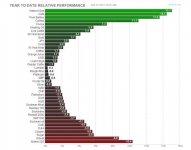
As you can see from the chart below, the Nikkei 225 is up 51.4% YTD as of Dec. 22, the best performing index among those included in this chart this year. On the other hand, the Japanese yen is down 16.7% vs. the US dollar. The fact that the two move in opposite directions shouldn't be surprising to anyone who pays attention to Japan's stock market.

Overall, this seems to be exactly what Abenomics hoped to accomplish by this point. To be sure, 2% inflation hasn't materialized yet, but there are some signs that it may be coming. The weaker yen vs. the dollar should add some upward pressure on prices and also improve (export-oriented) companies' bottom lines, allowing wages to be raised. Abe is also using the bully pulpit to ask companies to raise wages.

Borrowing costs for the government remain affordable, slightly lower than a year ago.

The draft budget for 2014 has been announced too:
Japan Unveils Record 2014 Budget Draft as Debt Burden Mounts

Japan unveiled a record budget for the next fiscal year, as Prime Minister Shinzo Abe boosts spending on social security, defense and public works while trying to contain the growth of the world’s biggest debt burden.

Government ministers and the ruling coalition adopted the 95.88 trillion yen ($921 billion) budget proposal for the fiscal year starting April 1 at a meeting yesterday in Tokyo, Finance Minister Taro Aso told reporters. Japan will issue 41.25 trillion yen of new revenue bonds, Aso said, less than the 42.9 trillion yen earmarked in this year’s initial budget.

Abe aims to pull the country out of a 15-year deflationary malaise and cope with the rising welfare costs of its aging population, while containing public debt that’s more than twice the size of the economy. His government has pledged to halve the primary balance deficit by fiscal 2015 and achieve a surplus by fiscal 2020.

Taxes will rise next April, specifically sales taxes, from 5% to 8%. I'm skeptical about "halving the primary balance deficit by fiscal 2015 and achieving a surplus by fiscal 2020" though. I expect another round of tax increases if the current ones succeed politically. Abe's government retains a relatively high approval rating for the time being. Whether the public has the appetite for more tax raises is another question though.
 

Attachments

  • fut_image.ashx.jpg
    fut_image.ashx.jpg
    29.1 KB · Views: 20
Well here we are getting towards the end of the year.

The Nikkei is at 15,500 or thereabouts, AFAIK hyperinflation has failed to hit Japan and the yen/dollar exchange rate is 103. While this represents a change from the sub-100 rates earlier in the year it's increasingly unlikely that Schiff is/was right

Schiff was wrong about the 200 yen to the dollar.

It looks increasingly like he will also be wrong about gold being $5,000 and ounce before 25 October 1214.
 
Last edited:
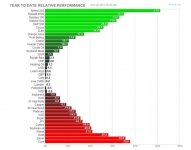
So while the Nikkei 225 was the best performer last year (see the attached image above), gaining 57% for the calendar year, January wasn't a good month for it (see below) giving back 10%. I kinda expected a bit of a correction at some point. It's still much higher than a year ago though.

On the other hand some data released today seems to be fairly positive:

Japan's Economy Shows Renewed Strength

TOKYO—Japan's economy is displaying a strength not seen in years,with an improving labor market and a welcome rise in prices that suggest the country is on the road to overcoming years of deflationary pressures.

The stronger-than-expected figures are good news for Prime Minister Shinzo Abe as he seeks to pull Japan out of 15 years of deflation, but there are concerns that a planned April increase in the sales tax may bring the momentum to a halt.

The closely tracked core consumer-price index, which excludes volatile fresh-food costs, climbed 1.3% in December from a year earlier, according to government data released Friday. For all of 2013, the index was up 0.4%, the first annual rise in five years.

Separate employment data also suggested a strongly recovering economy. The jobless rate fell to 3.7% of the workforce in December, down from 4.0% in November and the lowest rate since December 2007.

The planned April tax increase could be a big positive for the first quarter if people rush to buy things before the tax hike. Then of course, if that happens you could get a hangover from it in the second quarter because some economic activity that would have happened then in the natural course of things got moved forward to the previous quarter. Should be an interesting year. So far, so good, but the real test is yet to come.

I do not expect inflation to get out of control or the yen to plummet to 200/$ or anything apocalyptic to happen.

There has recently been some jitters over emerging markets and China. I think that's my biggest fear this year, because that could have negative ripple effects for Japan too.
 

Attachments

  • fut_image.ashx.jpg
    fut_image.ashx.jpg
    29.8 KB · Views: 11
Hey Puppycow. I suggest you keep watching. Much of Abenomics policy didn't start till April/May, and as you suggest more is yet to come. It doesn't surprise me that there is a transient positive impact, but in the LR my expectation is that it has no impact on GDP rates. We are already starting to see the stocks of Japanese export companies fall anticipating a decline.

I don't expect massive inflation either, but it will reach 2% which is very high historically fr Japan. The question is whether they will get a 2%+/yr gain in nominal GDP and I'm betting not.
 
Not a very good trade report:

Japan’s Trade Deficit Widens as Export Growth Weakens: Economy

The 1.8 percent rise in the value of shipments overseas from a year earlier, reported today by the Ministry of Finance, compared with a 6.5 percent median estimate of 27 economists in a Bloomberg News survey. An 18.1 percent jump in imports helped widen the deficit to the biggest ever for the month.

Exports by volume fell the most since June last year, suggesting external demand may fail to provide much support for an economy set to contract this quarter. A spending spree ahead of the tax increase boosted imports, already swollen by a surge in energy costs due to the yen’s slide and nuclear shutdowns.

“In spite of the continued weaker yen, the performance of Japanese exporters is quite weak compared to competitors like Korea or Taiwan,” said Junko Nishioka, chief Japan economist at Royal Bank of Scotland Group Plc in Tokyo. The trade balance will deteriorate “unless the government decides to restart nuclear power plants,” she said.

The rush demand ahead of the tax increase could have prompted companies to divert shipments to the domestic market, rather than overseas, crimping export growth, said Hiroaki Muto, a senior economist at Sumitomo Mitsui Asset Management Co. in Tokyo.

The weaker yen is not having the anticipated effect it seems. Exports are barely up, but imports are up by a much larger amount.
 
Not a very good trade report:

Japan’s Trade Deficit Widens as Export Growth Weakens: Economy

The weaker yen is not having the anticipated effect it seems. Exports are barely up, but imports are up by a much larger amount.

The way it was reported on the BBC (and it's referenced in the Bloomberg article) was that it is energy imports which increased the deficit. As I see it, a weaker yen will only make this worse.

In other news, Schiff's prediction about gold being $5,000 by 25 October 2014 looks to be very unlikely.
 
In other news, Schiff's prediction about gold being $5,000 by 25 October 2014 looks to be very unlikely.

Funny thing about random walks, is that they can be so, well...random!

Slightly off topic, anyone know how kevsta is doing? I kind of miss his perspective on things, and wonder if any of his chart-based predictions are working out for him.

Maybe he's just too rich to care enough to post any more!
 
Funny thing about random walks, is that they can be so, well...random!

Slightly off topic, anyone know how kevsta is doing? I kind of miss his perspective on things, and wonder if any of his chart-based predictions are working out for him.

Maybe he's just too rich to care enough to post any more!

I really believe and truly hope that this is the case. Maybe he finally got a set of working models and stopped sharing his insights on the internet and instead concentrated solely on making bucketloads of money.
 
The way it was reported on the BBC (and it's referenced in the Bloomberg article) was that it is energy imports which increased the deficit. As I see it, a weaker yen will only make this worse.

That is part of it, but there was presumably a rush to buy all manner of things (including imports) before the consumption tax hike. Meanwhile the exports were flat, as there was no particular incentive to buy exports now on the other side. But in theory a weaker yen should make Japanese exports more competitive overseas, but the volume of exports actually fell. It should also make imported goods more expensive relative to domestic-produced goods, but that only affects cases where the imports and domestics are directly substitutable.
 
The BoJ's goal of 2% inflation by 2015 appears to be stalling:

http://online.wsj.com/article/BT-CO-20140425-701018.html

Nationwide core consumer prices in March, before the sales tax hike, rose 1.3% on year, unchanged for three months and below economists' expectations for a 1.4% rise. That data, the BOJ's preferred price gauge, also was released Friday.

The data seems to bolster private economists' skepticism the Bank of Japan will succeed in its target to push inflation to 2% in 2015. The BOJ's massive monetary easing last year ended a yearslong run of falling prices, mainly through weakening the yen and pushing up import costs.

That impetus appears to have run its course now the yen is stabilizing. If price rises moderate, firms could become less optimistic to invest and consumers to spend, worrying prices may again fall in the future.

The economy is expected to contract in the second quarter due to the effects of the tax rise, before resuming growth later this year. The International Monetary Fund forecasts economic growth of 1.4% in 2014 before falling back to 1% in 2015.

To keep the momentum going, many economists now believe the BOJ will have to offer a second round of monetary easing to stimulate consumer demand and investment and push prices toward its target.

1% economic growth seems rather miserable, although that's just a prediction, not a fact yet. OTOH, given that Japan's population is shrinking, maybe 1% growth isn't so bad? I think it would be bad in a country with a growing population, but if the population is shrinking, even a little growth means it's growing on a per capita basis.
 
Last edited:
Why would changing the amount of money in circulation have any long term impact on REAL GDP or REAL value of imports/exports ? Ignoring currency and inflation, the exchange of comparable values is at work - the inflation doesn't matter in real terms. The rate of change has an impact on how the money circulates - lending/borrowing propensity for example, not the rate if fixed. It's like writing extra zeroes on your bills and bank accounts and declaring yourself wealthy. Paper trickery doesn't create value.

As far as it goes, I mostly agree. I think the best that "paper trickery" can do sometimes, maybe is to act as a kind of lubricant for the economy to prevent it from seizing up like an engine without enough grease. In financial panics or deflationary situations, real productive economic activity may stop due to monetary concerns and disincentives to investing or giving loans. This is why the flexibility of fiat money is preferable to "hard" money like gold.
 
The latest quarterly GDP number is very good, but it may be a one-off as people rushed to buy things before the consumption tax hike.

http://www.bloomberg.com/news/2014-...ted-in-first-quarter-before-tax-increase.html

Japan’s economy grew at the fastest pace since 2011 in the first quarter as companies stepped up investment and consumers splurged before the first sales-tax rise in 17 years last month.

Gross domestic product grew an annualized 5.9 percent from the previous quarter, the Cabinet Office said today in Tokyo, more than a 4.2 percent median forecast in a Bloomberg News survey of 32 economists. Consumer spending rose at the fastest pace since the quarter before the 1997 tax increase, while capital spending jumped the most since 2011.

The question then is, how much of a hangover will we see in the second quarter?

I wonder what would have happened if they raised the tax more incrementally? Say by 1% every 3 months until reaching the target 8%.

Then you would have had multiple incentives to shop sooner rather than later. We perhaps could have had several quarters of accelerated growth instead of just one.

Anyway, I believe they are already mulling second tax hike, perhaps to 10% from the current 8%. May depend on how well this one goes.
 
Abe wants Japan to have casino resorts as a way to revitalize the economy here.

What do you think?

http://www.bloomberg.com/news/2014-...-pass-japan-casino-legislation-in-autumn.html

Japanese Prime Minister Shinzo Abe said his ruling party will seek to pass a law in the next session of parliament to legalize casinos as part of a plan to boost tourism before the Tokyo Olympics in 2020.

“Integrated resorts are expected to provide a great contribution to tourism, regional economies and industry, I think, and can be one of the key elements of Japan’s growth strategy,” Abe, 59, said in an interview yesterday at his official residence in Tokyo.

Now 18 months into his term in office, Abe has fired two of what he calls the three arrows of Abenomics -- fiscal stimulus and unprecedented monetary easing -- in a bid to banish deflation from the world’s third-largest economy. The early euphoria that saw stocks surge 51 percent as the yen plummeted last year has been tempered by a sales-tax increase in April that is forecast to result in an economic contraction this quarter.

Allowing casinos to operate in Japan within integrated resorts is a key part of Abe’s updated growth strategy -- the third arrow -- approved yesterday by the cabinet. The plan includes starting to cut the corporate tax rate in the fiscal year beginning in April. Las Vegas Sands Corp. (LVS) and MGM Resorts International are among those considering investing billions of dollars in what could become Asia’s second-largest casino market after Macau.
 
My life has been very adversely affected by gambling addiction, so I am generally opposed for personal reasons.

Let's nor forget that every dollar lost in a casino is a dollar not spent on some other good or service, or invested or saved.

And the cost for that minority of the population plagued by gambling addiction is huge, in more than just financial terms.

Seems like a sign of desperation.
 
As far as it goes, I mostly agree. I think the best that "paper trickery" can do sometimes, maybe is to act as a kind of lubricant for the economy to prevent it from seizing up like an engine without enough grease.

But it's not like grease, it's more like beating the engine with a hammer. Inflation (one of the tricks) is nothing more than stealing value from lenders and financial asset holders and giving it to borrowers. It will reach a new equilibrium with little changes except the transfer, bad feelings and the lack of confidence in investment in debt instruments.

Of course if you are going to "burn" someone the old pensioners are a fruitful target.

In financial panics or deflationary situations, real productive economic activity may stop due to monetary concerns and disincentives to investing or giving loans. This is why the flexibility of fiat money is preferable to "hard" money like gold.

I agree that certain measures, like running a modest LT inflation helps to overcome wage stickiness. The problem in financial panics is the lack of confidence to invest (e.g. no one buys a house or makes a loan when their job or housing prices are unstable). The solution can't be found in temporary stimulus measures, inefficient government spending or inflation. Manipulating the lending rates (except perhaps for short term stabilization reasons) is just like any other market manipulation. It distorts market directly resulting in asset mis-allocation.
 
‘Abenomics’ at risk as firms put brakes on spending, hoard their cash
http://www.japantimes.co.jp/news/20...es-on-spending-hoard-their-cash/#.VA4ITmBdW00

How Japan's Shinzo Abe turned an economic recovery into a train wreck
http://theweek.com/article/index/26...urned-an-economic-recovery-into-a-train-wreck

http://www.bloomberg.com/news/2014-...e-japan-cash-lust-even-as-deflation-ends.html

http://www.ft.com/intl/cms/s/0/4cbeb78e-2a12-11e4-a068-00144feabdc0.html#axzz3Ckt8OG8i
The problem with relying on currency depreciation is that it gives producers an artificial and temporary boost.

http://www.thumbcharts.com/assets/p...dth=260&sort=0&thumbnail=0&time=1410206154932

http://www.x-rates.com/graph/?from=JPY

====

It's smelling like a short term boost and a LT negative; seems someone here suggested that quite a while back ;)
 
Last edited:
My life has been very adversely affected by gambling addiction, so I am generally opposed for personal reasons.

Let's nor forget that every dollar lost in a casino is a dollar not spent on some other good or service, or invested or saved.

And the cost for that minority of the population plagued by gambling addiction is huge, in more than just financial terms.

Seems like a sign of desperation.

Not trying to make light of a serious issue, but it reminded me of SIM City 2000. Any time my city was running short of cash, I'd just legalise gambling to quickly bring in large amounts of cash. Definitely a desperate act.
 

ISF - Join now!

Every member here is approved by hand. No bots, no spam, just people who care about evidence and honest debate.

Membership is free!

Create your free account

Back
Top Bottom