
-
Security incident: ISF was recently accessed by intruders. Please change your password, and change it anywhere else you used it. Read more
You are using an out of date browser. It may not display this or other websites correctly.
You should upgrade or use an alternative browser.
You should upgrade or use an alternative browser.
Ed Forum birdwatching 2008
- Thread starter Kotatsu
- Start date
-
- Tags
- birds birdwatching

Question: How does one tell the difference between the White Pelican (as I understand, different from American White Pelican) and the Dalmatian Pelican? I may have another species to add, but I can't really tell. (About to upload a few pics, but they are not as sharp as the previous.)
ETA... first shot.

Other sizes (including original) here.
Second shot, same place:

Other sizes here.
I was thinking they were Dalmatians, then that they were Whites, and now I have no idea.
ETA... first shot.
Other sizes (including original) here.
Second shot, same place:
Other sizes here.
I was thinking they were Dalmatians, then that they were Whites, and now I have no idea.
Last edited:
sphenisc
Philosopher

- Joined
- Jul 14, 2004
- Messages
- 6,253
Question: How does one tell the difference between the White Pelican (as I understand, different from American White Pelican) and the Dalmatian Pelican? I may have another species to add, but I can't really tell. (About to upload a few pics, but they are not as sharp as the previous.)
I was thinking they were Dalmatians, then that they were Whites, and now I have no idea.
Have a look at this picture:
http://images.google.co.uk/imgres?i...&start=20&ndsp=20&um=1&hl=en&safe=active&sa=N
The top four pelicans are dalmatian.
There are a number of differences to note from the whites.
Firstly, the underwing pattern is very different. Unfortunately not that useful for your photographs.
Secondly, bill colour intensity a pale yellow compared to a bright lemon (useful only in the breeding season).
Thirdly, head shape, the dalmatians show a distinctly flat-top with a sharp almost right-angle turn at the start of the neck, there's even a tiny hint of a bump at this point on some of the birds. The whites are generally more rounded, with a slope down to the nape which rises to a peak roughly above the eye.
Fourthly, forehead profile, the dalamatians have a short forehead with a distinct curve where the forehead meets the bill, on the whites this angle is almost straight and the forehead longer.
Fifthly, the dalmatians should be a greyish-white, it's not very obvious here, but they are, I think, a touch more matt than the whites.
Hope that helps.
Last edited:
So, no call there.Have a look at this picture:
http://images.google.co.uk/imgres?i...&start=20&ndsp=20&um=1&hl=en&safe=active&sa=N
The top four pelicans are dalmatian.
There are a number of differences to note from the whites.
Firstly, the underwing pattern is very different. Unfortunately not that useful for your photographs.
In my lower pic, at original size, it looks brighter than my dalmatians. But the light is different, too, so this looks like a wash.Secondly, bill colour intensity a pale yellow compared to a bright lemon (useful only in the breeding season).
To my eye, again at the largest size, my lower pic shows a rounded head, no flat-top. White.Thirdly, head shape, the dalmatians show a distinctly flat-top with a sharp almost right-angle turn at the start of the neck, there's even a tiny hint of a bump at this point on some of the birds. The whites are generally more rounded, with a slope down to the nape which rises to a peak roughly above the eye.
To my eye, my pelicans show a forehead. Dalmatian.Fourthly, forehead profile, the dalamatians have a short forehead with a distinct curve where the forehead meets the bill, on the whites this angle is almost straight and the forehead longer.
Another close call on my pic. Looks white, but again the lighting is different, and that might just be an artifact.Fifthly, the dalmatians should be a greyish-white, it's not very obvious here, but they are, I think, a touch more matt than the whites.
Tremendously. I now know what to look for, even if my pics might not show me enough to say. I am leaning toward White at present, based on a cluster toward the right on my second photo. Also because it would be fun to add yet one more species, I must admit. Since I am always hesitant to say that something is so because I want it to be.... aw, screw it, they are White Pelicans, and are yet another species to add to the list!Hope that helps.

Kotatsu
Phthirapterist

aw, screw it, they are White Pelicans, and are yet another species to add to the list!
Hehe. Well, I'd sort of agree. I have no experience with these either, but the head shapes look like Whites, and I think there seems to be some kind of contrast-ish thing going on between the different bill-halves on at least some individuals. Comparing with the pictures as Mangoverde, this would, again, suggest White.
Well, I suppose I could claim White Pelicans anyway, in one sense--our guide definitely pointed some out at several different times, along with the Dalmatians. Whether or not I got pics of them, I saw them.
Now, a more difficult question. I know that at Lake Kerkini there are both Great Cormorant and Pygmy Cormorant; I have no idea whether any of my hundreds of photographed Cormorants are Pygmy Cormorants. Is that something that can be ascertained from photos?
BTW, I wish to explicitly acknowledge and thank the birdwatchers in this thread for putting up with an ignoramus (me) with good humor and good advice. You may have infected another person with the birdwatcher disease. I am hoping to make a trip to the seashore very soon, with my camera, and there are actually two bird refuges within about 20 minutes' drive from here I must visit....
Now, a more difficult question. I know that at Lake Kerkini there are both Great Cormorant and Pygmy Cormorant; I have no idea whether any of my hundreds of photographed Cormorants are Pygmy Cormorants. Is that something that can be ascertained from photos?
BTW, I wish to explicitly acknowledge and thank the birdwatchers in this thread for putting up with an ignoramus (me) with good humor and good advice. You may have infected another person with the birdwatcher disease. I am hoping to make a trip to the seashore very soon, with my camera, and there are actually two bird refuges within about 20 minutes' drive from here I must visit....
RedIbis
Philosopher

- Joined
- Jul 22, 2007
- Messages
- 6,899
I'm just getting used to a new camera set up and I'm by no means a photographer, so these are among the first I've shot. I just took a walk across the street where there's a fairly large wetlands mitigation area. These are common in urban, Florida areas, as we'd be under water after each rain storm without them. They attract all kinds of birds, insects and wildlife.
I believe this is a Reddish Egret. Any ideas?
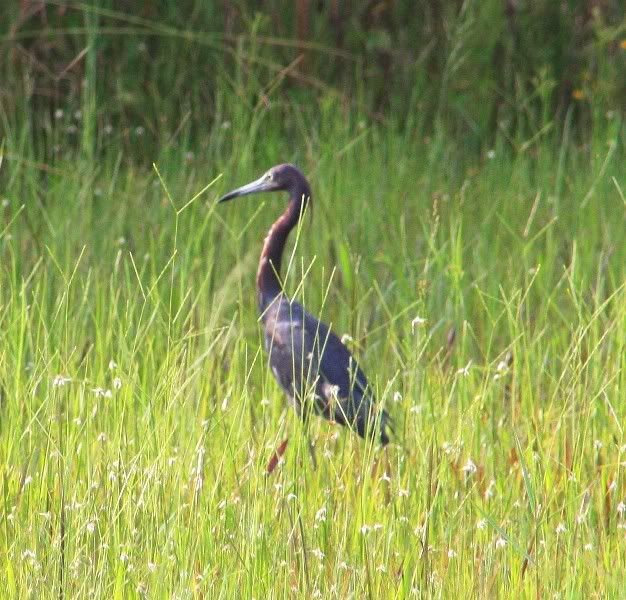
I believe this is a Reddish Egret. Any ideas?
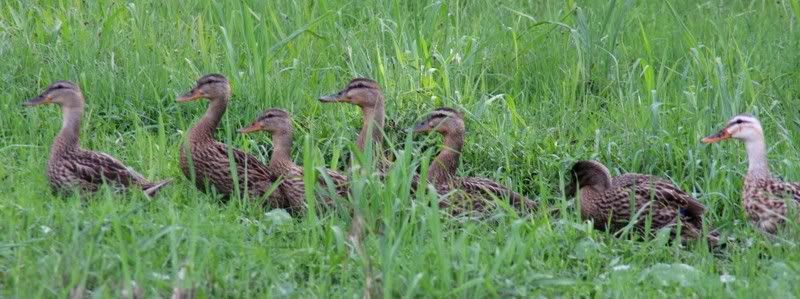
Kotatsu
Phthirapterist
Further listening leads me to believe that my aberrant crow is probably a single individual. It looks to be an otherwise normal, big one, and as all his neighbors are uttering their usual hoarse "caw caw" this one is calling with a high, almost monkey-like "kee kee" about two octaves higher. We have a lot of crows, and they fly all over the place, so it's hard to localize them sometimes, but it looks as if it's nothing more than a single countertenor crow.
Could you get a picture of it, perhaps? Maybe it's nothing strange at all, as you note, but you never know...
Well, I suppose I could claim White Pelicans anyway, in one sense--our guide definitely pointed some out at several different times, along with the Dalmatians. Whether or not I got pics of them, I saw them.
What date?
Now, a more difficult question. I know that at Lake Kerkini there are both Great Cormorant and Pygmy Cormorant; I have no idea whether any of my hundreds of photographed Cormorants are Pygmy Cormorants. Is that something that can be ascertained from photos?
That, I believe, shouldn't prove much of a difficulty, if you are patient. The Pygmy is much smaller, with a very short beak, shorter neck, and with a sort of "cuter" face, if that word can be used for cormorants. It's also more shag-like in shape, and has a darker head, which shimmers in brown during breeding. I've never seen one, though, but describe it here from a book (Mullarney, Svensson, Zetterström; if you can get this in Greek or English, do so. It is by far the best European bird book there is).
BTW, I wish to explicitly acknowledge and thank the birdwatchers in this thread for putting up with an ignoramus (me) with good humor and good advice. You may have infected another person with the birdwatcher disease. I am hoping to make a trip to the seashore very soon, with my camera, and there are actually two bird refuges within about 20 minutes' drive from here I must visit....
Well, it's a very rewarding hobby, I think, so you've chosen a good disease to be infected with^^.
I believe this is a Reddish Egret. Any ideas?
Mottled Ducks?
I'll have a look in some American field guides on Monday. From what I remember, the egret look correct, but I have no idea how to tell Mottled from Mallards...
June 18, same as the other Kerkini pics.What date?
Oh, I think cormorants are cute enough. (and these aren't even Pygmies)That, I believe, shouldn't prove much of a difficulty, if you are patient. The Pygmy is much smaller, with a very short beak, shorter neck, and with a sort of "cuter" face, if that word can be used for cormorants. It's also more shag-like in shape, and has a darker head, which shimmers in brown during breeding. I've never seen one, though, but describe it here from a book (Mullarney, Svensson, Zetterström; if you can get this in Greek or English, do so. It is by far the best European bird book there is).

I'll take a look through my pics.
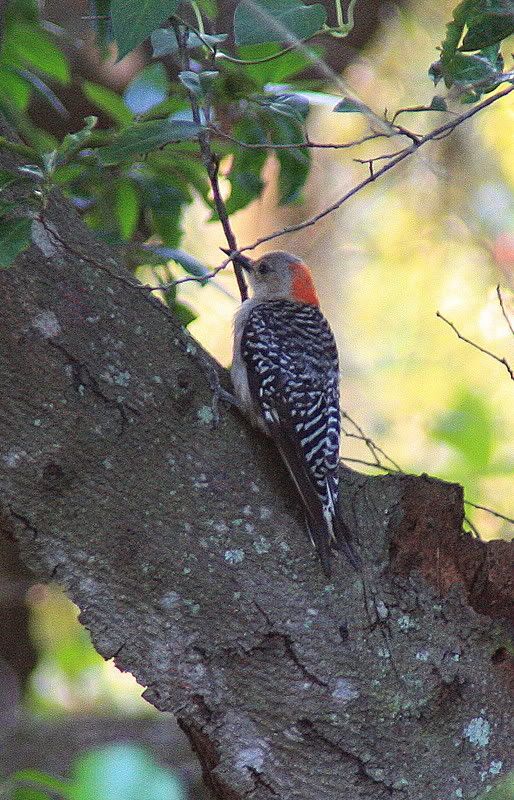
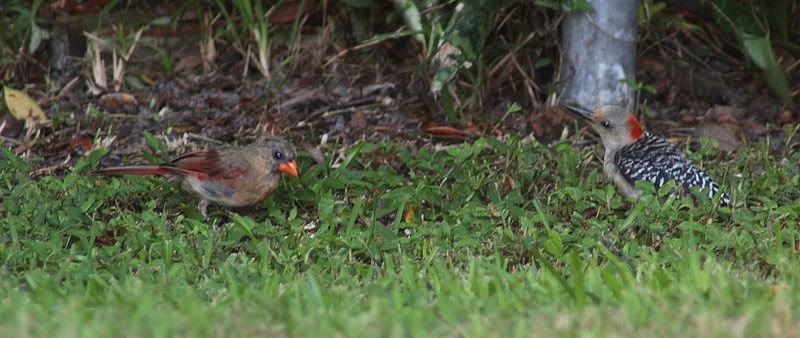
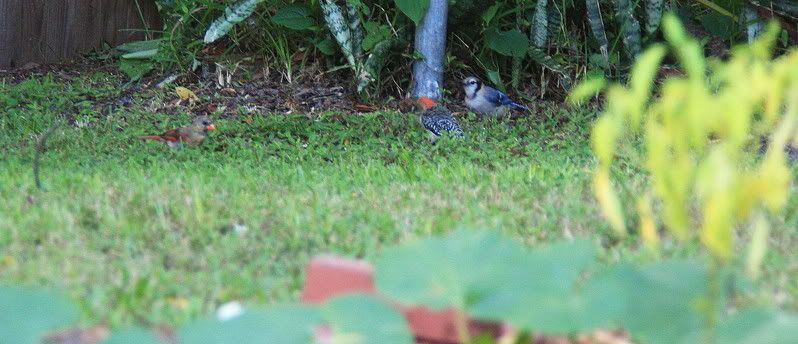
Tricky
Briefly immortal

Looks to me more like a Little Blue Egret. They also have a reddish neck, but less shaggy. Both have the bi-colored beak.I'm just getting used to a new camera set up and I'm by no means a photographer, so these are among the first I've shot. I just took a walk across the street where there's a fairly large wetlands mitigation area. These are common in urban, Florida areas, as we'd be under water after each rain storm without them. They attract all kinds of birds, insects and wildlife.
I believe this is a Reddish Egret. Any ideas?
http://i86.photobucket.com/albums/k90/jrubins101/ReddishEgret.jpg
Tricky
Briefly immortal


RedIbis
Philosopher
- Joined
- Jul 22, 2007
- Messages
- 6,899
Looks to me more like a Little Blue Egret. They also have a reddish neck, but less shaggy. Both have the bi-colored beak.
You could very well be right. The dark morph is so darn close. If it were a reddish egret it would be rare for this area.
Tricky
Briefly immortal
Eastern Egg Rock, in Penobscot Bay. They used to be common, but now are locally extinct. The ones on EEB are transplanted from Newfoundland and an organization called The Puffin Project is trying to make them viable, but the problem is, too damn many gulls.When and where, Trixie? I have not managed to see any Puffins yet!
I'll have to send you my final vacation journal. If I knew how to make a website I could post it there, but alas, I'm an ID-ten-T.
EHocking
Penultimate Amazing

Although not a bird photo, this is birding related. Just wandered up the Duomo in the centre of Milan and admired all the renovation work they have done to the massive amount of marble adorning the cathedral.
To maintain the pristine condition of the renovations, the Milanese have added a little extra to keep the flying rats from messing their work up.
Electric "fences".

No new species to add to the Italy list I'm afraid, just your common pigeons, swifts, sparrows etc.
To maintain the pristine condition of the renovations, the Milanese have added a little extra to keep the flying rats from messing their work up.
Electric "fences".
No new species to add to the Italy list I'm afraid, just your common pigeons, swifts, sparrows etc.
EHocking
Penultimate Amazing
You could email to the thread email [email protected] .Eastern Egg Rock, in Penobscot Bay. They used to be common, but now are locally extinct. The ones on EEB are transplanted from Newfoundland and an organization called The Puffin Project is trying to make them viable, but the problem is, too damn many gulls.
I'll have to send you my final vacation journal. If I knew how to make a website I could post it there, but alas, I'm an ID-ten-T.
It could be the first on a new page - Trip Reports.
That is, when I get around to pulling my finger out and updating the pages we have already.
I promise I'll get to it some time this week.
