WTC Dust Study Feb 29, 2012 by Dr. James Millette

What is going on here Mohr? You obviously said Millette would replicate Bentham paper.

Another thing, do you have any idea what Millette meant by saying he would do an "environmental forensic study"? It sounds like he was going to identify the sources of the dust in general.


I asked you before, but could you please tell me why you think Harrit et al try to show that they had iron oxide before ignition and iron after ignition. Do you see any problem with the spheres being iron not iron oxide?


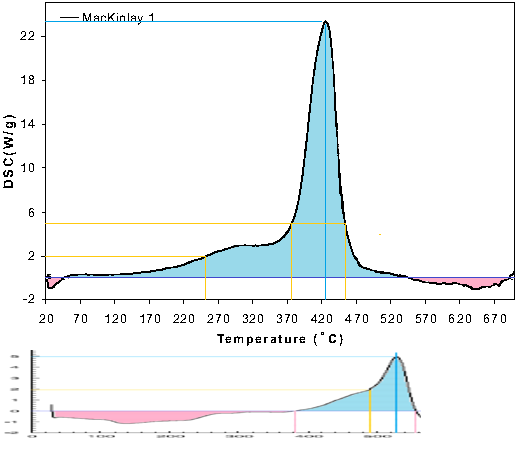
Unless the DSC graphs are proven to be unreliable, it tells us that Harrit´s chips release energy as fast as a known variant of superthermite. It is OK to say that you don´t understand, but then ask questions, don´t ignore. You do realize that one defining feature of superthermites and explosives is how fast they release energy?


Mohr, Basile has said that the dust is full of red paint chips and Jones has made it extra clear recently that a big difference between them and the chips suspected of being thermite is that the paint becomes soft in MEK while the thermite chips remain hard. One very notable thing about Millette´s chips is that they become soft in MEK, and that suggests they belong to which group of chips?

You are being very unreasonable to MM, and given what has been said about your promises of replication, maybe you should be a bit more humble?

You are begging in the wrong place. Go to 911 blogger and beg Jones to supply the magic red chips to Millette.

Then see how quickly you get banned from 911 blogger
 
What is going on here Mohr? You obviously said Millette would replicate Bentham paper.

Another thing, do you have any idea what Millette meant by saying he would do an "environmental forensic study"? It sounds like he was going to identify the sources of the dust in general.


I asked you before, but could you please tell me why you think Harrit et al try to show that they had iron oxide before ignition and iron after ignition. Do you see any problem with the spheres being iron not iron oxide?


Unless the DSC graphs are proven to be unreliable, it tells us that Harrit´s chips release energy as fast as a known variant of superthermite. It is OK to say that you don´t understand, but then ask questions, don´t ignore. You do realize that one defining feature of superthermites and explosives is how fast they release energy?


Mohr, Basile has said that the dust is full of red paint chips and Jones has made it extra clear recently that a big difference between them and the chips suspected of being thermite is that the paint becomes soft in MEK while the thermite chips remain hard. One very notable thing about Millette´s chips is that they become soft in MEK, and that suggests they belong to which group of chips?

You are being very unreasonable to MM, and given what has been said about your promises of replication, maybe you should be a bit more humble?
Hi JTL and MM,

As I said, MM if I led you to believe that I asked Millette to follow the Bentham protocol, I am sorry. I have no memory of making such a claim. However, JTL has found where I said something similar enough to cause possible confusion, and for that I apologize. When I was on the phone with Millette over a year ago, he said he had read the Bentham paper and then enumerated which tests from the Bentham paper he was going to replicate. He never said he would replicate every test they did. Nor did I ever ask him to. As I said, I did not tell him how to do his job. However, I did say in the post JTL found that he was going to "replicate the tests" when I should have said he was going to "replicate some of the tests." MM if that misled you into supporting the study, I apologize and will refund your contribution upon request.

I don't know what Millette meant by the environmental forensic study. In general, he said that the Bentham signatories did not perform certain tests and that he was also going to perform them, such as FTIR and others, to shed more light on the chemical composition of the chips.

As for the iron-rich spheres, are you saying those post-DSC spheres were pure iron and not iron oxide? I remember that they were not pure iron at all but I could be mistaken. I am not qualified to comment on the significance of the iron vs iron oxide question. I believe it refers to the claim that only a thermitic reaction could have produced pure iron. So do I see any problem in the iron oxide vs pure iron? No, just questions: was it indeed pure iron? What are all the things that can create a pure iron sphere if indeed that is what we are looking at? Even if we admit iron-rich spheres as one piece of EVIDENCE of nanothermite, what is really needed are CHEMICAL tests to prove it. Do you see any problem with the fact that Jones is withholding the results of tests he and his team did which could answer these questions? Do you see any problem with Ryan and Jones's failure to provide red-grey chips for independent testing?

I am not qualified to argue about soft vs hard chips. As a journalist I am qualified to say that Steven Jones and Kevin Ryan are not being forthcoming with their data or even the materials they are testing. That is the real issue. I have also talked personally with several knowledgeable people on the 9/11 Truth side of the argument as well as the JREF forum who claim Millette found the correct chips. The fact that Steven Jones claims that Millette tested the wrong chips is irrelevant to me. He and Ryan are withholding the chips they say are thermitic and then they have the nerve to say Millette found the wrong chips. Jones is one of the signatories withholding information and blocking independent research on their study. As a jourmalist this is a screaming red flag. Do you see a problem here?

As for the DSC graph and the comparison between known nanothermite and the red-grey chips, I can speak only as a journalist with an English major, so anyone is welcome to correct these obersvations:

1) I accept your claim that both steep curves show ignition
2) Even the ignition curves look dissimilar, and the speed of the two ignitions looks different to me (I could be wrong about this)
3) The temperatures where ignitions occur are drastically different, by well over 100 degrees C.
4) The energy released during ignition is drastically different, by a factor of at least 3!
5) Where are Jones's chemical tests (such as FTIR) he claims to have done which could give us better answers of the CHEMICAL composition of his chips? Where are the chips themselves so someone else could independently test them using a generally accepted protocol?

Do you see a problem here? I do, and you are wasting your time trying to convince me of the validity of Jones's claims when he is withholding both the data and his chips. NOTHING ELSE MATTERS TO ME in this regard. Some people here at JREF would accuse Jones of throwing out red herring after red herring. I do not have proof of this. But as a journalist I am trained to know what is important, and I will not get derailed from the big question: Dr. Jones, will you release all your data and will you release sameples of your red-grey chips to Millette?
 
The history is a little more complicated.

The original question was, of course: "Harrit e.al. claim there is nano-thermite in red-gray chips - is this claim true or false?"

To answer that claim, you must isolate the same kinds of chips, and the best, and only way, to do that, is to run the same tests on your own specimen that Harrit e.al. used on theirs to isolate and characterize them.

Now, knowing or at least suspecting that there are different kinds of red-gray chips, the question is: Which kind or kinds do we want to look at?

I was among those who urged Chris to ask Millette to focus on chips a-d. There are two reasons for this:
a) We suspected these chips are LaClede primer
b) Those chips are far and out the best characterized in ATM.


Now let's take a look at all specimen's that appear in ATM, and the tests that we know have been done on them, and the test results:


1. Specimens:

  1. Chip a
  2. Chip b
  3. Chip c
  4. Chip d
  5. The MEK-soaked chip (Fig. 12-18)
  6. DSC-chip 1 (MacKinlay 1)
  7. DSC-chip 2 (MacKinlay 2)
  8. DSC chip 3 (Intermont)
  9. DSC chip 4 (White)
  10. A chip that, post DSC, gave rise to Fig. 21
  11. A chip that, after flame test with very hot torch, gave rise to Fig. 23 and 26
  12. A chip that, post-DSC, gave rise to Fig. 25
  13. The multi-layered chip (Fig. 31)
  14. The chip that has a carbon layer (Fig. 32 and 33)


2. Tests done on these chips before DSC or flame test (destructive tests)

2.1 Chips a-d:
  • Magnetic attraction
  • Visual separation for being "red-gray chip"
  • Photomicrograph at 1 µm scale
  • BSE images at 20 µm scale (one of the four chips)
  • BSE image at 10 µm scale
  • XEDS spectrum of bulk gray layer
  • XEDS spectrum of bulk red layer
  • BSE image at 1 µm scale showing sub-micron particles in the matrix
  • SE image at 1 µm scale
  • XEDS map of five elements (chip a)
  • XEDS of selected, identified sub-micron particles

2.2 The MEK-soaked chip:
  • Magnetic attraction
  • Visual separation for being "red-gray chip"
  • Photomicrograph at 100 µm scale (badly out of focus!)
  • SE-image at 100 µm scale
  • XEDS spectrum of bulk red layer
  • XEDS map of five elements (post MEK-soak)
  • XEDS of selected, unidentified sub-micron particles/regions

2.3 The four chips tested in the DSC
  • Magnetic attraction
  • Visual separation for being "red-gray chip"

2.4 The chip from Fig. 21
  • Magnetic attraction
  • Visual separation for being "red-gray chip"

2.5 The chip from Fig. 23 and 26
  • Magnetic attraction
  • Visual separation for being "red-gray chip"

2.6 The chip from Fig. 25
  • Magnetic attraction
  • Visual separation for being "red-gray chip"

2.7 The multi-layered chip
  • Magnetic attraction
  • Visual separation for being "red-gray chip"

2.8 The carbon-layered chip
  • Magnetic attraction
  • Visual separation for being "red-gray chip"
  • XEDS spectrum of bulk gray layer
  • MEK-soaking (though no description of consistency is provided, except that the red layer has expanded and displays "porosity".)


So we see that all chips, except for the first five, have been characterized by magnetic attraction and visual appearance only before being destroyed in fire.

We see that neither DSC nor electric resistance nor anything else has been done to all chips to isolate them from all the other chips that are attracted to a magnet and that are red-gray chips.


As jtl and MM assert that many red-gray chips that are attracted to a magnet are in fact paint, they ought to admit that all these chips might indeed be just paint, or might be different from one another.


How could Millette selöect a chip like the ones that gave rise to Fig. 21, 23, 25, or the four chips that were tested in the DSC, when nothing is known about them except that they are red-gray and magnetic?


So of course Millette went for the four chips on which lots of detailed data is available: chips a-d.

And those have been showm to not contain thermite.

This means that Harrit e.al. must discard chips a-d, or revoke their conclusion that "the" red-gray chips are thermitic.

Once they discard chips a-d, they are out of evidence for anything "nano", as none of the other data shows anything in sub-micron size.

Thanks Oystein.

It is believed by some that the red/gray chips had been separated into thermitic chips and paint chips. If Harrit wanted to prove that the chips he tested were NOT paint chips, why didn't he get/publish the chemical composition of the paint chips they supposedly separated?

Do you get the impression fom the Bentham paper that they tested any of the separated red/gray paint chips pulled from the dust?

It doesn't sound like they tested/compared ANY of the paint chips from the pile. It sounds like they compared the thermitic chips to OTHER paint/paint chips gathered from other sources and not to paint chips gathered from the dust.

Given the small size of the red chip, about 0.5 mm x 0.5
mm, we used two probes and obtained a rough value of approximately 10 ohm-m. This is several orders of magnitude less than paint coatings we found tabulated which are typically over 10 10 ohm-m [31].

Another test, described above, involved subjection of red
chips to methyl ethyl ketone solvent for tens of hours, with
agitation. The red material did swell but did not dissolve, and
a hard silicon-rich matrix remained after this procedure. On
the other hand, paint samples in the same exposure to MEK
solvent became limp and showed significant dissolution, as
expected since MEK is a paint solvent.

Both the above quotes seem like they compared/tested OTHER paint/paint chips no?

If so, why did they not do anything with the paints chips they found in the dust?

If I am missing something in the paper that states they DID do testing on the paint chips found in the dust, please point me in the right direction.

Thanks.
 
qm.gif
qm.gif
3sunr2.jpg
 
Thanks Oystein.

It is believed by some that the red/gray chips had been separated into thermitic chips and paint chips. If Harrit wanted to prove that the chips he tested were NOT paint chips, why didn't he get/publish the chemical composition of the paint chips they supposedly separated?

Do you get the impression fom the Bentham paper that they tested any of the separated red/gray paint chips pulled from the dust?

It doesn't sound like they tested/compared ANY of the paint chips from the pile. It sounds like they compared the thermitic chips to OTHER paint/paint chips gathered from other sources and not to paint chips gathered from the dust.


Both the above quotes seem like they compared/tested OTHER paint/paint chips no?

If so, why did they not do anything with the paints chips they found in the dust?

If I am missing something in the paper that states they DID do testing on the paint chips found in the dust, please point me in the right direction.

Thanks.

You are absolutely right:

Nothing at all in the Bentham paper suggests they tested any non-thermitic chips from the dust. All the paint they talk about is something external to the dust.

I'd go further: They show no awareness that some red-gray chips might be different, might be paint. To the contrary: They stress how the chips they present in the paper are representative for ALL chips they studied. That would mean they didn't study any chips that they considered to be paint.
 
Mohr: I have no memory of making such a claim. However, JTL has found where I said something similar enough to cause possible confusion, and for that I apologize. When I was on the phone with Millette over a year ago, he said he had read the Bentham paper and then enumerated which tests from the Bentham paper he was going to replicate. He never said he would replicate every test they did. Nor did I ever ask him to. As I said, I did not tell him how to do his job. However, I did say in the post JTL found that he was going to "replicate the tests" when I should have said he was going to "replicate some of the tests."

Wait a minute, you wrote in a post one year ago, just after talking to Millette, that he would replicate the Bentham tests. But now you are saying you don´t remember having said that, but also at the same time that you now have a better memory of what Millette said one year ago in that phone call.

I don't know what Millette meant by the environmental forensic study.

You don´t know or you don´t remember? When you talked about the other labs, you said you refused them because they were going to perform all kinds of tests that you thought were not useful but you still accept Millette without knowing this? Very strange behavior.

I think you should explain this all in some detail before we continue.
 
Wait a minute, you wrote in a post one year ago, just after talking to Millette, that he would replicate the Bentham tests. But now you are saying you don´t remember having said that, but also at the same time that you now have a better memory of what Millette said one year ago in that phone call.


You don´t know or you don´t remember? When you talked about the other labs, you said you refused them because they were going to perform all kinds of tests that you thought were not useful but you still accept Millette without knowing this? Very strange behavior.

I think you should explain this all in some detail before we continue.

As far as I understand it, Chris didn't specifically ask Millette to replicate the paper.

Millette is the one who told Chris that he intended to replicate the paper.
 
You are absolutely right:

Nothing at all in the Bentham paper suggests they tested any non-thermitic chips from the dust. All the paint they talk about is something external to the dust.

I'd go further: They show no awareness that some red-gray chips might be different, might be paint. To the contrary: They stress how the chips they present in the paper are representative for ALL chips they studied. That would mean they didn't study any chips that they considered to be paint.

Newly fractured cross sections of red/gray chips from the four different dust samples are shown by BSE imaging in Fig. (5). These four cross sections are representative of all the red/gray chips studied from the dust samples.
Page 11.

We all know that the truthers are floundering with their nonsensical claim that Millette hasn't got the right chips. There is no indication that any other method other than separation using a magnet was required.

I haven't seen a single argument based on any data that can back that claim. On the contrary there are many correlations between the chips Millette went on to perform FTIR/TEM on and those samples a-d in Harrit et al. That's not a surprise to anyone with a working brain.

No truther has compared any of the data from Millette with Harrit et al and shown why the respective material is not the same. Only one truther here has admitted that samples a-d are the same!

If Chris Mohr can tell us which EDX spectra from the individual specimens correspond with the specimens in the FTIR test then we can then go further.
 
Last edited:
Chris Mohr owes you nothing, so stop turd munching and get an explanation from Jones.
Truthers will do anything to cling to their fantasy. By definition they are dishonest. Harrit and Jones or any other authors of the Harrit et al paper have had plenty of time to release additional data as promised in the same paper. They have also had plenty of time to respond to requests to publish data such as FTIR so that a comparison with Millette's FTIR data can be performed. They steadfastly refuse to do it.

The truthers will not pressure Harrit or Jones to release the data.

Harrit and Jones know they have been made to look silly and at worst to be fraudulent. They should put up or shut up.
 
No truther has compared any of the data from Millette with Harrit et al and shown why the respective material is not the same.

Exactly.

Furthermore, the paper gives the impression that ALL of the chips gathered using the "separated by magnet and visually having red/gray layers" isolation method are considered to be thermitic whether they tested them all or not.

This whole "the chips were separated into paint chips and thermitic chips is ridiculous. If that were the case, they would not have needed to site the NIST report for the chemical composition of primer paint or test OTHER paint samples. They could have just used the supposed "separated by resistivity" paint chips and come up with the composition of those to compare.

That would have sealed the deal and no further debate about "Harrit's chips are merely paint chips" would have been needed.
 
Wait a minute, you wrote in a post one year ago, just after talking to Millette, that he would replicate the Bentham tests. But now you are saying you don´t remember having said that, but also at the same time that you now have a better memory of what Millette said one year ago in that phone call.


You don´t know or you don´t remember? When you talked about the other labs, you said you refused them because they were going to perform all kinds of tests that you thought were not useful but you still accept Millette without knowing this? Very strange behavior.

I think you should explain this all in some detail before we continue.
None of this is worth responding to. I made myself very clear when I admitted to making a mistake. Bring me some WTC chips certified by Jones to be thermitic and all the data Jones has not released and we will talk then.
 
Wait a minute, you wrote in a post one year ago, just after talking to Millette, that he would replicate the Bentham tests. But now you are saying you don´t remember having said that, but also at the same time that you now have a better memory of what Millette said one year ago in that phone call.


You don´t know or you don´t remember? When you talked about the other labs, you said you refused them because they were going to perform all kinds of tests that you thought were not useful but you still accept Millette without knowing this? Very strange behavior.

I think you should explain this all in some detail before we continue.

You have been here drilling, arguing, and attempted to discredit people on the boards for awhile now. Have you taken any time to reach out to Jones? I know the answer to the question, but why is it you speak condescendingly to the members of the forums in regards to the information presented. However, you hold the members of the paper you take as gospel to no standard at all. Why is that?
 
Mohr: None of this is worth responding to. I made myself very clear when I admitted to making a mistake. Bring me some WTC chips certified by Jones to be thermitic and all the data Jones has not released and we will talk then.

LoL

"Admitting to a mistake" is a very nice way to describe your change in narrative due to supposed lapse of memory. But I suppose we must believe you since you also forgot to tell Kevin Ryan about Millette´s past, so this happens all the time with you:boggled:
 
LoL

"Admitting to a mistake" is a very nice way to describe your change in narrative due to supposed lapse of memory. But I suppose we must believe you since you also forgot to tell Kevin Ryan about Millette´s past, so this happens all the time with you:boggled:
LOL, you still don't understand what DSC is used for.

Do you understand no thermite was used on 911 to destroy the WTC?

Questions, too hard for you?

Millette did not find thermite. Because no thermite was used on 911. The only way to get thermite in WTC dust, is to plant it. Or have an etch-a-sketch fall into a pile of rust. :boggled:, what Jones is on 911. Or is that Harrit's evidence? :boggled:, or your knowledge on DSC? :boggled:, very useful...

Why study and chase the crazy claims of an insane old man who thinks the United States cause the earthquake in Haiti? Millette's paper is not needed to see Jones and Harrit's claims are bogus. No wonder 60 Minutes turned them down.
 
Last edited:
Chris:
Jtl is just an another sad victim of Jones' delusions and his NewSpeak, no need to take him seriously

According to his last posts and post 1836, he is still a victim of the assorted NewSpeak in which e.g.:

- Allegedly typical XEDS spectra corresponding to iron oxide massively contaminated with silicon and aluminium stuffs are showing pure iron

- Very broad experimental curves are "very narrow" and "very sharp" and show "fast release of energy"

- Experimental exotherms can be compared only with one exotherm for accidentally found superthermite, all oher comparisons are prohibited/invalid!!!

- Heating experiments, originally performed under pure nitrogen, must be performed under air during replication, to get good and comparable results (no matter if combustible material is present in the samples)

- Two DSC curves, which distinctly differ e.g. in their positions (peak temperatures), are indeed strikingly similar

- Red/gray chips with the same composition, look, structure and arrangement, corresponding perfectly to paint on rust, must be simultaneously paint AND evil superthermite

- Four WTC dust samples collected by one researcher must contain solely different red/gray chips than four samples collected by another researcher

Etc.

There is simply no way how to discuss fruitfully with the guy who simply does not understand the stuff and who is repeating the same nonsenses and lies again and again.
No way...
Thanks for this summary Ivan. A few questions I'd like to ask you for my better understanding:

1.) Even if the post-ignition spheres in the Bentham paper are not pure iron, is there relatively more pure iron in these spheres than there was pre-ignition?
2.) The "very broad curves" on the DSC-based graphs do look steep to this English major. And of course, looking at the Mark Basile YouTube, there is a sudden ignition of the chips once it reaches a certain temperature. So it is fair to say we are looking at a curve that shows a steep increase in energy release at the moment of ignition, yes? I do realize that anything that ignites will probably show a somewhat similar steep curve. I also realize that a piece of paper catching on fire might create a "steep curve" while a gasoline explosion would create a curve that looks more like a sheer cliff. My response to JTL though was that the graph comparing the nanothermite and the red-grey chips looks different in 3 ways: ignition temperature, energy release AND speed of ignition. The first two are obvious; the third I'm checking in with you on.
3.) Most importantly, is this true: THE BEST WAY TO DETERMINE WHETHER THERE I THERMITE IN THE CHIPS IS TO ANALYZE THE CHEMISTRY OF THE CHIPS. Things like iron spheres and DSC tests are at best secondary tools which might show supportive evidence, but it's the very tests Jones et al are withholding that would offer the strongest evidence.

And one more question while I am at it: my first thought about the hard vs soft chips after the MEK soak was maybe different paints respond differently to the soak. I can't wrap my mind around the idea that this is evidence that Millette has the wrong chips. In my limited mind, the real proof that Millette had the wrong chips would be found by having Jones release chips he believed were thermitic for Millette to test. Jones has no business complaining about Millette's study as long as he doesn't release the chip samples and all of his old data!!!!

If I may answer these?

1.) We can't know this. Apart from the obvious and omnipresent problem that they did not characterize the chips they actually put in the DSC before they burned them, there is another problem: In the "post-DSC" sample, Fig. 21, they are focussing on some detail particle selected based on its high iron content; in all of the DSC analysis of unburnt chips, there is no instance of them looking for spots with high Fe-ration in the gray layer - we only have XEDS spectra of the bulk of gray layer of some chips in Fig. 6.
Fig. 21 does appear to have the highest iron-concentration, relative to oxygen, of all spectra, but we can't rule out that such spots existed beforehand.

2.) Whether such a graph looks broad or steep depends on the scale of both the x- and the y-axis.
We say the curves are "broad" because they represent an ongoing exotherm reaction over the course of many minutes. This is not at all like the sparky bust seen in Fig. 22 which was powered by a torch, or the vigorous burn in a matter of seconds that Basile showed. The green curve has its slope increasing gradually over quite some time. The black curce is in exotherm territory almost from the beginning.
Here is a comparison of the black curve with Tillotson&Gash's graph - both to the same scale:

HarritFig19-1_vs_TG_Fig3.png


Note that there are more differences than just peak height and peak location: The red area is where the reaction is endotherm - big difference!

About the speed of ignition, Tillotson and Gash write, directly following their discussion of DSC-results:
"We are presently quantitatively evaluating burn rates ... Although the results of these tests were not available at the time of writing..."​
which means: DSC was not a test method to determine burn-rate.
And indeed, it isn't!


3.) Correct - obviously!
Tillotson and Gash didn't look for microspheres or any such nonsense after the DSC-test - they looked for both elemental iron and aluminium oxide, vie XRD in this case, and found them! They also knew with certainty that they had lots of iron oxide and elemental aluminium in their stuff, because they had put those in themselves. So all the chemistry is accounted for.


And the extra question: By claiming his MEK-soak results are worth anything at all, he implies that all chips he studied were the same material.
They weren't.
And of course you are right, different paints will behave differently in MEK. Also, different superthermite compositions might behave differently in MEK, too!
It's a useless crap test.


Chris, I have promised you a couple of weeks ago to summarize Jones's reasons for rejecting Millette's chips - and why these reasons are bogus. I haven't forgotten. I am by and by going through all statements by Jones I can find, to make sure I am not missing anything.
 
Thanks for this summary Ivan. A few questions I'd like to ask you for my better understanding:

1.) Even if the post-ignition spheres in the Bentham paper are not pure iron, is there relatively more pure iron in these spheres than there was pre-ignition?

We tried to estimate in the past, Oystein probably knows more. Looking at the Fig. 25 with a typical spectrum:

picture.php


I would say that there is enough of oxygen in order to consider some expected Al and Si compounds with oxygen (e.g. oxides, kaolinite) and some Fe compound with oxygen (e.g. iron oxide). But the height of oxygen peak is not so reliable, therefore difficult to decide/calculate anything. Anyway, this XEDS spectrum itself, with a lot of peaks is hardly any good proof of metallic iron:cool:


2.) The "very broad curves" on the DSC-based graphs do look steep to this English major. And of course, looking at the Mark Basile YouTube, there is a sudden ignition of the chips once it reaches a certain temperature. So it is fair to say we are looking at a curve that shows a steep increase in energy release at the moment of ignition, yes? I do realize that anything that ignites will probably show a somewhat similar steep curve. I also realize that a piece of paper catching on fire might create a "steep curve" while a gasoline explosion would create a curve that looks more like a sheer cliff. My response to JTL though was that the graph comparing the nanothermite and the red-grey chips looks different in 3 ways: ignition temperature, energy release AND speed of ignition. The first two are obvious; the third I'm checking in with you on.

By term "very broad curves" (not really fitting, I admit;) I meant the "curves showing a slow process in some context (here burning/explosions)", here the DSC peaks "lasting" several minutes! This is indeed very slow burning/oxidation and the curve (process) cannot be considered as "sharp"(rapid)! Indeed it's a matter of scale. In other scales (let's say hours), peaks would be even much, much sharper, if the scale is in seconds, curves would be much, much broader. (In short: by no means Bentham curves show "a fast release of energy").
Looking at the Basile's video, it is apparent that this chip really ignited, and we see some flame lasting some second. This is indeed in a clear contradiction with Bentham DSC curves, which lasted several minutes. Therefore, Bentham curves do not reflect Basile's burning (well, burning of his chip;); they reflect much slower process.

3.) Most importantly, is this true: THE BEST WAY TO DETERMINE WHETHER THERE I THERMITE IN THE CHIPS IS TO ANALYZE THE CHEMISTRY OF THE CHIPS. Things like iron spheres and DSC tests are at best secondary tools which might show supportive evidence, but it's the very tests Jones et al are withholding that would offer the strongest evidence.

Not only chemistry of the chips, but the structure, various physical properties, giving together some overview what this stuff could be, etc., but you are right and Jim Millette was right and he did exactly what had to be done in this "case": he identified his chips similar to Bentham chips (a) to (d), by purely competent methods.
I have spent many hundreds of hours on this topic, so I would naturally like to know, from which damned kind of WTC red primers on rust these microspheres are formed when heated up to 700 degrees, but I can still live easily without this knowledge:cool: But back to your question if, "Things like iron spheres and DSC tests are at best secondary tools which might show supportive evidence". Yep.

And one more question while I am at it: my first thought about the hard vs soft chips after the MEK soak was maybe different paints respond differently to the soak. I can't wrap my mind around the idea that this is evidence that Millette has the wrong chips. In my limited mind, the real proof that Millette had the wrong chips would be found by having Jones release chips he believed were thermitic for Millette to test. Jones has no business complaining about Millette's study as long as he doesn't release the chip samples and all of his old data!!!!

I have agreed easily even with jtl that they can be two main groups of similar red/gray chips in WTC dust (e.g. Laclede and Tnemec red primer scales on rust, to give some good examples;)) . They can easily differ in the degree of swelling in MEK. No problem. I do not see any reason from that data that these stuffs might be anything else than WTC paints;)
 
Last edited:
Mohr: The FTIR and other tests DO show us that gthe red-grey chips are NOT thermite. Until Kevin Ryan or Steven Jones release chips they believe are thermitic for testing, I will no longer waste time responding to your claim that Millette found the wrong chips.
Oystein: By claiming his MEK-soak results are worth anything at all, he implies that all chips he studied were the same material.They weren't.

Once again you get the same response from your buddy to the data in Harrit´s paper, they like to claim that the MEK test and the ignition tests were invalid because they were done on the wrong chips. You still think you can ignore truther responses to soft chips vs hard chips?

Mohr: And one more question while I am at it: my first thought about the hard vs soft chips after the MEK soak was maybe different paints respond differently to the soak. I can't wrap my mind around the idea that this is evidence that Millette has the wrong chips. In my limited mind, the real proof that Millette had the wrong chips would be found by having Jones release chips he believed were thermitic for Millette to test. Jones has no business complaining about Millette's study as long as he doesn't release the chip samples and all of his old data!!!!

Paints will either dissolve or become soft in MEK. Harrit´s chips remain hard even after over 50 hours of soaking in this paint solvent, that is they do not even become soft. This is no proof they are thermitic, but it is evidence that they are not paint, and also a definite test to sort out the different chips in the dust. Just take the time to answer this question you ignored before:

jtl: Mohr, Basile has said that the dust is full of red paint chips and Jones has made it extra clear recently that a big difference between them and the chips suspected of being thermite is that the paint becomes soft in MEK while the thermite chips remain hard. One very notable thing about Millette´s chips is that they become soft in MEK, and that suggests they belong to which group of chips?

The answer is obvious. Notice another thing Mohr, how Kminek who should not confuse such a simple thing actually tries to muddy the water by pretending not to understand and diverting you to non-relevant swelling:

Kminek: They can easily differ in the degree of swelling in MEK. No problem. I do not see any reason from that data that these stuffs might be anything else than WTC paints

You Mohr, will remain confused if you keep trusting this forum.
 

ISF - Join now!

Every member here is approved by hand. No bots, no spam, just people who care about evidence and honest debate.

Membership is free!

Create your free account

Back
Top Bottom