• Security incident: ISF was recently accessed by intruders. Please change your password, and change it anywhere else you used it. Read more

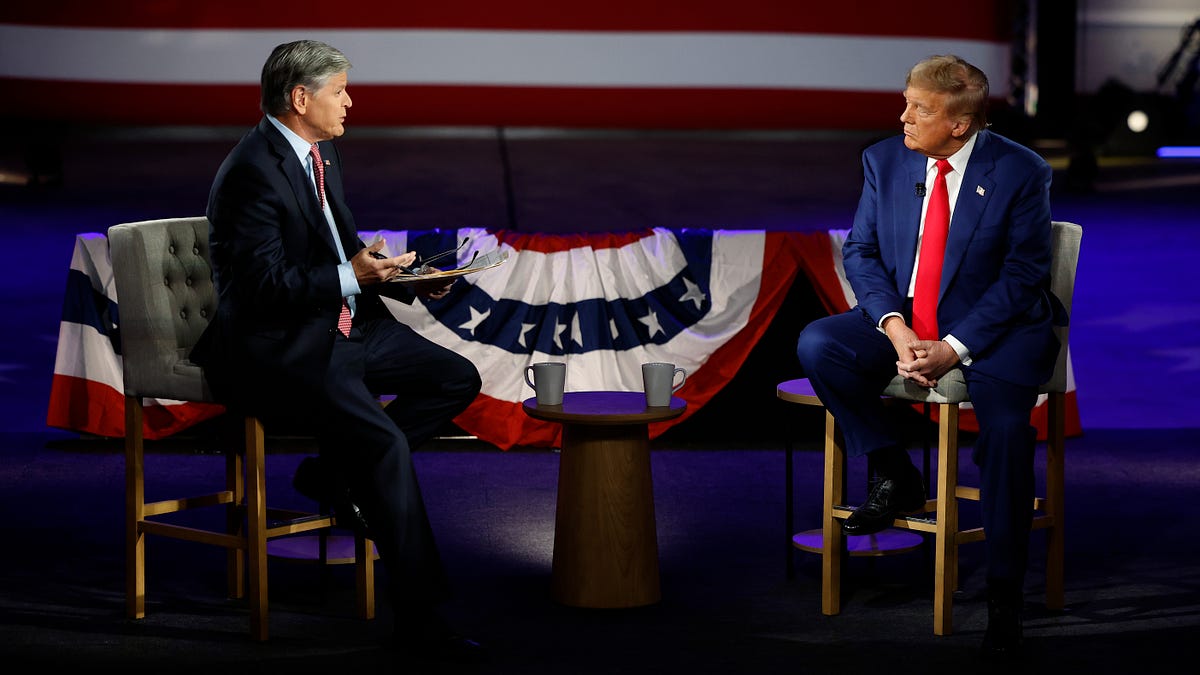
What did Democrats do wrong?

What did Democrats do wrong?

  • Didn't fight inflation enough.

    Votes: 13 14.9%
  • Didn't fight illegal immigration enough.

    Votes: 24 27.6%
  • Too much focus on abortion.

    Votes: 2 2.3%
  • Too much transgender stuff.

    Votes: 31 35.6%
  • America not ready for Progressive women leader.

    Votes: 31 35.6%
  • Should have kept Joe.

    Votes: 3 3.4%
  • Not enough focus on new jobs.

    Votes: 2 2.3%
  • Nothing, Trump cheated & played dirty!

    Votes: 16 18.4%
  • Didn't stop Gaza War.

    Votes: 9 10.3%
  • I can be Agent M.

    Votes: 6 6.9%

  • Total voters
    87
Because government workers are often idiots and fools. This isn't peculiar to government workers, but they aren't better than the rest of us.

For example?
Also, government workers are accountable to the public they serve. If there is a better alternative, you have yet to say what it is.
Who said I opposed government doing any of these things? I didn't. You read that into what I actually said, but I didn't actually say any of these things.

They are a necessary consequence of your distaste for government.
What I said is that I don't want my survival to be dependent upon government. That doesn't mean I don't want government to try to help me survive, but I want to be able to survive even if government screws up.

What kind of 'government screw-up' would result in your having to survive on your own devices?
The difference between you and I, it seems, is that, if things go badly wrong, you would deal with it by adopting some kind of Mad Max approach, roaring along empty roads in a muscle car, with a shotgun and a steely glint in your eye, and God help anyone who crosses you. I, on the other hand, would prefer that people band together, as a community, as a society, and try to forestall and/or fix whatever it was that the government was doing so wrong. That, in itself, would require co-ordinated efforts and central planning- in other words, a government.
I think we should structure society such that when government does screw up (and it inevitably will), the vast majority of us can and will survive such screwups just fine.

That makes no sense at all. If we structure society so government is redundant, or the fabric of a society is woven so loosely that if it unravels, it doesn't affect most people, then- as Roger Ramjets says- what you have then is anarchy. Whilst the idea of small, independent and self-sufficient communities is appealing for some, it is utterly unrealistic given the size of the world's population now, and would also involve the destruction of so much of our civilisation. Roads, universities, mains water and sewage, power generation... all of this relies on central planning, maintenance and oversight. To somehow construct a society that needs none of this is more dystopian than 'rugged frontiersman'. You seem to relish the idea that is it inevitable that our societies will collapse, and we will be plunged back into a 'survival of the fittest' dark age. I do not share that relish. I would rather we continue to improve and refine democratic government, so it benefits all.
I'm not sure why that position is generating such controversy and opposition. Seems like this should be everyone's default position.

It's convtroversial because it's callous, selfish, defeatist and cynical.
 
This is quite astonishingly naive. It is also quite the departure from your stance in the UK Politics forum, where you appear to be fairly left-wing, opposed to privatisation and in favour of nationalisation.
Your naivety with regard to private versus public can be shown by a couple of examples. Thames Water, on our side of the pond, is the first one. Priavtised water company, massive wastage of water, huge amounts of pollutants released into the water, £14 billion of debts, all whilst paying out enormous dividends to its shareholders. That is the exact opposite of focusing on the public good.
On the US side, the opiates crisis. Pharmaceutical companies are responsible for a nation-wide public health crisis. They showed no sign of being aware of the public good at all: profits were paramount, and to hell with the families and communities devastated by the effects of mass drug addiction.
In both cases, the private sector focused on its own narrow interests , maximising profit at the expense of the public- and, in both cases, it has needed government intervention to bring them to heel.

Astonishing. You are arguing that companies should be allowed to release harmful chemicals freely and unfettered by oversight or legislation, in order to safeguard jobs and the profits of those companies.


You now abandon the concept of a safe working environment too? Wow. Just wow.
Are you being serious, or have I missed the sarcasm in this post? I sincerely hope this is sarcasm, because the alternative is that you are a dyed-in-the-wool cutthroat capitalist, intent only on profit, and utterly unconcerned about harm to the environment and to people's health- and that is a truly disgusting attitude.

Third choice: you are channeling your inner Ziggurat, and trying to express what you think is his viewpoint.
Do, please clarify. I have little time for the elitist cynicism you voice in the UK Politics forum, but this is a new low, if this is a serious post.
Sorry, I should have thrown a couple of handfuls of "sarcastic" smilies at that post to indicate that rather than expressing my own opinions I was attempting to channel (unsuccessfully as it seems) right wing and/or libertarian opinion.
 
Sorry, I should have thrown a couple of handfuls of "sarcastic" smilies at that post to indicate that rather than expressing my own opinions I was attempting to channel (unsuccessfully as it seems) right wing and/or libertarian opinion.
Your post was perfectly clear, and was successfully channeling libertarians. You forgot to take into account that some of your audience is completely unable to understand sarcasm.
 
Democrats didn't FIGHT LIKE HELL that's what.

Yes. They basically ghosted me.

In the spring I get the phone call and post card telling me that the candidates running for office and a solicitation for money. I got several from Nikki Haley, but nothing from the Democrats.

In the fall after the convention I expected to get the phone call and the post card announcing the nominees run. I got nothing. Billions of dollars raised. No radio ads, no billboards, I got nothing.

I had to go online and look up who was running for senate, congress, and the rest. I cannot imagine how they felt about not getting any support. It was like a non-election year. And the vote count for the Democratic Party here was down.

Major parties, minor parties, mini parties, and even micro parties around the world know how to do cheep, nickel and dime advertising, to let people know about their candidates.

You advertise to people in "safe" states, not just to raise the popular vote numbers by millions, but those voters know people in the swing states as colleges, family, friends, or coworkers who weren't paying attention and remind them about the election. That cost them at least a few hundred thousand votes in the swing states. Basic campaign knowledge centuries old.

I'm still seething with anger about this... whatever you want to call it.
 
Democrats failed to reach about 50% of the voters. They are stuck in their echo chambers. Trump managed to scare them. We did not manage to scare the masses about Trump. Who they knew well! To Trump's favor, the first 4 years was a clown show. Not scary enough. Even with pandemic!
 
Yes. They basically ghosted me.

In the spring I get the phone call and post card telling me that the candidates running for office and a solicitation for money. I got several from Nikki Haley, but nothing from the Democrats.

In the fall after the convention I expected to get the phone call and the post card announcing the nominees run. I got nothing. Billions of dollars raised. No radio ads, no billboards, I got nothing.
I want to move where you live. We were bombarded from mid-August on. And almost all of it negative--how bad the opponent was, not how good the candidate they supported was.
 
I haven't kept up so apologies if it's been stated before, especially by me. My view of what "Democrats did wrong," if they did, is fail to capture the votes they absolutely need to capture. This is a tautology, so no great insight, but it still says something to me. Harris needed a fraction of the people who turned out for Biden in 2020 to turn out for her in 2024. I doubt there were significant defections, just depressed turnout for Dems in highly critical places such as metro Detroit, Philly and Atlanta. I ran one scenario that gave her enough EC votes to beat Trump, with some to spare, with as few as 330K votes.

As a registered Republican, EVERY DAY I got multiple reminders from multiple PACs to *turn in my ballot* (for Trump). They even hinted that I would be shamed in front of my neighbors for not voting. (Extortion, anyone?) I texted back the reasons I would NOT vote for Trump or congressional Republicans. Those answers got me "unsubscribed" but the PACs kept coming at me. They were either legit running scared or doing a very good imitation of it.

Meanwhile, crickets from Kamala. Yes, I was registered Republican, but certain Republicans could be swayed with the right argument. They could have reached out to every Democrat with an unreturned mail ballot, especially in areas that showed up for Biden in 2020. Maybe they did, maybe they were wearing out shoes knocking on doors, or at least reaching out to people digitally. Registered Democrats here who dawdled returning their ballots might be able to tell me. And it wasn't just Dems - independents mattered too.

So how was their ground game? Did they take too much for granted? Really, not knowing much about Kamala (who did not, IMO, use the vice presidency as well as she could have), I still wanted to vote for:

The party that had a platform generally aligning with my values. I want things like sustainable development, abortion rights and universal health care, which we could very well afford if we didn't have this weird, wonky adversarial system where enormous resources are spent denying people health care. It would be cheaper to just take care of everyone. But then we'd run the risk of helping people who don't "deserve" to be helped.

The "liberal" platform acknowledges that civilization is a collective endeavor. The conservative platform ... well, is there one? Not officially and I'm not sure in any other sense, either.
 
So how was their ground game? Did they take too much for granted?
Yes. They took for granted that at least half the voters were decent human beings who weren't just thinking of themselves, and were savvy enough to know when they were being lied to. But as we all know that isn't reality.

If Democrats had instead assumed that most people are sheep who are easily manipulated into acting against even their own interests, they might have done a lot better. Harris should have clued in the faithful on why she was hoodwinking swing voters with even bigger lies than Trump's. Only they would know about her 'real' plan to turn the US into a socialist paradise that gave them everything they wanted - no matter how outrageous and unworkable it might be. Then she would get all the votes of liberals who didn't care about anything except winning, and capture the swing voters who delude themselves into believing they are 'independent thinkers'.

Of course this would take a massive amount of advertising, but she had the money to do it. Instead of wasting it on rallies that only the faithful attend, she should have paid for an army of bots to saturate social media with 'facts' about how only she could lower the price of gas, and how Trump's policies would absolutely bankrupt the US within days of talking office.

There are other things she could have done too of course. Handing out $1 million to people in swing states willing to sign a petition upholding the Constitution would be a good one. But that would require the kind of risky 'thinking outside the box' genius that Harris and Co. didn't have. Someone else might have thought of it, but unfortunately they burned their bridges with him long ago.

That's typical of Democrats though - always wringing their hands about 'purity', and 'taking the high road' rather doing what's necessary to get votes. Which comes back to their delusion that people are generally decent human beings with more than half a brain cell. If they understood the truth, like Trump does, they could have done a lot better.
 
Also, government workers are accountable to the public they serve.
No they aren't. When have you ever heard of a government employee being fired for bad customer service? It doesn't happen.

Politicians have some accountability, but most government workers? They have almost none.
If there is a better alternative, you have yet to say what it is.
Again, you seem to think I'm arguing for no government.
What kind of 'government screw-up' would result in your having to survive on your own devices?
Just look at the most recent hurricane disaster relief mess.
The difference between you and I, it seems, is that, if things go badly wrong, you would deal with it by adopting some kind of Mad Max approach
Hardly.
That makes no sense at all. If we structure society so government is redundant
I never said that either. You keep reading more into my posts than I'm writing.

Government is necessary, I never suggested otherwise. The essence of government is the monopoly on legitimate violence to solve disputes, which manifests most importantly as law enforcement and the military. But in a well-functioning society, most of the time you don't have to deal with law enforcement or the military. Its role in your day to day life should be pretty small.
Roads, universities, mains water and sewage, power generation... all of this relies on central planning, maintenance and oversight.
No it doesn't. And none of what you mention in the US truly has central planning. They all have distributed planning.
 
No they aren't. When have you ever heard of a government employee being fired for bad customer service? It doesn't happen.
Probably because very few government employees are in "customer service". Even the ones you deal with at a service desk or o nthe phone have other duties. This isn't Walmart we're talking about.
Politicians have some accountability, but most government workers? They have almost none.
You mean they can't be fired at the whim of eveyr Karen coming through the door.
Again, you seem to think I'm arguing for no government.
ITs hard to tell what yo uare arguing
Just look at the most recent hurricane disaster relief mess.
Oh, do expand on that.
Hardly.

I never said that either. You keep reading more into my posts than I'm writing.
Ya, you seem more of a Jennifer Government type of dystopia fan.
Government is necessary, I never suggested otherwise. The essence of government is the monopoly on legitimate violence to solve disputes, which manifests most importantly as law enforcement and the military. But in a well-functioning society, most of the time you don't have to deal with law enforcement or the military. Its role in your day to day life should be pretty small.
that depends. do you consider thigns like maintaining an electrical grid and air traffic control as part of everyday life?
No it doesn't. And none of what you mention in the US truly has central planning. They all have distributed planning.
Its not as black and white as that. Plus, those things probably could use mroe central planning. At least to establish a base level.
 
What did we do wrong?
I've seen a few think pieces trying to answer this question, but the one from Mike Pesca is my favorite so far because it combines partisan betrayal of the working class with the ongoing cultural conflict between essential workers (to revive my favorite COVID-era circumlocution) and symbolic capitalists.

Like human resources, the Democrats are a party of norms, procedure, bureaucracy, DEI initiatives, rule following, language policing, and compliance. It is in this way that the Democratic Party feels not so much infuriating and threatening, but just kind of an annoying bummer. In the same way that an HR manager might respond when asked for clarity, Kamala Harris frequently speaks in the lexicon of lawyerly avoidance.​

 
So, while I still think that Dems did plenty wrong, I'm coming around to thinking the primary reason they lost is the anti-incumbency trend through much of the world's democracy this last year, mostly driven by inflation. The dems nominating the old man first and pretending he wasn't old then replacing him with his VP meant they really couldn't work a change angle. She was basically in a no win situation.
 
i guess besides the fact that trump should have been tried and jailed for his sedition, i agree that inflation was probably the single biggest factor. they called the election on the 6th and kamala was down by quite a bit in many states, and most of the west coast hadn't been counted. kind of looked like a landslide at that point, but as the tallies came in she didn't lose by nearly as much as it seemed, but that narrative still somewhat prevails. i think if they had handled their messaging on the economy a little better it wouldn't have been impossible to flip the few hundred thousand votes they needed to take a couple of those swing states.

i guess the interesting thing about inflation is it seems when people say inflation, they really mean purchasing power and wealth inequity. like, they don't care the inflation rate is considered below a recession, so when the dems countered with that rate it didn't really mean anything. and it doesn't mean anything that trump doesn't have a coherent plan to address any of it either, in fact his economic policy as stated is incredibly inflationary. so when people say inflation, they don't really mean inflation.

the whole thing is pretty nebulous to me.
 
I'm sure a "better" campaign was possible, but it's rather disheartening to watch the other side do almost everything wrong under any reasonable criteria and still win. At that point a defeatist attitude makes sense.
Have you considered that perhaps your concept of what is right and wrong and how that factors into people's policy priorities might be a bit off?

IIRC several years back there was some polling done around values. The short version of it was that liberals rated equality more highly than conservatives did - and for liberals this was a clear and demonstrative win over conservatives. Liberals could point to this and say "see, we value equality far more than you do, therefore we're better". And from an exclusively liberal perspective, that's true - for people who value equality above all else, rating higher at valuing equality is a reinforcement of their core values.

But I watched conservatives take an entirely different message from that study. Conservatives admittedly rated equality lower than liberals did, although it was still fairly high. But conservatives rated several other values at about the same level of importance - things like justice, sanctity, loyalty, liberty. And for conservatives, the results of that survey were a complete win for them. Conservatives looked at the results and said "see, we have more values than liberals, liberals don't care about justice or loyalty or sanctity at all, therefore we're better". And from an exclusively conservative perspective, that's true.

At the end of the day, both groups felt that this survey proved that they were right and the other side was wrong - because it demonstrated what they valued and how strongly they valued it. At the end of the day, liberals valued equality as their highest ideal, and rated all other core values materially lower; conservatives cared about all of the core values more or less the same amount, but lower than the level at which liberals ranked equality.

This is a long-winded way of saying that Trump's campaign did things that you see as wrong, because of where they land on your value scales - and for you that's a turn off. And I get it - it's definitely a turn off for you. But for other voters, Trump's campaign did things that they just don't care about as much as you do... and Trump's campaign focused on things that they care about more than you.

If we're going to make it through the next few years without self destructing, we've really got to get out of this habit of attributing malice and negative traits to other people. We've really got to get back to a place where we can acknowledge that other people have a different constellation of values, and that's okay.
 
This morning, I read an op-ed that I can not find right now in which the author opined that it was the perception of the attitudes of rank-and-file Democrats rather than the platforms of the candidates for major offices (President and Senate) that cost the election. The author's position was that while the Democratic candidates ran on center or center-left platforms (Harris was certainly closer to the center than Trump was), many voters believed that the rank-and-file of the Democratic Party was overly woke and overly fixated on transgendered rights.

I'm not necessarily endorsing the op-ed, but I do think that it is worth considering.
 
Again, rationality doesn't tell you what to value or prioritize.
Sure it does. Rationality doesn't tell you what other people ought to value or prioritize. Common sense and compassion might go a ways toward it though.

For someone with a steady and sufficient income, inflation might suck but it's perhaps not as big a deal as abortion rights. For someone who is trying to make ends meet and keep food on the table, abortion might not be as important right now, even if it's something that is highly valued. It's that orthogonal break-out of urgent vs important.
 
your priorities are irrational, it's not my problem.
ahhell's priorities aren't any more or less irrational than yours. They are simply different. And if you would like democrats to win back some control... perhaps you should consider making it your problem to start understanding why people have different priorities, and which of those are the best place to start building common cause.
 

ISF - Join now!

Every member here is approved by hand. No bots, no spam, just people who care about evidence and honest debate.

Membership is free!

Create your free account

Back
Top Bottom