The US was NOT strongly isolationist before Pearl Harbor.

.
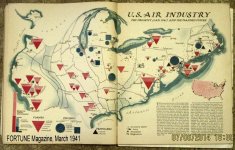
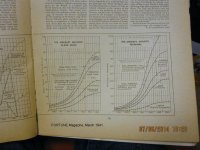
At home*, I have a copy of Fortune Magazine from March 1941, which has graphs showing the existing and planned expansions in the arms industries up through 1945.


*
(at the Mall right now, beating myself up with an Android tablet)
Love to see that. :)

The Committee to Defend America by Aiding the Allies (CDAAA) and the Century Group were influential in helping Americans understand what was at stake here. That allowed FDR to get more rearmament programs through Congress.
 
Well, the fine folks at the Institute for Historical Review did a piece a few years back on the book "Hollywood Goes to War", and cites a lot of anti-Nazi "propaganda" from the late 30s, prior to Pearl Harbor (as proof of how those American meanies and Hollywood Jews and Rossevelt were plotting against that nice paper-hanger, fella!).

There were a number of films that were quite popular in the pre-PH years that were distinctly calls to arms. Casablanca was released in '42, but was shot before Pearl, also. Rick, the epitome of the American loner and anti-hero, is clearly getting ready for join the fray. The Great Dictator was also hugely popular.

Today, you'd generally cite film trends as just film trends. But back in the 30s? Movies drove the public taste and opinion.

Actually Casablanca was produced in 1942. The rights to the play ("Everybody comes to Rick's") were bought in January of that year. The movie itself takes place in the first week of December 1941. As Lazlo is about to board the plane, he tells Rick (and the US audience) "Welcome to the fight, this time I know we will win." The movie is very much a post Pearl Harbor creation.
 
Actually Casablanca was produced in 1942. The rights to the play ("Everybody comes to Rick's") were bought in January of that year. The movie itself takes place in the first week of December 1941. As Lazlo is about to board the plane, he tells Rick (and the US audience) "Welcome to the fight, this time I know we will win." The movie is very much a post Pearl Harbor creation.

Foreign Correspondent fits the bill. Released in 1940.

Director: Alfred Hitchcock
Writers: Charles Bennett (screenplay), Joan Harrison (screenplay), 3 more credits »
Stars: Joel McCrea, Laraine Day, Herbert Marshall

Nominated for six Oscars.

In the meantime, England and France have declared war on Germany. Then, while the group are on a Short Empire plane to America, Fisher confesses his deeds to his daughter. Despite this, Carol blames Haverstock for not really loving her and only wanting to pursue her father. He protests that he was just doing his job as a reporter. Seconds later, the plane is shelled by a German destroyer and crashes into the ocean. The survivors perch on the floating wing of the downed plane. Realizing that it cannot support everyone, including his daughter, Fisher sacrifices himself by allowing himself to drown. Jones and ffolliott attempt to save him, but are unsuccessful. Shortly after, they are picked up by an American ship, the Mohican, from which, over the phone and over the objections of the captain who is concerned to maintain American neutrality, they relate their whole story. Later, back in London, Haverstock and Carol do a radio broadcast to the US, while London is being bombed, warning them about what Germany is doing.
 
Foreign Correspondent fits the bill. Released in 1940.

Director: Alfred Hitchcock
Writers: Charles Bennett (screenplay), Joan Harrison (screenplay), 3 more credits »
Stars: Joel McCrea, Laraine Day, Herbert Marshall

Nominated for six Oscars.

It's a better fit than Casablanca. Were there many other movies like it? I ask because I'm having trouble with the "Hollywood was trying to bait us into a war" idea. It just seems to me that the fall of Paris and the bombing of London would have convinced most Americans that this Hitler dude wasn't planning on stopping any time soon.
 
Love to see that. :)

The Committee to Defend America by Aiding the Allies (CDAAA) and the Century Group were influential in helping Americans understand what was at stake here. That allowed FDR to get more rearmament programs through Congress.
.
Here 'tis... the image is 22" x 14"... FORTUNE was a BIG magazine way back when!
 

Attachments

  • Fortune-031941 (1).jpg
    Fortune-031941 (1).jpg
    131.5 KB · Views: 10
It's a better fit than Casablanca. Were there many other movies like it? I ask because I'm having trouble with the "Hollywood was trying to bait us into a war" idea. It just seems to me that the fall of Paris and the bombing of London would have convinced most Americans that this Hitler dude wasn't planning on stopping any time soon.
Yes but in the end it was Hitler who first declared war on the USA, not vice versa.
On December 11, 1941, the United States Congress declared war upon Germany, in response to that nation's declaration of war following the Japanese attack on Pearl Harbor, and only hours after Germany declared war on the United States.
http://en.m.wikipedia.org/wiki/United_States_declaration_of_war_upon_Germany_(1941)
If he had not (insanely) done so, would the USA, already a victim of Japanese attack, have initiated hostilities also with Germany?
 
Last edited:
It's a better fit than Casablanca. Were there many other movies like it? I ask because I'm having trouble with the "Hollywood was trying to bait us into a war" idea. It just seems to me that the fall of Paris and the bombing of London would have convinced most Americans that this Hitler dude wasn't planning on stopping any time soon.

Senator Gerald P. Nye chaired a Congressional Committee to investigate if Hollywood was in cahoots with England to get us into the European War or if Hollywood was acting as an unregistered agent for England for purposes of propaganda. The Committee met for six weeks or so in Sept/Oct. 1941. They adjourned with plans to meet again in the next January. That was subsequently canceled for some reason.

And yes, there were several. A Yank in the R.A.F. was probably typical.
 
Can't argue with fighting a war on someone else's turf.
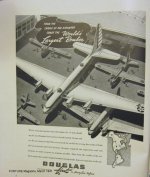
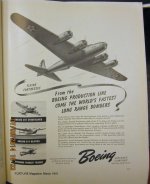
Some of the ads...
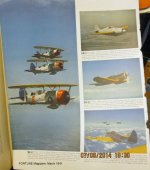
Note the Corsair was already in flight test!
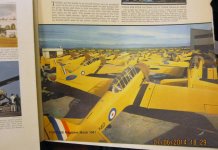
And the herd of AT-6s!
 

Attachments

  • Fortune-031941 (4).jpg
    Fortune-031941 (4).jpg
    68.1 KB · Views: 2
  • Fortune-031941 (5).jpg
    Fortune-031941 (5).jpg
    58.4 KB · Views: 1
  • Fortune-031941 (12).jpg
    Fortune-031941 (12).jpg
    125.1 KB · Views: 1
  • Fortune-031941 (10).jpg
    Fortune-031941 (10).jpg
    91.7 KB · Views: 1
  • Fortune-031941 (9).jpg
    Fortune-031941 (9).jpg
    57.1 KB · Views: 3
Last edited:
Note the Corsair was already in flight test!


The XF4U-1 had its first flight on May 29, 1940. It became the first U.S. fighter aircraft to exceed 400 MPH in level flight on October 1 of that same year.


As I understand it there were no US combat aircraft not on the drawing boards at least by Dec. 7th, 1941, that saw combat.


I'm having trouble parsing this statement as written. Might you restate it?
 
Sure. Every US airplane that saw combat in WWII was, as I recall, already on the drawing boards, if not in production, before we got into the war.


Yes, I think that is the case, bearing in mind how one defines "on the drawing boards." In some cases it means little more than the contract having being signed to begin development of the aircraft. For example, the contract for the XF7F-1 Tigercat prototype was signed in June 1941, though the first flight was not until November of 1943 and only small numbers actually saw combat before the war's end.

The F8F Bearcat and P-80 Shooting Star would have been exceptions but they missed seeing combat by a month or two.
 
The XF4U-1 had its first flight on May 29, 1940. It became the first U.S. fighter aircraft to exceed 400 MPH in level flight on October 1 of that same year.


I'm having trouble parsing this statement as written. Might you restate it?

He's trying to rewrite history and so far making a very poor fist of it
 
Have you read the thread (and have something to add) or do you want me to start from January, 1933?
I read enough to where I frankly got tired of reading numerous replies by you, none of which backed your original claim. You were either extremely roundabout about doing so or knew you couldn't back it and never tried, instead just relishing the attention. Whatever.
 
I read enough to where I frankly got tired of reading numerous replies by you, none of which backed your original claim. You were either extremely roundabout about doing so or knew you couldn't back it and never tried, instead just relishing the attention. Whatever.

Try reading the Gallup Polls. And Lynne Olson's Those Angry Days. Or anything by Wayne Cole. Or don't. You've already made up your mind.
 
Yes but in the end it was Hitler who first declared war on the USA, not vice versa. http://en.m.wikipedia.org/wiki/United_States_declaration_of_war_upon_Germany_(1941)
If he had not (insanely) done so, would the USA, already a victim of Japanese attack, have initiated hostilities also with Germany?

While it might not have been a declared war until then, I was under the impression that the US and German navies weren't exactly on speaking terms prior to that declaration. As long as we were supplying his enemies with war material, Hitler couldn't afford to ignore us.
 
U-552 sank the USS Reuben James (DD245) in October 1941.
ETA:
Jeez... takes 5 god-damn minutes to upload a single god-damn sentence!
What the **** is wrong with this forum?????!!!
 
Last edited:

ISF - Join now!

Every member here is approved by hand. No bots, no spam, just people who care about evidence and honest debate.

Membership is free!

Create your free account

Back
Top Bottom