science fraud is common place

It is no longer a question are scientists fallible?
So why do you have a question mark there?

65% of papers studied were found to be fraudulent.
100% of your statements about statistics have been found to be hogwash.

Scientists are more than fallible they are willing to commit fraud to enhance their careers.
There's that "all" and "some" issue I mentioned earlier.

Also, what does fallibility have to do with willingness to commit fraud? I mean, you've proven more than fallible but--wait, never mind. I think I get it now.

Science fraud is so common we should apply the existing laws to charge them with fraud and criminal activity with no exceptions. The scientific method is not an excuse for their failing....it is the cause for their failings.
So what's causing yours?
 
Last edited:
justintime,

I see you failed to answer the questions I posted regarding percentages.

That's sad.

If you had read them, and given answers to them, then it might be possible to teach you just why everyone is laughing at you when you posit things like "6500% of science is fraudulent".

Alas, you seem to be morally opposed to learning.

So I leave you to the ignorance you've chosen.
 
justintime said:
It is no longer a question are scientists fallible?
It never was. No one has ever said scientists are infallible. In fact, the entire enterprise of science has been constructed on the precise OPPOSITE--the assumption that we're going to screw up, and rather annoying and obnoxious but critical methods for addressing such screw ups.

65% of papers studied were found to be fraudulent.
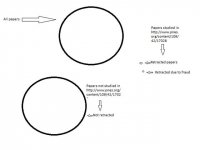
Right--in a study which specifically excluded the overwhelming majority of papers, and included only those papers found to be worthy of removal from scientific discourse. This study has NO bearing on non-retracted papers.

Scientists are more than fallible they are willing to commit fraud to enhance their careers.
Funny how less than 1% of 1% of them actually do it, then.

Are scientists any different from the common criminal?
Considering the fact that 99.99% of publications included no fraud, I'd say yes.

What they have in common with them is the willingness to commit fraud.
Except that 99.99% of all publications are valid.

That's about as far as I can stand to go. I can't stand such irrationality and flagrant falsehood long enough to read the rest of the post.
 
Do scientist admit guilt when caught? It appears only 2% of scientist admit to fraud. 14% of scientists are reported by their peers/colleagues suspected of fraud. But by not admitting to it go undetected.

Now you are just outright lying. As I made perfectly clear in multiple posts (at least one of which you read), the 14% number is the number of scientists that admitted to knowing at least one colleague that they believe did fraud. This is entirely different than 14% of scientists are reported by their peers for fraud. You are lying and you know it...ironic given the topic of discussion.
 
It really comes down to a giant fallacy of composition - "65% of the retracted papers are fraudulent, so 65% of ALL science is fraudulent". Nothing in the previous statement is true, by the way - 65% of the studied papers were retracted to misconduct, of which fraud is one part.
 
Say aye if you think justintime isn't deliberately lying.

:cricket chirping:


Like I said earlier, he's not even pretending not to be outright trolling anymore.

This is why he got himself banned from other forums.
 
Justintime, you seem to be having trouble comprehending the point that the authors of that PNAS paper only studied retracted papers. Perhaps the problem is that you have difficulty with words? So I've drawn you a picture.

You're welcome.

PS: sorry, there are still some words involved. I couldn't figure out how to dispense with language entirely. If you like my drawing, I also have a picture of a T Rex I could upload.
 

Attachments

  • Teh frauds.jpg
    Teh frauds.jpg
    19.9 KB · Views: 20
Now you are just outright lying. As I made perfectly clear in multiple posts (at least one of which you read), the 14% number is the number of scientists that admitted to knowing at least one colleague that they believe did fraud. This is entirely different than 14% of scientists are reported by their peers for fraud. You are lying and you know it...ironic given the topic of discussion.

Point to the difference. If 14% of scientists admitted they knew a colleague or colleagues involved in fraud. That would equate to 14% of scientists or more involved in fraud based on a one to one ration.

If out of a 100 scientists 14% said they knew someone in the room committing fraud. At the minimum 14 scientists would be picked from the crowd. That is 14% of scientists. But if they picked one or more the percentage would be higher.

If you broaden the scope. You have small and large research institutions so 14% in the larger institutions would be a much higher number than in the smaller institutions with just a 100 scientists.

To average it to 14% of scientists do not admit to committing fraud and go undetected is a practical approach to arrive at a workable number of fraudulent scientists.
 
Point to the difference. If 14% of scientists admitted they knew a colleague or colleagues involved in fraud. That would equate to 14% of scientists or more involved in fraud based on a one to one ration.
If out of a 100 scientists 14% said they knew someone in the room committing fraud. At the minimum 14 scientists would be picked from the crowd. That is 14% of scientists. But if they picked one or more the percentage would be higher.
If you broaden the scope. You have small and large research institutions so 14% in the larger institutions would be a much higher number than in the smaller institutions with just a 100 scientists.

To average it to 14% of scientists do not admit to committing fraud and go undetected is a practical approach to arrive at a workable number of fraudulent scientists.
If out of a room of 100 scientists, 14% said they knew someone in the room committing fraud then as a minimum 1 scientist would be picked from the crowd. Those 14 scientists might all know that Michael X is a fraud. Of course, if scientists are prone to gossip then by the end of the meeting it might be 100% who knew someone in the room committing fraud as the 14% chat to the other 85% (the missing 1% is the fraud, who presumably knows he or she is a fraud but is not counted in the 14%). Yet the number of fraudsters would still be 1.

You cannot tell from the percentage of scientists aware of fraud what percentage of scientists are frauds. I think you know this, but are having too much fun teasing forumites to stop pretending you don't.
 
Point to the difference. If 14% of scientists admitted they knew a colleague or colleagues involved in fraud. That would equate to 14% of scientists or more involved in fraud based on a one to one ration.

Not necessarily. There could be a lot of overlap amongst the "14%" as far as which colleague is involved in fraud.

It is statistically possible that it's just one (very ambitious) scientist that is involved in all of this fraud, and 14% of all scientists know about this guy and/or gal.

ETA: Ninja'd by jdc324. Darn it all.
 
Last edited:
Point to the difference. If 14% of scientists admitted they knew a colleague or colleagues involved in fraud. That would equate to 14% of scientists or more involved in fraud based on a one to one ration.

No. That's your problem. You don't know that it's 1-to-1.

If out of a 100 scientists 14% said they knew someone in the room committing fraud. At the minimum 14 scientists would be picked from the crowd. That is 14% of scientists.

Again, NO. If they ALL know each other, perhaps only ONE of them has commited fraud, meaning the actual number is 1%. That is the flaw in your reasoning.

That you cannot see this either points to incredible mathematical ignorance, or deliberate avoidance on your part.
 
Point to the difference. If 14% of scientists admitted they knew a colleague or colleagues involved in fraud. That would equate to 14% of scientists or more involved in fraud based on a one to one ration.
By this logic if someone asked 100 JREFers if they had ever responded to posts by a user named Akri, and 14% of them said 'yes', then there would suddenly be 14 of me.
 
By this logic if someone asked 100 JREFers if they had ever responded to posts by a user named Akri, and 14% of them said 'yes', then there would suddenly be 14 of me.

If a survey was done to point out how many JREF members supported fraud in science. Those participating in the OP 'science fraud is commonplace' would be included in the survey and the result would show the majority except Maartenn and Justintime support science fraud, which accurately reflects what the scientific community is saying about scientific fraud in the scientific community. It is real and many accept it and are even willing to defend it.
 
If a survey was done to point out how many JREF members supported fraud in science. Those participating in the OP 'science fraud is commonplace' would be included in the survey and the result would show the majority except Maartenn and Justintime support science fraud, which accurately reflects what the scientific community is saying about scientific fraud in the scientific community. It is real and many accept it and are even willing to defend it.

The quoted post is science fraud. None of the claims are accurate and the conclusion is flawed
 

ISF - Join now!

Every member here is approved by hand. No bots, no spam, just people who care about evidence and honest debate.

Membership is free!

Create your free account

Back
Top Bottom