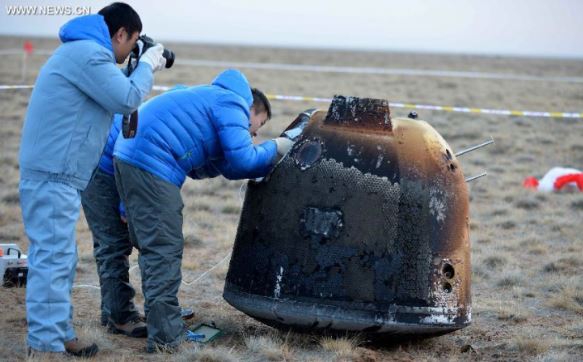
At least in everyday language, the whole process can be called friction, i.e. kinetic energy of an object is transformed into heat by more or less direct contact.
No, that is wrong. Drag and friction have little to do with the heat produced during reentry. Here is a link to some (mostly) good explanations:
https://www.quora.com/Why-does-a-spacecraft-heat-up-during-reentry
Quotes from
Why does a spacecraft heat up during reentry? concerning the use of "friction":
"When a spacecraft reenters, very little heat is generated by friction."
"Many people think that it's due to friction with air passing over the surface of the re-entering vehicle, but that's actually a relatively minor component. Most of the heating comes from the fact that, when you slam into a column of air really hard, really fast, it compresses; and when you compress air, it heats up. And that heat will be transferred, by direct conduction, to the object doing the compressing – i.e., the spacecraft."
"It has nothing to do with friction."
"This speed is reduced entirely through friction (drag) of the atmosphere. The thicker the atmosphere, the more the friction."
"The important thing is the above simulation is run without considering any friction (no viscous effects)."
"The compression friction heats the air."
"If the vehicle is slowed down by an ablating heat shield, it is friction with the air that heats up the shield."
A reasonable answer seems to me the second one:
"The reason why objects without a heat shield or entering the atmosphere uncontrolled incinerate is simply due to the fact air can't get out of their way fast enough. … As an object encounters the atmosphere, air cannot move out of the way due to the hypersonic velocity, and instead it piles up ahead of the object and compresses into a shock wave. The gases there are compressed rapidly enough to heat up to 20,000 degrees or more [Fahrenheit?], and because of that the radiant heat from the shock wave starts to heat up the incoming object. The heat will either melt or vaporize any material exposed to the shock wave, and since aluminum is used heavily in the construction of spacecraft, the spacecraft tears apart and the pieces melt or vaporize."
Yet the first answer (of a "NASA engineer that has worked spacecraft operations design), seems rather illogical to me. Here two quotes:
"Through making the reentry vehicle blunt, air can't 'get out of the way' quickly enough, and acts as an air cushion to push the shock wave and heated shock layer forward. Since most of the hot gases are no longer in direct contact with the vehicle, the heat energy would stay in the shocked gas and simply move around the vehicle to later dissipate into the atmosphere."
"Plasma, known as the fourth state of matter, does not conform to the gas laws of conventional thermodynamics, although it does share one familiar property, – a proportionality between pressure and temperature in a contained system. The formation of the pressure wave, therefore, also creates extreme temperatures. The plasma stream is electrostatically-charged too, and so it concentrates at acute surface contours. The resultant effect is particularly intense local heating at the airframe's leading edges.
If we have proportionality between pressure and temperature, then why isn't temperature highest, where pressure is highest? And pressure obviously is the higher, the closer to the heat shield, isn't it?
And there's another critical error in your thinking. It seems fairly clear to me that, because adiabatic compression takes place at greater distances from the falling object, the process of heat transfer into the falling object must be much less efficient than viscous drag. As a result, a much larger proportion of the energy loss goes into heating the air around the falling object, and a much smaller proportion into heating the object itself, than one would expect from viscous drag. Your unspoken suggestion that all the kinetic energy lost is converted into thermal energy in the falling body, as embodied in your calculation of what you expect its heating to be, is therefore completely specious.
Once again: All Apollo modules re-entered atmosphere with a speed quite close to
escape velocity from Earth: v = 11.186 km/s
≈ 4p11 m/s, corresponding to a kinetic energy of E
kin = v
2 /2 ≈ 62.6 Mega-Joule per kg
≈ 7p6 J/kg. If we assume an average
heat capacity of 1 kJ/kg/K (and 100% efficient heat transfer) then the heat released during atmospheric deceleration would be enough to heat up the return module of 5.5 tons
= 3p55 kg by around 60 000 Kelvin
= 4p6 K.
Thus, even if as much as 99.9%
= 9n999 of the energy were used to heat up only the atmosphere and the vaporizing heat shield, the remaining 0.1%
= 7n1 = 9n001 would still be enough to heat the whole return module on average by 60 Kelvin
= 1p6 K.
So the reproach that my argument is based on "
assuming the entirety of the heat generated by atmospheric entry must be borne and rejected by the entrant" (#61) is rather unfounded.
Please imagine concretely: Every single kilogram of the return module releases as much heat as 4 kg rocket fuel do, if it is simply burned! And no action-at-a-distance can heat the atmosphere without affecting the landing module at the same time.
Cheers, Wolfgang
Nitpicking often results from lack of genuine objections


 )


 .