Merged DDWFTTW in a “Real” Wind

Status
Not open for further replies.
Desperate. 57N comes from the submission (13lb = 57N)
That won't be anywhere near enough to allow a 295kg cart to be driven by the wheels.

Metrology of Pedestrian Locomotion and Slip Resistance, M Marpet

I thought you'd have wanted to show the submission was wrong. What was the point of your posting an equation for Frr and all the variables required to make the calculation if you then completely ignore that and rely on a figure you don't trust instead?

Do you disagree with my arithmetic using the formula and data you provided? Do you believe the published coefficient of rolling resistance for a tyre does not take into account "internal tyre losses"? If so, then what use is it?

Please also note that, for the bazillionth time, the cart is not "driven by the wheels".

I'm not even going to ask why you're now posting charts analysing an old lady walking. Perhaps you're just posting random technical-looking stuff assuming nobody can read any of it. Perhaps it's a hint that your whole contribution here is some kind of performance art.
 
Last edited:
The extraordinary passes quickly into the norm!

Just got back from Maker Faire
http://makerfaire.com/pub/e/4978

Long weekend. 17,623 people asked me "So - how does it work?". Oddly, none of them told me it doesn't work.

We won the editor's choice award. Pretty cool.

Spork and JB,

Congratulations!

Actually, I believe you'll pass through phases from 1. it can't work, to 2. wow, it works, to 3. what a clever machine, to 4. this is how its done and finally 5. no more notice than a passing general aviation airplane.

It's a little sad that the extraordinary so quickly becomes the norm!

Regards,

WindGrins:D
 
I thought you'd have wanted to show the submission was wrong. What was the point of your posting an equation for Frr and all the variables required to make the calculation if you then completely ignore that and rely on a figure you don't trust instead?

Do you disagree with my arithmetic using the formula and data you provided? Do you believe the published coefficient of rolling resistance for a tyre does not take into account "internal tyre losses"? If so, then what use is it?

Please also note that, for the bazillionth time, the cart is not "driven by the wheels".

I'm not even going to ask why you're now posting charts analysing an old lady walking. Perhaps you're just posting random technical-looking
stuff assuming nobody can read any of it. Perhaps it's a hint that your whole contribution here is some kind of performance art.


The wheel drives the prop, right? So that drives the cart, right?
so how can 14.5N, drive a 295kg cart?
It can't.
The Continental tyre tests, have figure as low as 0.005, but that if for constant velocity for 45kg on a smooth, clean roller. However, the losses internal to the tyre in order to produce traction so the tyre does not slip, are between 35 and 50W, at 18mph.
The cart is 295kg on dirt, and accelerating at 28mph.
The tyre pressure use in the test is around 7 bar so 90psi, close to the limit of the tyre.
The walking data, just shows how ludicrous the cart's claims are.

There is a frictional power loss of Frr*V, and the internal losses.
They are inescapable.
 
Spork and JB,

Congratulations!

Actually, I believe you'll pass through phases from 1. it can't work, to 2. wow, it works, to 3. what a clever machine, to 4. this is how its done and finally 5. no more notice than a passing general aviation airplane.

It's a little sad that the extraordinary so quickly becomes the norm!

Regards,

WindGrins:D

" 17,623 people asked me "So - how does it work?". Oddly, none of them told me it doesn't work."
That contrasts with the bare-knuckle fist fights which broke out at all the other stalls.
 
Swoosh! The sound of the obvious passing overhead!

The wheel drives the prop, right? So that drives the cart, right?
so how can 14.5N, drive a 295kg cart?
It can't.

F=MA

The Net force is 14.5 to 15.5 depending on which of the calculations is chosen yielding an acceleration of 0.053 to .045 m/s**2 in post #7244.

"Net ~ 220N - 169 - (from 14.5 to 15.5) -21 = from 14.5 to 15.5N".

Not only will it move it. It will accelerate it.


WG
 
Last edited:
It specifically violated the conservation of energy, and some rather basic logic.


There is no energy from the ground, and the ground is not necessary to extraction of energy from the wind, and is a source of friction. Iceboat designers do their best to minimize the influence of the ground on their crafts.

1) The cart is moving faster than the wind, so will not slow it, but accelerate it.

2) The stream tubes for extraction of energy from the wind, and transmission to the wind as thrust, are polar opposites.

3) The wind could do only one of two things.
Turn the rotor opposing the usual CW direction, so slow the cart by opposing the torque from the wheel. ( the shaft strain will increase)

Turn the rotor to in the CW direction, so reducing the torque form the wheel. ( the shaft strain will decrease)

The ratchet prevents the second case, no matter what. The trial was conducted with that ratchet in place, so that case cannot be the invoked, should it have a hope in any case.


General laws cannot be used to support a specific case. All putative PM machines will definitely obey the conservation laws, yet not work as claimed.


That is always the case.

Spork and JB,

Congratulations!

Actually, I believe you'll pass through phases from 1. it can't work, to 2. wow, it works, to 3. what a clever machine, to 4. this is how its done and finally 5. no more notice than a passing general aviation airplane.

It's a little sad that the extraordinary so quickly becomes the norm!

Regards,

WindGrins:D

Ditto!

Of course like the airplane in its early life there will always be a few cranks who claim "them dang air-o-planes can't work, it is a trick I tell you!". We have a couple of the crankiest right here.
 
The wheel drives the prop, right? So that drives the cart, right?
so how can 14.5N, drive a 295kg cart?
It can't.
The Continental tyre tests, have figure as low as 0.005, but that if for constant velocity for 45kg on a smooth, clean roller. However, the losses internal to the tyre in order to produce traction so the tyre does not slip, are between 35 and 50W, at 18mph.
The cart is 295kg on dirt, and accelerating at 28mph.
The tyre pressure use in the test is around 7 bar so 90psi, close to the limit of the tyre.
The walking data, just shows how ludicrous the cart's claims are.

There is a frictional power loss of Frr*V, and the internal losses.
They are inescapable.

And yet it moves.
 
The wheel drives the prop, right? So that drives the cart, right?
so how can 14.5N, drive a 295kg cart?
It can't.
The Continental tyre tests, have figure as low as 0.005, but that if for constant velocity for 45kg on a smooth, clean roller. However, the losses internal to the tyre in order to produce traction so the tyre does not slip, are between 35 and 50W, at 18mph.
The cart is 295kg on dirt, and accelerating at 28mph.
The tyre pressure use in the test is around 7 bar so 90psi, close to the limit of the tyre.
The walking data, just shows how ludicrous the cart's claims are.

There is a frictional power loss of Frr*V, and the internal losses.
They are inescapable.

So, where does this acceleration at 28 mph come from?
You have yet to tell us!
 
I'll post and I'll post till I blow your house down!

The walking data, just shows how ludicrous the cart's claims are.

The walking data shows just how desperate you are to distance yourself from your own calculation and the obvious result that the cart works.

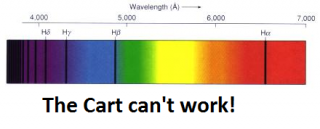
Why not post the hydrogen absorption spectrum from the sun next and tell us how it shows the cart can't work!

On 2nd thought, don't bother, I'll just do it for you!


WindGrins:D
 
The wheel drives the prop, right?
Right
So that drives the cart, right?
Right-ish. It turns the prop, so that the wind can interact with the prop blades usefully. It's the wind which drives the cart.
so how can 14.5N, drive a 295kg cart?
It can't.
It doesn't. That value is only the component of the retarding force which is due to the rolling resistance of the tyres. The force due to spinning the propeller is a different component.
 
Last edited:
It doesn't work.

You all see the problems with the math. You all see the changing winds that none of you expected to be there. If I had said to you prior to getting the data, that the cart was driven by winds that changed by 50 degrees, let alone 100, you would have said that was a lie, and that NALSA would have noticed is that were the case.

You are hoping that NALSA will approve what you know to be false.
 
Last edited:
That's patently false. For example with the cart going dw at windspeed, the cart's body will not affect the wind, but the prop will create a breeze blowing back - which means the passage of cart has slowed the wind. That energy must go somewhere, and it can only go into resistive losses and accelerating the cart. Therefore if friction is not too high, the cart will accelerate from windspeed.

It really just that simple.

It only seems that simple if you are willing to accept a static analysis of Power, and also willing to accept that the propeller on the cart behaves in a manner that is inverted from every other propeller on the planet.

Power, by its very nature, is always dynamic, as it is Work / Time, or as we define it in terms of the cart, Power = Force / Velocity. There is no such thing as static power, yet that is exactly how it is being applied in the calculations of Thrust versus Drag, in order to “prove” the cart works. All of the calculations are static, using only the initial value of Power, for example when a tow line is released, to calculate a thrust force, and say it is greater than drag force. That is not a valid method of analysis, as the power is varying with respect to time; it is a dynamic quantity, not static. The solution for the cart motion can only be done in terms of a dynamic differential equation, and cannot be based on a static initial condition.

The second point, concerning the propeller behaving in an inverted manner, is this: An airplane just before takeoff revs the engine with the brakes on, and produces maximum thrust while doing no work to move the aircraft forward. (In truth, this is not absolutely necessary, as thrust can be applied incrementally is the pilot is experienced enough, but normally it is throttle pushed to the wall for takeoff). The point here is, as the aircraft moves forward and velocity increases, the thrust drops off, and at the maximum cruising speed the thrust is at a minimum value. But the explanation for how the cart works has the thrust at a high value while the cart is moving at wind speed, ( but not greatly higher than drag) and the claim is that the thrust increases from that point onwards, accelerating the cart! How can the thrust increase as the velocity also increases? Yet it would need to increase, as the drag forces are increasing! This is contrary to the manner in which propellers operate.

To recap: The static analysis of forces is invalid because it is based on a static value for Power, and there is no such thing. The solution must involve a differential equation, and I have yet to see anyone offer one. Secondly, the “explanation” of how the cart works, is in direct contradiction of how all propellers work on all other vehicles. What makes the cart different? Magic, or something else?

 
It doesn't work.

You all see the problems with the math. You all see the changing winds that none of you expected to be there. If I had said to you prior to getting the data, that the cart was driven by winds that changed by 50 degrees, let alone 100, you would have said that was a lie, and that NALSA would have noticed is that were the case.

You are hoping that NALSA will approve what you know to be false.

We see the problems with your math.
 
Right

Right-ish.

It turns the prop, so that the wind can interact with the prop blades usefully. It's the wind which drives the cart.
Using vague folksy language like "A drives B" instead of well defined physical quantities is the best method to confuse things, that he uses deliberately to troll you. Instead of going along with it and saying "Right-ish", just ask him what he means by "drives".

a) "drive linearly" : exert a force in the direction of velocity (this requires to also define the frame)
b) "drive angularly" : exert a torque in the direction of angular velocity

In the ground frame the prop is driven angularly by the wheels and linearly by the air.

Total crock. I have broken down all the linear forces to torque, and then back again. You are all trying to deny power losses that you have simply ignored, even though they were pointed out to you many times.
The Continental data it there as empirical evidence, and can be backed by theory. The cart fails at the most basic level. (The walking data says you also have a problem with the TM and runner motion, and not just with the absurd cart.)

You can consult the data on any prop, be it for a model aircraft or not, and you will see that the static thrust does fall as soon as the plane moves.
 
Last edited:
It only seems that simple if you are willing to accept a static analysis of Power, and also willing to accept that the propeller on the cart behaves in a manner that is inverted from every other propeller on the planet.

Power, by its very nature, is always dynamic, as it is Work / Time, or as we define it in terms of the cart, Power = Force / Velocity. There is no such thing as static power, yet that is exactly how it is being applied in the calculations of Thrust versus Drag, in order to “prove” the cart works. All of the calculations are static, using only the initial value of Power, for example when a tow line is released, to calculate a thrust force, and say it is greater than drag force. That is not a valid method of analysis, as the power is varying with respect to time; it is a dynamic quantity, not static. The solution for the cart motion can only be done in terms of a dynamic differential equation, and cannot be based on a static initial condition.

The second point, concerning the propeller behaving in an inverted manner, is this: An airplane just before takeoff revs the engine with the brakes on, and produces maximum thrust while doing no work to move the aircraft forward. (In truth, this is not absolutely necessary, as thrust can be applied incrementally is the pilot is experienced enough, but normally it is throttle pushed to the wall for takeoff). The point here is, as the aircraft moves forward and velocity increases, the thrust drops off, and at the maximum cruising speed the thrust is at a minimum value. But the explanation for how the cart works has the thrust at a high value while the cart is moving at wind speed, ( but not greatly higher than drag) and the claim is that the thrust increases from that point onwards, accelerating the cart! How can the thrust increase as the velocity also increases? Yet it would need to increase, as the drag forces are increasing! This is contrary to the manner in which propellers operate.

To recap: The static analysis of forces is invalid because it is based on a static value for Power, and there is no such thing. The solution must involve a differential equation, and I have yet to see anyone offer one. Secondly, the “explanation” of how the cart works, is in direct contradiction of how all propellers work on all other vehicles. What makes the cart different? Magic, or something else?

Magic? nah- just a tailwind component.
If you had been paying attention, or if you tried any of the prop calculations for yourself, you would soon find that the prop's thrust drops off as velocity increases. No-one but you has claimed otherwise. As the velocity increases, the prop's pitch needs to be increased, until steady state is eventually reached, exactly like sheeting in the sail of the land yacht.

A static aircraft with no power? Full power during the engine run-up blows a heck of a lot of wind around, even with the aircraft's brakes on. Work is certainly being done shifting that air, even if no work is being done to the aircraft.
What work is being done to a hovering helicopter? discuss.
 
Last edited:
Total crock. I have broken down all the linear forces to torque, and then back again. You are all trying to deny power losses that you have simply ignored, even though they were pointed out to you many times.
The Continental data it there as empirical evidence, and can be backed by theory. The cart fails at the most basic level. (The walking data says you also have a problem with the TM and runner motion, and not just with the absurd cart.)

You can consult the data on any prop, be it for a model aircraft or not, and you will see that the static thrust does fall as soon as the plane moves.

The Continental data is indeed there in your post, along with the theory for calculating the rolling resistance. So why are you continually ignoring it, and still using the nebulous 57 N in your calculations?
And exactly what power losses are we ignoring?

Answers to both points would be appreciated.

PS: I don't think that it is us that have a problem with the treadmill!
 
Last edited:
Magic? nah- just a tailwind component.
If you had been paying attention, or if you tried any of the prop calculations for yourself, you would soon find that the prop's thrust drops off as velocity increases. No-one but you has claimed otherwise. As the velocity increases, the prop's pitch needs to be increased, until steady state is eventually reached, exactly like sheeting in the sail of the land yacht.
The first runs had fixed pitch, so that means they were false then?
The model has fixed pitch.

A static aircraft with no power? Full power during the engine run-up blows a heck of a lot of wind around, even with the aircraft's brakes on. Work is certainly being done shifting that air, even if no work is being done to the aircraft.
What work is being done to a hovering helicopter? discuss.
[/quote]
A fan does work on the air, but not on the fan. That's why is stays where it is.

There is no wind in any of the calculations, just the wheel power that Spork used to show NALSA that it works in theory. It fails abysmally even with an idealised prop, and transmission. What you can't see, is that the best such a machine could do, is to maintain velocity, but not accelerate.
Any loss at all, means it slows.
Type 3 PM machines do not break the C of E, but are not possible to construct.
 
How can the thrust increase as the velocity also increases? Yet it would need to increase, as the drag forces are increasing!

Wrong.

The thrust would have to increase to maintain the same rate of acceleration of the cart. But, as long as the thrust exceeds the losses due to drag and friction, the cart will accelerate.

When the cart reaches the speed of the wind, the drag on the cart is zero. So, the thrust only has to exceed the rolling resistance of the cart to accelerate the cart past wind speed. The propeller is spinning and producing thrust. Therefore, it should be obvious to anyone that the cart can exceed the wind speed (if only by a little bit and for a short period of time). Even those who refuse to understand why it can continue to accelerate past wind speed should be able to see that it will, at least, be able to go faster than wind speed even if only momentarily.

-- Roger
 
Last edited:
Status
Not open for further replies.

ISF - Join now!

Every member here is approved by hand. No bots, no spam, just people who care about evidence and honest debate.

Membership is free!

Create your free account

Back
Top Bottom