Still arguing about efficiency, of something that according to you is a PMM and thus should not accelerate even with 99% efficiency, If it requires less then 100% efficiency to work then it is not a PMM.It must have been that 90 % efficient, perfectly aligned and tensioned 5 meter long twisted chain that dunnit.

You are using an out of date browser. It may not display this or other websites correctly.
You should upgrade or use an alternative browser.
Merged DDWFTTW in a “Real” Wind
- Thread starter ynot
- Start date
- Status
- Not open for further replies.
H'ethetheth
fishy rocket scientist

Ah, I see there are still people who are totally not Harold Bricer arguing about hypothetical numbers with 3 or more significant decimals.
Grrreat.
profpangloss
Critical Thinker
- Joined
- May 1, 2011
- Messages
- 391
Ah, I see there are still people who are totally not Harold Bricer arguing about hypothetical numbers with 3 or more significant decimals.
Grrreat.
You have something against three place acuracy? Is that why you call yourself a fishy rocket scientist? (Your own designation, not mine before the moderators get trigger happy)
You should get a real kick out of this from lyricist:
http://www.internationalskeptics.com/forums/showpost.php?p=7197840&postcount=6680
Last edited:
It must have been that 90 % efficient, perfectly aligned and tensioned 5 meter long twisted chain that dunnit.
Yes, Shimano's mechanical engineers are in defiant opposition with their sales team.
H'ethetheth
fishy rocket scientist
You have something against three place acuracy?
Yes. It gives numbers an air of accuracy that isn't really there. Sure, you should take all the decimals in account in your intermediary steps, but it's kind of ridiculous to talk about some hypothetical example with errors of 10 - 20% and discuss its power consumption with four significant places, yev.
Last edited:
profpangloss
Critical Thinker
- Joined
- May 1, 2011
- Messages
- 391
Still arguing about efficiency, of something that according to you is a PMM and thus should not accelerate even with 99% efficiency, If it requires less then 100% efficiency to work then it is not a PMM.
You got any more strawman arguments you would like to make? I never claimed the cart was a pmm, as no pmms exist. I said that IF it were able to do as claimed, it would be a pmm, but my argument is it cannot do what is claimed. Are we clear on this?
profpangloss
Critical Thinker
- Joined
- May 1, 2011
- Messages
- 391
Yes. It gives numbers an air of accuracy that isn't really there. Sure, you should take all the decimals in account in your intermediary steps, but it's kind of ridiculous to talk about some hypothetical example with errors of 10 - 20% and discuss its power consumption with four significant places, yev.
The three place numbers were the radii of the wheels and the sprockets. I think you will find these are real physical objects and not hypotheticals. Jose.
Had a look at lyricist's post yet? Jose?
Last edited:
H'ethetheth
fishy rocket scientist
Yes, those numbers are ridiculous too. Though the tabular data is, it seems, raw data, in which case, that would be excused.You should get a real kick out of this from lyricist:
http://www.internationalskeptics.com/forums/showpost.php?p=7197840&postcount=6680
Yes. It gives numbers an air of accuracy that isn't really there. Sure, you should take all the decimals in account in your intermediary steps, but it's kind of ridiculous to talk about some hypothetical example with errors of 10 - 20% and discuss its power consumption with four significant places, yev.
In the same way, Heth, that is it futile to try and generate internal forces of 6500N, in an attempt to justify a net force of 32N, calculated from velocity data gathered from a commercially available hand-held GPS unit, using proprietary FFT algorithms partially derived from empirical data and look-up tables.
H'ethetheth
fishy rocket scientist
Doesn't matter. I'm not talking about any post in particular. This thread, your posts, they're all strewn with numbers like 477 W, and 7.433 m/s.The three place numbers were the radii of the wheels and the sprockets. I think you will find these are real physical objects and not hypotheticals. Jose.
Nothing about the performance of the cart can be calculated with 1% accuracy. Not even if the wheels are known to be 27±0.1 in.
Yes, those numbers are ridiculous too. Though the tabular data is, it seems, raw data, in which case, that would be excused.
Quite right. Each entry of the raw data is unlikely to be accurate enough to support an error margin of 5%, and will be asymmetrical. Guess who made the calculations? It was not NALSA.
Last edited:
profpangloss
Critical Thinker
- Joined
- May 1, 2011
- Messages
- 391
Doesn't matter. I'm not talking about any post in particular. This thread, your posts, they're all strewn with numbers like 477 W, and 7.433 m/s.
Nothing about the performance of the cart can be calculated with 1% accuracy. Not even if the wheels are known to be 27±0.1 in.
Is it just my posts that violate your rules? Maybe you should have dropped in sooner to set us all straight, your highness!
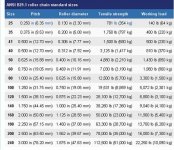
And the breaking and work loads?The three place numbers were the radii of the wheels and the sprockets. I think you will find these are real physical objects and not hypotheticals. Jose.
Had a look at lyricist's post yet? Jose?
Attachments
H'ethetheth
fishy rocket scientist
Okay, but a net force of 3·101 N is very measurable on a 2·102 kg object. And that would be precisely something to do by measuring the changes in velocity.In the same way, Heth, that is it futile to try and generate internal forces of 6500N, in an attempt to justify a net force of 32N, calculated from velocity data gathered from a commercially available hand-held GPS unit, using proprietary FFT algorithms partially derived from empirical data and look-up tables.
Especially since you know it won't accelerate too much, so you can filter out the errors in the velocity data very well.
Also, I'm afraid to ask, but what internal forces are 6.5 kN?
A propeller spinning with zero POWER produces zero thrust. Thrust = Power / Velocity. When the cart (in your imagination only) reaches windspeed ddw, there is no wind energy, no source of Power. No Power = No Thrust.
Let's rewrite the equation as Power = (Thrust)(Velocity), which is equivalent to your equation for nonzero velocity, but has the advantage of making sense, and being true, also when the velocity is zero.
Then, it becomes clearer that zero power does not imply zero thrust. A condition of zero power might be due to zero velocity instead.
Is it just my posts that violate your rules? Maybe you should have dropped in sooner to set us all straight, your highness!
Not to mention that the rim size, and the wheel's outside diameter are related by the tyre profile and pressure. The effective diameter depends upon the surface and tyre deformation under load.
32 Crank-Newtons
Last edited:
profpangloss
Critical Thinker
- Joined
- May 1, 2011
- Messages
- 391
And the breaking and work loads?
Yes, and after squuezing every drop of blood out of their calculations using overflated efficiency factors, their proof of concept is now down to a margin of 10 N or less! But my three place accuracy of wheel and sprocket radii is open to criticism! I see.
profpangloss
Critical Thinker
- Joined
- May 1, 2011
- Messages
- 391
Let's rewrite the equation as Power = (Thrust)(Velocity), which is equivalent to your equation for nonzero velocity, but has the advantage of making sense, and being true, also when the velocity is zero.
Then, it becomes clearer that zero power does not imply zero thrust. A condition of zero power might be due to zero velocity instead.
This HAS to be a joke, right?
Jack by the hedge
Safely Ignored

So you think two sprockets joined by a 1m chain will be more efficient than the same sprockets moved further apart and joined by a 5m chain? How much more efficient, and where does the extra energy go?You don't suppose that a longer chain has more links, now do you? How difficult is that?
Large sprockets have a larger radius so the links entering and leaving the turn flex though a smaller angle. Less flexing means lower losses. The links travelling around the radius are not flexing. Nor are the links travelling between the sprocket wheels. So you're wrong.Large sprockets have more teeth, and more friction with the chain. Difficult concept?
If you won't take my word for it, go back and read the Johns Hopkins study which states flat out "the larger the sprocket, the higher the efficiency".
That depends on whether the load on the chain is more than it is designed to work with. (Have you dreamed up any figures for that?) In fact if we refer back to your own link, the Strathclyde study shows that a lower load is less efficient, which makes perfect sense if the frictional losses are relatively constant while the energy transferred varies. Once again you are wrong....The higher power will cause the chain to stretch, adding to the inefficiency.
And to prove that statement you have to show that it cannot work as claimed, with any efficiency less then 100%. If you have to argue if it is 90% or 70% then you are very far away from that goal.I said that IF it were able to do as claimed, it would be a pmm,
- Status
- Not open for further replies.