• Quick note - the problem with Youtube videos not embedding on the forum appears to have been fixed, thanks to ZiprHead. If you do still see problems let me know.

Split Thread David Gilroy: murder conviction goes to Scottish Review Commission

Have we any idea at all why there wasn't any odometer data to give a clue as to how far he'd driven?

He could have paid for the fuel himself which was then refunded through expenses or used a fuel card before his trips to Argyll. If the cost of fuel for DG's trip to Lochgilphead was made using a fuel card which was paid by IML then it is likely that he was asked for a mileage reading at the Esso on Queensferry Road. It is possible that DG gave a false mileage reading but I wonder if the police looked in to this.

Nobody knows exactly how many litres of diesel were in the fuel tank before he put diesel in it at the Esso on Queensferry Road. (although DG would know the approximate amount of diesel in the fuel tank based on the fuel gauge position) The police know how many litres were put in the fuel tank but we don't and the police will have the Vectra's mpg data but we don't.
 
Last edited:
You can get past the Scotsman paywall using Reader View on Firefox.

The police theory of what Megrahi is believed to have done to get the bomb on to the plane that blew up over Lockerbie is pretty mental. I could always understand why they believed it though, to some extent. They spent months investigating a different theory (which was probably pretty close to the truth) but they couldn't nail it down and it all seemed to be going nowhere. Then the US authorities presented them with a ready-made suspect in the form of Megrahi, and it seemed like a lifeline. There really were three or four pieces of evidence pointing to Malta, to the point where I genuinely suspect some complicated shenanigans. You have to dig deeper to realise that it doesn't really fly, and see the real evidence pointing to Heathrow. And given the political pressures, it's not really a huge shock to realise that the police don't want to know about any of that.

But this? There's no politics involved. The police genuinely want to know what actually happened and to find Suzanne's body. There's no reason for them to cling to the R&BT theory and reject the Glen Orchy one. At the beginning they did have Glen Orchy in the frame, just as the D&G police were pursuing the PFLP-GC in 1989. But then, just like the D&G, they pivoted away, and now they can't be persuaded to pivot back.

And yet their scenario of what Gilroy is supposed to have done is, as you say, ludicrous. Far more so than their imagined Lockerbie scenario. When you add the theory of what Luke Mitchell is supposed to have done, it all starts to look like a bit of a pattern. But again, there is a plausible reason for them to cling to the ludicrous theory in respect of Luke Mitchell (face-saving). I can't see any reason for their behaviour in the case of Gilroy. They were pretty much on the ball there from the outset. They got the right guy. They got a solid conviction. We're only talking about finding the victim's body, and if it was found in Glen Orchy it would prove they were right all along. But they won't countenance it.

Can it really be that they view the contradiction of their increasing fixation on the R&BP to be so embarrassing that they can't cope with the idea of going back to the Glen Orchy theory? Surely not.
 
Some more thoughts.

Turning his phone off at Nyadd at 1205, on at Inveraray at 1323 and off again at Inveraray at 18.58 indicates that DG was attempting to place both the northern and southern routes to and from Lochgilphead in the frame. All three of these phone off/on shenanigans were very important to him as they place both routes in the frame. He now has to go for four out of four.

On the way back to Edinburgh he has to make a choice where and when he will turn his phone on and still place both routes in the frame taking into account the police were expecting him to call at Corstorphine police station at about 21.30 on his return from Lochgilphead.

Option 1 is to drive to Nyadd and turn his phone on at 22.17 (it takes 1 hour and 9 minutes to drive from Tyndrum to Nyadd) He rules this out as the police may phone him at 21.30 and he does not want the police to phone him asking why he was not at the police station already and his phone goes directly to voicemail..

Option 2 is to get to Tarbet by 21.30 and turn his phone on.

I think he planned to get to Tarbet by 21.30, turn his phone on and when the police phone and ask where he is he can say he is on the A83 heading south past Loch Lomond. (placing both routes in the frame) However, he underestimated the time it takes to drive from Crianlarich to Tarbet. When he passed Ardlui/Inveruglas at 21.34 he feels he has to turn his phone on because he does not want the police to phone him asking why he was not at the police station already and his phone goes directly to voicemail.

The importance of placing both routes in the frame is emphasised further when the police do phone him at 22.15 asking why he was not at the police station already. DG replies that he is at Stirling (and would be at Corstorphine in about 45 minutes) which again leaves both routes in the frame. The reality is he was still on the A811 approaching Drymen.

If this is correct then it is ridiculous to ascertain he was in the Ben Donich area until 20.10 (as the police think he was) If he was in the Ben Donich area at 20.10 he just drives 8 miles east which is even better than option 2 as he passes Tarbet at 20.23. (well before 21.30 - when he expects the police to phone him asking why he was not at the police station already)
 
Last edited:
With regards to the police being fixated on the R&BT, Glen Croe and Ben Donich areas.
1 - I think the police have some intangible circumstantial evidence linking DG to these areas on 5th May 2010 and as they had no other circumstantial evidence from anywhere else they felt they had to be seen to be doing some sort of major search.
2 - In the Critical Evidence video Gary Flannigan says "experience tell us that people in these situations will mask where they're trying to go, so David Gilroy went an alternative route to mask from the police where his true destination was"
3 - The A83/R&BT route was his usual route to Lochgilphead.
4 - The police theory that he was in the Glen Croe/Ben Donich areas in the afternoon and evening is physically possible in the timescale. (although this is unrealistic)
5 - The police had spent too much time, money and resources on the Glen Croe/Ben Donich searches and doubled down on that area to avoid being perceived as incompetent.
6 - The police ran out of money to thoroughly search anywhere else.
 
Last edited:
This was cross-posting, I haven't read your previous two posts yet.

The charges are listed on the Scotsman website but are behind a paywall, however there is a list here.

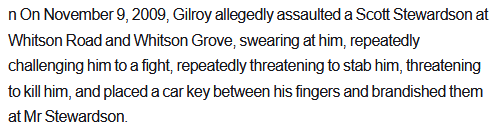
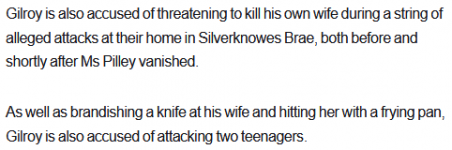
I must have read that Scotsman article before, but I'd forgotten a lot of it. The attacks on his wife are a particularly serious issue.
1763043896305.png

This is elaborated on further down the page. (I think the "n" characters are bullet points.)

1763043976357.png
1763044044179.png

So, a violent bugger with anger management issues, which makes his suddenly losing it and going for Suzanne entirely in character. It's surprising his wife stood by him in the end, although maybe she saw him as her meal ticket. He had a well-paid job and someone was going to have to pay the mortgage. I don't know who the "two teenagers" were - if they were his own children, wouldn't the article have said so? Or would there have been a non-identification order for minors? I have a feeling this was his own children. I believe the charges relating to the fracas at Crieff Hydro (which I think was in relation to a work event) and the alleged assault were dropped as being small beer compared to a murder charge. Yes, cops will scratch around for things that might paint the accused as being of bad character, but something must have happened.

In the list of indictments relating to his manoeuvres to get the body out of Thistle Street, there are again a couple of things I wasn't aware of, or hadn't remembered.

1763047033153.png
"Last year" would be 2010, in this context.
1763046880758.png

What was the situation as regards the "authorised access" (shouldn't that be "unauthorised access"?) to a computer? Since that began before Suzanne's death, I'm not at all clear what it was about.

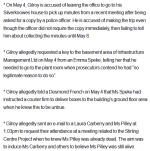
I don't remember ever discussing the fact that it was a policeman who had asked for these minutes. Is this correct? I know journalists sometimes make mistakes, but this is court reporting and it's an unlikely mistake to make. This request must have been some time in the late morning of 4th May, not long after he'd killed Suzanne, and well before she was discovered to be missing. What's a policeman doing in the story at that stage? Why did he want minutes of a meeting from Gilroy? I'm genuinely wondering if this is an error of some sort.

So he had to ask for a key to the basement area, it wasn't somewhere anyone could just wander into. That makes me wonder how he got Suzanne in there in the first place. I had imagined they'd started to argue in the front lobby, then had moved to the basement by mutual agreement to avoid the row being overheard. But if a key was needed? This would suggest that the killing happened outside the basement and he had to get that key in order to get the body into the basement in the first place. Do you know any more about that? Interesting about making up a story about a delivery to explain his interest in the basement. Also interesting that he did send a work email to Suzanne after he killed her, although he didn't continue the bombardment of texts. I wonder if he not only switched her phone off but appropriated it, and didn't think the police would be able to access her messages at all.

1763047864234.png

So the pitch inspection had already been done, very recently. Odd that it doesn't make it clear whether this was done by Gilroy himself or by someone else. Presumably by someone else. Maybe he thought the job was still outstanding, but if he'd made an appointment with the school for that purpose, someone would have told him it had just been done, less than a fortnight ago. Others have said he inspected a disabled toilet, souds a bit as if he was scratching around for a reason.

The mobile phone switch-off. "So that his whereabouts could not be ascertained" would be more like it, but obviously I think it's more than that, and that he was manipulating the phone contacts so as to deceive the police as to his route.

He wanted the bin bags to tidy his car, because he had been asked to go to the police station on his way home, and he wanted the car to be tidy when the police examined it. Whatever gave him the idea the police would want to examine the car of someone who had just called in to give a witness statement?
1763049951891.png
1763050012798.png

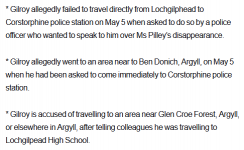
On that first point, for sure. He took over two hours longer than he should have done to make that journey, and nobody can call the detour down the A82 from Crianlarich to Balloch "direct". They think he went to somewhere near Ben Donich.

1763050258757.png

The evidence for this is smoke and mirrors though. Some parts of the case are absolutely solid, like the CCTV images and the phone mast pings. And then when we get to where he went during the missing time, facts simply evaporate. I don't even know what time the sighting of the man the witness thought looked like his brother-in-law was supposed to have happened at.

Then on the outward journey he's supposed to have gone somewhere "near Glen Croe Forest", which would seem to include "an area near Ben Donich", so I wonder why the two different descriptions. Why not the same place?

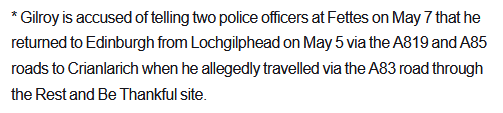
That last bullet point is bizarre. He told the cops he travelled back by the A819 and the A85, and that's exactly what the evidence indicates. The only definite evidence of where he was between Inveraray (where he was caught on a camera at the point where he turned off his phone) and the point on the A82 where he turned his phone back on agan is the camera sighting in Tyndrum. Both that camera sighting and the turning on of the phone (supposedly at Ardlui) show without doubt that he did return on the roads he said he took. Again, where is the evidence he was on the A83 through the R&BT at all?

The only actual evidence we have is that he drove through Tyndrum. He was absolutely frank about this from the get-go. Then the police found the CCTV images at the Green Welly, which corroborated that. They have no reason to think he was trying to disguise the fact that he went that way. They start to imagine that the Tyndrum loop was the misdirection, so the body must be around the R&BT. But if we look at it from the other direction, we get a different picture. Gilroy surely didn't expect to be questioned about his route on that very same evening. But that's what happened, and how could he risk lying and saying he came by the A83, when he had no idea whether the police might find evidence of him on the A85 - as indeed they did. He had to tell the truth or risk being proved to be lying.

But suppose he really did want to do what the police believe he did? If you're driving a big loop away from the place you intend to dispose of the body, surely you leave some evidence that you did that? He couldn't have known that the camera in Tyndrum would catch him. The phone switch-offs do exactly the opposite - they conceal the route he took. It's far more likely that he took the route he didn't usually take, tried to leave no evidence that he'd done that, and hoped the police would concentrate on his usual route, the R&BT one, whereas the disposal site was on the A85 route. But then he had to abandon that plan when he was asked the direct question on the Wednesday evening.

Someone seems to have thought that Glen Orchy was in the frame at one point. It must have taken quite a long time to search the area of 200 yards on either side of the B8074. Of course, they would only have searched to the river on the NW side of the road. But, hello???

1763057115718.png

They should have had a look at the Achnafalich track as well, and maybe one or two of the others depending on how practical they looked. And the Succoth lodge track, and the Duncan Bàn one, and maybe even Glen Strae. All of these were accessible.

I don't understand it. I probably never will.

 
What was the situation as regards the "authorised access"

Authorised access relates to an attempt to log on to a computer or other electronic device that is not yours by attempting to bypass the security controls by attempting to guess the password and answering the security questions. (for example, name of you first pet/school) This could be a computer that you have physical access to or access can be attempted by remotely accessing a computer that you do not have physical access to.

Unauthorised access is when you gained authorised access illegally and you start obtaining private information from a computer that is not yours. i.e hacking
 
Last edited:
You learn something new and useless every day. Do you have any idea what he was up to when he was doing that? It seems to have been a prolonged pattern of behaviour. Something unconnected to the murder which they just added to the indictments because they could?
 
"Gilroy is also accused of trying to gain “authorised access” to a computer at his home and at Infrastructure Management Ltd on various occasions between January 5, 2009 and October 9 last year."

I would assume he would not have physical access to Suzanne's personal computer at his home so he may have been trying to gain authorised access to her computer remotely and tried various passwords until he was locked out.

If he attempted authorised access on Suzanne's work computer within the IML office then he attempted to access Suzanne's work computer and tried various passwords until he was locked out.

So, he has stalker type behaviour to add to his other negative traits.

There is no mention of "unauthorised access" which indicates that although he tried to gain access, he failed.
 
I don't remember ever discussing the fact that it was a policeman who had asked for these minutes. Is this correct?

No.

From Gilroy v HMA paragraph 5

Later that morning, (Tuesday 4th May) the appellant excused himself from the office, stating that he was going home to retrieve a set of minutes.

No mention of a policeman asking for the minutes. In fact the police first made contact with IML on Wednesday 5th May as per paragraph 7 in Gilroy v HMA

"At about 12 noon on Wednesday, 5 May, two uniformed constables visited her flat and made local enquiries. They learned of the relationship between the deceased and the appellant and called at IML's office."
 
"Gilroy is also accused of trying to gain “authorised access” to a computer at his home and at Infrastructure Management Ltd on various occasions between January 5, 2009 and October 9 last year."

I would assume he would not have physical access to Suzanne's personal computer at his home so he may have been trying to gain authorised access to her computer remotely and tried various passwords until he was locked out.

If he attempted authorised access on Suzanne's work computer within the IML office then he attempted to access Suzanne's work computer and tried various passwords until he was locked out.

So, he has stalker type behaviour to add to his other negative traits.

There is no mention of "unauthorised access" which indicates that although he tried to gain access, he failed.

Ah. Stalking Suzanne. That figures.

I don't remember ever discussing the fact that it was a policeman who had asked for these minutes. Is this correct?

No.

From Gilroy v HMA paragraph 5

Later that morning, (Tuesday 4th May) the appellant excused himself from the office, stating that he was going home to retrieve a set of minutes.

No mention of a policeman asking for the minutes. In fact the police first made contact with IML on Wednesday 5th May as per paragraph 7 in Gilroy v HMA

"At about 12 noon on Wednesday, 5 May, two uniformed constables visited her flat and made local enquiries. They learned of the relationship between the deceased and the appellant and called at IML's office."

I was beginning to think that must be the case. Identifying and discounting journalism errors is a real issue in this case. ("His phone pinged a mast in Glen Croe" for one, "analysis of soil and vegetation on the car placed him in the Rest and Be Thankful area" for another. None of that was true.)
 
So he had to ask for a key to the basement area, it wasn't somewhere anyone could just wander into. That makes me wonder how he got Suzanne in there in the first place. I had imagined they'd started to argue in the front lobby, then had moved to the basement by mutual agreement to avoid the row being overheard. But if a key was needed? This would suggest that the killing happened outside the basement and he had to get that key in order to get the body into the basement in the first place. Do you know any more about that? Interesting about making up a story about a delivery to explain his interest in the basement.

I can only surmise that inside the main entrance there was a corridor leading to a locked door which led into the basement. He probably killed Suzanne in the corridor and somehow managed to hide the body while he went to get his car. He would probably need 2 keys.

One to unlock the outer garage door to get his car into the garage.

This is the Google street view of the garage door from the outside.

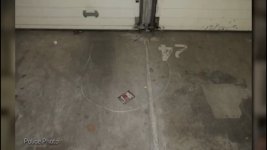
This a screen grab of the garage door from the inside from the Critical Evidence video

Inside basement.jpg


And another key to unlock the internal door to move Suzanne from the corridor into the car boot. (He was absolutely the luckiest man in Edinburgh that Tuesday morning)
 
Last edited:
The only actual evidence we have is that he drove through Tyndrum. He was absolutely frank about this from the get-go.

When he is asked on the Wednesday night/Thursday morning at Corstorphine police station how he got to Lochgilphead from Edinburgh he has to tell them he went via Tyndrum in case he has been caught on CCTV somewhere between Nyadd and Inveraray. This suggests that although DG was not aware of specific CTTV cameras, he was aware that there could be CCTV cameras anywhere on his route from Edinburgh to Lochgilphead which the police could potentially find.

On the Wednesday night/Thursday morning, the police are right to not believe a word he says. The police do not have any CCTV or any mobile phone information yet. When the police get the mobile phone information they find out he turned his phone off at Nyadd leaving both the northern and southern routes in the frame. The police would still be unable to verify his route and because the police do not believe a word DG says they would focus on the R&BT as that is his "normal route" from Edinburgh to Lochgilphead. Was this part of DG's plan?

When the Green Welly CTTV images are found it confirms he drove on the A84 from Nyadd to get to Tyndrum. His version of events are confirmed so far.

When the police ask him about his route from Tyndrum to Inveraray he advises that he drove on the A85 then the A819 stopping along this route for 112 minutes to check his car etc. Therefore, he is confirming that he passed the petrol station at Inveraray at 15.50 - one minute before passing The Royal Burgh Cafe at 15.51.

If he had actually passed the petrol station at Inveraray at 13.58 on his way to Glen Croe he would now be worried. There is potentially CCTV at the petrol station at Inveraray that could thwart his misdirection plan and he knows it. He cannot explain this if the police find CCTV of him passing the petrol station at Inveraray at 13.58. So either he passed the petrol station at Inveraray at 15.50 and did not go to Glen Croe and was not worried about any CCTV at the petrol station at Inveraray or he passed the petrol station at Inveraray at 13.58 and crossed his fingers, hoping that there would be no CCTV available at the petrol station at Inveraray.

He does not seem to be the type of person to cross his fingers and hope for the best, therefore it is highly unlikely he went to Glen Croe in the afternoon which means that the disposal site is somewhere off the A85 or A819 between Tyndrum and Inveraray.

Side note 1 -Granted, he could have circumvented the petrol station at Inveraray by taking this route twice but I think this is highly unlikely. It was easier to stick to the original story and blame the missing 112 minutes on being parked somewhere on the A85/A819 looking at his car's broken suspension while in reality he was digging a grave in some secluded forest off the A85.

Side note 2 - It is not unheard of for the police to fail to disclose evidence. What if there was CCTV from the petrol station at Inveraray showing DG passing at 15.50 and the police suppressed it as it did not fit their Glen Croe theory?
 
Last edited:
You're moving faster than I am! One at a time.

Some more thoughts.

Turning his phone off at Nyadd at 1205, on at Inveraray at 1323 and off again at Inveraray at 18.58 indicates that DG was attempting to place both the northern and southern routes to and from Lochgilphead in the frame. All three of these phone off/on shenanigans were very important to him as they place both routes in the frame. He now has to go for four out of four.

On the way back to Edinburgh he has to make a choice where and when he will turn his phone on and still place both routes in the frame taking into account the police were expecting him to call at Corstorphine police station at about 21.30 on his return from Lochgilphead.

Option 1 is to drive to Nyadd and turn his phone on at 22.17 (it takes 1 hour and 9 minutes to drive from Tyndrum to Nyadd) He rules this out as the police may phone him at 21.30 and he does not want the police to phone him asking why he was not at the police station already and his phone goes directly to voicemail..

Option 2 is to get to Tarbet by 21.30 and turn his phone on.

I think he planned to get to Tarbet by 21.30, turn his phone on and when the police phone and ask where he is he can say he is on the A83 heading south past Loch Lomond. (placing both routes in the frame) However, he underestimated the time it takes to drive from Crianlarich to Tarbet. When he passed Ardlui/Inveruglas at 21.34 he feels he has to turn his phone on because he does not want the police to phone him asking why he was not at the police station already and his phone goes directly to voicemail.

The importance of placing both routes in the frame is emphasised further when the police do phone him at 22.15 asking why he was not at the police station already. DG replies that he is at Stirling (and would be at Corstorphine in about 45 minutes) which again leaves both routes in the frame. The reality is he was still on the A811 approaching Drymen.

If this is correct then it is ridiculous to ascertain he was in the Ben Donich area until 20.10 (as the police think he was) If he was in the Ben Donich area at 20.10 he just drives 8 miles east which is even better than option 2 as he passes Tarbet at 20.23. (well before 21.30 - when he expects the police to phone him asking why he was not at the police station already)

Well, let's look at this. If he'd simply wanted to leave both routes in the frame, all his phone connections would have had to have happened on the parts that were common to both routes, that is Edinburgh to Blair Drummond, and Inveraray to Lochgilphead. If he's heading back towards Edinburgh he doesn't have any option but to wait till Blair Drummond. Sure, the police might phone him when he doesn't show up when he said he would, but they're not going to be on the blower right on 9.30, they'd give him a bit of leeway. But he can't be back on the common route until about 10.15, so what does he do?

If keeping both routes in the frame is his objective, there's only one solution. Get to Blair Drummond as quickly as possible and don't turn the phone on till he gets there. It might have worked. The police didn't actually phone until 10.15. But suppose the phone had still been off? So what? Presumably they'd try again a bit later, when it would be on. He could just say he was trying to save the battery. So I don't see any necessity to turn down the A82 if he's trying to leave both routes in the frame. He can't do it that way. Turning the phone on at Tarbet puts the southern route in the frame and (on the face of it) excludes the northern one. He can only keep both in the frame by keeping off the radar till he gets to Blair Drummond, and going down the A82 actually delays that by half an hour.

The only thing going down the A82 can do is to bring the southern route, the R&BT route, into the frame. I still don't see any other rational explanation. He was trying to convey that he drove back by the R&BT route and misdirect the cops away from the Tyndrum area. And he turned the phone on about five minutes too soon.

I have no idea why he said he was at Stirling (that is a little way past Blair Drummond) when the police phoned. He must have known the phone connection would locate him. Was he really beginning to lose it a bit at that point? It's possible. He'd driven a very long way, he'd done a lot of work one way and another, and I'll bet he didn't get a lot of sleep on the Tuesday night. Certainly he got his act back together when he was with the police, probably another shot of adrenaline then, but for him to be a bit fuddled in the dusk around the 9.30-10.30 window isn't far-fetched.
 
With regards to the police being fixated on the R&BT, Glen Croe and Ben Donich areas.
1 - I think the police have some intangible circumstantial evidence linking DG to these areas on 5th May 2010 and as they had no other circumstantial evidence from anywhere else they felt they had to be seen to be doing some sort of major search.
2 - In the Critical Evidence video Gary Flannigan says "experience tell us that people in these situations will mask where they're trying to go, so David Gilroy went an alternative route to mask from the police where his true destination was"
3 - The A83/R&BT route was his usual route to Lochgilphead.
4 - The police theory that he was in the Glen Croe/Ben Donich areas in the afternoon and evening is physically possible in the timescale. (although this is unrealistic)
5 - The police had spent too much time, money and resources on the Glen Croe/Ben Donich searches and doubled down on that area to avoid being perceived as incompetent.
6 - The police ran out of money to thoroughly search anywhere else.

I think the only circumstantial evidence they could have had at that early stage was the belief (correct as it happened) that that was the usual route to Kintyre, and that's the way he would have gone. Maybe someone at IML was able to tell him that was his usual route. How could they have any other evidence at that point? So your second point is very pertinent. Instead of deducing that he went via Tyndrum to dispose of the body, hoping that the cops would jump to the conclusion that he'd gone the usual route (but the way things panned out he couldn't keep up the pretence), they assumed that his ready admission that he went by Tyndrum was a smoke-screen to divert from the R&BT. Which is fairly perverse, a very risky double-bluff that would have been an unlikely plan to be hatched up in such a short time, and which would have had a big chance of backfiring if the cops just went for the obvious place without realising he'd driven via Tyndrum (as they actually did - but didn't find anything, hah). Bear in mind that Gilroy did nothing at all to let it be known he was driving via Tyndrum, when he could so easily have done that just by leaving the phone on until he was going through Callander.

I think they have become more wedded to the R&BT theory as the inquiry progressed. Maybe a strong personality became convinced of it and dragged the entire investigation in that direction. And nearly ten years later (when I contacted them), as you say, my argument wasn't srong enough to overcome this and get anyone prepared to spend any more money.

The search in Glen Orchy (and also the rather Hail Mary one around Lochgilphead itself) shows they weren't completely wedded to that idea, at least in the initial stages,
 
I can only surmise that inside the main entrance there was a corridor leading to a locked door which led into the basement. He probably killed Suzanne in the corridor and somehow managed to hide the body while he went to get his car. He would probably need 2 keys.

One to unlock the outer garage door to get his car into the garage.

This is the Google street view of the garage door from the outside.

This a screen grab of the garage door from the inside from the Critical Evidence video

View attachment 65912


And another key to unlock the internal door to move Suzanne from the corridor into the car boot. (He was absolutely the luckiest man in Edinburgh that Tuesday morning)

I thought it would probably have to be something like that. They moved towards the basement, maybe even going down a staircase? to continue the row out of earshot of their colleagues, but couldn't go through a locked door. I think I recall something about a staircase to the basement being mentioned in an earlier post? So obviously, when he realised she was dead and decided to try to conceal the body rather than raise the alarm and claim it was an accident, he needed the key.
 
I don't remember ever discussing the fact that it was a policeman who had asked for these minutes. Is this correct?

No.

From Gilroy v HMA paragraph 5

Later that morning, (Tuesday 4th May) the appellant excused himself from the office, stating that he was going home to retrieve a set of minutes.

No mention of a policeman asking for the minutes. In fact the police first made contact with IML on Wednesday 5th May as per paragraph 7 in Gilroy v HMA

"At about 12 noon on Wednesday, 5 May, two uniformed constables visited her flat and made local enquiries. They learned of the relationship between the deceased and the appellant and called at IML's office."

Yeah, I didn't see how a policeman could have been involved at that stage, unless he was there about a completely different matter. I thought Gilroy's need for these minutes (why would a policeman have wanted company minutes anyway?) was something he dreamed up for himself. But maybe someone else asked for them. The bizarre idea that someone in 2010 would need to go home to get a paper copy of a set of minutes doesn't seem to have been explained at all.
 
Hmm...

Regarding body disposal.

There are many places where a body could be left, and it would not be found again, and require no tools.

Examples include: disused wells, mine shafts, pits (that are full of water), tanks that are used for disposal of cow manure, pig manure, etc.

Given the size of the area you are discussing, I'd guess there are hundreds of places like that out there.

The only way that would come to light, would be if the person that disposed of a body, talked about it.
 
Yeah, well, you know what happened when you dragged that. I just don't know whether a body would have sunk down below the pond weed. Or whether he'd have been able to prevent the body from floating to the surface in the first few days.
 
Hmm...

Regarding body disposal.

There are many places where a body could be left, and it would not be found again, and require no tools.

Examples include: disused wells, mine shafts, pits (that are full of water), tanks that are used for disposal of cow manure, pig manure, etc.

Given the size of the area you are discussing, I'd guess there are hundreds of places like that out there.

The only way that would come to light, would be if the person that disposed of a body, talked about it.

When you start to examine the details it's a lot less open-ended than you first imagine. It has to be somewhere accessible by Vauxhall Vectra, and that narrows it down a  lot. Most of the tracks leading off these roads are gated. It was the middle of the day, broad daylight, and he wasn't going to drive into the middle of a farmyard and start unloading a body. There is no pig farming in the area. Cattle and sheep are free range on the hill and there is no need for slurry disposal. (Even if there were such tanks, they are cleaned out periodically, but there aren't.)

There are no disused wells or mine shafts. It's mostly commercial forestry. There are some drainage sumps in the R&BT area which might have been a great place for the job, but the police searched these thoroughly and found nothing.

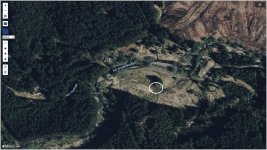
We've been over every possibly using detailed maps. We've driven and cycled and walked it. There are actually very few serious possibilities once you really get down to it. That little pond, and the area round about it (forest) is the absolute stand-out place, and it was never searched. I tried to get the police to do it, but it was nearly ten years on and the SIO was still wedded to the idea that she was in the R&BT area, 20 miles away, so no dice.

(I seem to remember considering somewhere near Tyndrum where some old mine working were indicated on the map, but it turned out not to be accessible.)
 
Last edited:

Back
Top Bottom