
-
Security incident: ISF was recently accessed by intruders. Please change your password, and change it anywhere else you used it. Read more
You are using an out of date browser. It may not display this or other websites correctly.
You should upgrade or use an alternative browser.
You should upgrade or use an alternative browser.
Split Thread WWII & Appeasement
- Thread starter skyeagle409
- Start date
-
- Tags
- world war ii history
Dave Rogers
Bandaged ice that stampedes inexpensively through

You people can't just complacently deny that Britain and Malta were blitzed during the war, even if America wasn't.
And you can't just complacently deny that Germany had virtually no Spitfires or Hurricanes throughout the war, yet didn't surrender within a week.
More relevantly, you can't just gloss over the fact that at least 25 German cities were virtually wiped out by Bomber Command over the course of over three years' bombing, something the Luftwaffe never had the resources to match, and yet Germany didn't surrender until the majority of the country was overrun and occupied by the Allies, making it clear that heavy bombing isn't enough to force a country to surrender.
Dave
lobosrul5
Philosopher

You people can't just complacently deny that Britain and Malta were blitzed during the war, even if America wasn't. Chamberlain thought it would have been far worse in 1938 because he didn't believe in the Churchill 'with what' and want of judgment strategy. There is an intelligent website about the situation of the Czechs in 1938:
Just two decades after the end of WWI, neither Britain nor France - still recovering from the war and marked by the world economic crisis of the inter-war period - wanted another war. On September 29, 1938, representatives of the four great powers - Great Britain, France, Italy, and Germany, met at Munich to come to an agreement. Neville Chamberlain, the British prime minister, became the major spokesman for the West. Recognising Hitler's claims for the ethnic Germans in Czechoslovakia as genuine, he believed that a war could be avoided if Hitler were "appeased" by promising him the Sudetenland. The Munich Agreement was signed and the Czechoslovak government was neither invited nor consulted.
http://www.radio.cz/en/section/special/heroes-or-cowards-czechs-in-world-war-ii
I'd be exceptionally surprised if anyone posting on this thread wasn't aware of this. Well, except Chamberlains thoughts on Hitler's claims being genuine. What Chamberlain actually thought is a secret known only to him.
Dave Rogers
Bandaged ice that stampedes inexpensively through
Who has denied the blitz or bombing of Malta?
It has been discussed but it wasn't in 1938.
Ah, but if the Germans had sent all their Stukas on one-way missions to Britain and Malta in 1938 they would both have surrendered, because any nation without Spitfires can't possibly stay in a war. Or something like that.
Dave

You people can't just complacently deny that Britain and Malta were blitzed during the war.
I literally posted this a few hours ago:
and even though you refer to the bombing campaign of 1940 you ignore the fact that months of repeated attacks failed to knock Britain out.
Your dishonesty about what others have claimed is getting tiresome, you are just making stuff up at this point. Britain was blitzed by a Luftwaffe with bases in Northern France, not flying unescorted from German and again, as I pointed out in the post you willfully ignored, they failed utterly.
Chamberlain thought it would have been far worse in 1938 because he didn't believe in the Churchill 'with what' and want of judgment strategy. There is an intelligent website about the situation of the Czechs in 1938:
Again you choose to ignore the facts presented too you out of some personal distaste for Churchill, Munich was a bad deal for Britain and your endless untruths can't change that.
Hans
Philosopher

- Joined
- May 10, 2007
- Messages
- 9,276
You people can't just complacently deny that Britain and Malta were blitzed during the war, even if America wasn't. C
Henri you are babbling now. Trying desperately to come up with something that might make sense.
Yep they were blitzed and guess what they didn't surrender in a week....
Do you even keep track of what your argument actually is? lol
erwinl
Illuminator

- Joined
- Sep 5, 2008
- Messages
- 4,051
Henri you are babbling now. Trying desperately to come up with something that might make sense.
Yep they were blitzed and guess what they didn't surrender in a week....
Do you even keep track of what your argument actually is? lol
I don't think he knows anymore.
Both Japan and Germany suffered so much bombing that, by the end, the allies were struggling to find new targets worthy of the attention from the bomber fleets. There was hardly anything left.
Yet. Neither country surrendered because of bombing only.
It took a whole lot more for either of them to throw in the towel. And the same would have been necessary with the UK in 1938.
SpitfireIX
Philosopher

There was rearmament when Chamberlain became Prime Minister, and I think when Lord Swinton became the Minister for Air.
Yes, of the RAF. Yet the neglect of the Army continued, as noted, despite your claim that Chamberlain strengthened it. Additionally, as Chancellor of the Exchequer in the early 1930s, Chamberlain had pushed for deep cuts in spending for all branches of the armed forces.
The British Navy could have been attacked by Stuka dive bombers if the RAF had been made non operational.
And how was the RAF going to be made non-operational in 1938? Again, be specific. Also, from what bases were these Stukas going to fly?
That would have made some sort of invasion easier, even if the Germans had to be supplied by air.
You didn't answer my question: From what port, and in what sort of landing craft, was this hypothetical invasion force going to embark? As for air supply, even granting, arguendo, that the Luftwaffe had enough airlift capacity to adequately supply an invasion force, their Ju 52s had a top speed of 121 mph. How were they going to avoid the RAF Gladiators?
The British Navy were reluctant to operate in the Channel then because of the dangers involved, and they expected the army to protect their Navy bases.
As noted, the RN would have thrown everything they had at a German invasion force.
The Germans had the means to launch a devastating and virtually unopposed bombing attack on Britain in 1938. That's why gas masks were introduced
No. The British had radar covering London, and, despite your sticking your fingers in your ears and humming loudly every time someone points this out to you, the Gladiator had a 60 mph speed advantage over a loaded He 111. Finally, as I mentioned earlier, other means of detecting incoming air raids were available.
Last edited:
Rincewind
Philosopher
However - at least WE have a Spitfire.....

Andy_Ross
Penultimate Amazing

- Joined
- Jun 2, 2010
- Messages
- 85,954
The British Navy were reluctant to operate in the Channel then because of the dangers involved, and they expected the army to protect their Navy bases.
No they weren't reluctant to operate in the Channel.
Right through the war the RN patrolled the Channel and made raids in to the harbours and ports along the French coast.
You forget that the Navy has it's own army called the Royal Marines. They, along with Jack himself were protecting the bases.
If you mean that the Army were expected to protect the bases by stopping an German invasion force, everyone was expecting it.
SpitfireIX
Philosopher
SpitfireIX
Philosopher
I used to use a Spit9 with American markings as my avatar, but I changed it to the Purdue logo after there was a shooting on campus. Then I decided to keep it to annoy conspiracists (lots of Apollo astronauts went there, including Neil Armstrong; they did the CGI visualizations of the WTC and Pentagon attacks; and they funded Amelia Earhart's final flight). 
Hans
Philosopher
- Joined
- May 10, 2007
- Messages
- 9,276
I don't think he knows anymore.
Both Japan and Germany suffered so much bombing that, by the end, the allies were struggling to find new targets worthy of the attention from the bomber fleets. There was hardly anything left.
Yet. Neither country surrendered because of bombing only.
It took a whole lot more for either of them to throw in the towel. And the same would have been necessary with the UK in 1938.
Yep and by 1938 the German Condor legion had been operating in SCW along with Italian bombers. The Republicans didn't surrender in a week after being bombed instead they had to be defeated on the battlefield. Granted this was a small force - which would not have been immediately available in case of war in 1938. They would have been cut off. Neither did the Polish buckle under airattack again they had to be defeated on the battlefield - and get stabbed in the back by the Soviets.
Additionally the Soviets were unable to bomb the Finns into surrendering and had to use ground pressure.
Rincewind
Philosopher
Maybe Henri's using a modification of the religious saying:
"A thousand years are as but a day to god"?
"A thousand years are as but a day to god"?
Oh and I had forgotten this until I was rereading 'Wages of Destruction' but in 1938 the Luftwaffe had done a study that concluded a strategic air war against the UK was out of the question without airbases on the channel coast. So Henri appears to have a higher estimate of Luftwaffe capabilities than the Luftwaffe did.
Hans
Philosopher
- Joined
- May 10, 2007
- Messages
- 9,276
Oh and I had forgotten this until I was rereading 'Wages of Destruction' but in 1938 the Luftwaffe had done a study that concluded a strategic air war against the UK was out of the question without airbases on the channel coast. So Henri appears to have a higher estimate of Luftwaffe capabilities than the Luftwaffe did.
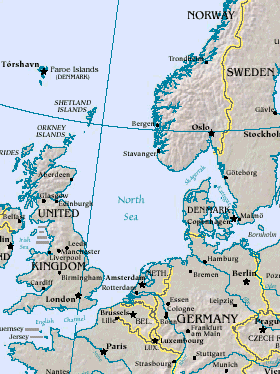
Yes and I remember also that there were a limited number of concrete airbases and facilities in the western part of Germany (not near the Benelux border) that would allow flights around those neutral nations and having a more direct line to eastern UK.
Does anyone know if Germany had secured x percentage of the Romanian oilfield production or would they have had to depend on reserves or Soviet oil?
Last edited:
erwinl
Illuminator
- Joined
- Sep 5, 2008
- Messages
- 4,051
Oh and I had forgotten this until I was rereading 'Wages of Destruction' but in 1938 the Luftwaffe had done a study that concluded a strategic air war against the UK was out of the question without airbases on the channel coast. So Henri appears to have a higher estimate of Luftwaffe capabilities than the Luftwaffe did.
Are the 'Wages of destruction' good?
I'm tempted to buy it, to have something to read during the summer holiday.
I think it's an excellent account of the Nazi war economy.Are the 'Wages of destruction' good?
I'm tempted to buy it, to have something to read during the summer holiday.
Henri McPhee
Illuminator
You people ignore the fact that if Chamberlain had been 'honourable and gone to war over the Sudetenland in 1938 there would have been a state of war with Germany, which is a fearful thing, and it would have involved France and the Czechs as well as Britain. You then assume that a German blitzkrieg would not have engulfed Holland and Belgium or France in 1938 because of weak little Germany, and that the Czechs would have lasted more than three months, and that there were no deficiencies in the British army or air force at the time. Churchill's attitude seemed to be to have a 'with what strategy' and to try to involve the Americans at the time, which was pie in the sky because of political and military problems in America then. Chamberlain declared war on Germany. That's not appeasement.
Chamberlain had previously said that the public and House of Commons only understand straight lines, and that treaties and agreements cannot be depended on to keep the peace, and that we should not delude weak and small countries into thinking they will be protected from aggression by the League of Nations. Chamberlain was right.
There is a fair website about Chamberlain, which might not be entirely true :
http://www.bbc.co.uk/news/magazine-24300094
Yet notwithstanding Chamberlain's personal predilection for negotiation, what is beyond question is that he perceived himself to be a prisoner of forces largely beyond his control. As he noted stoically in January 1938, "In the absence of any powerful ally, and until our armaments are completed, we must adjust our foreign policy to our circumstances, and even bear with patience and good humour actions which we should like to treat in a very different fashion."
Last edited: