
WTC Dust Study Feb 29, 2012 by Dr. James Millette

It seems the chips are similar on the surface, with same basic ingredients and looks, but paints do have some similarities also. The solgel process may have started as a way to make paints. The best way to confirm there is nothing special about the chips would be to show that there is nothing special about the ignition results.


It is just my opinion that these sort of arguments are weak. If there had been larger pieces then it does not seem impossible that explosive force could leave behind tiny fragments of the material and whatever it was attached to. Arguing about this kind of stuff gets us nowhere because it looks like avoiding Harrit. Much better to just falsify his hypothesis.
http://en.wikipedia.org/wiki/Falsifiability
You don't mean falsify his hypothesis, that is supporting his hypothesis.

There was no thermite used on 911. This means Harrit was wrong before they started the paper.
Because.
No steel had fused iron on it from thermite; the big product of thermite, iron.
No blast effects on steel.

The paper can be dismissed due to evidence found on 911. Learning that dust burns at 430C, also debunks the thermite claim in Harrits own paper.

Using DSC is not useful. In Harrit's paper, they don't match. And how will 560C thermite do anything?

http://i286.photobucket.com/albums/ll116/tjkb/111JonesDelusion.jpg
111JonesDelusion.jpg

The paper compares the DSC release to known superthermite paper and it seems like a fact that they are similar. Harrit does not compare it to paint so I can´t be sure that there is anything special about it. Millette also fails to do this
Similar? Not. Why would you use DSC for this? What is DSC for? Discuss.

Read the paper, see the lie. Easy to see the paper is nonsense, because no evidence of thermite on any steel at the WTC complex. The steel they used as evidence was corrosion below 1,000 C.
The steel was studied by rational engineers...

The worse corrosion found...
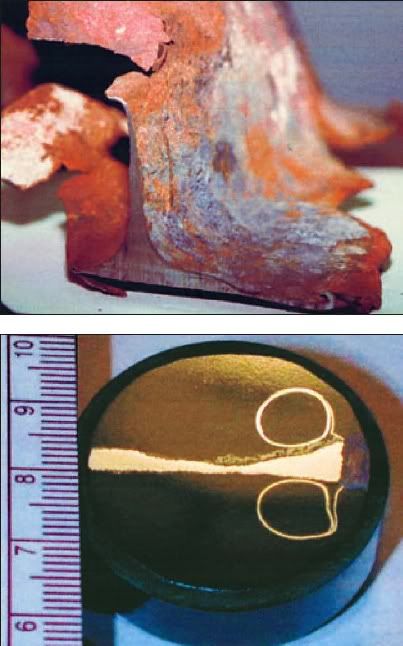
111corosion.jpg

Not melted, corroded. No thermite. This is their only chance so 911 truth lies. Why?
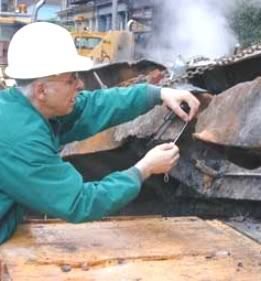
NotMelted.jpg

Why did rational engineers not find thermite?
Why has Gage not used part of his million dollars in donations to study the dust? Because Gage does not have to do anything to fool people into donating money.

... I do agree with truthers up to a point about some issues, like that it is possible that there was some cover-up of incompetence and corruption, and that the investigations may have been fishy. ...
Why do you slander people without facts?
Oh, so you rant so sweetly about things you offer zero evidence for. Declaring people were incompetent when their throats were cut by terrorists acting like other passenger but rising up to kill people without notice?
Accusing unknown people of a cover-up, corruption, and fishy investigations. You make the claims without evidence.

What was covered up with regards to thermite?
What incompetence? What corruption? What was fishy about 911 investigations.

I discussed the paper, and why does the DSC not match thermite? Why does Harrit and Jones lie about 911?
 
With the DSC, the scientists reported using a "rising temperature method of ignition", but they also tested with flame-ignition.

And heating to 3000°C+ is indeed the ultimate proof that a thermite reaction was started at 430°C. :rolleyes:

I can´t remember, does Millette say that chips remain hard? Then was that all the different kinds of chips?

Dr. Millette stated in his progress report:

The solvents had no effect on the gray iron/steel layer. Although the solvents softened the red layers on the chips, none of the solvents tested dissolved the epoxy resin and released the particles within. SEM-EDS phase mapping (using multivariate statistical analysis) of the red layer after exposure to MEK for 55 hours did not show evidence of individual aluminum particles (Appendix G).

Dr. Millette tested MEK, DCM (Dichloromethane) and two paint strippers (mixtures of several organic solvents).

I don´t agree, the main point of Harrit paper seems to be that the chips ignite and make very high temperatures while paint does not. We don´t need literature to falsify those claims, some tests will do the trick. Someone could have shut up those truthers long ago with these tests.

Harrit was falsified by Millette. Millette detected only chemically bond aluminum and not elemental aluminum. As the presence of elemental aluminum is fundamental condition for the existence of thermite, the thermite hypothesis has been successfully falsified. The truther claim, that Dr. Millette missed an important experiment is pure (and a very successful) disinformation.
 
Last edited:
The red material does burn quickly as shown in the DSC, and we have observed a bright flash on ignition, but determi- nation of the burn rate of the red material may help to classify this as a slow or fast explosive. It may be that this material is used not as a cutter-charge itself, but rather as a means to ig- nite high explosives, as in super-thermite matches [30]. Hav- ing observed unignited thermitic material in the WTC residue, we suggest that other energetic materials suitable for cutter charges or explosives should also be looked for in the WTC dust. NIST has admitted that they have not yet looked for such residues [11].

The other question is, why is the above quote in the Bentham paper ? MM seems to think it is fact. To me it looks like conspiracy feed.
 
Based on these observations, we conclude that the red layer of the red/gray chips we have discovered in the WTC dust is active, unreacted thermitic material, incorporating nanotechnology, and is a highly energetic pyrotechnic or explosive material.

Another quote from the Bentham paper.^

Now let's have a look how explosive this material is and what sort of effect it has on steel.

http://www.youtube.com/watch?v=S1TwVACENAo&feature=youtube

Mmmm
 
Why use thermite? Why use explosives? Why crash the airplanes? I guess you could get the same answer to all three, but I think it is more productive to debunk Harrit paper directly. Was there any reason for NIST to look for this residue? I am not sure but if it had looked for explosives it would had to have a reason and maybe this would have fueled more conspiracy theories?
I debunked the Harrit et al paper days after it was published. The paper is self debunking, it's only the uneducated and gullible that believe that the paper has any merit at all.

Start reading this thread and pay very close attention to all my posts. http://www.internationalskeptics.com/forums/showthread.php?t=139293

When you've done that start reading this thread and pay close attention to all my posts. http://www.internationalskeptics.com/forums/showthread.php?t=140017

That will take you some time, but when you have read the debunking come back and comment.
 
Rational discussions about Harrit paper and Millette. I am not an expert on explosive but I have read both papers, and expect to discuss them with people who have also read them. Not angry rants about liars with this kind of stuff:crowded::jaw-dropp:jaw-dropp:jaw-dropp:crowded:
I have read both papers and sent the Harret et al paper to two independent "peer reviewers" (both PhD chemists) . They both said the same thing, "the papers data does not support their conclusions" .

At this point, what are we "rationally discussing" and with whom?
 
Last edited:
@jtl

Unfortunately you are using the truther trait. (saying a whole lot about nothing)

Why not just come out and say the problem you have with Millette or Harrits work.
 
Sunstealer: I debunked the Harrit et al paper days after it was published. The paper is self debunking, it's only the uneducated and gullible that believe that the paper has any merit at all.

Start reading this thread and pay very close attention to all my posts.

It is not really helpful or true to call them uneducated and gullible. If you really think you have debunked the paper why don´t you publish your findings? I have read some of your posts but I don´t know if I read them all. I don´t think you have answered my questions, and you don´t seem to acknowledge any problems with Millette paper. I am sure you are ultimately right about Harrit chips but I would like to see it confirmed with published research and including all the tests. I would like more comments from you and Kminek on my posts.
 
It is not really helpful or true to call them uneducated and gullible. If you really think you have debunked the paper why don´t you publish your findings? I have read some of your posts but I don´t know if I read them all. I don´t think you have answered my questions, and you don´t seem to acknowledge any problems with Millette paper. I am sure you are ultimately right about Harrit chips but I would like to see it confirmed with published research and including all the tests. I would like more comments from you and Kminek on my posts.

Just a suggestion , why not clearly set out your questions in a fresh post ?

It will make it alot easier than picking though your last 18 posts
 
Africanus: The solvents had no effect on the gray iron/steel layer. Although the solvents softened the red layers on the chips, none of the solvents tested dissolved the epoxy resin and released the particles within. SEM-EDS phase mapping (using multivariate statistical analysis) of the red layer after exposure to MEK for 55 hours did not show evidence of individual aluminum particles (Appendix G).

Does it say anywhere that the chips remain brittle or hard like Harrit chips?
This seems to give chance to open up the debate about the chips being the same or not. Why do Millette and Harrit get opposite results with MEK and individual aluminum?
 
Does it say anywhere that the chips remain brittle or hard like Harrit chips?

This is what Harrit says about the MEK test:

2. Test Using Methyl Ethyl Ketone Solvent

By employing some means to separate the different components of the material, the chemical compositions of the different particles in the red layer were more accurately determined. The initial objective was to compare the behavior of the red layer with paint when soaked in a strong organic solvent known to soften and dissolve paint. Red/gray chips were soaked in methyl ethyl ketone (MEK) for 55 hours with frequent agitation and subsequently dried in air over several days. The chips showed significant swelling of
the red layer, but with no apparent dissolution.
In marked contrast, paint chips softened and partly dissolved when similarly soaked in MEK. It was discovered in this process that a significant migration and segregation of aluminum had occurred in the red-chip material. This allowed us to assess
whether some of the aluminum was in elemental form.

So the Harrit match the Millette Chips in at least one behaviour: both chips could not be dissolved by MEK.

This seems to give chance to open up the debate about the chips being the same or not. Why do Millette and Harrit get opposite results with MEK and individual aluminum?

Although Harrit claims, that his results prove the segregation of aluminum from the platlets, he has only unsufficient data. His claim is only based on the EDX map of a chip after MEK treatment. But if you want to prove a dynamic process, you should also record the EDX map before the MEK treatment.
 
The paper compares the DSC release to known superthermite paper and it seems like a fact that they are similar.
In context they are not.

DSC-overlaid2.png


The most likely reason for the lowest peaks would be that they were attached to bigger pieces of gray layer. And all have gray layers attached according to the paper, which means the peaks would have been even bigger, which would be an even clearer difference with the known superthermite trace.

Note also the endothermic stage of the superthermite until ~270°C.

And there's no aluminium oxide found in the residue, which the known superthermite paper does find. Whatever burned in the DSC was not thermite. Most probably epoxy, given the trace and the total energy release.

ETA: Look at this image: http://www.springerimages.com/Images/RSS/1-10.1007_s10973-010-0833-6-3

What does it remind you?

And some of the peaks here also look similar, don't they?

http://www.springerimages.com/Images/RSS/1-10.1007_s10973-010-1046-8-0

Or look at this one: http://www.rsc.org/ej/CE/2009/b907224a/b907224a-f9.gif

Or this one: http://ars.sciencedirect.com/content/image/1-s2.0-S0925838807018518-gr2.gif

Why is the comparison of DSC traces significant?
 
Last edited:
Africanus: This is what Harrit says about the MEK test:

It says more than that:
Harrit: The red material did swell but did not dissolve, and
a hard silicon-rich matrix remained after this procedure

One swells and remain hard, other softens.

So the Harrit match the Millette Chips in at least one behaviour: both chips could not be dissolved by MEK.

See above answer. Millette could also be a bit more clear on the no dissolution part. But both could still be paint.

Although Harrit claims, that his results prove the segregation of aluminum from the platlets, he has only unsufficient data. His claim is only based on the EDX map of a chip after MEK treatment. But if you want to prove a dynamic process, you should also record the EDX map before the MEK treatment.

I just read up on the paper, it has the data for before and after MEK. But does it matter, could the paint not have al? Could the MEK split the kaolin into al and si in some strange circumstances?
 
I have read both papers and sent the Harret et al paper to two independent "peer reviewers" (both PhD chemists) . They both said the same thing, "the papers data does not support their conclusions" .

At this point, what are we "rationally discussing" and with whom?

This is not an appeal to authority, it is rational confirmation the paper has a failed conclusion. When chemists say the paper failed, it is confirmation, the paper failed.

The paper confirms they failed to find thermite when they added the DSC.

When I researched the paper, I found kaolin from Europe matched the elements listed in the paper. BS artists had to pay to publish their paper. No legitimate paper would publish the nonsense.

Millette paper found no thermite. RJ Lee, no thermite. USGS, no thermite. 911 truth found thermite, in their heads, in their heads, zombie, zombie
 
pgimeno: In context they are not.

I think the main thing is they are all about as narrow as the comparison. But they don´t actually show a paint curve for comparison so this is where Millette could improve on Harrit.

ETA: Look at this image:

Have to same X and Y to compare. Would be really nice to get a known paint sample with same parameters and compare.

And there's no aluminium oxide found in the residue, which the known superthermite paper does find.

This does not seem to be an issue. The paper does report aluminum oxide after ignition, or at least al and oxide, and they do compare directly to known thermite residue. But al melts below 700 so I don´t see a problem, unless paint cant have it?
 
The thermite DSC they added to their paper to prove they did not find thermite. Kind of silly on Harrit's part, he debunks himself with little effort.
The DSC are not the same. Proof it is not thermite. But I know Jones made up thermite, I have his first letter where he ranted about 911, and made delusional statements.

Anyone upset with the homage to THE CRANBERRIES?
911 truth does keep repeating the same failed nonsense, like zombies.
 
Last edited:
It says more than that:


One swells and remain hard, other softens.

This doesn't contradict Millette's results. Millette's Chip remained hard, too as neither the kaolin nor the epoxy was dissolved.

See above answer. Millette could also be a bit more clear on the no dissolution part. But both could still be paint.

I think, that his statement is clear enough.

I just read up on the paper, it has the data for before and after MEK. But does it matter, could the paint not have al? Could the MEK split the kaolin into al and si in some strange circumstances?

No, it hasn't:

1. We don't know where the EDX spectrum prior soaking was collected. Usually the region of spectrum collection is specified in scientific papers.

2. Harrit claims, that he was able to seperate elemental aluminum from the platelets. But it is a fact, that his data is insufficient. There is no EDX map of the Chip prior soaking. His paper contains two EDX maps. The first one is depicted in Fig. 10 on page 16, the examined chip is from dust sample 1 (MacKinlay). The second is depicted in fig. 15 one page 18. This map shows the MEK chip after soaking, the chip is from dust sample 2 (Delessio/Breidenbach).

BTW, MEK cannot split kaolin. If you want to free the aluminum of the kaolin you have to reduce it to elemental aluminum. MEK does the opposite, it reacts with aluminum as MEK is an acidic compound and produces aluminum ions.
 
I think the main thing is they are all about as narrow as the comparison. But they don´t actually show a paint curve for comparison so this is where Millette could improve on Harrit.
Why? DSC has not been proven to be any good method for material identification and characterization. FTIR and TEM are, and Millette used them. Jones et al. also did but they are holding the data.


Have to same X and Y to compare. Would be really nice to get a known paint sample with same parameters and compare.
You are applying different standards to compare. The shapes of several of the pictures I posted are essentially the same: a large peak after a slower increment. You should be aware by now that the expected total energy release of thermite is much less than that observed in the DSC traces of the chips, therefore what the DSC trace shows can not materially be thermite. It is a physical impossibility. On what basis do you dare to compare the DSC traces if it is self-evident they do not show the same material burning to start with? What significance does it have that the width matches, if the height, the shape, the peak temperature and the endothermic areas don't? There are more differences than similarities.


This does not seem to be an issue. The paper does report aluminum oxide after ignition, or at least al and oxide, and they do compare directly to known thermite residue. But al melts below 700 so I don´t see a problem, unless paint cant have it?

From the superthermite paper:

To verify that the reaction observed in Figs. 2 and 3 was indeed the thermite reaction the solid products from the DSC analysis reaction were analyzed using PXRD. The pattern of these products is shown in Fig. 4. The major constituents identified were metallic Fe and Al2 O3 , which are the expected products if the thermite reaction had occurred.​

Presence of aluminium and oxygen is no surprise. The aluminium is in kaolin and the oxygen is in iron oxide and kaolin. Those elements were there at the start. If there was aluminium oxide, they should have shown it.

But they fell short of doing this, therefore they didn't really show that a thermite reaction occurred. They are hiding their FTIR/TEM data. Significantly, the red layer in their post-DSC images is still there, meaning the iron oxide has not reacted. Their micrographs show iron oxide crystals, as Sunstealer noted. Their own data refutes any thermite reaction. Even the chip subject to flame test (~3000°C) is still red. What kind of thermite reaction does leave the iron oxide intact?

In my world, if something is not proven, it can not be used to accuse anyone. Is your world different?

Did the authors clearly prove that a thermite reaction occurred? If you are honest enough you have to answer that with a resounding NO.

The ball is in their field. Why do you insist that Millette should do or have done this or that, if the ATM paper is a piece of crap proving nothing?


Why is it important? Two Harrit chips also have endothermic stage around ca 650 to 670 which could be aluminum I think.
Why is it not? You are the one claiming they are similar. I am pointing out the differences. That one strikes me as an important difference. Thermite absorbs heat during the first ~300°C, the chips do not. Can you explain it and why it doesn't matter in the comparison? (I mean besides the fact that what is burning is a different thing, as evidenced by the total energy releases)
 
Last edited:
I just read up on the paper, it has the data for before and after MEK. But does it matter, could the paint not have al? Could the MEK split the kaolin into al and si in some strange circumstances?
The data before MEK soaking is an EDX spectrum of the red layer. The data after soaking is an EDX mapping of the sample for individual elements. These are chalk and cheese and cannot be considered the same thing.

Secondly the chip soaked in MEK is most likely Tnemec Red primer paint

picture.php


which has a different composition to Laclade joist primer paint

picture.php


which is the most likely candidate for samples a-d.

Click my sig for evidence of the MEK chip being Tnemec red
and http://oystein-debate.blogspot.co.uk/2011/03/steven-jones-proves-primer-paint-not.html *

What Harrit et al are observing in their MEK test is the migration of aluminates in the sample. This has been discussed in some depth before.

When we look at the Millette EDX data for the red layers then those of us who have spent some time on this subject can spot potential Tnemec red primer paint candidates. In the samples a-d and many of Millette's red layer EDX spectra we see that Al and Si have equal peak height ratios. That's a tell tale sign for an aluminosilicate in this case kaolin. Laclade paint contains kaolin but Tnemec red doesn't. When we look at the MEK chip red layer EDX we don't see this characteristic, the Si peak is higher.

Here is EDX from top to bottom of Millette (Page 26, Sample L1560 9119-4795L1560-red(2)), Harrit et al (Fig 14 MEK chip) and Jones (Tnemec Red from a talk * see above for source). N.B. I've adjusted the x-axis scale so the KeV matches.

picture.php


Notice anything jtl? ;)

There are other potential signs. See Oystein's thread http://www.internationalskeptics.com/forums/showthread.php?t=214739&highlight=paint


We know Millette has Tnemec and most likely Laclade, however, his criteria was to look at the chips red layer EDX spectra and match them to samples a-d in the Harrit paper and then take those chips and analyse them further so he wouldn't have looked at the chip 9119-4795L1560 in any detail because it wasn't required and time and money was scarce.

Millette used exactly the same method that Harrit et al used to separate chips from the dust, that is via a magnet.

This post proves that this method of separation will mean that known paint chips are separated by this method yet nowhere in the Harrit et al paper is this important fact mentioned. Care to comment MM? lol
 
Last edited:

ISF - Join now!

Every member here is approved by hand. No bots, no spam, just people who care about evidence and honest debate.

Membership is free!

Create your free account

Back
Top Bottom