Anyway, he claims that his process with the red/grey chips is basically different from mine when I burnt steel wool. And I just want to clear that up, being a novice within chemistry.
He says that the process of the chips is a reduction and that the steel wool undergoes an oxidation. And when I read his paper, "Actibe Thermitic Material...", I notice this:
"Significant elemental iron is now present as expected from the thermitic reduction-oxidation reaction of aluminum and iron oxide."
So, could he have a point? Is his process significantly different to mine?
Welcome to the Forum.
Your reaction is different than an actual thermite reaction. But that doesn't mean that it's different than what Dr. Harrit had with his chips -- since, as we all have figured out by now, he's not actually reacting thermite.
What you did is simple oxidation. Iron burns, provided it's sufficiently treated to react with oxygen. Normal blocks of iron don't burn easily because they have a "passivating" layer of iron oxide (i.e., rust) on the outside which protects the raw iron underneath, and what little oxygen gets through this layer doesn't cause enough of a reaction that you notice. Steel wool, however, can burn, because the greater surface area exposes much more iron to the oxygen, and thus it burns quickly, essentially "rusting" so fast that it causes a noticeable increase in temperature.
In thermite we have a "redox" reaction. This is simultaneous oxidation of elemental aluminum (that's the "ox") and reduction of iron oxide (that's the "re"). In short, the iron gives up its oxygen, at a cost in energy, which then reacts with the aluminum for a net release of energy. This kind of reaction is indeed different than what you did. But it's not so easy to tell.
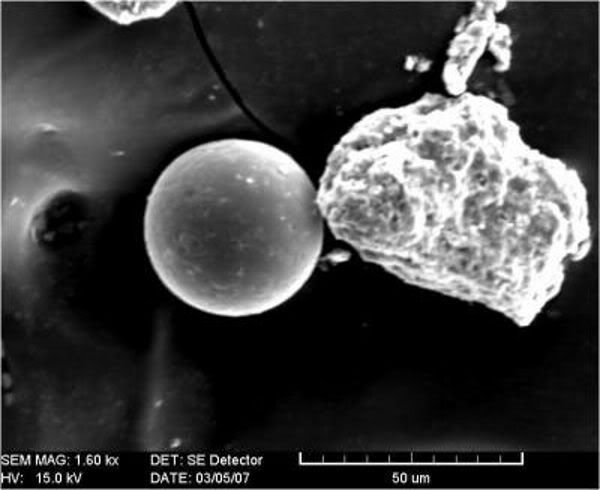
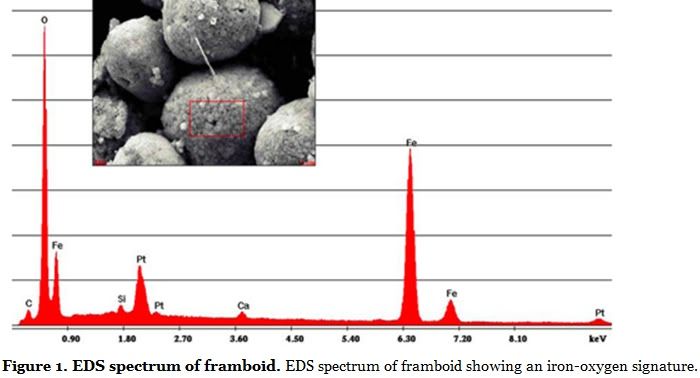
Both of these reactions can create "iron rich microspheres." Looking for these is not a good way to tell what kind of reaction actually took place, which is why the Truthers have been barking up the wrong tree for almost a decade.
You see, if you have actual thermite, iron oxide + aluminum ==> iron + aluminum oxide + heat, in real life it doesn't stop there. You then have hot elemental iron
in the atmosphere, which oxidizes on its own almost immediately. There's no reason at all to expect the iron to stay elementally pure, unless you carried out the reaction in a neutral atmosphere, or a vacuum.
Truthers like Steven Jones also make the extraordinary assumption that the shape of the resultants was significant. The argument was that you'd only see microspheres as a result of surface tension acting on droplets of the material, i.e. you'd need an actual pool of molten, pure iron to get any microspheres splashing out of it. As it turns out, this is nonsense, since "iron rich microspheres" can be created in many processes that don't involve melting a large volume of iron -- like burning steel wool, as Dave Thomas showed some time ago.
So, in conclusion, there is a difference between your reaction and a thermite reaction, but it isn't clear that there is one between what you did and what Dr. Harrit did. He has never provided any evidence that he indeed was reacting thermite. He just thinks he did.