tube said:
Of course. But let me be clear about the order of my logic; I believe most casts are bogus and therefore do not exhibit dermal ridges, not that since they do not exhibit dermal ridges I conclude they are bogus. I believe most casts are bogus for entirely different reasons.
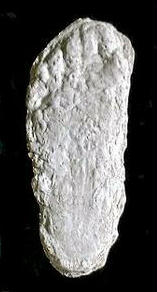
There is a major, glaring, problem in the world of Sasquatchery; so glaring and foolish that it almost makes me want to walk away from the whole enterprise; and this is the blind acceptance of the morpological dissimilarity of all these feet! I have personally examined a number of casts; "Wrinkle Foot" Onion Mountain, Dennis Heryford's cast, "Cripple Foot" Jerry Crew's cast, Patterson film site cast, John Bindernagle' cast, and various others. THEY ARE ALL PROFOUNDLY DIFFERENT IN SHAPE!
Actually, Meldrum was able to identify ones from the same individual.
I can only go by photos, but I see profound similarties between The Bluff Creek 17.5" Crew track and a 15" Blue Creek Mountain cast. A right Hyampom is almost a match for a left Bossburg. Strathcona looks like Shawnee State Park. I've seen a photo of Heryford holding his cast before it was cleaned up and it looked an awful lot like Sherriff Closner's cast.
I'll bet my feet are different than yours.
Krantz thought the four-toed tracks could just be from the fifth toe not printing. I'm not familiar with any three-toed tracks other than the alligator tracks.
I think variation in substrate (which would influence the spread of toe pads and plantar pads), age of tracks and age of individual could be factors. Also gender; females seem to have narrower feet than males. Also movement of the foot; a side-to side movement could make part of the track appear wider than the foot that made it. Variations occur in a single trackway. Wouldn't fakes be nearly identical?
My own feet, before they acquired their rather attractive bunions (Ballanchine thought bunions give a nice line to the foot and wanted his Ballarinas to have them), gained a size in length and width just from being used a lot. Their tracks wouldn't have matched my younger feet. Krantz noted an arch on juvenile tracks and wondered if the loss of the arch was due to weight or was genetically determined.
There is a reason we can track animals; there is enough morphological similarity between individuals within a species that we can identify the species by the track. I'm currently reading Wilderness Tracks by Barbara Butler. I had no idea that a Grizzly bear track could be differentiated from a black bear track, but that is the case. Same genus, different species. The blunt reality is that purported Sasquatch tracks differ among themselves as much as a raccoon tracks differs from dog tracks! At this point various apologies are made by Bigfooters like "we must have multiple species" or "we must be seeing inbreeding". To me, the obvious, parsimonious explanation is that we are seeing human (hoaxer) creativity in action!
Or we may be seeing normal variation in a living species. I don't have a problem with possible subspecies. Most other animals seem to have them.
Bigfoot casts are kind of like the religions of the world; logically they can't all be true therefore most, it not all, must be false.
LAL, you seem much more inclined to accept that the Blue Creek Mountain tracks of 1967 were made by a Sasquatch than I am. If the tracks were indeed made by a Sasquatch, and not Ray Wallace, then surely Sasquatch has a "double ball" foot. Why don't other tracks which I assume you accept as real like the Patterson film site or "Cripple Foot' have a double ball?
More like three Sasquatches.
Meldrum explains the "double ball" and differed from Krantz on that. Still trying to find that; it's in Murphy somewhere.
I believe Green on Blue Creek Mountain. He was there; I wasn't.
How would a rigid wooden foot bend up?
http://www.bigfootforums.com/index.php?showtopic=9553&st=40
Doesn't it make more sense that Wallace, or Mullens, if he carved the feet as he claimed, used a Titmus cast for a model? Even the double ball doesn't match up, BTW.