• Quick note - the problem with Youtube videos not embedding on the forum appears to have been fixed, thanks to ZiprHead. If you do still see problems let me know.

"Living Beyond Our Means..."

This pulls together some stuff I knew and some I didn't. The broken metric in question is the US poverty line and why it skews other metrics. I'd love to see these numbers crunched for the UK. (hat tip to @russincheshire.bsky.social)

This is shocking only because most people don't realize how much of their monthly budget goes to food. Let's put a little meat on that stat; for 2025 the federal poverty limit for a single person is $15,650. One third of that is $5,216 per year or $434 per month or about $14 a day. That doesn't strike me as "minimum food budget." Yes, you're not dining out at the Ritz, but you're hardly wasting away with a little common sense about money--buy extra of foods that you like when on sale, substitute lower priced items when something you like is too expensive temporarily (I had an extra slice or two of bacon back in January instead of eggs).
 
Last edited:
you're right about comparing it to the ritz, even eating 3 meals at a gas station would cost you much more than $14 a day. idk how pointing out that you can achieve that by eating a minimal amount of staple foods when they're on sale isn't minimum food budget though.

besides, the point of the article was that by that measure of poverty food is the only metric that has held steady since establishing it.
 
You might be able to eat on $14/day, but you're living in a cardboard box at $434/mo (presumably including utilities?). So I'm not guessing your kitchen amenities are all that for storage and preparation of even a cheap staple diet.
 
I’ve had to point this out to doom and gloom merchants in other threads. World poverty and “living beyond our means” will be a thing of the past quite soon, maybe by 2050.

The global birth rate continues to decrease and the world’s population will decrease. Those who predict a later date, say late century, expect the birth rate to bounce back, for reasons I can’t comprehend. In fact, if the population continues its current trend line, it could be even earlier than 2050.


So our children and particularly grandchildren will live in a world where population decline could raise quite a few problems. “Living beyond our means” will not be one of them.
 
One of the biggest problems is fresh water being where we need it. A lot of water supplies depend on high mountains being cold enough. That is turning out to be a problem. If Mount Kailash has that problem there will be major consequences.
 

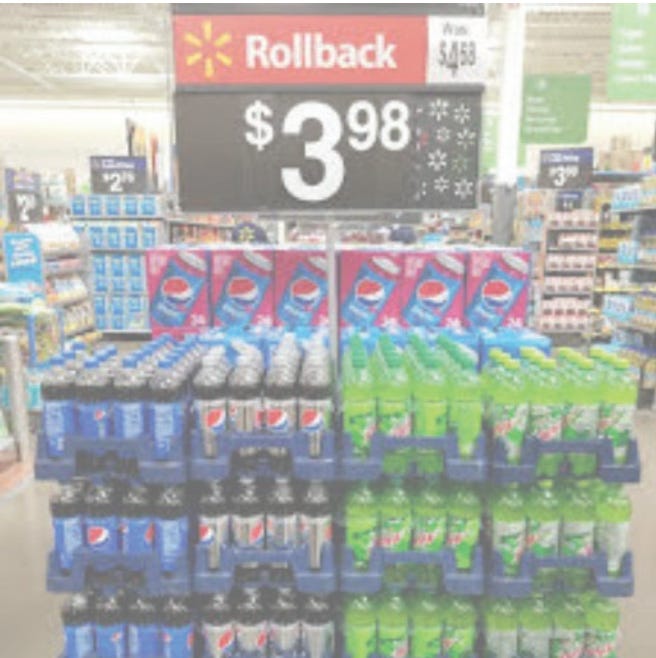
walmart and pepsi used monopolistic practices and coordinated to raise prices, with the help of the ftc. walmart likely has done so with other large suppliers of other products as well.
 
I’ve had to point this out to doom and gloom merchants in other threads. World poverty and “living beyond our means” will be a thing of the past quite soon, maybe by 2050.

The global birth rate continues to decrease and the world’s population will decrease. Those who predict a later date, say late century, expect the birth rate to bounce back, for reasons I can’t comprehend. In fact, if the population continues its current trend line, it could be even earlier than 2050.


So our children and particularly grandchildren will live in a world where population decline could raise quite a few problems. “Living beyond our means” will not be one of them.
You're assuming population is the only factor. If we don't get a handle on global warming by 2050 then the effect could be devastating for the food supply, and no amount of money may be enough to fix it. This could cause mass migration as people move to areas that are more fertile.

The median projection is for the global population to peak at 10.5 billion around 2080, remaining above 10 billion to beyond 2100. Countries predicted to decline before then may not, due to immigration. This is already happening. In New Zealand the population appeared to be leveling off in the 1970's at a sensible 3.1 million, but since then has been steadily climbing - reaching 5.33 million in November 2025. The 'European' proportion is now declining (reversing the earlier trend) as the 'Asian' population increases. In Hastings Indians and Chinese are becoming more prevalent, while Pacific Islanders make up most of the seasonal workforce. Our government is currently negotiating a free trade agreement with India which may encourage even more immigration from there.

The truth is that for the foreseeable future global population decline isn't a problem, except for racists. However 'living beyond our means' will continue to be because that's what humans do. Right now we are living way beyond our means, as resources are dwindling and cannot sustain even 8 billion long-term, let alone over 10 billion. Luckily efforts to combat global warming are going some way towards addressing this, but a lot more will be needed to avoid mass starvation and lower living standards.

The question is can we develop the technology required to live sustainably and affordably with a population 10.5 billion? There are indications that we can, but only with global economic and political stability. If we fight over resources instead, as Russia and Israel are doing right now, it may not happen.
 

walmart and pepsi used monopolistic practices and coordinated to raise prices, with the help of the ftc. walmart likely has done so with other large suppliers of other products as well.
Pepsi make food? I see they own a lot of brands, but none of them appear to be associated with actual food. IMO the more expensive their disgustingly unhealthy drinks and snacks can be the better.
 
i think they're considering it food for legal purposes. although pepsi owns a lot of brands of sodas and other snacks, like lays and doritos. and figure too, if you go to a restaurant, they typically either offer pepsi or coke products, almost always not both. makes you wonder in what other ways they collude with other chains if they are doing it with walmart.

anyway, not sure if you read the article, but the higher prices scheme ends up funneling price conscious shoppers into walmarts for better deals, where they end up having fewer options because pepsi is squeezing out the rest of the market unfairly due to a backroom deal they made with walmart. and the ftc was in on it.
 

Back
Top Bottom