Judd v. Obama (Orly Taitz)

Orly really hasn't got the hang of how courts work.

During the conference in judge’s chambers defense stated to judge Reid that they do not have any witnesses. They did not bring one single witness to counter prima facie evidence by Paul Irey and Felicito Papa that Obama’s BC is a forgery. That is the reason why no witnesses for defense were called. I would be absolutely shocked if after this Judge Reid would rule Obama to be legitimate

This was a time limited hearing. Orly was supposed to be bringing 7 'witnesses' to this trial, yet only 2 were heard, the second cut off as the time allotted to Orly's crazy was up.

I'm not surprised that the defence didn't bother bringing anyone because:

1. Orly is barking
2. There was no time.

They didn't even get to closing statements, yet Orly thinks that this is going to be some sort of landmark case. There is going to be no ruling as to the legitimacy of the Presidency of BHOII.

Her statement just goes to prove that as a lawyer, she's better off being a dentist.
 
This was a time limited hearing. Orly was supposed to be bringing 7 'witnesses' to this trial, yet only 2 were heard, the second cut off as the time allotted to Orly's crazy was up.
Best summed up by Orly's first witness, Christopher-Earl: Strunk in Esse (yes, he's a FOTL'er) who spent 40 minutes on the stand, and came away with a testimony that basically included his name and address.

Everything else had been objected to by the defense, and the objections sustained.
 
Just noticed something a little wrong on Orly's site.

Her latest post on her website seems to have the comment of someone challenging her within it. It also includes the email and IP address of that person. All of the comments in the comment section do not include this comment, yet her supporters can remain anonymous.
 
Just noticed something a little wrong on Orly's site.

Her latest post on her website seems to have the comment of someone challenging her within it. It also includes the email and IP address of that person. All of the comments in the comment section do not include this comment, yet her supporters can remain anonymous.
That's Orly Taitz' IT skills for you. It shows up for her, since she's the site admin (she likes to call out "Obots" and have her flying monkeys trace their IPs), so go figure it shows up when she's copy-pasting it. And like she hasn't a clue why SSN's are supposed to be redacted, she doesn't see anything wrong in blathering her flying monkeys' IP/email addy all over her site.

If you aren't already using stuff like NoScript, AdBlock & Flashblock when visiting her site, be afraid. Be very afraid.
 
Everything else had been objected to by the defense, and the objections sustained.

It had been stricken largely due to his utter lack of subject-matter expertise. The commentators are a little aghast at Judge Reid having admitted and allowed so much, but this is not tremendously surprising to me. Judges frequently err on the side of admitting marginally qualified expert testimony with the option later of striking it. So Strunk was allowed to testify initially as an "expert," but then the defense prevailed in voir dire. Hence nothing remained of his testimony.

Keep in mind that most judges and counsel in trial are looking ahead to an eventual appeal. Hence they will conduct the trial so that an appeal has the most grist for the mill. If there is ever any question about the impropriety of testimony, having the testimony on record is preferred over not having the testimony admitted.

This is especially salient for the early Birther cases where "expert" testimony about the birth certificate was ruled inadmissible outright. That is, you have to be a pretty lousy pseudo-expert not to be allowed to testify at all.
 
The commentators are a little aghast at Judge Reid having admitted and allowed so much, but this is not tremendously surprising to me. Judges frequently err on the side of admitting marginally qualified expert testimony with the option later of striking it. So Strunk was allowed to testify initially as an "expert," but then the defense prevailed in voir dire. Hence nothing remained of his testimony.

I spoke with a lawyer friend about this. As he told me, having evidence admitted does not mean that it's a slam dunk or gives the evidence legitimacy or value. It's down to the opposing lawyers to challenge it and remove it as anything of substance in the trial, and it seems that there was no time for this to be done.

He also thinks it is funny that Orly is crowing about how huge it is to get evidence admitted into proceedings.

JayUtah said:
Keep in mind that most judges and counsel in trial are looking ahead to an eventual appeal. Hence they will conduct the trial so that an appeal has the most grist for the mill.

One of the things he pointed out after skimming through what's available is that proceedings were cut off in the middle of cross examination, and that both lawyers did not get to present closing statements. For a judge to make a ruling in favour of the plaintiffs would be a failing by the court, and an appeal would have it overturned, and the judge disciplined.

Whatever is coming down the pike does not look good for Orly.
 
I spoke with a lawyer friend about this. As he told me, having evidence admitted does not mean that it's a slam dunk or gives the evidence legitimacy or value.

Indeed the first hurdle is admissibility. There are other hurdles.

Admissibility is a low hurdle. You have to show only that it is relevant and putatively reliable, i.e., that it has probative value and that its reliability can be tested in open court. The judge is a gatekeeper; he may rule spontaneously that evidence is inadmissible, but his omission from doing that does not enshrine the evidence forever thereafter as admissible or valuable. It may be heard but then later stricken upon motion or disregarded by the trier of fact. The judge in his gatekeeper role may hold pre-trial proceedings to hear arguments about the admissibility of evidence. But in some cases, such as for testimony in open court, the question of admissibility may not be justiciable on ripeness grounds until the testimony itself is heard.

In the case of expert testimony is it customary but by no means required that the qualification of the witness as an expert precede his testimony in open court. Typically the adverse party stipulates to the qualification, and will already have deposed the witness. In other (but few) cases voir dire is appropriate, and the ripeness criterion applies.

Here's the background: Taitz has a standard bundle of 200-odd pages of illegible, disorganized, unindexed documents that she dumps in the laps of all her prospective defendants (when she can manage to serve them properly) as her response to a motion for discovery. She desperately wants this unholy mess admitted in toto as evidence, sort of her attempt at throwing lots of mud against the wall and hoping some sticks. She has no clue what constitutes evidence or discovery.

It has come to light that she surreptitiously tried to get what was likely to be Sheriff Joe Arpaio's infamous affidavit admitted as evidence in open court in connection with Strunk's testimony. The defense caught the failed sleight-of-hand and asked what it was being submitted, whereupon Taitz withdrew it without comment. Keep in mind that Arpaio, misguided as he is on his own, wants nothing to do with this huge ball of crazy and has refused to cooperate with her. That didn't prevent her from locating and downloading Arpaio's affidavit from a public records website and trying to reopen a bunch of her previously-dismissed actions on the grounds of having "new evidence." The affidavit is inadmissible as hearsay and because it inappropriately draws its own conclusions of fact and law. It does not provide or allege any testable facts pertaining to Obama's eligibility, only proposes a theory for how the PDF copy "may have been" forged.

It's down to the opposing lawyers to challenge it and remove it as anything of substance in the trial, and it seems that there was no time for this to be done.

Indeed, it looks like the cross-examination was beginning to lay a proper groundwork to strike on the basis of relevance (i.e., that the properties observed in a digital copy of a document, and pertinent only to the digital medium, are irrelevant to the authenticity of the paper copy from which it was derived). I agree also with the commentators that the defense could have conducted a more effective voir dire on expert qualifications, but I think there is sufficient grounds for disqualification.

As I said above, it is not necessary for the trier of fact to decide the question of expert qualification before testimony is rendered. That question may be decided after the presentation of evidence has concluded, in which case the trier of fact may disregard any subsequent testimony that requires qualification.

Full Faith and Credit allows Reid to cite other states that have ultimately stricken or disallowed as irrelevant evidence for forgery in the PDF on the basis of the Hawaii certification. She may also draw her own conclusions of fact and law. Even though the defense did not seek or obtain a motion to strike in the cases of Irey and Papa, as they did for Strunk, that does not compel Reid to give any weight to them in deciding the ultimate issue.

Strunk did not claim expert status. He is simply the originator of a FOIA request pursuant to which he received what he alleges to be a copy of Obama's passport application. It is the document, not Strunk, which is evidence here. The document is ruled inadmissible because it is being presented as a public record but has not been certified as a true copy of the record and hence is hearsay. The testimony of Strunk himself is stricken because he is merely the conveyor of hearsay and has no knowledge of any relevant facts.

In short, Taitz' utter incompetence over what constitutes evidence and how to present it in court is what sank Strunk and the passport application.

He also thinks it is funny that Orly is crowing about how huge it is to get evidence admitted into proceedings.

Taitz is crowing because this is the first time in any of her cases that she has managed to navigate the local rules correctly and have any evidence admitted, and further have it heard in open court. Previously she has run afoul of trial rules or has failed to qualify the witnesses. Since this is a first for her, she has cause to crow. However it's akin to a kindergartener crowing about his newfound ability to finally sit facing forward on his tricycle.

She still has not qualified her expert witnesses. I'm somewhat puzzled by the judge's statement that the "motion to qualify" no longer exists in Indiana law. Normally the formal voir dire of an expert witness (where it must occur) begins with a motion to qualify, proceeds with a presentation of the expert's qualifications and the challenge by the adverse party, and often concludes with a ruling on the motion or a deferral of same. While Indiana follows the federal rules for expert testimony, it appears there may not be a separate qualification. I will research this further.

Taitz' direct examination of Papa is a shambles. She has no clue how to examine an expert witness. She launches into his findings with a bunch of leading questions without first laying an expert foundation. The defense objections to this may constitute a sufficient voir dire to allow Reid to disqualify Papa. She attempts a foundation about halfway through his testimony, upon irrelevant grounds, as if she has finally understood what the defense is objecting to.

Judge Reid rules that there is no foundation for Papa's "expert" conclusions. This is not the same as ruling that Papa is disqualified as an expert; only that the testimony he presented in court cannot be considered expert testimony because it has not been presented correctly as such. But it has the same effect: his testimony is irrelevant.

The defense cross is actually pretty astute. Since Reid has already ruled that Papa may not draw any expert conclusions in his testimony, the cross deals only with the lay portion of Papa's testimony and not his (non-existent) foundation and (inadmissible) conclusions. Papa's testimony after the defense's motions, objections, and crosses is simply that he downloaded certain digital documents from an unknown source and looked at them. The cross-examination destroys the reliability prong of the probative-value question.

Ultimately the documents he tried to refer to are also ruled inadmissible. Originally the defense objected to the pages that contained only the "layers" separated out in Adobe Illustrator but did not object to the first page, which is apparently a printout of the PDF. The printout was also ultimately ruled inadmissible as hearsay. In short, Papa's exhibits were at first entered as evidence but then ruled inadmissible. Taitz doesn't seem to know the difference between entry as evidence and admissibility.

Irey's testimony is another animal. The defense objection to expert qualification was overruled and Taitz laid a (sort of) foundation. See, when you examine an expert, you have to get that expert to testify in open court what his qualifications are and what work he has done to arrive at the expert conclusions he's going to present. This has to be done -- even if the judge has already ruled that the witness can be considered an expert -- for two very important reasons. First, the jury (or other trier of fact) has to hear the qualifications so that they may weight the value of the testimony against them. Second, so that adverse counsel may, if possible, undermine the credibility of the expert upon cross examination by showing that the expert's qualifications and work are insufficient to support the conclusion being drawn. Cross examination can only address what was said in direct examination, so the direct examination is required to provide a basis for opposing counsel to question the expert's qualifications. Taitz didn't do this for Papa, thus denying the defense the right to challenge his testimony on grounds of his having sufficient expertise.

I won't go into the substance of Irey's testimony since that more properly belongs in the moderated thread.

One of the things he pointed out after skimming through what's available is that proceedings were cut off in the middle of cross examination, and that both lawyers did not get to present closing statements.

At first I was under the impression that the Oct. 22 proceeding was simply a hearing on the motion to dismiss. But according to the docket it was intended as an expedited trial under Indiana rule 42(B), which provides for separate trials on individual causes in the complaint where circumstances such as expedition prevail. Hence this should have been a trial in all respects. Trial rule 43(D) provides for opening statements and cases in chief, but not for closing statements. Hence under Indiana law a trial might be considered sufficient without them.

The same rule also gives a judge discretion in limiting or directing the presentation of evidence. This includes setting limits on the time, and has a good chance of withstanding appellate review in this case given Taitz' incompetence and tendency to screech and ramble incoherently. Judges have leeway to reign in unruly counsel by such means.

By Taitz' characterization of the discussion in camera, the defendants disclosed that they had no case in chief (or at least no witnesses). The only substantive grounds for Taitz to appeal would be that she was allowed no redirect on her final witness. Otherwise the record will show that she presented her case in chief and would have had no opportunity for cross-examination in a defense presentation. Hence it would be very difficult for her to show that she did not have her day in court.

The real disadvantage, as we have noted, is the incomplete cross examination of Irey. While the trial rules give the judge discretion over the order and circumstances of presenting evidence, it does not give Reid leave to simply omit a cross examination, previously imposed time limit or not. As your friend notes, if she rules for the plaintiffs she will face a fairly stern-faced appeals court on that basis. However this may render moot any eventual claim by Taitz that she was not permitted a redirect for Irey, since there was little if any cross and therefore little need to rehabilitate that witness.

Whatever is coming down the pike does not look good for Orly.

Not at all. Orders were due today by close of business. However, I do not expect a ruling forthwith because I expect Judge Reid to stall until it's too late for Taitz to make some sort of hare-brained attempt at an emergency appeal before the election. The "emergency" motion to enjoin Obama's name from appearing on the ballot has already been denied.

 
It should probably be mentioned that the hearing was based on the Second Amended Complaint (SAC), which Orly was not given a leave to file in the first place.

I made the mistake earlier to try and get my head around the course this particular case has taken. As a result, I have a massive headache now.
 
Orly still seems to be in great spirits over what happened in IN, judging by her website, and has issued an answer to a question about what happens if it doesn't go her way. I'm posting the full response, as I know that there is apparently an occasional danger of acquiring malware from her site. A link for the brave.

yes, of course Actually, the state might not appeal if they lose. Keep in mind: Governor Mitch Daniels, Attorney General Greg Zoeller and Sec of State Connie Lawson are all Republicans. They realise that if the decision is in our favor, we might not pursue other causes of action and other remedies. Declaratory relief deeming Obama ineligible is at the center of the complaint. They understand it and the judge understands it. The judge is older, very experienced, very smart. I don’t know how old is she, but she is all gray. She understands what is going on. When Kenneth Joel was cross examining Mr. Irey, he did not know what to ask or say.

After Irey said that it is a forgery, that letters came from different typewriters Joel told: objection, do you know exactly how those certificates were done in the health department. I stated, your honor, he already stated that it was done with a typewriter, you cannot have letters of different sizes, shapes and fonts made with one typewriter. The whole question was stupid, as clearly one would not sit there and type a letter “a” with one typewriter and “b” with another and so on. I felt bad for Ken Joel. He probably thought to himself “I can’t believe I am being forced to defend this ****” The courtroom was full. I think that everybody there felt bad for Joel, in that he was forced to defend this
 
Orly still seems to be in great spirits over what happened in IN...

I do agree with her on one point: I'm reasonably sure the AG's office was indeed thinking, "Why are we being forced to mount a defense for this?"

I discuss Paul Irey's testimony in depth in the moderated thread. If Taitz thinks he is the least bit credible, she's pretty far out in the weeds. As we know she is.
 
And true to form, Orly has (apparently) refiled Judd v Obama in Federal court in California's Central District. No docket as of yet, but it'll be interesting to see what she threw at them this time.
 
Orly's crowing about her fantastic new 'witness' to the alleged forgery of the COLB.

http://www.orlytaitzesq.com/?p=360487

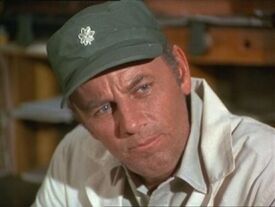
A Dr Henry Blake has filed an affidavit in support of Orly's nonsense, and he's packing 'credentials'

"I have 40 years experience with a variety of computers including: Personal Computers, Work Stations, Mainframes and Super Computers."

I just hope it's this guy.

275px-Lt-Col-Henry-Blake-MASH.jpg
 
Yes, it would be hilarious if it were that Henry Blake. But given the Birthers' track record on experts, this promises to be quite hilarious.

Birthers still haven't figured out that being "a computer guy" is not enough. Computer science is a huge field. I too have plenty of professional experience with all types of computers, from microcontrollers to supercomputers -- as in designing and building them, not just using them. But none of that matters unless one can also talk intelligently about image processing and the specific techniques used in the Adobe Portable Document format. I have that expertise as well, because I specifically required it to do certain aspects of my job. Not every "computer guy" has that specific knowledge. They've had various "computer guys" that have turned out in some cases to be artists, and in other cases to be business and legal consultants. None has turned out to have any applicable subject-matter expertise to the arguments they plan to make. This will not survive voir dire, nor Orly Taitz' ineptitude at laying a foundation for expert testimony.

The Birthers still haven't figured as well that their accusation is of forgery. The forensic detection of forgery and the forensic analysis of documents (digital or paper) is a separate set of skills. It may involve delving into digital document formats and image processing, but the ability to attribute observations either to normal operations or to forgery depends on a comprehensive knowledge of how both behave. Birther pseudo-experts can show no experience or training in forensics. That simply will not fly in court. As was shown during the Indiana cross-examination, downloading a PDF from some web site does not establish that the records in question were forged at the source.

And the Birthers haven't figured out that there is no legal significance to accusations of the PDF being forged. They obsess over the PDF because it's all they have, not because it matters. They can trot out any number of "computer guys" as witnesses for their tabloid articles and it will have not the least effect upon the probative value of the official birth certificate, which was a paper copy, not a PDF. In fact, Taitz is definitely stuck in the Birtherism of about two years ago, when it was largely theorized that the paper copy was just a printout of the Photoshopped PDF.

And still there's no legal theory to account for Full Faith and Credit. You'd think after being slapped down repeatedly in state court after state court, the Birthers would realize that simply expanding their baseless accusations to encompass Dr. Onaka doesn't mean they suddenly have a theory that gets around the U.S. Constitution. We don't expect Orly Taitz to have an answer for a complicated legal concept such as full faith and credit when she's still working out how to file motions, serve process, and behave in a courtroom.
 
Orly's crowing about her fantastic new 'witness' to the alleged forgery of the COLB.

http://www.orlytaitzesq.com/?p=360487

A Dr Henry Blake has filed an affidavit in support of Orly's nonsense, and he's packing 'credentials'

"I have 40 years experience with a variety of computers including: Personal Computers, Work Stations, Mainframes and Super Computers."

I just hope it's this guy.

[qimg]http://images1.wikia.nocookie.net/__cb20120915042548/mash/images/thumb/1/1f/Lt-Col-Henry-Blake-MASH.jpg/275px-Lt-Col-Henry-Blake-MASH.jpg[/qimg]

He's comparing two versions of a document that he claims is fake to begin with?
 
He's comparing two versions of a document that he claims is fake to begin with?

Yes, the affidavit itself is legal and technical joke, carrying on in the best tradition of Orlylaw.

Technically, yes Blake just compares two digital files both purporting to be scans of the same paper document, both purported to have been submitted by the defense, and at least one of which purporting to have been made available by the White House by downloading it from the White House web site. He claims that "alterations" occurred between them.

The bulk of the affidavit lists what he considers to be these alterations (i.e., differences between two digital images). They are essentially comical, amounting to such obvious things as one copy being redacted while the other copy is not, text being variously selectable in "Adobe Reader," and text colors differing in subtle ways. He describes these specimens in non-technical gibberish ("digital electronic page documents") hoping, I suppose, to convince someone he knows what he's talking about.

He does not.

He doesn't bring any facts to the table that would require any knowledge of digital imaging, digital document representation, computer science, or the forensic examination of documents. His attested facts are simply observations at large. And therein lies the problem. In order for testimony to be considered expert, it has to go beyond the ken of the lay juror. Anything that arises rationally from the five senses is within the ken of the trier of fact and cannot be made the subject of expert testimony. All this "expert" has done is note visual differences between two displayed images, which anyone can do.

He offers no image analysis, which is good because he lays no foundation for image analysis in his statement of qualification. He purports to have no greater access to the relevant facts than anyone else: he simply looked at the digital images in the case file. He offers no conclusion beyond that which can be drawn by the trier of fact based on his own senses, hence fails the relevancy prong of the admissibility test. In order to be admissible, an expert testimony would need to draw a learned conclusion for how those "alterations" occurred, show how the expert's study of the evidence supports that conclusion above all other possible conclusions, and show how the conclusion rationally supports an accusation of forgery.

Taitz really doesn't get how the law works.
 

Back
Top Bottom