Perhaps there is, but as you've described them, the class is known as "idiots."
Or maybe "suckers."
And I'm (ahem) not entirely convinced that we should be encouraging people to model their investment behavior off of idiots who have never heard of rebalancing.
So, um, gold is supposed to go up 1400%, but not enough to raise their investment in gold above 10% of their portfolio. Interesting. I guess I want to know what the rest of their portfolio is supposed to be.
The whole point of diversification is to create offsetting profits against "expected" losses due to random fluctuations. I.e. if gold is doing well and stocks are doing badly, you sell gold (high) and buy stocks (low). Especially with a non income-producing investment like gold, the idea of buying it and not rebalancing periodically is daylight madness, as it essentially defeats the purpose.
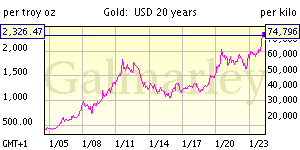
But there's a further reason that buying gold is irrational. As you point out, the 10% diversification requirement you set above is "somewhat arbitrary." It's not just arbitrary, but it's stupid. If you look at the long-term profitability of gold, or even its long-term performance as an inflation hedge, gold is a worse commodity to invest in than, say, Twinkies or classic cars.
The people who actually do investment planning for a living have elaborate spreadsheets and calculations about how much you should put into each class of assets for a given risk/reward profile in order to maximize your expected return. And these calculations can be optimized -- there's an actual correct number, based on history.
The "correct" amount of gold to have in order to maximize risk/return appears, empirically, to be zero. Every percentage point of your portfolio you put into gold both increases your risk and decreases your reward, when measured against the optimal portfolio (which of course, historically, is heavily weighted towards equity stocks if you want reward, and heavily weighted towards cash investments and Treasuries if you want low risk).





 Gold is 100% safe, but INTC is just too risky.....
