Gage's next debate

...
3) Extracting sulfur dioxide from drywall requires a very specific set of conditions including an atmosphere containing nitrogen. These conditions are only attainable in a kiln where the atmosphere is controlled.

...
Where do you find this stuff. Let me see, air is only 78 percent Nitrogen. Is that enough atmosphere of nitrogen? The steel did not melt, it was corroded, big difference; did you read the paper?

This is cool...
...
Steel starts to lose its shape at around 2650-2700ºF and is considered "liquid" [can be poured] at about 2750 ºF. ...
Sure!
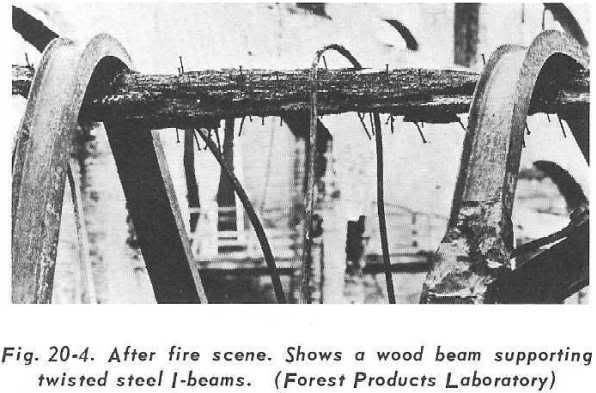
woodsteelfire.jpg

Oops, steel lost it shape in an office fire...
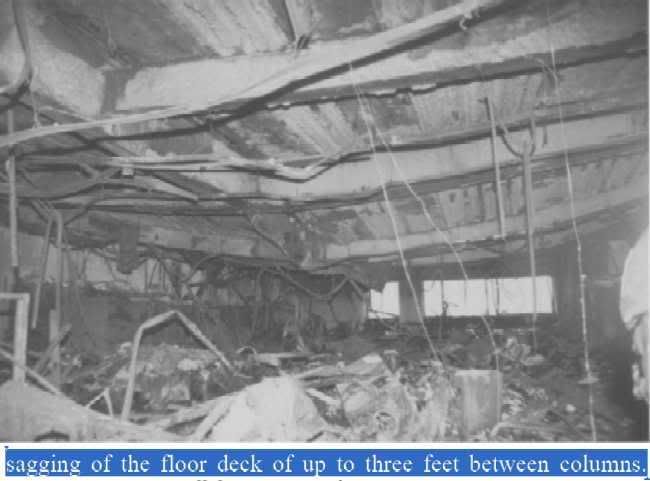
onemeridiansag.jpg

Darn. Office fire temperatures cause steel to "lose its shape". Did you make up your stuff on fire and steel, or get it from Gage? 9 years and no Pulitzer, I checked, you guys have no Pulitzer for what would be the biggest story if true. Darn, short on facts, long on fantasy and made up claims - 911 truth.
 
Last edited:
Sunstealer,

What you are proposing has several fatal flaws.

Jonathan Barnett, who discovered the sulfidation, is professor at center for fire safety studies in Worcester, Massachusetts. He is also a metallurgist.
Don't you think he would propose the drywall hypothesis if it had any probability?
Well one of the co-authors of the paper, Prof Sisson, is claiming it. You even quoted him as part of your rebuttal in post #465.

Do you really think that they would use drywall for fireproofing if it released a toxic gas when heated?
see ozeco41's post #470. He's already explained why this line of reasoning is wrong.

The test was done in a SO
2 and O2 environment [pg 160]. This is nothing like the environment in question.
If you want to test to see what SO2 does you don't add lots of other gases into the furnace environment because these gases can affect the study. I've told you this before.

For example lets say I wanted to know the effect of SO2 in fluidised bed combustion I'm not going to burn coal and pump the resulting gas into my furnace. It's impractical and uncontrollable. You seem to want an exact, un-knowable atmosphere for some bizarre reason.
 
.....

The argument about SO2 causing corrosion is now over. Where and how the SO2 comes from might be a different matter but we would have to rule out every possible source before moving on to thermate.

Gypsum is a naturally occurring form of calcium sulfate, CaSO4·2H2O. It is used in the building trade for gypsum board, also called drywall, … The sulfur can be removed from the gypsum by a series of chemical steps including use of a heat, reducing agents and catalysts.
1 Roast the gypsum moderately in an oven, causing it to give off its "waters of hydration."
CaSO 4 ·2H2O ' CaSO4 + 2 H2O'
The anhydrous calcium sulfate can then be processed further to obtain a separation or extraction of its sulfur content.
2. Heat the gypsum in a kiln to 600 to 900 degrees C in the presence of a reducing atmosphere such as hydrogen or carbon monoxide to produce calcium oxide and sulfur dioxide. Using hydrogen, for example,
CaSO4 + H2 ' CaO + H2O + SO2
http://www.ehow.com/how_5700758_extract-sulfur-gypsum.html
I think you can make sulfuric acid by burning sulfur to produce sulfur dioxide, then bubbling the sulfur dioxide through water ... it worked for me
http://www.finishing.com/391/46.shtml


Sunstealer, is this a possible process for turning drywall into sulfuric acid which corroded the steel as seen.


In the burning pile, after the collapse, the crushed gypsum - CaSO4·2H2O is dehydrated by the 600-900C deg fires and when exposed to hydrogen from the water and steam, gives off SO2 – Sulfur dioxide. IIRC firemen reported the water poured on the fires turned to steam. A reducing atmosphere of hydrogen from water and steam at 600 -900C deg turns SO2 to H2SO4 – sulfuric acid which attacks the steel as seen.

The dehydration of the drywall could have occurred before or after the collapse, but the exposure to the hydrogen reducing atmosphere that produced the sulfur dioxide and subsequent sulfuric acid could only have occurred after the collapse.

The damage to the two steel samples could not have resulted from thinly painted thermite, which flames are diffused and has been shown by others to have the energy to only heat the steel to a few degrees.

The damage to the two steel samples, with wide irregular areas of corrosion could not have resulted from thermate (thermite +sulfur) devices which either focus the cutting effects in a straight line through a slit in a box, or focus the cutting effects in a spherical pattern through a flare type device.
 
Last edited:
Do you really think that they would use drywall for fireproofing if it released a toxic gas when heated?

First off, the primary role of drywall is not fireproofing. It's for decoration.

Secondly, here are a list of things that give off toxic gasses in a fire. Using your logic, we should ban them from being stored any place that fire may occur.

PVC
Any kind of plastic, including soda bottles, computers, televisions, storage bins, etc. etc. etc.
Foam found in seat cushins. (No more office chairs!!)
any type of fiber that is made with oil compounds.
Cooking oil
cleaning supplies
wood
paint
cotton
styrofoam

ALL things that produce smoke when burning is toxic. Hence, why you don't breath in smoke.

Any plastic will produce toxic chemicals when burned. Should we outlaw plastics?

Your line of reasoning sucks.


[/SIZE][/FONT]The vast majority of any sulfur dioxide gas would leave the building/pile with the smoke.

The test was done in a SO
2 and O2 environment [pg 160]. This is nothing like the environment in question.

I take it that you did NOT read the papers he listed, did you?
 
Sunstealer,

What you are proposing has several fatal flaws.

Jonathan Barnett, who discovered the sulfidation, is professor at center for fire safety studies in Worcester, Massachusetts. He is also a metallurgist.
Don't you think he would propose the drywall hypothesis if it had any probability?


He did! In fact his exact words in an e-mail were

"The Possible sources of enough sulfer:
-Heating oil (extr high probability)
-Construction materials such as gyp wallboard dust
(extr high probability) -environmental sources such as acid
rain (high)"

If you don't believe me you'll have to contact him yourself.
 
Last edited:
Sunstealer
Is there a way of determining if sulfur dioxide or sulfuric acid did the damage to the steel? Which is more likely.
 
C7 said:
Jonathan Barnett, who discovered the sulfidation, is professor at center for fire safety studies in Worcester, Massachusetts. He is also a metallurgist. Don't you think he would propose the drywall hypothesis if it had any probability?
Well one of the co-authors of the paper, Prof Sisson, is claiming it. You even quoted him as part of your rebuttal in post #465.
[FONT=&quot]That was nearly 7 years later and he offered no science to back up that claim.

Kent1, Dr. Barret has not said so publicly and your claim of an email is not verifiable. His original statement in the FEMA report is that the melted/corroded beam needed a detailed study to determine to the cause but NIST did not do so and then lied when they said that no steel from WTC 7 was recovered in the final report on the towers. The final report on WTC 7 does not mention Sample #1
[/FONT]

C7 said:
Do you really think that they would use drywall for fireproofing if it released a toxic gas when heated?
see ozeco41's post #470. He's already explained why this line of reasoning is wrong.
His reasoning is ridiculous. Just because some things put off toxic gases does not mean that material used for fireproofing can.

If you want to test to see what SO2 does you don't add lots of other gases into the furnace environment because these gases can affect the study.
For example lets say I wanted to know the effect of SO2 in fluidised bed combustion I'm not going to burn coal and pump the resulting gas into my furnace. It's impractical and uncontrollable. You seem to want an exact, un-knowable atmosphere for some bizarre reason.
If you want to know what happened it the fire or debris pile, you have to do an experiment to replicate the event. The test in question does NOT replicate the conditions in the event. It was not for that purpose so stop misapplying this science.

None of the experiments listed here replicates the conditions in the WTC event but this one does:
http://www.youtube.com/watch?v=3YuDKUCALtU

Y'all will deny that which you cannot handle as always but it's just denial of evidence.
 
3) Extracting sulfur dioxide from drywall requires a very specific set of conditions including an atmosphere containing nitrogen. These conditions are only attainable in a kiln where the atmosphere is controlled.

Ho ho ho ho. This is stupendously hilarious. You should stop copying and pasting nonsense from morons without actually undertstanding what things mean. We gave you a chance with eutectic and you failed.
 
WTC 7 melted beam conundrum

NIST Chapter 1 pg 17 - Progress report June 2004
No steel from WTC 7 has been identified from the pieces of recovered WTC steel in NIST's possession.
http://wtc.nist.gov/progress_report_june04/chapter1.pdf

NCSTAR 1-3 pg xlix [pdf pg 46] - September 2005
E.6 No steel was recovered from WTC 7

NCSTAR 1-3 pg 36 [pdf pg 84] September 2005
5.2.5 No steel elements have been positively identified from WTC 7.
http://wtc.nist.gov/NCSTAR1/PDF/NCSTAR 1-3.pdf

NCSATR 1-3B pg xxv [pdf pg 27] September 2005
No pieces could be unambiguously identified as being from WTC 7.
http://wtc.nist.gov/pubs/NISTNCSTAR1-3BDraft.pdf

NCSATR 1-3C pg 5 [pdf pg 55] September 2005
No pieces could be unambiguously identified as being from WTC 7.
http://wtc.nist.gov/NCSTAR1/PDF/NCSTAR 1-3C Damage and Failure Modes.pdf

NIST Q and A 8-21-08 (Updated 4-21-09)
Why didn't the investigators look at actual steel samples from WTC 7?Steel samples were removed from the site before the NIST investigation began. In the immediate aftermath of Sept. 11, debris was removed rapidly from the site to aid in recovery efforts and facilitate emergency responders’ efforts to work around the site. Once it was removed from the scene, the steel from WTC 7 could not be clearly identified. Unlike the pieces of steel from WTC 1 and WTC 2, which were painted red and contained distinguishing markings, WTC 7 steel did not contain such identifying characteristics.


BBC "The Third Tower" At 48:00
[Professor Jonathan Barnett, Fire Protection Engineer, Simpson Gumpertz & Heger]
It came from a much larger beam… This was the size of steel that they used in the construction of Tower 7. They didn't use this particular kind of steel in Towers 1 or Towers 2. So that's why we know its pedigree. It was a surprise to me because it was so eroded and deformed and so we took it for analysis in the lab.
http://video.google.com/videoplay?docid=9072062020229593250#
 
Unless they knew exactly where in the building they came from then they were useless. Thats what they are saying.

Which sample did they say eroded in the pile and not before?
 
[FONT=&quot]That was nearly 7 years later and he offered no science to back up that claim.

Kent1, Dr. Barret has not said so publicly and your claim of an email is not verifiable. His original statement in the FEMA report is that the melted/corroded beam needed a detailed study to determine to the cause but NIST did not do so and then lied when they said that no steel from WTC 7 was recovered in the final report on the towers. The final report on WTC 7 does not mention Sample #1
[/FONT]

Y'all will deny that which you cannot handle as always but it's just denial of evidence.
Yes it is, that's why I said you can e-mail him yourself if you don't believe me. I thought you would say something like that.
That last statement seems to reflect much more on yourself as I have just shown.
 
Last edited:
Yes it is, that's why I said you can e-mail him yourself if you don't believe me. I thought you would say something like that.
That last statement seems to reflect much more on yourself as I have just shown.

The poster in question will never email ayone for confirmation. See my sig.
 
WTC 7 melted beam conundrum

...
It was not melted, it was corrosion. All these years for 911 truth, only product, failure.
Classic 911 truth lies. Pushing false information mixed with a study that was done.
Debunked by a truther site. Cool. That web site looks like it was made under the influence of meth or something making it open loop nonsense. He is the one who said the ceiling tiles had radio controlled thermite. An insane claims web site where the author failed to read and understand what he posts.

The report said corrosion, not melted. Why do you make up false stuff about it? http://wtc.nist.gov/media/AppendixC-fema403_apc.pdf

Not surprising 911 truth has failed to make progress in their evidence free quest to make up delusions. Calling corrosion melted metal is typical failure of 911 truth. Got some evidence to move Gage from snake-oil salesman to reality based research? Gage does not care, he has free travel and 70k a year from donations from those who can't think for themselves.
 
Last edited:
Most likely he doesn't even know what produces white smoke in a fire, or by what process it would be created.

What else would produce white smoke in office fires? I cannot imagine therm*te being the only possible producer of white smoke.

In my March 6 debate, on the issue of sulfidized steel, I said I don't know its source. But there wasn't very much of it so it couldn't support a global destruction of a large building with thermate anyway. I also said that the melting point of sulfidized steel is within the range of office fires anyway, so 4500 degree thermates are not necessary for this melting to occur: it can happen at much lower office-building fire temperatures.

I've since read that there were just a few beams and no supporting columns that had been corroded through sulfidization.

Simple Question Number 2: Does anyone know how many beams and/or columns were actually found in the debris with this phenomenon?

I think a good way to go about the arguments Gage makes is to point out how he quote mines/misrepresents the findings in the papers he cites.
 
C7

"This whole "sulfur from drywall" fallacy is straw grasping. Drywall would not be used as fireproofing if there was any danger of the sulfur being released in any fire. "
* * * * *

You don't even need a fire to release the sulfur. The sulfur/drywall debate has been a huge issue over the last few years in homes.

http://www.cbsnews.com/stories/2009...5752469.shtml?tag=cbsnewsTwoColUpperPromoArea


"It's not as black and white as saying the Chinese drywall is bad and all other drywall is good," Townsend said.

As expected, the contaminated Chinese samples gave off high levels of sulfur gases. But all but one of the U.S. samples emitted sulfur gases, as well - not at levels as high as the defective Chinese product, but unexpected.

Perhaps more surprising, "There were some American products that we tested that had higher emission than some of the new Chinese products that we tested," Townsend said.
There's plenty of articles on the subject.
 
Last edited:
C7

"This whole "sulfur from drywall" fallacy is straw grasping. Drywall would not be used as fireproofing if there was any danger of the sulfur being released in any fire. "
* * * * *
You don't even need a fire to release the sulfur. The sulfur/drywall debate has been a huge issue over the last few years in homes.

http://www.cbsnews.com/stories/2009...5752469.shtml?tag=cbsnewsTwoColUpperPromoArea
The damage being blamed on defective drywall is ugly: corroded copper coil, electrical wires eaten away and a noxious odor fouling the air. Health complaints range from itchy eyes to headaches and bloody noses to breathing problems.

It's believed that "bad" drywall produces corrosive sulfur gasses. The reason remains unclear

In its pure form gypsum emits no gas or odor. Bad drywall, however, is darker.

Comment:
[FONT=&quot]"The interior of drywall consists of calcium sulfate, otherwise known as gypsum or plaster of paris. There are many common anaerobic bacteria that utilize sulfate, in the absence of air and presence of water, as their oxygen source, converting the sulfate to sulfide.
The interior of drywall is a good anaerobic medium, and if such bacteria are present and the humidity is adequate, the calcium sulphate is converted to calcium sulfide, which reacts with water to produce the gas hydrogen sulfide. This gas corrodes many metals and is also highly poisonous."

We went thru this before with drywall releasing sulfur dioxide in landfills. Anaerobic bacteria release the gas in moist, oxygen free environments. This has nothing to do with how drywall reacts in a fire.

ETA: As it turns out, the drywall in question is contaminated with sulfur and other substances not normally found in drywall.

[/FONT] An estimated 60,000 American homes, built within the last five years, are rotting from the inside out.
Normally drywall is made purely from the stone-like mineral gypsum, and emits no gas or odor. But health officials now suspect at least some of the Chinese product was contaminated with dangerous chemicals,
http://www.cbsnews.com/video/watch/?id=4895804n

Tests on two small samples of Chinese drywall performed by the Environmental Protection Agency (EPA) detected three suspicious compounds in the samples. These included sulfur and two organic compounds associated with acrylic paint. Similar compounds were not found in four samples of American-made drywall, the EPA said.
The Chinese drywall samples used for the EPA tests were obtained from a Florida home. The domestic samples come from stores in New Jersey. According to the EPA, its analysis of the material found sulfur at 83 parts per millions (ppm) and 119 ppm in the Chinese drywall samples. Sulfur was not detected in the four US-manufactured drywall samples.
http://www.chinese-drywall-answers....tain-sulfur-acrylic-paint-compounds-epa-says/


[FONT=&quot]
[/FONT]
 
Last edited:
The damage being blamed on defective drywall is ugly: corroded copper coil, electrical wires eaten away and a noxious odor fouling the air. Health complaints range from itchy eyes to headaches and bloody noses to breathing problems.

It's believed that "bad" drywall produces corrosive sulfur gasses. The reason remains unclear

In its pure form gypsum emits no gas or odor. Bad drywall, however, is darker.

Comment:
[FONT=&quot]"The interior of drywall consists of calcium sulfate, otherwise known as gypsum or plaster of paris. There are many common anaerobic bacteria that utilize sulfate, in the absence of air and presence of water, as their oxygen source, converting the sulfate to sulfide.
The interior of drywall is a good anaerobic medium, and if such bacteria are present and the humidity is adequate, the calcium sulphate is converted to calcium sulfide, which reacts with water to produce the gas hydrogen sulfide. This gas corrodes many metals and is also highly poisonous."

We went thru this before with drywall releasing sulfur dioxide in landfills. Anaerobic bacteria release the gas in moist, oxygen free environments. This has nothing to do with how drywall reacts in a fire.

ETA: As it turns out, the drywall in question is contaminated with sulfur and other substances not normally found in drywall.

[/FONT] An estimated 60,000 American homes, built within the last five years, are rotting from the inside out.
Normally drywall is made purely from the stone-like mineral gypsum, and emits no gas or odor. But health officials now suspect at least some of the Chinese product was contaminated with dangerous chemicals,
http://www.cbsnews.com/video/watch/?id=4895804n

Tests on two small samples of Chinese drywall performed by the Environmental Protection Agency (EPA) detected three suspicious compounds in the samples. These included sulfur and two organic compounds associated with acrylic paint. Similar compounds were not found in four samples of American-made drywall, the EPA said.
The Chinese drywall samples used for the EPA tests were obtained from a Florida home. The domestic samples come from stores in New Jersey. According to the EPA, its analysis of the material found sulfur at 83 parts per millions (ppm) and 119 ppm in the Chinese drywall samples. Sulfur was not detected in the four US-manufactured drywall samples.
http://www.chinese-drywall-answers....tain-sulfur-acrylic-paint-compounds-epa-says/


[FONT=&quot]
[/FONT]

Heat, humidity and/or moisture have been identified as "accelerating" the release of the sulfur compounds from the drywall.
The hotter the temp and humidity the faster the release.
"Given a high enough temperature and humidity within the lab testing environment ALL drywall even top quality US drywall will off gas sulfur."
http://chinesedrywalllaw.com/uploads/9-12_Chinese_Drywall_Testing_Overview.pdf
Yea this has nothing to do with what happens in a fire.:boxedin:

U.S. drywall now targeted as harmful

Lawsuit claims Charlotte-based National Gypsum's drywall releases corrosive and toxic sulfur gas.
http://www.charlotteobserver.com/2010/12/15/1913504/us-drywall-now-targeted-as-harmful.html

Also re-read previous post
But all but one of the U.S. samples emitted sulfur gases, as well - not at levels as high as the defective Chinese product, but unexpected.
Perhaps more surprising, "There were some American products that we tested that had higher emission than some of the new Chinese products that we tested," Townsend said.
 
Last edited:
Heat, humidity and/or moisture have been identified as "accelerating" the release of the sulfur compounds from the drywall.
The hotter the temp and humidity the faster the release.
"On the flip side of the coin, given a high enough temperature and humidity within the lab testing environment ALL drywall even top quality US drywall will off gas sulfur gas to some extent."
Again you are using lab tests that are for other purposes and do not reflect the conditions in a fire.

"If you have non-smelly drywall that is off gassing a very small amount of corrosive sulfur gas over years [anaerobic] there can be some level of copper tarnish inside walls and inside an air handler without any detectable odor or measurable levels of indoor gas."

"Ceilings often require UL approved Fire Code rated drywall and in such cases are always non-problematic drywall even when the walls are problem drywall."


The previous post said the emissions were due to things not normally found in drywall like elemental sulfur.
 
Most drywall is currently disposed of in landfills (Master, 2009). This disposal pathway can be problematic; if water is admitted to the landfill, under certain conditions the drywall may produce hydrogen sulfide gas. Incineration can produce sulfur dioxide gas, and is banned in some states (CIWMB, 2009b)

http://www.epa.gov/climatechange/wycd/waste/downloads/drywall-chapter10-28-10.pdf

Incineration

Incineration may produce toxic sulfur dioxide
gas. (Drywall is not incinerated in California.)
http://www.p2pays.org/ref/34/33785.pdf

I doubt C7 will acknowledge any of this but chris will be able to use this. Any lurkers will see that C7's position on SO2 from drywall is now untenable.
 
Last edited:

Back
Top Bottom