• Quick note - the problem with Youtube videos not embedding on the forum appears to have been fixed, thanks to ZiprHead. If you do still see problems let me know.

Cont: Electric Vehicles II

I wouldn't say the clock is striking midnight on internal combustion engine cars. But it certainly is striking at least 10 o'clock. I feel confident in saying there is nothing that is going to stop the widespread adoption of EVs.

Why do I say this? It's all about the battery. Battery cost keeps decreasing and the energy density keeps increasing. Since 2015, the price of a kilowatt of electricity storage has decreased from $300US to $90US today. Energy density since 2000 on top tier batteries has increased from 180 watt hours per kg to 480 watt hours per kg.

This combination has led to new EVs being as cost affordable as a new internal combustion engine vehicle. And they will continue to become less expensive. And price sells.

And while past isn't necessarily prolog there is every reason to believe that battery prices will continue to fall and energy density will continue to rise. Maybe not as fast as it has over the last 25 years. But experts predict that by 2030 price per KW hour will fall to $32US to $54US and energy density per kg will increase to 600 to 800 watt hours.

I spent a lifetime selling tech. This is a value proposition that a lot of people will say yes to.
 
Well now, look at this. I shared my OS subscription data with The Don's site (one click) and got this.

1739580074611.png

That's a brilliant view. I think there's a section I might walk about 2 km in, and then obviously I'll walk the 1 km of the zig-zags. I'll be going on a very nice day indeed, that goes without saying. I wonder how the bike's battery will hold up? There's a range extender available for it, but it's expensive and I don't know whether I'm likely to do enough in a day to need it. Maybe here!

I can't see if they have any data for the other side of the pass, don't know how to search for that. But I can see now that it's the middle section, between the summit and Lagan a' Bhainne, which is the really hard bit if you're doing it uphill. I had thought about going on a bit over the summit to see how far I could go, but I don't honestly think I could get back up that. If I want to see that middle section, and I do, the only way is to ride the whole pass from Melgarve to Kilcumein so I do it downhill only. Which would need an accomplice with another car to get me back to the start. It's over 60 miles by the public road. Still, worth thinking about.

This really does exemplify how liberating an e-bike can be. I'm not saying I couldn't walk to the summit and back from Melgarve, but it would be a slog. Then it's possible my popliteal tendinitis might kick in and I'd really regret being up there. If I took an ordinary bike I'd be pushing it nearly all the way up. But with an e-bike it's doable. (Somebody hire me a pony...)
 
I wouldn't say the clock is striking midnight on internal combustion engine cars. But it certainly is striking at least 10 o'clock. I feel confident in saying there is nothing that is going to stop the widespread adoption of EVs.

Why do I say this? It's all about the battery. Battery cost keeps decreasing and the energy density keeps increasing. Since 2015, the price of a kilowatt of electricity storage has decreased from $300US to $90US today. Energy density since 2000 on top tier batteries has increased from 180 watt hours per kg to 480 watt hours per kg.

This combination has led to new EVs being as cost affordable as a new internal combustion engine vehicle. And they will continue to become less expensive. And price sells.

And while past isn't necessarily prolog there is every reason to believe that battery prices will continue to fall and energy density will continue to rise. Maybe not as fast as it has over the last 25 years. But experts predict that by 2030 price per KW hour will fall to $32US to $54US and energy density per kg will increase to 600 to 800 watt hours.

I spent a lifetime selling tech. This is a value proposition that a lot of people will say yes to.

I agree. We're seeing it start already. We're looking at EVs being cheaper than their ICE equivalents in the fairly near future, as well as being nicer to drive and cheaper to run and maintain. A lot cheaper to run if you can charge at home, and most people actually can. Also more reliable, and also safer in a crash.

You think you're not going to get a CD player because you love your vinyl and that unique analogue sound, but when push comes to shove and you see the run time and the relative indestructibility of CDs, and the players are getting cheaper, you give in. You think you love 35mm film and you have a dark room under the stairs and you love messing around with the chemicals, but when push comes to shove, a digital camera - well you get my drift. And as far as videotape to DVD goes, I don't think there was ever any doubt about it. This is going the same way. Just slower, because a car is a big ticket item.

And if it forces the my-diesel-has-a-range-of-600-miles-then-I-can-"recharge"-in-five-minutes pee-in-a-bottle brigade to take a sensible half-hour break every 200-300 miles or so, so much the better.
 
I agree. We're seeing it start already. We're looking at EVs being cheaper than their ICE equivalents in the fairly near future, as well as being nicer to drive and cheaper to run and maintain. A lot cheaper to run if you can charge at home, and most people actually can. Also more reliable, and also safer in a crash.

You think you're not going to get a CD player because you love your vinyl and that unique analogue sound, but when push comes to shove and you see the run time and the relative indestructibility of CDs, and the players are getting cheaper, you give in. You think you love 35mm film and you have a dark room under the stairs and you love messing around with the chemicals, but when push comes to shove, a digital camera - well you get my drift. And as far as videotape to DVD goes, I don't think there was ever any doubt about it. This is going the same way. Just slower, because a car is a big ticket item.

And if it forces the my-diesel-has-a-range-of-600-miles-then-I-can-"recharge"-in-five-minutes pee-in-a-bottle brigade to take a sensible half-hour break every 200-300 miles or so, so much the better.
They aren't there yet with people that demand a SUV or truck that can tow a trailer. But most people don't use their car that way. There are still big challenges with people that live in apartments and the state of the grid. But that can and will be sorted out.

These are issues that will slow adoption. But not prevent it from happening.
 
Last edited:
They aren't there yet with people that demand a SUV or truck that can tow a trailer. But most people don't use their car that way. There are still big challenges with people that live in apartments and the state of the grid. But that can and will be sorted out.

These are issues that will slow adoption. But not prevent it from happening.
Looks at the Atto- a midsized SUV towing capacity, available in Australia since 2022...
(indeed thats one of the reasons I wrote off the similarly sized MG4 off the list- no towbar is available in Australia for them but the Atto has one available...)
1739587682417.png
1739588153668.png
1739588006405.png
In fact even the little Leaf has a towbar kit available for them lol
1739588632587.png
(unlike some places, we don't think you need a 4 tonne 'dually' v8 truck to tow a 3.6m tinnie lol- that Leaf for example could readily tow my 4.2m boat and not even be anywhere near its legal limit... my boat is rated at 450kg (fiberglass 4.2m with 25hp, 4 person capacity- the Atto could legally (just) have the boat and its trailer loaded on my car trailer behind it lol it would only 'just' manage the weight legally, but it could do it...)
1739588922413.png
 

Attachments

  • 1739588427107.png
    1739588427107.png
    614.5 KB · Views: 0
This photo was taken at the top of the ridge on which my apartment is located. My daughter lives a about three blocks lower than the apparent end of the street.

Google maps says the distance from the ridge top to her house is 1,893.95 ft (577.27 m). My GPS indicates about a 55 meter elevation difference from top to bottom.

You will notice that the roofs of the cars at the lower level are totally visible. What is not so noticeable is that the second story of the lower houses are each at the level of the ground story of the houses above them. I should point out that the incline is minimized by the camera.

I have seen cars climb this hill, and I've seen people walking it, but I have never seen a bicycle or an e-bike do so.

1739589409356.jpeg
 
Looks at the Atto- a midsized SUV towing capacity, available in Australia since 2022...
(indeed thats one of the reasons I wrote off the similarly sized MG4 off the list- no towbar is available in Australia for them but the Atto has one available...)
View attachment 59026
View attachment 59028
View attachment 59027
In fact even the little Leaf has a towbar kit available for them lol
View attachment 59031
(unlike some places, we don't think you need a 4 tonne 'dually' v8 truck to tow a 3.6m tinnie lol- that Leaf for example could readily tow my 4.2m boat and not even be anywhere near its legal limit... my boat is rated at 450kg (fiberglass 4.2m with 25hp, 4 person capacity- the Atto could legally (just) have the boat and its trailer loaded on my car trailer behind it lol it would only 'just' manage the weight legally, but it could do it...)
View attachment 59032
Average weight of a empty US RV is 12,500 lbs. Some are as heavy as 22,000 lbs. The Chevy Silverado EV's towing capacity is 10,000 lbs. But the real problem is just how much the range and efficiency drops when towing. The maximum range package is 205 kw providing as much as 490 miles. But towing a 10,000lb rv would lower that to 300 miles at most. In contrast a Ford F350 with a diesel can tow 25,000 lbs.

Now I don't tow. But my neighbor does all the time. He has a toy hauler 5th wheeler and a race car hauler.

You're right, there are EVs that will work for light towing. But it wouldn't work for the average trailer towing American. Yet.
 
Last edited:
I'm starting to do some EV research and wanted to hear some opinions from those around here who have done theirs.

As far as range goes, I am trying to figure out what range I need to be aiming for. I have little faith in the range limits advertised by the manufacturers as these are likely done under ideal conditions and not real world.

I have a cottage that we like to travel to on weekends. This is one of the primary reasons for buying an EV, to eliminate the need to burn gas for these weekend trips. We frequently do this drive late at at night, with the kids asleep in the car so I don't like the idea of having to stop and charge along the way so I'd like something that will get us there in one go.

Its a 376km trip door to door and the latter portion is very hilly with a 200m elevation increase so a little more up than down. The car will be loaded to the gills for a longer trip. 2 adults, 2 kids as well as luggage and food. We will also be doing the trip in -20C temps at times although I'm not sure how much effect that has on the batteries anymore. My iphone will shut down pretty quick in those temps but I think most EVs have heat pumps now.

I was originally thinking that a 450km advertised range would probably be sufficient but given the above factors, that might have been too optimistic. 500km range might be an absolute minimum for what we want to do. And I suppose the other question is how will range in year 1 compare with year 7 for example. How much reduction can be expected?

I'd appreciate others thought on the matter.
 
Average weight of a empty US RV is 12,500 lbs. Some are as heavy as 22,000 lbs. The Chevy Silverado EV's towing capacity is 10,000 lbs. But the real problem is just how much the range and efficiency drops when towing. The maximum range package is 205 kw providing as much as 490 miles. But towing a 10,000lb rv would lower that to 300 miles at most. In contrast a Ford F350 with a diesel can tow 25,000 lbs.

Now I don't tow. But my neighbor does all the time. He has a toy hauler 5th wheeler and a race car hauler.

You're right, there are EVs that will work for light towing. But it wouldn't work for the average trailer towing American. Yet.
Actually, the light commercial EV's can have towing up to 4.5 tonnes here eg the ECanter can tow 4500kg/10000lbs on a car licence (anything bigger than that requires the driver to have a light rigid (LR) licence- regardless of its powertrain and so are less common) your F350 for example is well into the LR range and so can't be driven by anyone with only a car licence (regardless of whether it is towing or not!!!) which means every person in the family has to have a LR or MR truck licence to drive it (even empty down to the shops lol), plus you have more onerous licencing regs (for example- on a car licence you can have up to a 0.05 BAL on the breathalyzer, where a LR or MR is only 0.02... and we have RBT or random breath testing- they can pull you over anywhere, anytime...)
1739594457107.png
They are actually much shorter than any 'yank tank' truck so much easier to park- the short wheelbase version is only 5.7m/18ft, (they come in dualcabs as well) and are actually very comfortable to drive in (I drove the diesel version for a couple of years doing deliveries)- and the cabover light trucks are already common tow vehicles here in Australia for the big vans (not surprising- they have WAAAY better fuel economy, easy service parts availability and cost a fraction of the price of a US 'truck'- as in you could buy a small LR truck, a brand new 10m/30ft caravan and still have enough left over to pay your entire fuel bill for the 'big lap' (driving completely around Australia) and still have money left over...)
1739595630342.png
You can buy an ECanter for less brand new... (300km per charge, 35 min recharge)
1739595685790.png
Or the diesel versions are even less (4wd version for $94k)
1739595874897.png
or the 2wd version for $70k new
1739595917514.png

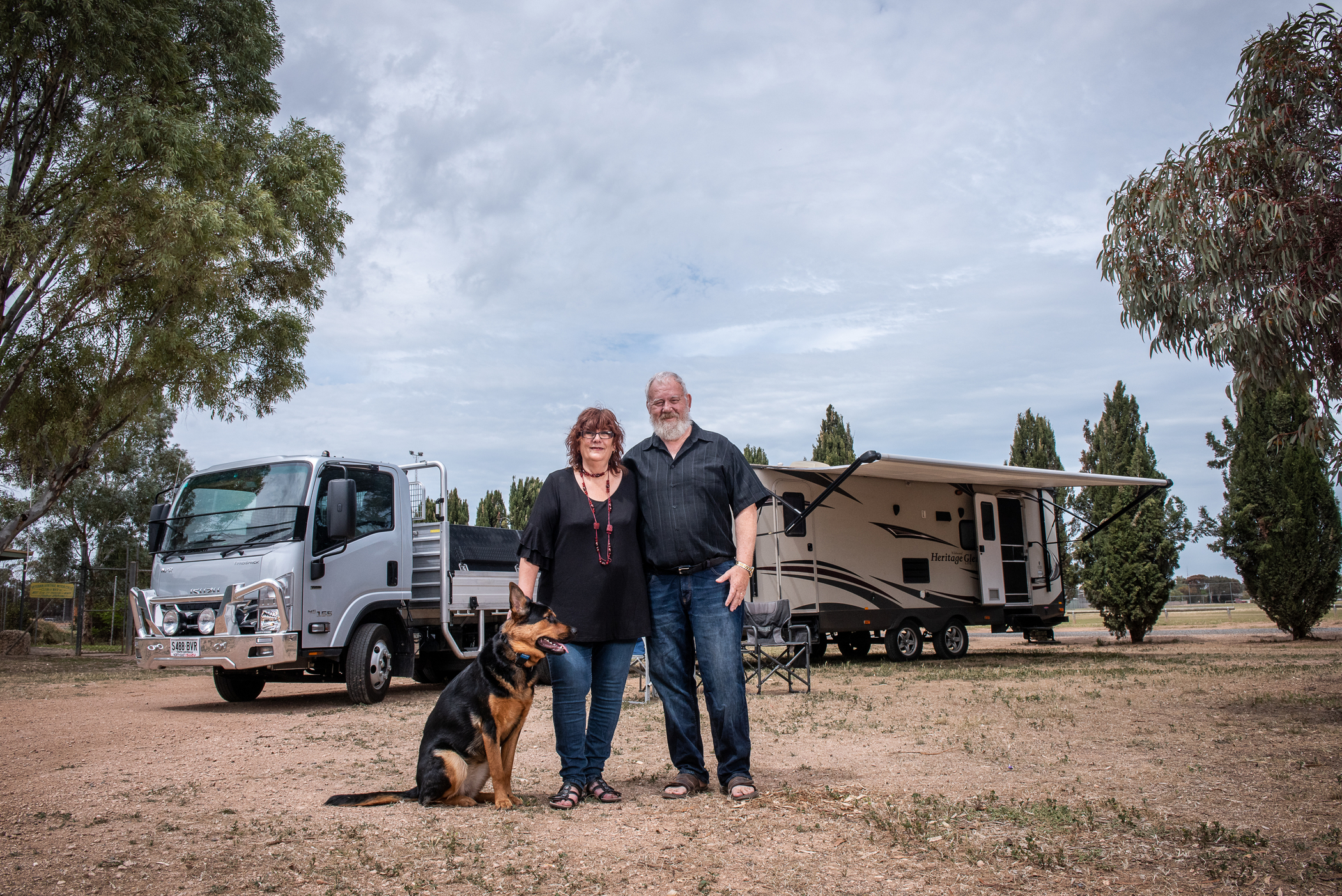
These and similar trucks like the Toyota Dynas, the little Hino's, Isuzu's etc are all commonly seen towing the bigger caravans...
1739596158657.png1739596180666.png
https://www.content.isuzu.com.au/media/upmjeyio/isuzukadina-121-2100x1402-3c568e1d-d67b-4f7c-a5c3-4c07556466cb.jpg


So here, you could most certainly already get a 'heavy tow vehicle' in EV form... and its cheaper than buying a thirsty 'yank tank' to boot lol (with a 300km range loaded with the LR version of the ECanter, they could already do most of the 'big lap' on the public charger network here no problems- only the most remote areas might cause issues)
1739597465431.png
 

Attachments

  • 1739596314895.png
    1739596314895.png
    97.1 KB · Views: 0
While that hill is no doubt steep, I've ridden up a steeper hill in Sydney, in Randwick (I think).

The hill was so steep, the footpaths were stairs, not a slope.

(Sydney is supposed to be built on seven hills like Rome.)
 
This photo was taken at the top of the ridge on which my apartment is located. My daughter lives a about three blocks lower than the apparent end of the street.

Google maps says the distance from the ridge top to her house is 1,893.95 ft (577.27 m). My GPS indicates about a 55 meter elevation difference from top to bottom.

You will notice that the roofs of the cars at the lower level are totally visible. What is not so noticeable is that the second story of the lower houses are each at the level of the ground story of the houses above them. I should point out that the incline is minimized by the camera.

I have seen cars climb this hill, and I've seen people walking it, but I have never seen a bicycle or an e-bike do so.
Maybe it's not on a cycling route or there's a less steep way to get to the same place.

It's about the same steepness as the steeper and more direct of the two routes up to Don Towers from the local village and there's plenty of cycle traffic past our house - I account for 2, 3 or 4 ascents a week by one route or another.

 
I'm starting to do some EV research and wanted to hear some opinions from those around here who have done theirs.

As far as range goes, I am trying to figure out what range I need to be aiming for. I have little faith in the range limits advertised by the manufacturers as these are likely done under ideal conditions and not real world.

I have a cottage that we like to travel to on weekends. This is one of the primary reasons for buying an EV, to eliminate the need to burn gas for these weekend trips. We frequently do this drive late at at night, with the kids asleep in the car so I don't like the idea of having to stop and charge along the way so I'd like something that will get us there in one go.

Its a 376km trip door to door and the latter portion is very hilly with a 200m elevation increase so a little more up than down. The car will be loaded to the gills for a longer trip. 2 adults, 2 kids as well as luggage and food. We will also be doing the trip in -20C temps at times although I'm not sure how much effect that has on the batteries anymore. My iphone will shut down pretty quick in those temps but I think most EVs have heat pumps now.

I was originally thinking that a 450km advertised range would probably be sufficient but given the above factors, that might have been too optimistic. 500km range might be an absolute minimum for what we want to do. And I suppose the other question is how will range in year 1 compare with year 7 for example. How much reduction can be expected?

I'd appreciate others thought on the matter.
Well, you are risking a yellow card bringing up EV's in the "assessing slopes" thread. But, so will I by answering.

Firstly, where are you? As you are no doubt aware, not all models and manufacturers are available in all markets.

Heat pumps? Not being fitted as standard in all markets. Here, in the UK, they don't seem to be that common. I've been focused on "the next Kia," it keeps me from spending money I can't afford, for a while, and heat pumps seem to be an option on the top spec in the range. I've read a number of discussions about them, and most people feel that the payback in saved electrons only kicks in around 80,000 miles. Where you are sounds colder than here. Much colder.

Battery degradation. 1 year? 98-99%? Batteries are faring much better than was feared even 8 years ago, and newer technologies are more robust. 7 years? I have 80-90% on my 7 year old Leaf 40kW. Batteries are lasting so well that some manufacturers (Renault?) are cutting the warranty period on them.
 
Actually, the light commercial EV's can have towing up to 4.5 tonnes here eg the ECanter can tow 4500kg/10000lbs on a car licence (anything bigger than that requires the driver to have a light rigid (LR) licence- regardless of its powertrain and so are less common) your F350 for example is well into the LR range and so can't be driven by anyone with only a car licence (regardless of whether it is towing or not!!!) which means every person in the family has to have a LR or MR truck licence to drive it (even empty down to the shops lol), plus you have more onerous licencing regs (for example- on a car licence you can have up to a 0.05 BAL on the breathalyzer, where a LR or MR is only 0.02... and we have RBT or random breath testing- they can pull you over anywhere, anytime...)
View attachment 59035
They are actually much shorter than any 'yank tank' truck so much easier to park- the short wheelbase version is only 5.7m/18ft, (they come in dualcabs as well) and are actually very comfortable to drive in (I drove the diesel version for a couple of years doing deliveries)- and the cabover light trucks are already common tow vehicles here in Australia for the big vans (not surprising- they have WAAAY better fuel economy, easy service parts availability and cost a fraction of the price of a US 'truck'- as in you could buy a small LR truck, a brand new 10m/30ft caravan and still have enough left over to pay your entire fuel bill for the 'big lap' (driving completely around Australia) and still have money left over...)
View attachment 59036
You can buy an ECanter for less brand new... (300km per charge, 35 min recharge)
View attachment 59037
Or the diesel versions are even less (4wd version for $94k)
View attachment 59038
or the 2wd version for $70k new
View attachment 59039

These and similar trucks like the Toyota Dynas, the little Hino's, Isuzu's etc are all commonly seen towing the bigger caravans...
View attachment 59040View attachment 59041
https://www.content.isuzu.com.au/media/upmjeyio/isuzukadina-121-2100x1402-3c568e1d-d67b-4f7c-a5c3-4c07556466cb.jpg


So here, you could most certainly already get a 'heavy tow vehicle' in EV form... and its cheaper than buying a thirsty 'yank tank' to boot lol (with a 300km range loaded with the LR version of the ECanter, they could already do most of the 'big lap' on the public charger network here no problems- only the most remote areas might cause issues)
View attachment 59043
I'm not saying you can't buy one. I'm saying it makes much less practical sense if you're a frequent tower of a typical RV and for good reasons. A typical diesel truck can tow easily twice the payload. The diesel truck is cheaper to fill up/charge and can be done a lot quicker. The value and practicality of an ev truck is not as good as it is for a typical car.
 
They aren't there yet with people that demand a SUV or truck that can tow a trailer. But most people don't use their car that way. There are still big challenges with people that live in apartments and the state of the grid. But that can and will be sorted out.

These are issues that will slow adoption. But not prevent it from happening.

You're absolutely right, but these things are being addressed already. I'm seeing towing performance I wouldn't have believed a couple of years ago, and getting 7 kw AC chargers where cars are normally parked overnight is just a matter of logistics.
 
Looks at the Atto- a midsized SUV towing capacity, available in Australia since 2022...
(indeed thats one of the reasons I wrote off the similarly sized MG4 off the list- no towbar is available in Australia for them but the Atto has one available...)
View attachment 59026
View attachment 59028
View attachment 59027
In fact even the little Leaf has a towbar kit available for them lol
View attachment 59031
(unlike some places, we don't think you need a 4 tonne 'dually' v8 truck to tow a 3.6m tinnie lol- that Leaf for example could readily tow my 4.2m boat and not even be anywhere near its legal limit... my boat is rated at 450kg (fiberglass 4.2m with 25hp, 4 person capacity- the Atto could legally (just) have the boat and its trailer loaded on my car trailer behind it lol it would only 'just' manage the weight legally, but it could do it...)
View attachment 59032

You can get a towbar for the MG4 here. It was one possibility if I couldn't get the e-bike in the car (mine is an MG4), I just didn't want to do it. But it's only rated for 500 kg so it's a bit limiting. You're not going to be towing a caravan or a horse trailer.
 
I'm not saying you can't buy one. I'm saying it makes much less practical sense if you're a frequent tower of a typical RV and for good reasons. A typical diesel truck can tow easily twice the payload. The diesel truck is cheaper to fill up/charge and can be done a lot quicker. The value and practicality of an ev truck is not as good as it is for a typical car.
For most of the Australian public- you can't even DRIVE one of those 'trucks' legally (even unloaded) basically anything over a F150/Ram1500 is a nogo without a truck licence... and if you did and were caught (and you would be the first time you were pulled over at an RBT) then you are classified as an unlicenced driver (even if you have a valid car licence- you do not have a valid truck licence...)- 3 months licence suspension, and well over a grand in fines (and god help you if you are involved in an accident!!!)

So its a bit pointless even trying to sell them- here your rego costs go WAAAY up, they cost a small fortune (as in more than many peoples houses) to buy new (if you can even find one- Ford don't sell them in Australia, Dodge only sell the 1500 and the Chevvy isnt sold here either) when you could buy the Euro/Japanese trucks for quarter of the price, and get far better mileage with their diesels than the US 'monster trucks' (which use more diesel than my 8 tonner Mercedes tiltray does!!!)
:eek:

An EV version is already available (several in fact)- theres the ECanter I showed before, the Hyundai Mighty, Isuzu ELF, the JAC N series, LDV EDeliver all are capable of towing 4.5 tonnes or more, some up to 9 tonnes if you have a MR truck licence all with 300-400km range and fast DC charging and cost less than the US 'trucks' anyway...

So your arguments may apply in the US- but not anywhere else... (and the US is well behind on EV uptake compared to many other countries, even here in Australia, they are taking off in a big way...)
 
I'm starting to do some EV research and wanted to hear some opinions from those around here who have done theirs.

As far as range goes, I am trying to figure out what range I need to be aiming for. I have little faith in the range limits advertised by the manufacturers as these are likely done under ideal conditions and not real world.

I have a cottage that we like to travel to on weekends. This is one of the primary reasons for buying an EV, to eliminate the need to burn gas for these weekend trips. We frequently do this drive late at at night, with the kids asleep in the car so I don't like the idea of having to stop and charge along the way so I'd like something that will get us there in one go.

Its a 376km trip door to door and the latter portion is very hilly with a 200m elevation increase so a little more up than down. The car will be loaded to the gills for a longer trip. 2 adults, 2 kids as well as luggage and food. We will also be doing the trip in -20C temps at times although I'm not sure how much effect that has on the batteries anymore. My iphone will shut down pretty quick in those temps but I think most EVs have heat pumps now.

I was originally thinking that a 450km advertised range would probably be sufficient but given the above factors, that might have been too optimistic. 500km range might be an absolute minimum for what we want to do. And I suppose the other question is how will range in year 1 compare with year 7 for example. How much reduction can be expected?

I'd appreciate others thought on the matter.

That's still a tough ask and you're right to think about the effects of cold and loading and gradient. I keep reading tales of woe from people who didn't take any of that into account and got a nasty surprise when the real world asserted itself. There are cars that will do that, but they're in the "big and expensive" bracket. I would honestly wait another year or two, while keeping an eye on what's available. Prices are going to come down and more cars with that sort of capability will come on the market.
 
I think trucks are another angle where it makes sense to wait. Let the real enthusiasts play with the things for the moment and watch the capability improve.
 

Back
Top Bottom