• Security incident: ISF was recently accessed by intruders. Please change your password, and change it anywhere else you used it. Read more

Merged DDWFTTW in a “Real” Wind

Status
Not open for further replies.
And how am I wrong. Will the reel move faster than the pencil?

If the paper strip were pushing the reel, then it could be glued to the reel and so both would move at the same speed, but the reel would not turn.
The strip is lifted, and impulse energy is added to the angular KE, so it rolls along the strip. Any more?
The Chinese are not planning to launch rockets on the basis of misunderstandings about the conservation of momentum or simple tricks to amuse an audience

http://www.trudd.com/blog/wp-content/uploads/2007/05/safe_imagephp.jpg

Does the reel move faster than the string or not? Answer the question. "Yes" or "no"? No discussion of Chinese rockets, what would happen if you glued the reel to a lamp post, or other diversion is necessary. No explanation is necessary. Just "yes", or "no".
 
"Moving faster than the string" is a akin to being delighted by the fact that the part of the of a door near the handle, moves faster than a point near the hinge.

You didn't say it was or wasn't delightful, you said it wasn't possible. Do you now admit that you were wrong?
 
You didn't say it was or wasn't delightful, you said it wasn't possible. Do you now admit that you were wrong?

Laughs. Doors are proof of ddwfttw. Still no math to back your primitive

"look ma...it done gone faster than the string, ya hear"

And have you made the reel move faster than the pencil? No
But when a string is used...voila. Might be something to do with the string, or what you are not seeing.
String = wind.....laughs.
 
Last edited:
Laughs. Doors are proof of ddwfttw. Still no math to back your primitive

"look ma...it done gone faster than the string, ya hear"

You still haven't answered the question. Does the spool move faster than the string? "Yes", or "no"? No more diversions.
 
Just so you know, humber will never, ever answer a yes or no question regarding physics, or math, or anything I can think of.
 
Just so you know, humber will never, ever answer a yes or no question regarding physics, or math, or anything I can think of.

He will sometimes answer yes or no, but with a bunch of gobbledygook added so he can later claim that wasn't really what he meant. I am curious to find out if it is possible for him to simply answer one way or the other.
 
You still haven't answered the question. Does the spool move faster than the string? "Yes", or "no"? No more diversions.


NO NO NO NO NO
Does the reel move faster than the pencil? No.
What can the "speed difference" be? The change in the length of string.
A transient occurrence, put their by using a string. No text book will equate the wind with a string...
 
Last edited:
Does the reel move faster than the pencil? No.
What can the "speed difference be? The change in the length of string.

You're still avoiding. Does the spool move faster than the string? "Yes" or "no"? No other text is necessary.
 
NO NO NO NO NO
Does the reel move faster than the pencil? No.
What can the "speed difference" be? The change in the length of string.
A transient occurrence, put their by using a string. No text book will equate the wind with a string...

Why did you edit your previous post to add the "NO"s seven minutes after my reply instead of just answering? Transient or not, whether or not it only works until you run out of string, whether or not textbooks equate wind with strings, does the spool move faster than the string? "Yes", or "No", without additional text please.
 
Easy. Carteers have the habit of compounding their errors and then demanding a binary yes or not. So I gave you that

Your are not so bad, Modified, but some of the Carteers are aggressive boneheads, who are so innumerate, they can't do the math that would tell them they are seeing nothing. They are like Medieval villagers. If not for time, it would be they who be calling for Galileo's execution.

The point is that the effect is transient. You can send a pinball to high speed by punching the spring launcher for a fraction of a second, but to do it again, you need to move the launcher to the ball
.
All that you are seeing is increased work because the 2:1 ratio demands more force. But, continuously, that is twice the power P = work/time.

If you had twice the continuous power, you could drive a simple cylinder to twice the speed in the first place.

But you added "no"s, now you appear to be saying "yes". Which is it?

ETA: You're now saying the effect is transient. Let's make the question more clear then. Will the spool move faster than the string until it reaches the end of the string?
 
Last edited:
And that is evasion by rhetoric
You might like to think so, but no. It really is not clear what your point was. If you are saying that looking at the reel from below through a glass table is the same as looking at it from above with the reel flipped over then you are wrong. The obvious difference is that the stationary surface upon which the reel rolls is on the "top" of the reel in one case and underneath it in the other. Consequently the leverage between the two "points of contact" work in opposite directions.

If you were trying to make some other point, then you failed to get your point across.

It's a cotton reel with a thread wrapped around it. To move the reel, one had must relax as the other pulls, so it just like the version where one end is free and moves at the speed of the hand. What are you hoping to gain?
The math explains it all. A simple and basic exercise in mechanics.
The control of the variables determines the result. What a wonder.
The point of holding both ends is to apply a steady tension in order to prevent the cord slipping on the reel. I thought that was completely obvious to even the meanest intelligence, but it seems not. What I hope to gain is your acknowledging what your maths failed to explain: that moving the cord can make the reel move either slower or faster than the cord, depending on whether it's threaded over or under the reel.
You don't have a leg to stand on. It is abundantly clear that providing equal force, means no motion at all. If the reels rolls, then you have relaxed one hand. Wow!
You worked that out all by yourself? Quite seriously, do you think you have made some kind of serious point here? Talk about clutching at straws. As a matter of fact I don't have to relax one hand, because today I was using a length of elastic while I was proving you wrong so I had a choice of whether to move both hands or not. I chose to move both hands, because that's what seemed absolutely bleedin' obvious to me.
Of course, the math remains unaddressed as Carteers hope to bludgeon every one with their "vision" .

The maths you posted was not actually relevant to the point which was always about what direction and speed the reel moves relative to the cord if friction prevents it slipping.
 
That is perfectly possible (well, probably not for a prop and certainly not for this cart, but in general). It's possible for exactly the same reason DDWFTTW is - you can extract energy at any interface where there's a velocity difference between two masses, be it air and ground (the cart) or air and air (this thing you're proposing) or ground and ground (down ruler faster than the ruler) or table and finger, regardless of your speed.

The albatross achieves a net downwind speed 40% faster than the wind speed (wind speed at the highest point of the maneuver) without flapping the wings:

http://esoaring.com/albatros_presentation_esa.pdf

Connect two albatrosses or RC-gliders on mirrored tracks with a string, and you have a DDWFTTW-glider in steady state (no net altitude loss).

As for the BB exploiting the wind-gradient:
- I don't see how this would work (and neither does humber)
- I don't think it would violate NALSA rules
- I don't see the point of it, if you have ground contact anyway.

As usual humber is trying to make spork's & JB's achievements look far more amazing, than they are:
- The BB-prop is so efficient that it can achieve 3 WS using wind gradients
- The BB-pylons are so efficient that it can tack downwind at few degrees to true wind
- The TM models are super-efficient vibration engines powered by the sound of the TM against the belt.

Are they paying this guy?
 
Last edited:
The albatross achieves a net downwind speed 40% faster than the wind speed (wind speed at the highest point of the maneuver) without flapping the wings:
http://esoaring.com/albatros_presentation_esa.pdf
Connect two albatrosses or RC-gliders on mirrored tracks with a string, and you have a DDWFTTW-glider in steady state (no net altitude loss).
As for the BB exploiting the wind-gradient:
- I don't see how this would work (and neither does humber)
- I don't think it would violate NALSA rules
- I don't see the point of it, if you have ground contact anyway.

But your theory is squashed by the fact that the cart operates just as well 25 degrees off wind, so is wrong. The cart is not a specifically ddw cart, but one that exploits crosswinds and calls itself ddw.

Why is it, that you think you can second-guess EVERY expert? They are always wrong, even if chosen by you, unless they agree with you.
Dr Camp is "a bit right" where the bits are those you agree with.
It is not for you to say if there is enough power from the cross-winds AND the general non-ddw path, unless you can prove it. Yevgheni has shown that the "obvious" choice is wrong, because the math says so.
The electrical model says so.

As usual humber is trying to make spork's & JB's achievements look far more amazing, than they are:
- The BB is so efficient that it can achieve 3 WS using wind gradients

Trivial. Could be much better. It is an inefficient sail cart

- The BB is so efficient that it can tack downwind at few degrees to true wind

Try 30. Data manipulation, changing the claim to meet reality. Short term performance in a variable wind. The real question is why is it so slow?
Making up the rules. Burying failures. Unwillingness to supply data, or answer to anomalies in that data. Smells like fraud.

- The TM models are super-efficient vibration engines powered by the sound of the TM against the belt.
Are they paying this guy?

The Creator has no math skill, and shows little technical expertise, but to compensate for that, tells himself that he has "intuition" and can see all sorts of abstract things. That led him to the misbegotten notion that the TM was a GT. At first the cart did not stay on the belt, so he fiddled with it until it did. He tinkered with it. But did not ask himself, why changing the tyres may do that, so failed to notice that the reason it stayed on the belt, was because of a change in the mode of operation.
Yevgheni, Harold and I, do indeed understand that change of mode, and we didn't need to tinker to work it out.

 
Last edited:
But you added "no"s, now you appear to be saying "yes". Which is it?

ETA: You're now saying the effect is transient. Let's make the question more clear then. Will the spool move faster than the string until it reaches the end of the string?

Well, that is a question about a question.

1) The math I presented shows that the behavior is related to the moment of the reel. That is a dynamic condition, so can will be influenced by time.
Transient.

2) The spool does not move faster than the string

3) When I presented a drawing that showed that, the cry was "but that's over the top, below is different". Yet you accept I Ratant's over the top experiment because it suits you, and compare that to my under version.

4) Sorry I Ratant, but despite the obvious effort, the experiment is wrong.
The length of wire between the spool and ruler is changed, when it should be the ruler that is moved. When that is done, you get the result I posted earlier.

attachment.php


5) I do not accept the Carteer's claim to "visions". Math. Address the math.
 

Attachments

  • ruler4.png
    ruler4.png
    34.5 KB · Views: 105
I just wanted to de-lurk here for a moment and let everyone know that this thread is really interesting and educational. DDWFTTW is something that is hard to grasp without a really firm understanding of physics - it certainly FEELS wrong.
Yes. I joined in on the previous conversation a year or so back and drew up my own spool diags and at first it did seem counterintuitive. Until I realised what was going on.

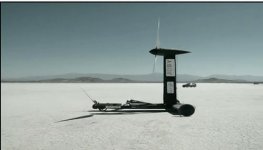
Then, of course, if you view the videos of the record cart runs at the start of this thread, just looking at the streamers on the mast, you can see that at some part of the run, once up to speed, the cart is running faster than the tail wind. Force diagrams, maths, theory be damned - the proof in the pudding is the physical evidence of the run.
While I know that Humber isn't going to get it, in the process of trying to educate him you have made it make way more sense to me. I wasn never actually opposed to it being a possibility since I am aware of my own limitations when it comes to physics, but it's still a big leap from "I guess it's possible because scientists say so" to "I know it's possible, because I get it".

So thanks.
Me too. It took me a while to wrap my head head around the concept too. But then, I'd already done the spool and twine experiment and seen exactly what was being talked about. I can see how some would still think the wheels driving the prop in the opposite direction to that which would be imparted by a tailwind on a freewheeling prop is counterintuitive, but realised, once the prop is spinning, it forms an opposing barrier to the tail wind (i.e. as a sail would) and at the same time adds thrust by acting as a motor driven prop would.

At the end of the day, the cart ran at 27+ mph in a 10mph wind and the angle of attack on the prop/cart wasn't sufficiently deviated from directly downwind to have been caused by the effects of jibing.
 
If the string goes underneath, the reel will turn CCW, unless the friction works the other way and then it moves to the right.
But, only if the reel rolls along the thread.
Correct
The thread can't pull it, unless it slides - a condition where there is no angular KE.
Wrong. No sliding required. The reel moves in the direction the string is pulling. The friction of the reel on the surface prevents it from turning in the direction that would move it in the opposite direction. The reel is free to roll on the surface and along the string.
When it rolls to the right is does so because impulse has added angular momentum. There is no other way.
When the string is pulled. It exerts a torque on the small diameter of the reel "trying" to rotate it "backwards", which is countered by greater torque (equal force, bigger radius) from the frictional force of the surface on bigger parts of the reel, causing the reel to turn "forward". The net result is that the reel moves in the direction it is pulled, faster than the string is moving. What a surprise! (To humber.)
Note that the math uses acceleration and not the simple static relationship of the "length" of the thread or ratio of diameters.
That is what you do not understand about cotton reels and yo-yo's.
I think everyone here understands perfectly well that the reel has to accelerate to go from stationary to moving. It hasn't been explicitly stated because it's obvious, and because it's pretty much irrelevant to the point they are trying to make.
None of that has ever been put to you because The Creator is a wonk, with "intuition". There are so many holes in the trail as to make it worthless, and
that is a result of wanting to "prove" at all cost that he is right.

There is one person in this discussion trying to "prove" at all costs that he is right, even though he is wrong nearly all the time. That person is humber. Despite humber's claimed dedication to math, he has frequently gotten the math wrong. His utter inability to understand basic physical principles has rendered him incapable of using math correctly. Note that spork and Thin Air Designs have proven themselves right, first with the treadmill tests, then in the "real" wind. They have, all the way, explained how the achieved their results in a manner that would allow anybody willing to make the effort to duplicate their results. Humber, OTOH, has provided nothing but bare assertions that it's impossible, with many truly amazing errors in his understanding of basic physics. Even after performing, finally, a simple experiment with a spool and string, he could not accept that the reel did, in fact move faster than the string, even after seeing it with his own eyes.

This folks, is just about as close as humber appears to be capable of getting to admitting that he was wrong. He actually almost has the reel problem right, except for the sliding part.
 
Last edited:
Yes. I joined in on the previous conversation a year or so back and drew up my own spool diags and at first it did seem counterintuitive. Until I realised what was going on.

Then, of course, if you view the videos of the record cart runs at the start of this thread, just looking at the streamers on the mast, you can see that at some part of the run, once up to speed, the cart is running faster than the tail wind. Force diagrams, maths, theory be damned - the proof in the pudding is the physical evidence of the run.

Then you will accept from the evidence of the streamer attached to the front, that the cart has exceeded WS, before it started the run. The proof is in the pudding, right?
And no, it stays that way. You can see it in Jenkin's video. Other evidence that the claim is BS, is the vane that turns 90 degrees in a fraction of a second and even shows a true >WS headwind, but that is not the evidence you are looking for is it?

Well done in your overcoming of the "counterintution"
It's a good ploy, that.
Instead of having to provide details of how the cart works, this simple toy, is likened to Relativity, and so needs "intuition", and that puts the burden upon you. That is, it;s your fault - you just don't "get it".
attachment.php


Me too. It took me a while to wrap my head head around the concept too.
Burger Physics...Wrap your head around it.

But then, I'd already done the spool and twine experiment and seen exactly what was being talked about. I can see how some would still think the wheels driving the prop in the opposite direction to that which would be imparted by a tailwind on a freewheeling prop is counterintuitive, but realised, once the prop is spinning, it forms an opposing barrier to the tail wind (i.e. as a sail would) and at the same time adds thrust by acting as a motor driven prop would.
Then you can show how the spool and twine fits the math, or is that
"counter-too-much-like-work".

At the end of the day, the cart ran at 27+ mph in a 10mph wind and the angle of attack on the prop/cart wasn't sufficiently deviated from directly downwind to have been caused by the effects of jibing.

It holds the record, because the bucket couldn't make it to the trial.
 

Attachments

  • streamer.jpg
    streamer.jpg
    12 KB · Views: 96
Status
Not open for further replies.

ISF - Join now!

Every member here is approved by hand. No bots, no spam, just people who care about evidence and honest debate.

Membership is free!

Create your free account

Back
Top Bottom