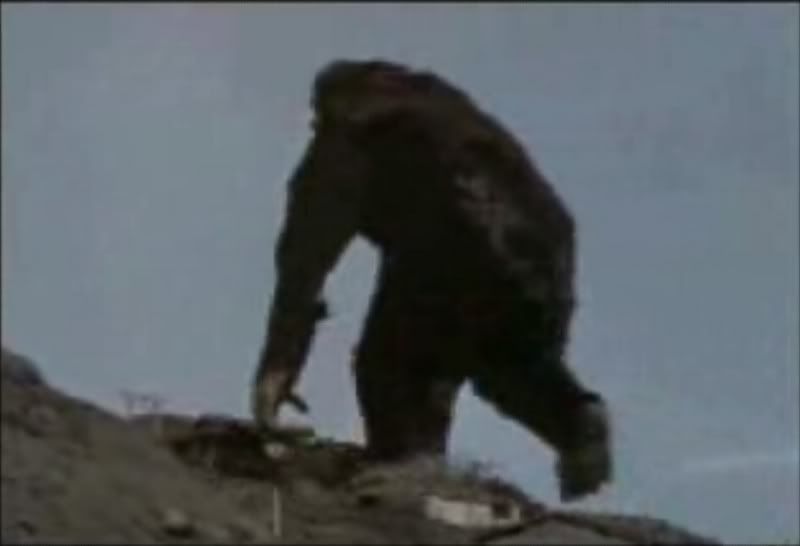
Bigfoot - The Patterson-Gimlin Film

Status
Not open for further replies.
Sweaty, that line doesn't look like a real leg. Just like the boobs don't look like real primate boobs.

BTW, Sweaty, I was hoping you'd answer this post:
If Joyce and her daughter saw anything....they saw a Bigfoot.
Very interesting. Would you mind telling us how a hoax was ruled out?

It was 1983. It was a cow pasture at the corner of County Rt. 203 and State Farm Road in Kinderhook, New York.

Sweaty, what do you think of Kinderhook, Columbia County as habitat for an unidentified 8ft giant bipedal primate?
 
Crowlogic wrote:

A very significant point. A static, stationary suit by no means compares to a moving, flexing one....or to moving flesh.

Oh, you have some sasquatch flesh to show us?

Where?!

Oh, wait...you're referring to Bob in a suit. Never mind. :rollseyes

Dfoot's suit, at this point, is nothing more than a sculpture...

Are you talking about the Halloween gag, which was never intended to be a Patty suit? If so, yes, it just hung from a tree, by all reports.

Are you talking the pad demonstration? Sorry, it moved.

Oh, no...you're referring once again to the "Where is Dfoot's suit!?" Straw Man. Because -- hey! -- why argue about facts when you can just make crap up so much more easily!

Reminds me of the old Star Trek: Voyage fan song:

Bounce a Positron Particle Beam
Off the main deflector dish
That's the way we do things, lads
We're making **** up as we wish.
The Klingons and the Romulans
Pose no fear for us,
'cause if we find
We're in a bind
We just make some **** up.


[qimg]http://i172.photobucket.com/albums/w28/SweatyYeti/Pattywalk5.gif[/qimg]

See Bob walk.

Walk, Bob, walk.

Avindair
 
Why is that? The puppets have to have a full range of motion between frames and are, in effect 'posed' for examination every frame (sometimes at 'full stretch' seams & all). Grooming between frames would surely lead to inconsistencies? It ought to also be pointed out that some are covered in very short flexible backed fur made by a patented method that pre-dates the 60's.

JohnWS

Ask Bill Munns or better yet spend some time reading his posts at BBF.
 
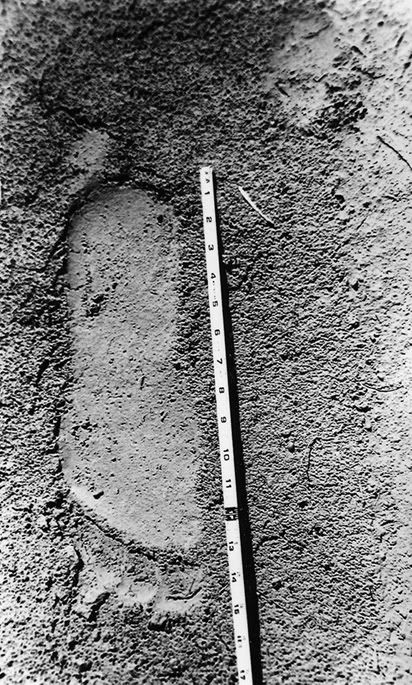
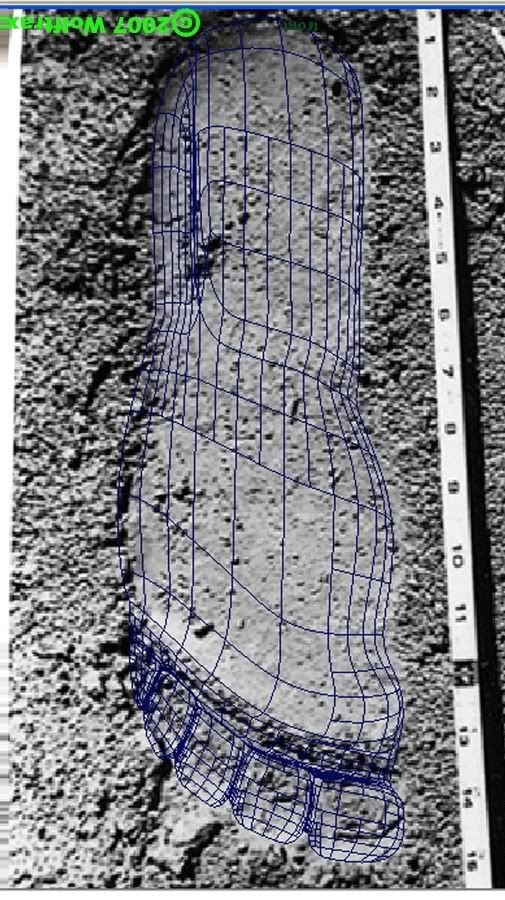
I am now preferring Option #2 over #1. It took a couple days and some sleep to decide that. I think Greg was right after seeing the two different rotations I presented. This photo must have had some cropping because it is not a 35mm aspect ratio. IOW, with only this cropped photo, we may not be able to determine if the camera was originally held in a horizontal or vertical position.

There is still a problem with wolftrax's wireframe grid applied to this. I'm seeing an illusion created by it that suggests the topography of a raised impression...

Option #2; now preferred by me...
1c3c009d.jpg


Option #2 with wireframe; do not like...
c689d38a.jpg
 
Correa Neto

Citing the work of Ray Harryhaussen as a means to counter the works and observations Bill Munns has posted concerning the PGF is a classic case of comparing apples to oranges. Mr. Munns stated in the beginning of his BBF posts that static display creations were orders of magnitude eaiser to produce than moving ones.
Not exactly apples and oranges... Apples and pears would be a better approximation.

Stop animation, which was the speciality of Ray Harryhaussen, are much closer in character to static display pieces than a live moving mime in a suit. Munns stated quite early on that while his static Gigantopithicus looks impressive would not function as a live action suit.
A hair or fur- covered costume with a person inside, or a puppet, or a stop-montion miniature will have seams; a static character will also have seams, but, its static while the previous examples are not. So far we agree.

But from beyond this point I disagree with him- If you can hide the seams at the junctions in miniatures (stop-montion figures and puppets) when the character is shown in focus, under the propper exposure conditions with a steady camera and filling the screen, doing the same with a full-size figure under PGF (small size, shaky camera, exposure problems, etc.) conditions is far from being a problem. This is the point where the comparisson becomes valid. The point, again, is- if you can hide it in small figures, filmed in focus, using a steady camera, correct exposure and with the subject filling the screen, you can also hide it in shaky footage of a full-sized figure shown at a small corner of the screen.

On a side note, I think a museu-quality static figure problably will be of a better quality than a FX prop. The flaws in the prop can be hidden (or minimized) using lightining, filming angles, among other things. So, again, Munn's arguments seem problematic, at least for me.

I think Munns, as well as many pro-PGF folks overstimate the ammount of detail that can be seen at PGF; they also underestimate the role pareidolia may have when it comes to "seeing" details such as muscle movement, opening mouth, moving fingers, etc.

Having seen many of Harryhausen's monsters on the screen the older I get the worse they look.
Well, FX tends to get worse while they age. We become used to it and the tech evolves. Its unfair to compare his work with top CGI creatures. I say top, because the crappy CGI stuff sci-fi channel repeats every now and then...
A similar feature happens with me and PGF- the more I see it, the crappier it looks.
 
JohnWS

Ask Bill Munns or better yet spend some time reading his posts at BBF.

I've certainly been reading Bill's posts (although with nine pinned threads I'm sure I've missed something). He is clearly very knowledgeable. But would you be in a position to refute anything he said if he made a technical error? Do you have access to anyone you could ask if you suspected something was questionable?

If and when Bill finally finishes I may well have some further questions. But every time I think he has it's just been a pause for breath ;).

However it was your response here that interested me. Hence the question :).
 
Last edited:
WIth regards to static and stop action figures vs live moving figures the issue of having to put a human being inside and convincingly hide the sections posses the biggest problems. Munns posts concerning attaching the head demonstrated this well. After just seeing a Janos Gorillia suit in operation its clear why he preferred long fur which as stated by Bill Munns hides a multitude of sins. Gumby and Pokey on the other hand seem to have transended all of this in fine fashion.
 
The history of Bigfootery is quite interesting, but not easy to find. Much can be learned about the present by looking into the past.

I have been exploring the archives of the CBC, and it is a real treasure. These archives begin with a radio interview featuring Rene Dahinden in 1957, then move periodically to 1984. The CBC is from Canada and Dahinden is represented throughout. We will also see Bob Titmus, and even hear from Bob Gimlin. The starting location is around Harrison Hot Springs, British Columbia. This was the area that had Dahinden, Titmus, John Green and other significant Bigfooters (then and now). Bigfootery has evolved in many ways, but in some ways it hasn't changed a bit. You will hear the evolution of what this mythical creature is called, from Sasqua to Bigfoot. You will hear the accounts of classic and now-famous Bigfoot encounters and evidences. After 1967, the PGF takes center stage in many ways. When Dahinden was interviewed in 1957, at the age of 26, the term Bigfoot had not been invented yet. Dahinden could have called it Sasquatch (an English derivation first appearing in 1929), but the young Swiss mountaineer immigrant instead says Sasqua. In later archives you will hear him use Sasquatch, but he does not ever seem to use the term Bigfoot.

Dahinden pursued Bigfoot for most of his adult life but never did see one. His obsession cost him his marriage, and you will hear about it from him and his ex-wife. Besides the overall charm of hearing and seeing modern Bigfootery at its beginnings and through its earlier years, there are fascinating and important factual elements found in these archives. This was a time before the Internet and YouTube. Communication amongst Bigfooters would have been by a personal visit, telephone, mail or an occasional conference.

Find some time to devote your attention to these episodes, and enjoy a trip into the old days. If you love this legend and the PGF as much as I do, you might want to have a tissue nearby for some of this...

Episode 1) This is audio only. Young Rene Dahinden is interviewed and is introduced as an anthropologist (I don't think he was college educated). The interview sounds fully scripted on both sides. His wife says a few words as well. Dahinden is quite committed to his quest for the creature. His immediate concern is to find a sponsor for his searching trips. This was a time when many people still got their news and entertainment from radio. There may have still been a chill in the March air, and I like to think that some listeners would have heard this by a fireplace. Trailing B.C.'s Hairy Giants. March 21, 1957.


Episode 2) This is our first audio-visual archive. We are back with Dahinden again, 19 years after his radio interview above. He now uses the term Sasquatch. The Patterson-Gimlin Film is now over 9 years old. He says he has been searching for 20 years, finding footprints here and there, and will keep searching "until I find the damn thing". He carries two cameras and a rifle. He doesn't want a typical life of making a full-time living with only a given vacation period. He only wants to work to earn enough money to survive and search for Bigfoot. Dahinden is now seperated from his wife. It seems that he was not cut out for being a husband and father. Instead, Bigfoot was his only goal in life.

A driven man who gave up almost everything else. He wasted no time on the Internet in Bigfoot forums - it didn't exist yet. When he was in an armchair, he was reading about Bigfoot and responding to his letters. He calls encounter stories like Albert Ostman's Bigfoot abduction "a classic". Little did Rene know that we would now call him a Classic Bigfooter. Native American totems are shown, and we are told that in the mid-1950's Sasquatch was considered nothing more than Indian folklore. "And even Dahinden himself thought at first that he was looking for some demented and presumably hairy Indian turned wild in the bush."

We are treated to a scene where Rene shows the reporter the PGF from a small projector. This is the real deal, and students of the PGF will want to pay close attention to this. The image projected on the wall is small because the cameraman (for this episode) is behind Rene and the reporter. Then he zooms in to fill the episode screen and we even see some slow-motion. You are seeing Rene Dahinden's copy of the PGF in full glory, and it appears to be something like 'full frame'. This is not the LMS DVD at all. Dahinden sells the creature to the reporter as being authentic. Little has changed about this 'salesmanship' in modern times. He focuses on the knees flexing ("which isn't a human walk"), and the estimated great weight. I noticed an occasional array of scratches that look very much like those on the plaster pour still frames. Keep that in mind for future discussions in this thread. A scientist skeptic is shown and he gives his views on Bigfootery. Ray Pickens (sp?) shows how to fake Bigfoot tracks using huge wooden feet affixed to boots.

The "commercial goldmine" of Bigfoot is mentioned and we learn what Dahinden thinks of this. His bitterness and hostility is evident and he says so. Yet, he wants a piece of that action. Rene Dahinden wants revenge on all the scientists that have been scoffing at him. After some prodding, we also learn that he "wouldn't even get out of bed" for less than one million dollars as his reward for finding Bigfoot. These last few minutes are dramatic and revealing. Has anything really changed in Bigfootery? Tracking The Sasquatch. Dec. 21, 1976


Episode 3) This is audio only. We are in Vancouver. Jay Ingram, the scientist newsman, has just seen the PGF at a local BC Sasquatch conference/film festival. He is excited and impressed. Russian Bigfooters are on the scene. You will hear his interview with Bob Gimlin (Roger Patterson is now dead). Listen for differences in what he says about the encounter as compared to what we read and hear within modern Bigfootery. Sasquatch Caught On Film. May 12, 1978.


Episode 4) Back to audio-visual. A Harrison Hot Springs resident tells of his encounter. There is a rare interview with Bob Titmus, who tells us that his first sighting was in 1942. He mentions that he has tracked them "hundreds, and hundreds, and hundreds of times, over a period of 26 years". You will see the late Marjorie Halpin (anthropologist and curator of the Museum of Anthropology at the University of BC) surrounded by Native American totems and masks, as she asks us "...how can a being of the mind leave a footprint in the earth?" You may be reminded of archaeologist Kathy Strain's statements on MonsterQuest. We see a portion of the PGF; some is full-frame, and some zoomed. We see the "Dahinden Cibachrome" of the famous Frame 352, which would end up being published for the first time by Halpin in her 1987 book, "Manlike Monsters on Trial: Early Records and Modern Evidence". Another eyewitness tells his story. At the end, reporter Marion Coomey shows us a recommended way to find a Bigfoot. Let it find you. Sasquatch Cannot Be Dismissed. Oct. 8, 1984.


There are other interesting archives that can be found at those links. I think I found all of the ones specific to Bigfoot. These should offer much for discussion in this thread, and also in Kitakaze's Native American/Bigfoot thread.

 
kitakaze wrote:
BTW, Sweaty, I was hoping you'd answer this post:
Originally Posted by kitakaze
Originally Posted by SweatyYeti

If Joyce and her daughter saw anything....they saw a Bigfoot.


Very interesting. Would you mind telling us how a hoax was ruled out?

It was 1983. It was a cow pasture at the corner of County Rt. 203 and State Farm Road in Kinderhook, New York.

As far as the possibility of Joyce and her daughter being fooled by a guy-in-a-suit (I assume that's what you're refering to, by "hoax") ....while it does fall within the "realm of possibility"...it's extremely improbable.

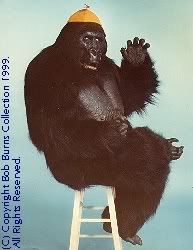
All one has to do is look at pictures of your typical "Charlie-in-the-suit".....

gorilla6.jpg


gorilla1-1.gif


....and ask yourself...."what's the chance that both Joyce and her daughter were fooled by one of those??
I'd give it about a .0001% chance, or probability. (That equates to a 99.9999% chance they saw, if anything, a real Bigfoot. ;) )

Just watch any of the joke Bigfoot videos on Youtube, and you can see how laughable a typical Bigfoot suit is.

Remember, Joyce told me that when they first saw it...her daughter said, in a shocked manner, "What the f___ is that?!"
They then watched it walk away from them for approx. a couple of minutes, in broad daylight. I think it would have been rather obvious to them if they were looking at a guy in a cheap shaggy-haired suit.

But, if it makes you feel good, kitakaze...you can give it a '100% probability' that they were hoaxed, and totally convinced they saw a real wild creature, when in fact they were watching one of those baggy, shaggy-haired suits. :)


kitakaze wrote:
Sweaty, what do you think of Kinderhook, Columbia County as habitat for an unidentified 8ft giant bipedal primate?

I rather doubt that a population of Bigfoot actually lives in Columbia county (I'd give that a low probability)....but that doesn't mean that one Bigfoot couldn't have walked through it, from wherever it does live.
(There are the Adirondacks not too far to the north....with a few million acres, roughly, of wilderness.)
I haven't studied the region....but I have driven through that area many times over the last 25 years. My ex brother-in-law, coincidentally, lives only 1 mile from Joyce, in East Greenbush. E. Greenbush is only a 10 minute ride from the city of Albany, yet the town has many acres of undeveloped forested land. There is a lot of wilderness in that region for an intelligent human-like animal to avoid humans, if they wanted to.
 
Last edited:
The analysis done by wolftrax on the Blue Creek Mountain Road (Onion Mountain) tracks has focused on the right foot. It's the one with the distinctive crack near the heel. Unfortunately, the photo used of this track is taken at an angle and does not offer the best possible comparison. Even still, it shows that that right-foot track was made by the right-foot Wallace Alderfoot.

But what about the left foot? The photo of this one was taken at BCM from a much better position for comparison. It is still not a perfect comparison because there is some apparent angle to the camera position (the camera is not directly above the track). Below I have shown the photo of the BCM left foot track. Alongside is the cropped and horizontally-flipped photo of the left-foot Wallace Alderfoot. There were no changes by me to the size or aspect ratio of this image. You can see that they are a virtual match. Again this Alderfoot was not pressed deeply into the substrate. The full expression of the surface topography of the Alderfoot is not revealed because of this.

51eaedd0.jpg
42b1caf5.jpg


post-2-1107477084.gif
 
Yes. The two Alderfoots (L&R) carved by Ray Wallace do not match each other. They have very obvious differences. The outside edge of the left foot is distinctly different compared to the right foot (w/crack). The left is much more 'hour-glass' shaped than the right.

There is no rational doubt that these BCM tracks were made by those Alderfoots being displayed by Dale Wallace. Those wooden tools were there at Blue Creek Mountain Road. Whether Ray Wallace himself was there for the creation of the hoaxed tracks is a question that remains. It could have been anyone using those tools, but it certainly was those tools.
 
WIth regards to static and stop action figures vs live moving figures the issue of having to put a human being inside and convincingly hide the sections posses the biggest problems. Munns posts concerning attaching the head demonstrated this well. After just seeing a Janos Gorillia suit in operation its clear why he preferred long fur which as stated by Bill Munns hides a multitude of sins. Gumby and Pokey on the other hand seem to have transended all of this in fine fashion.
Last time I checked Gumby had no fur or hair cover.

Of course longer hairs can be used to cover the seams. But I think one should ask "how long the hair must be to mask the seams?" and "will the seams be easily seen in a short, shaky footage with incorrect exposure settings which shows the costume as a small figure?"

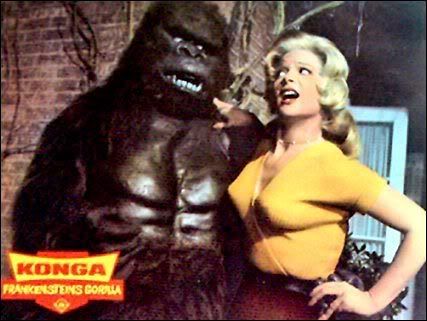
Take these two examples:
bobsfav.jpg

kongalc.jpg

How easilly can the seams be seen?
How long are the hairs?
How would they look if filmed at conditions similar to PGF?

Now look at this one (its flaws are easy to spot at other stills and footage):
kaijufoot.jpg

Are the hairs long enough to cover the seams?
Can you spot them?
How would it look if filmed at conditions similar to PGF?

And at last, but not least, lets compare these ones (I think all of them are costumes):
fake_apes.jpg

First, lets look the three costumes at the bottom; forget for a moment the different heads and the baggy appearance of the lower middle one. Focus on the seams. Can you see them?

Now remember that the images at the bottom have higher resolution and better focus and exposure than the two Patty stills. Could you spot the seams if the images were of similar quality? Can you see in Patty's images lines that could be compared to seams?

I think answer for the first question would be "barely", and the answer for the second, "yes".

Again, Munns, I think, overengineers Patty because he overestimates PGF resolution and underestimates the effects that personal bias and pareidolia can have in the interpretation of this footage.
 
I asked on BFF, but does anyone have a timeline of who visited the PGF site from the time of the filming, to the time that Titmus arrived there? I'm just curious why their footprints weren't noted by Titmus, and also, if there was 'Bark' covering up the best tracks, wouldn't they have removed the bark to see for themselves? It seems there would have been footprints everywhere, if there were researchers, curious loggers, etc... yet Titmus could manage to see BOB & ROGERS horse prints all over the site.

Also, Titmus says, he backtracked patty to see where she came into the Creek bed. And that he assumes she came down the 'hard road' but he couldn't see any prints. Isn't this just another way to say, the prints just appeared out of nowhere at the creek?
 
Last edited:
Isn't this just another way to say, the prints just appeared out of nowhere at the creek?

Yep, and it has been discussed many times before. As far as anyone can tell, Patty just appeared at the spot where Roger claims to have run into her. There are no tracks or evidence of her arrival. She's just there, then she walks away, leaving a trackway.

Several people went there with still cameras, including Roger, but no one apparently bothered to photograph what would likely be the most convincing footprint evidence of all.

The prints where the alleged sasquatch was standing by the creek, and then turned and walked away up the bank, would be very interesting to see. One would expect that the beastie might have been crouching and may have even put a hand down to steady itself a time or two.

These prints would be the most convincing, imo. However, there is no mention of anyone seeing these "turn and walk away" prints.

I suppose it's possible that Roger filmed them when he filmed the trackway, but...

Being near the bank, they could have been erased by the flood, but then the flood didn't seem to bother any other tracks...
 
Titmus' map seems to indicate that he found the both the spot where Roger encountered Patty, and the spot where Patty was standing. I presume he found the spots via tracks, which would indicate that Patty's initial footprints were still visible.
 
Some random thoughts on the above still:

(1) The animal seems to have black or dark gray fur. Bigfeet are supposed to have brownish hues, usually reddish-brown;


(3) The animas has a hairy butt. Again, if my memory is not failing, most primates (specially the bigger ones) don´t seem to have such feature. BTW, would such hairy butt fit with the supposed "butt print"?


Looks like a hairy Gorillia butt to me.
 
Titmus' testimony and map is nonsensical until you consider him as being part of the PGF hoax. When you switch to that kind of thinking, most of the strangeness becomes logical and understandable.

Laverty and his crew's spontaneous appearance on the scene was an unexpected surprise to the hoaxers. Titmus didn't know how to deal with seeing bold-tread work boot tracks amongst the Patty tracks. Those tracks would have been the most fresh of all that he saw. He chose to not mention them at all.

Titmus was in communication with Patterson before and after going to Bluff Creek to see the Patty tracks. Do not make the mistake of characterizing him as simply a capably observant and objective witness that arrived on the scene to accurately document the visual evidence. The Pattycakes do want you to think that about him. Titmus was a Classic Bigfooter from the Golden Age. These guys were in the business of bringing folk tales to life. His report from Bluff Creek after the Patty encounter does not make sense unless you understand what is at the heart of Bigfootery.
 
Last edited:
Last time I checked Gumby had no fur or hair cover.

Of course longer hairs can be used to cover the seams. But I think one should ask "how long the hair must be to mask the seams?" and "will the seams be easily seen in a short, shaky footage with incorrect exposure settings which shows the costume as a small figure?"

Take these two examples:
[qimg]http://i34.photobucket.com/albums/d150/AVCN/bobsfav.jpg[/qimg]
[qimg]http://i34.photobucket.com/albums/d150/AVCN/kongalc.jpg[/qimg]
How easilly can the seams be seen?
How long are the hairs?
How would they look if filmed at conditions similar to PGF?

Now look at this one (its flaws are easy to spot at other stills and footage):
[qimg]http://i34.photobucket.com/albums/d150/AVCN/kaijufoot.jpg[/qimg]
Are the hairs long enough to cover the seams?
Can you spot them?
How would it look if filmed at conditions similar to PGF?

And at last, but not least, lets compare these ones (I think all of them are costumes):
[qimg]http://i34.photobucket.com/albums/d150/AVCN/fake_apes.jpg[/qimg]
First, lets look the three costumes at the bottom; forget for a moment the different heads and the baggy appearance of the lower middle one. Focus on the seams. Can you see them?

Now remember that the images at the bottom have higher resolution and better focus and exposure than the two Patty stills. Could you spot the seams if the images were of similar quality? Can you see in Patty's images lines that could be compared to seams?

I think answer for the first question would be "barely", and the answer for the second, "yes".

Again, Munns, I think, overengineers Patty because he overestimates PGF resolution and underestimates the effects that personal bias and pareidolia can have in the interpretation of this footage.

Try showing those top 3 photos with better contrast and brighter its hard to make out anything at all especially on the Chimp? pic.
 
Try showing those top 3 photos with better contrast and brighter its hard to make out anything at all especially on the Chimp? pic.

Why not ask for visual examples of those gorilla suits filmed under the same conditions as the PGF? Far away and filmed with a shaking 16mm camera. Ask Correa for that, so that we can treat apples as apples.

You want to do the right thing, don't you Crow Logic?
 
Status
Not open for further replies.

ISF - Join now!

Every member here is approved by hand. No bots, no spam, just people who care about evidence and honest debate.

Membership is free!

Create your free account

Back
Top Bottom