That's not a connection though.
That both ziggurats and Pyramids are stylised mountains (which is untrue) would not signify a relationship between the two types of structure, such that one was influenced by the other.
people have eyes, they make comparisons with things they can see and understand
The horizon in Egypt can be described a few ways, but mountainous is a new one on me.
The Egyptian symbol for horizon is the Akhet
seen here between the two cats
heres Giza again
are you about to deny that those two big lumpy things depicted in the akhet are mountains
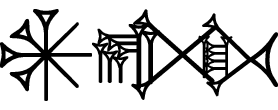
heres the Hieroglyph for mountain
Djew =
In other words, Pyramids were just a natural progression from the mastaba (bench). If they'd been thought of as artificial mountains from the beginning, then they would have been built that way.
So when the architectural knowledge didn't exist they would have built them that way ?
perhaps youre missing the inference, that just because something has an origin in one area, it doesn't mean that it can't change over time to gain new symbolism and are you forgetting why the Egyptians believed that mountains are sacred, what is a mound and what did Atum do on one
anyway, I thought the "bench" translation for mastaba was arabic, not egyptian, didn't they just call them MR which meant "mound"

you want me to cite that Mesoamericans thought that the gods lived on mountains ?
thats common knowledge
take for example the orientation of geoglyphs at Nazca towards the mountains surrounding the plain, or the very well attested beliefs of the Atzec deity Tlaloc
http://en.wikipedia.org/wiki/Tlaloc
probably going to be easier for you to just google "Mesoamerica mountain gods" though, theres so many cites there that posting them here would take a long long time. Maybe you should read the Popul vuh where the Gods create the mountains first from a primordial sea in exactly the same way that Atum creates a mound from the primordial sea in the "heliopolitan" cosmology iirc. Its clear in both cultures that mountains are foremost in cosmological thought