• Security incident: ISF was recently accessed by intruders. Please change your password, and change it anywhere else you used it. Read more

Air France Flight 447 report

Link to new evidence ?

Did you read the link about the Airbus flight laws?

The OP link :/

ETA: Also I don't understand the link about the flight laws. My point is that the first link assumes normal law when in fact the data shows they were in alternate law.
 
Last edited:
That link is older than the new evidence.

He misses quite a few things.

1. Alternate law.
2. Bonin was pulling the stick back the whole time.
3. The instruments recovered and they had plenty of altitude.


The reason why the aircraft switched from normal law to alternate law was that the flight computers realised that the air speed data had become unreliable. And since the flight computers need accurate airspeed data (among many other inputs) in order to continuously calculate the flight envelope, the loss of airspeed data triggered an immediate switch out to alternate law. At the same time, the autopilot disengaged.

In real terms, the switch to alternate law would have had very little effect on how the pilots flew the aircraft - on the A330, the main alternate law protocols simply remove the protection against stall and over-steep ascent (in normal law, the flight computer would modify stick inputs to ensure that the aircraft never exceeded its design envelope). So, aerodynamically, the aircraft would not have handled any differently from if the pilots were flying it in normal law manual mode. The only difference was that the aircraft could now be placed into a stall, and that it could be manually placed into an inappropriate (and dangerous) rate of climb.

And of course that's exactly what happened in this case. And I'd repeat once again that even if the pilots thought the aircraft to be "unstallable", the evidence that was literally RIGHT IN FRONT OF THEIR NOSES AND RINGING IN THEIR EARS showed unequivocally that the aircraft was in an aerodynamic nose-up stall.

Incidentally, with regard to your point (3), the only instrument that ever experienced malfunction was the airspeed indicator. All of the other instruments were entirely reliable and accurate throughout the whole episode. And even the airspeed indicator came back fairly fast when the de-icing system thawed out the pitot probe. As you say, the pilots had huge amounts of altitude to play with, even after the airspeed indicators came reliably back on line.
 
The OP link :/

ETA: Also I don't understand the link about the flight laws. My point is that the first link assumes normal law when in fact the data shows they were in alternate law.

So the new evidence is an article in Popular Mechanics and my grandfathers experience as a hot air balloonist.;)
 
So the new evidence is an article in Popular Mechanics and my grandfathers experience as a hot air balloonist.;)

The link you provided says:

Think back to the Airbus flight envelope protections I mentioned, and the fact that the pilot can’t override them. The airplane computers “think” the aircraft is overspeeding and therefore continue to increase the airplane’s angle of attack. That only makes it climb steeper, thus perpetuating this cycle of increasing indicated airspeed and increasing angle of attack. This continues until the airplane is at a ridiculously high nose-up attitude and stalls, regardless of pilot inputs.

This is why we really need to wait for a full analysis, so that investigators can figure out what the pilot inputs were and whether or not they were consistent with what the flight control surfaces were doing. In other words, were the pilots *********** up the control deflections, or were the Airbus flight computers *********** up the control deflections? Because the airplane eventually stalled, I can only surmise that it was the computers *********** up, because when the computers do their jobs correctly, they increase angle of attack in this situation — again, regardless of pilot input.

Do you agree with this?
 
So all the air crash investigators can go home now ?


Huh? That, I presume, is what the final accident report will probably conclude. I'm not suggesting that I can second guess the investigators, and far less that I can in any way "out-think" them. I'm simply giving my opinion on what the totality of the available data point towards.

It's pretty unquestionable that the pilots not only made no proper effort to recover from the stall, but that in fact they made inputs that tended to exacerbate the problem rather than solving it. I don't have any agenda to blame the pilots - it's simply the logical reasoning that is based on the data. Yes, perhaps it would have been "kinder" and "easier" to everyone (except Airbus Industries and their avionics contractors) if the accident had been the result of a massive computer glitch or a significant mechanical/electrical failure. But - aside from the temporary icing of the pitot probes (which was only a short-term fault and which should definitely not have resulted in the ensuing accident) - the data show unequivocally that the overwhelmingly major factor causing the crash was pilot error.
 
The OP link :/

ETA: Also I don't understand the link about the flight laws. My point is that the first link assumes normal law when in fact the data shows they were in alternate law.

I got the impression the two pilots were unaware the computer had switched to alternate law when the pitot tubes froze, and the captain, having arrived late, had no reason to believe the aircraft was in anything but normal law.
 
Before disrespecting the pilots please read the following link.


http://www.wired.com/autopia/2011/07/an-airbus-captains-take-on-the-air-france-disaster/


"
The key ingredient most everyone seems to be overlooking: The flight control laws of an Airbus.


And here’s where the pundits really don’t get it. A so-called Transport Category airplane like an Airbus is not required to be recoverable from deep stalls like the one that may have occurred with AF447. They’re supposed to be difficult to stall, and pilots are trained to avoid stalls. In fact, we train to recover from “approaches to stalls,” not “full stalls” or “deep stalls.” So even if the pilots did everything they were supposed to do to recover from a stall, the airplane still may not have been recoverable once it entered a deep stall and exceeded the critical angle of attack.


That’s my best take. In any case, let’s not throw blame at the pilots before the engineers and investigators can sort out what really happened."
.
One of the tests we'd do on the Tristar was Vmca... the speed for minimum control in the air.
One wing motor pulled to idle, and the pilot would then see if he would slow the plane down to the calculated minimum control speed.
Interesting test to be in.
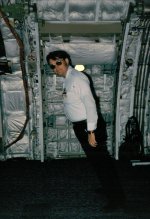
The deck angle gets extreme. (see image :) )
What made it MOST interesting was doing these over the Catalina Channel, at 1500 feet above the ocean.
Knowing the plane needs at least 5000 feet to recover from a full stall... :jaw-dropp
Other than getting real up close to some off-shore oil rigs, nothing much out of the ordinary occurred. :)
 

Attachments

  • PJB-Leaning.jpg
    PJB-Leaning.jpg
    76.1 KB · Views: 8
I was providing some rebuttal to the link he provided. It seemed to me that the author was making the case that the aircraft stalled by itself under normal law.

This is obviously false from the more up to date evidence.


Ah I see.

But, incidentally, I don't even think it's reasonable that the pilots might have followed the following train of thought: "Hmm, the aircraft is showing indications of a stall (including a very loud and persistent stall warning and stick shake); yet I have been taught that this aircraft cannot stall in normal law; I believe that the aircraft is flying in normal law; therefore whatever indicators I'm seeing or hearing, they simply can't mean that the aircraft is in a stall; therefore let's discount the possibility of a stall, and look around for other reasons".

The above seems to be one of the "explanations" for the pilots' behaviour. But I'd argue that this is negligence in itself. To me, it's immaterial whether or not the pilots believed the aircraft was flying under normal law, and whether or not they therefore believed that the aircraft was "unstallable". The accumulation of evidence right in front of them should have been more than sufficient for them to make a quick diagnosis that the aircraft was indeed in a stall. And the correct action would have been to take manual control to correct the stall, and to deal with the potential cognitive dissonance regarding the "unstallability" issue later on.
 
I got the impression the two pilots were unaware the computer had switched to alternate law when the pitot tubes froze, and the captain, having arrived late, had no reason to believe the aircraft was in anything but normal law.

I think I might have not been clear. The link he provided: http://www.wired.com/autopia/2011/07/an-airbus-captains-take-on-the-air-france-disaster/

makes the assumption that the plane basically stalled itself. All I am saying is that from what I see from popular mechanics article that doesn't seem to be the case. Also keep in mind the popular mechanics article was written after more evidence came in.
 
It's pretty unquestionable that the pilots not only made no proper effort to recover from the stall, but that in fact they made inputs that tended to exacerbate the problem rather than solving it.

snip


the data show unequivocally that the overwhelmingly major factor causing the crash was pilot error.

Evidence ?
 
.
One of the tests we'd do on the Tristar was Vmca... the speed for minimum control in the air.
One wing motor pulled to idle, and the pilot would then see if he would slow the plane down to the calculated minimum control speed.
Interesting test to be in.
The deck angle gets extreme. (see image :) )
What made it MOST interesting was doing these over the Catalina Channel, at 1500 feet above the ocean.
Knowing the plane needs at least 5000 feet to recover from a full stall... :jaw-dropp
Other than getting real up close to some off-shore oil rigs, nothing much out of the ordinary occurred. :)


Please tell me that these were manufacturers'/operators' test flights to establish flight parameters, and were not part of ongoing flight training!
 
What's wrong with the official version.

http://www.bea.aero/fr/enquetes/vol.af.447/transcript29juillet2011.en.php

ETA: "The main findings at this stage show that the crew complied with the operator's procedures: two co-pilots, commercial pilots, above level 200, which is according to regulations, in accordance with the operator's procedures. There was no explicit or implicit division of tasks, not clearly, this was not expressed clearly from the start by the Captain. There is no training in crew resource management for a crew made up of two co-pilots."
 
Last edited:
I got the impression the two pilots were unaware the computer had switched to alternate law when the pitot tubes froze, and the captain, having arrived late, had no reason to believe the aircraft was in anything but normal law.


At the risk of sounding like a broken record, I'd argue that it was the responsibility of the captain to look past issues such as normal law vs alternate law, and focus on the most basic issue: what aerodynamic state was the aircraft in, what was its attitude, what was its indicated airspeed, what was its altitude, and what was its vertical speed? A competent aviator should have been able to glean all of this information within five seconds of looking at the primary instruments.

Had the captain done so (or even if he'd asked all of these questions quickly), he would have been easily able to ascertain that the aircraft was almost certainly in a nose-up stall, with insufficient forward airspeed and a rapid vertical descent. He should then either have instructed one of the co-pilots to apply remedial action (thrust to 70% or even maximum, and nose down 5 degrees), or he should have taken the left hand seat and carried out these actions himself. The data show that the captain was present in the cockpit for two and a half minutes before impact. Had he even taken the first 30 seconds of his presence in the cockpit to figure out the flight situation, he would almost certainly have had sufficient time and altitude to correct the stall and save the aircraft. Unfortunately, the CVR shows that he was indecisive and impotent, and utterly failed to take responsibility. I'd therefore judge him as partly culpable for the accident, but - as I said before - I'd place the majority of the blame onto the two co-pilots.


Well, firstly, that's not the report is it? That's a media presentation that took place at the time the (interim) report was released. The final report has not been prepared yet.

Secondly, I'd refer you to what I wrote earlier about the BEA and their general reluctance to ascribe accidents to Air France pilot error if there's any ambiguity.

Thirdly, since this is still an interim report, the instinct of most accident investigators would be to refrain from ascribing blame to the pilots until the final report is issued. That's because it's a serious charge to level, and one which will not only distress the families of the pilots, but may also materially affect the pensions etc of the families. Therefore, pilot error is usually only officially listed as a cause when all the evidence has been carefully examined and the final report is published.

Lastly, I would be very surprised if the final report does not list pilot error as the primary cause of the accident. However, I'd temper that with my previous observations about BEA. Let's say that if this had been a BA flight with the AAIB investigating, I'd be willing to express a high degree of certainty that the finding would be pilot error as the primary cause.
 
So the new evidence is an article in Popular Mechanics and my grandfathers experience as a hot air balloonist.;)


Isn't this the first time that the full transcript of the pilots' conversations has been released (not the PM article, but the book--Erreurs de Pilotage--that prompted the article)?
 
What's wrong with the official version.

http://www.bea.aero/fr/enquetes/vol.af.447/transcript29juillet2011.en.php

ETA: "The main findings at this stage show that the crew complied with the operator's procedures: two co-pilots, commercial pilots, above level 200, which is according to regulations, in accordance with the operator's procedures. There was no explicit or implicit division of tasks, not clearly, this was not expressed clearly from the start by the Captain. There is no training in crew resource management for a crew made up of two co-pilots."


With regard to your ETA: yes, I read that, and it looks to me like arrant nonsense. I honestly don't think that M Bouillard knew what he was really talking about here - it certainly makes little sense in the translated English. In what way did "the crew comply with the operator's procedures"? The next clause makes even less sense: "two co-pilots, commercial pilots (huh? Why does this need pointing out?), above level 200 (i.e. 20,000 feet), which is according to regulations, in accordance with the operator's procedures (again, huh?)."

If you can decipher just what M Bouillard might have been trying to say with this huge pile of nonsense, then I'd be very interested to know!
 
Link to new evidence ?

Did you read the link about the Airbus flight laws?

Yes. I don't see anything in the flight laws that would prevent the pilots from reducing AOA using the side stick controller. They didn't, though.

Just my opinion, but the first thing a pilot should learn is that there is no such thing as an aircraft that cannot be stalled. There are aircraft with limited pitch authority. The Ercoupe uses a stop on the elevator control cables. The Airbus uses a sophisticated computer algorithm. Both limit authority; neither can limit the aerodynamic reality that a wing will stall.

Even for someone who was fixated on climbing to the exclusion of all else, the junior pilot was behaving foolishly. The maximum rate of climb for an airplane happens when you have maximum excess power. This will be somewhere near the minimum sink AOA, which is still well above stall. If you're flying slower than this, even if you're above stall, you are not going to climb as fast as you would if you sped up a little.
 

ISF - Join now!

Every member here is approved by hand. No bots, no spam, just people who care about evidence and honest debate.

Membership is free!

Create your free account

Back
Top Bottom