• Quick note - the problem with Youtube videos not embedding on the forum appears to have been fixed, thanks to ZiprHead. If you do still see problems let me know.

Damned audiophiles

I remember when the first Orange Book audio CD-R recorder hit the professional market. It was made by Studer and cost $25,000.

A couple of years later I attended a SPARS function to promote the launch of a new professional CD-R deck by Marantz- they had got the price down to a mere 7 grand, and blank discs down to only about 10 bucks apiece.

Now, of course, that technology is essentially obsolete, while the wrangling about digital sound quality will never be obsolete.

It reminds me of the first-ever LED digital watch (cirac 1971). It was made by Hamilton and sold for $1500- of course it was a very nice watch with a lovely gold case and band- but within two years you could buy a product with exactly the same function in a dpeartment store for maybe 20 bucks.

Sometimes "early adopter"="happily offers buttocks to be bitten".

My parents bought the first commercial CD player (top loader), made by Philips.
It cost $ 5000.

A mere year later I (a teenager then) bought my Sony CD player for $ 250.
The thing kept working for over a decade, it had much more functionality and was a front-loader. On top of that, it was light as feather so I could take it to parties and DJ.

I have made it habit to be about a year behind the times with technology.
Same goes for buying movies and games.
 
My present set up is a Sony Vaio from which I stream music with Spotify Premium. A no brand USB cable to a Firestone Fubar USB DAC with Power Supply (bought second hand). A Musical Fidelity X-CANV8P (which I was given by the owner of MF as a thanks for uncovering a problem with one of his suppliers). I have a stupidly expensive interconnect by Q-Audio, $300 (but the owner of Q-Audio gave me that as a present as thanks for my work regarding cables and the audiophile cable industry) and then a collection of various headphones, many of which are second hand off eBay.

The clarity and detail of my head-fi system is phenomenal. I listen to it every day for a good few hours a day, whilst I post drivel on forums!
 

Price: $2,500.00 (includes 10 Magical Stones and 10 E-Pads)

Heh.

The H2 stimulates the oxygen's molecules in a way that improves its viscosity thus allowing it act much more effectively." The info that arrived with the H2 reads, in part, "The basic principle is similar to a catalyser. Technically it works with capacitively activated crystals. The air molecules inside of the listening room are jogged through the loudspeaker and thus transmit the sound information. In order to elongate the air molecules from their rest position it is necessary to spend energy first. It is much easier to move them if once moving. This phenomenon is similar to static and dynamic friction. To force a heavy piece of rock to move is not an easy task. But if it is once moving it can be much easier shifted further. The Steinmusic Harmonizer is working very similar, but rather at a level of ethereal states...."

ETA - Does it sound like this person knows what "air" is?
 
Last edited:
My present set up is a Sony Vaio from which I stream music with Spotify Premium. A no brand USB cable to a Firestone Fubar USB DAC with Power Supply (bought second hand). A Musical Fidelity X-CANV8P (which I was given by the owner of MF as a thanks for uncovering a problem with one of his suppliers). I have a stupidly expensive interconnect by Q-Audio, $300 (but the owner of Q-Audio gave me that as a present as thanks for my work regarding cables and the audiophile cable industry) and then a collection of various headphones, many of which are second hand off eBay.

The clarity and detail of my head-fi system is phenomenal. I listen to it every day for a good few hours a day, whilst I post drivel on forums!

What does the Firestone Fubar USB DAC do?
Can't you just go from the jack plug of the laptop to the stereo?

I'm very interested as I'm working on my man-cave.
I have a high-end amp and speakers, but still looking at what sound and graphics cars I'll be sticking in the PC.

In short. I'll convert my current PC to a media PC or buy a media PC to hook up to the TV and stereo.
 
By using an off board DAC and taking the digital signal from the music files on the laptop, I am bypassing the laptops sound card. The conversion to the analogue signal takes place in the DAC and then to the amp.

I am sure this makes for better sound quality because I have tried my headphones straight out of the laptop, I have tried the DAC that comes with the V8P amp and the Firestone and the Firestone sounds best. I do not think that the digital part has any role to play in that, it is the opamps and other gubbings once the signal is analogue that makes for sound quality improvements.

Where there is disagreement is whether or not it is worth getting an off board DAC or just using a good quality sound card to do the same job. For £120 second hand I decided to go with the off board DAC.
 
By using an off board DAC and taking the digital signal from the music files on the laptop, I am bypassing the laptops sound card. The conversion to the analogue signal takes place in the DAC and then to the amp.

I am sure this makes for better sound quality because I have tried my headphones straight out of the laptop, I have tried the DAC that comes with the V8P amp and the Firestone and the Firestone sounds best. I do not think that the digital part has any role to play in that, it is the opamps and other gubbings once the signal is analogue that makes for sound quality improvements.

Where there is disagreement is whether or not it is worth getting an off board DAC or just using a good quality sound card to do the same job. For £120 second hand I decided to go with the off board DAC.

Where does the DAC pull it's digital signal from?
USB?
 
A better quality DAC will always provide better sound quality over a crappy one. Laptops are not built to be high-end audio components. They're mostly designed for maximum portability and intended for business, field use, and on-the-go computing, etc. and therefore tend not to have the best onboard audio adapters.

The main problem I've always had with using a laptop as an audio source is the 60 Hz line noise generated by the transformer in the external power supply.
 
I use an outboard sound card (about $500, bit it's also for recording, so it has inputs) USB connected to a regular laptop. The soundcard is connected to my stereo with standard audio cables.

The onboard soundcard was terrible, I used it for a couple of years, but thought the room acoustics was terrible. The sound was "naggy", no dynamics, always to low or to high in volume, no sweet spot were the music comes at you witout overpowering you. Now I love to listen to music again, it really paid off.

I think the convertion job from digi to analogue is where you can throw *some* money at, and off course the speakers and the amp. But cables? Snakeoil.
 
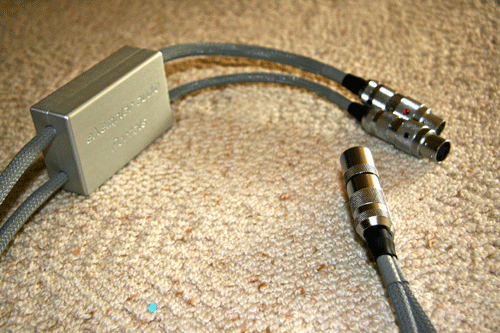
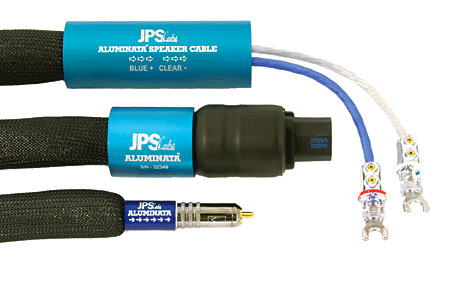
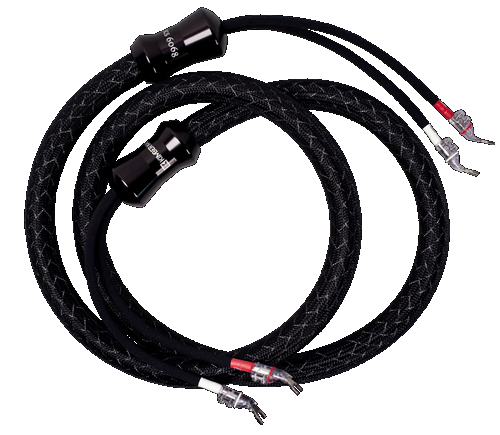
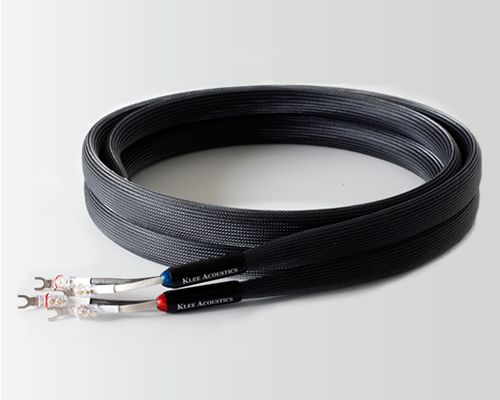
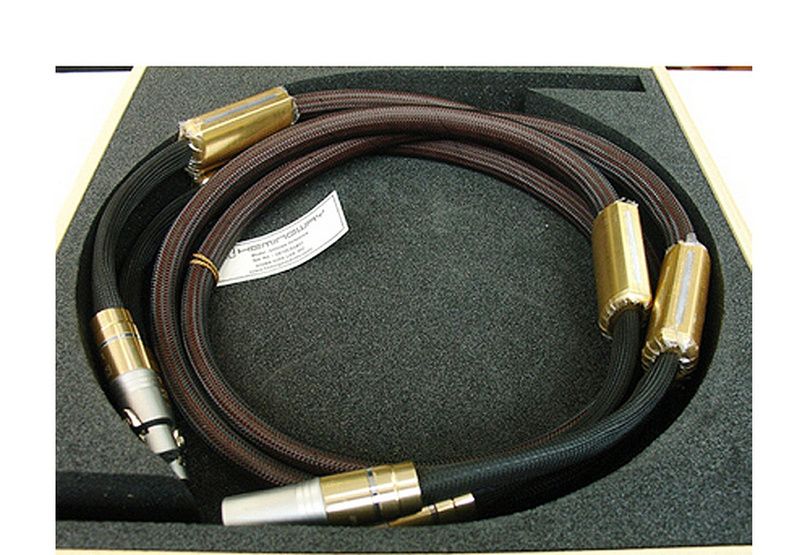
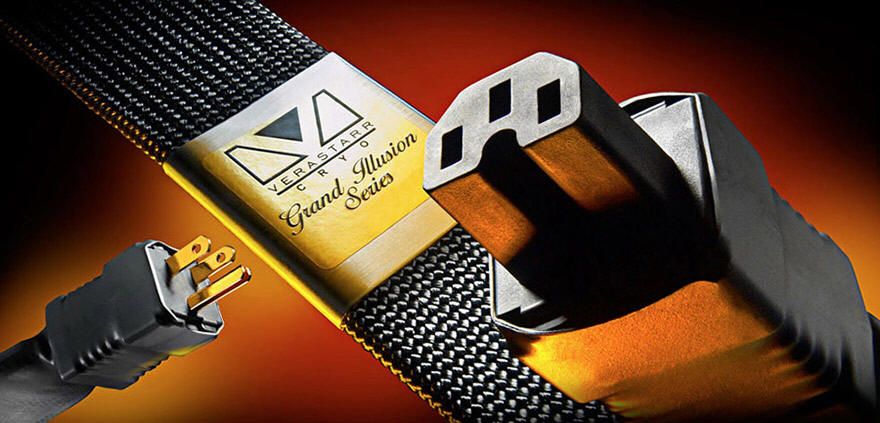
But just look at them!

MW2011791.gif


407jpsxxx1.gif


KS6068_smccxx1.gif


grand-illusion-21.jpg


p1069837341-41.jpg


MW2011811.jpg


"Grand Illusion" indeed!


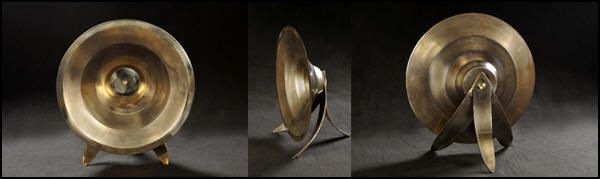
...and then there's this thing that looks like some tarnished old knick-knack you might find at the Salvation Army:

MW2011831.jpg

http://www.stereotimes.com/acc010412.shtml

but with a MSRP of $2190.00!
 
Where does the DAC pull it's digital signal from?
USB?

Yes, since USB outputs are on all PCs/laptops and usually more than one there are more and more USB DACs coming on to the market. They are overtaking, if not have overtaken DACs with optical or digital SPDIF outputs. Some USB DACs also use the USB to provide power as well as the signal.
 
A better quality DAC will always provide better sound quality over a crappy one. Laptops are not built to be high-end audio components. They're mostly designed for maximum portability and intended for business, field use, and on-the-go computing, etc. and therefore tend not to have the best onboard audio adapters.

The main problem I've always had with using a laptop as an audio source is the 60 Hz line noise generated by the transformer in the external power supply.

The impression I get is that many computer makers know that people use them as a music source and sound cards are getting better for sound quality.

I had background noise and dealt with that by using a couple of mains conditioners, one from Russ Andrews and another from Tacima. Now right up to the highest volume setting on my amp, way beyond what is a listenable volume, I get no background noise at all.
 
But just look at them!

.........

But what is the cable inside them made from? Or even more so, who made it? ;) I would like cable makers to show pictures of every part of their product, but they don't do that. Hmmmmm!
 
But what is the cable inside them made from? Or even more so, who made it? ;) I would like cable makers to show pictures of every part of their product, but they don't do that. Hmmmmm!

I bet the look causes a better sound experience.

Audio cables are the perfect product for these scams.
It's low-tech and you can ham up the looks and brand name, and packaging no-end.

There is a lot of research on people incorporating the look and feel and yes, the price of a product in their experience of it.

Penn & Teller did a fun episode where they served cheap supermarket food in an expensive restaurant. It was much appreciated.

it's stupid, but once you've paid fifty bucks for a bottle of wine, and the bottle has an awesome label with watermarks, raised letters, and gold-ink awards printed on it. that wine will taste better.

These guys are selling a placebo effect.
 
The impression I get is that many computer makers know that people use them as a music source and sound cards are getting better for sound quality.

I had background noise and dealt with that by using a couple of mains conditioners, one from Russ Andrews and another from Tacima. Now right up to the highest volume setting on my amp, way beyond what is a listenable volume, I get no background noise at all.

I plug the headphone output of my Mac into my mixing board, and the sound is excellent.

I have to push the faders way up to hear any hash or hum, and this is in a "quiet" room.

This turned out to be cleaner than some other options I tried.

This is much better, now, than the sound out of a Mac SE/30 with an expensive sound-card was -- maybe ten, fifteen years ago. I mean much better.

Anyway, it's just for monitoring.
 
Last edited:
Apple with and ipods and itunes have a reputation (which may alone account for reports of good SQ) for considering sound quality.

Even with not so good Apple buds and basic speaker docks, the sound quality available now is way better than what i had a s a youth with an early Walkman and Aiwa boombox for my cassette collection.
 
Apple with and ipods and itunes have a reputation (which may alone account for reports of good SQ) for considering sound quality.

Even with not so good Apple buds and basic speaker docks, the sound quality available now is way better than what i had a s a youth with an early Walkman and Aiwa boombox for my cassette collection.


Absolutely!

But desktop computers often have far better audio adapters than most laptops. This is even true of Apple hardware (from my experience).
 
Last edited:
My previous lappy, Macbook Pro from 2008, had downright embarassing audio performance. On headphones I'd be able to hear a atrocious amount of background digital chirping and the hard drive spinning up would bleed all kinds of noise.

A bit better with the current 2011 model, the very noticeable digital noise is now gone at least. Card now says Intel rather than Realtek.
 

Back
Top Bottom