• Quick note - the problem with Youtube videos not embedding on the forum appears to have been fixed, thanks to ZiprHead. If you do still see problems let me know.

WTC7 and the girder walk-off between column 79 and 44

Status
Not open for further replies.
Only little children use words like "troofers".

Abject denial. The NIST theory fails several different ways.

1) The fire that supposedly started the collapse had burned out over an hour before the collapse.
Total ********. To this veteran hosedragger, this is an obvious lie, based on what I can see and what I could predict based on experience. You will need more than little Dickie Gage's ear crickets to support your delusions.

2) The walk-off theory is impossible as has been demonstrated on this thread.
Tony's model relies on concrete's being fire-proof.

:dl:
 
The reason there has never been a steel framed building that collapsed due to fire is because random interactions cannot defeat the heavy redunandcy in these buildings and things cannot get to the point of complete collapse.
Yes, hogwash. That mantra has been proven false by evidence.

WTC5 had internal floors collapsing due to fire. It didn't have a total collapse for other reasons, its size being one.

One New York Plaza also had internal floor collapses:

Light, spray-on fireproofing, which at some point had been knocked away, left steel supports for the floors exposed to the blaze. They twisted and pulled away from their connections, initiating collapses that stopped only because the concrete slabs of the floors refused to give way.
http://www.nytimes.com/2002/04/02/n...ons-of-earlier-fires.html?pagewanted=3&src=pm

It's not impossible for a fire to "defeat the heavy redunandcy[sic]" of building structures if not fought. Or it wasn't by 1983. Proof: it has happened more than once or twice. It was a question of time that a case where a building got to the point of global collapse happened.

And of course, the "first time in history" argument is silly. If a Concorde crashed, it would be the first time in history, so we're safe, the passengers of Air France flight 4590 would think if they followed your reasoning. Alas, they're dead.

By the way, let me remind you that my real name keeps being Pedro Gimeno Fortea, if that matters to you.
 
Last edited:
63,

Sorry for the length. (once on a roll … :o)

It didn't come down solely due to fire. It came down due to bits of another building falling on it, which set it on fire.

Yeah, actually it did come down solely due to fire.

Plus some unrecognized weaknesses in the design, which will now be eliminated from new building design.

The specific weaknesses were: extremely long beams, beams that attached to girders from only one side (generating huge asymmetric side loads when they heated up, side loads that would not have occurred if the beams tied into the girders from both sides), and inadequate anchoring of girders to column seats.

The "inadequate anchoring" refers to the fact that the main girders (& beams) were not welded in place, they were merely held by small bolts. This was just fine, as long as all the geometry of the building was fixed & constrained by the shear studs anchored into the concrete floors.

But once those shear studs failed & the concrete fractured in the fires, suddenly all those critical components were free to slide around. This is an absolute prescription for disaster in any building, but especially in a skyscraper.

I used the analogy before that, with the beams properly anchored into the concrete, the building was solid as a Mercedes. But when the shear studs failed, it was equivalent to taking out about 3/4ths of the bolts in one portion (say the front suspension), and loosening up all the remaining bolts.

You'd change the car from a tight-as-a-drum Mercedes into a rattle trap, that would surprise no mechanic if it fell to pieces as you drove down the road. Even while nobody expects an "as built" Mercedes to simply fall to pieces as you drive.

The damage caused by the collapse of WTC1 onto the building was not a component of the collapse initiation (except, of course, for setting the fires & crushing the water mains that prevented the firefighters from fighting the fire).

The damage on the south & southeast sides of the building played a small role in changing some of the late details of the collapse. (In essence, a 2nd collapse began at the site of the main damage on the south wall). But by that time, the total collapse of the building was inevitable.

As for Tony's comment that "fire has never caused the collapse of a steel framed structure", it is rare.

It is certainly not "unknown", and people here have given numerous examples.

Sight & Sound Theater, PA
McCormack Place, Chicago
Kadar Toy Factory, Thailand

And others.

And here is one more: WTC5. VERY interesting.

http://www.youtube.com/watch?v=jeYPm8XzC3g&t=52m30s

It'll jump right to the pertinent point in the video.
If it doesn't jump right to the point on "fire only collapse of WTC5", simply slide the slider to 52 minutes, 30 seconds.

[Tony, C7, care to comment on this video?]

BTW, most steel buildings that do collapse (and they do every year, killing firefighters with terrible regularity), do so when they are cooling down. It makes it spooky to be intentionally cooling down the fire by squirting water on it. Especially if you're standing on top of it, or have a bunch of the building above your head.

WTC5 was unusual because it appears to have collapsed during its heating phase. That means that it happened very quickly.
___

BTW, truthers started with the patently false meme that "steel buildings have never collapsed simply due to fires". When it was pointed out to them that this is simply wrong, they modified it to "steel framed high-rise buildings have never collapsed simply due to fires."

The determinant of collapse is simply stress in the affected member. The beams & girders don't know, & don't care about how many stories are above them. They simply respond to their LOCAL stress.

Beams & girders generally carry only the load of their own floor. Approximately equal stresses on all floors.

But columns are the "load paths" that carry the accumulating loads of all the floors above. Low stresses on top floors, very high stresses on lower floors.

(I know I'm stating the obvious, but it's to focus on my point.)

Most times, when steel framed buildings collapse, it's the connectors, trusses, beams & girders that fail first. This is because they tend to be lightweight (higher surface area to volume ratio) compared to the columns in tall buildings, and therefore heat up quicker than the more massive columns. And they fail FIRST.

1) If fires can cause the collapse of beams & girders in a single story design, then they can absolutely cause the collapse in those same beams & girders when they are in a multi-story design. Because, as we said earlier, the beams & girders & their connections to the columns carry only the weight of their own floor, which (for a given design) is the same in a 1 story or 100 story building.

All other things being equal, connectors, trusses, beams & girders in high rises are exactly as likely to fail in high rise fires as they are in single story fires.
___

It turns out that few or no floors above some particular column at some particular height puts light loads into that column. But many floors above that same column puts high loads into the column. But engineers compensate for the extra loads by adding material. In the end, the stresses in high rise columns are just about identical to the stresses in single story buildings. And this is true from the top of the building to the bottom.

The one advantage that the lower columns in high rises have over the columns in low rise buildings is that they are more massive & take longer to heat up. And fires are dynamic, transient events.

However this one advantage is completely negated by the fact that the columns depend completely on the integrity of the beams & trusses to keep them in close alignment in order for the columns to do their job.

Lose the beams, lose the geometry, lose the columns, lose the building.

Finally, the huge disadvantage that the lower columns in high rise buildings have is that, if anything changes (damage, buckling floors, changed geometry, airplane impact, etc.) then, with all the weight being carried, the loads (and stresses) can increase enormously.

Highly stressed components fail much, much, much faster in fires than equivalent low stressed components.
___

The reason that collapse happens so rarely is that skyscrapers are very, very expensive buildings, and fires & fire protection is taken very, very seriously. Engineers & building owners spend lots of extra money to make sure that they do survive fires, that they don't spend on smaller, less expensive buildings.

Truthers addition of "high rise" or "skyscraper" to the conditions of their "first time ever" argument is not only irrelevant, it is from an engineering POV completely ass backward.

What a surprise, eh…?


tom

PS. Then truthers add "total collapse" to the growing list of qualifiers to account for events like the Windsor Towers.

At this point, real engineers merely laugh & walk away.

Christ, I've got to take my own advice in that last sentence…!!

 
Last edited:
Only little children use words like "troofers".

Well what would prefer? 911Liars? Its common for cults to claim they hold the "truth", Christianity has been doing it for 1000s of years, it just part of the con.

Well pardon me but I've yet to come across an honest "truther" and they certainly do not earn the use of the word. Hence you are a twoofer, an object of derision.
 
Tony, C7. gerrycan,

Show ...

Your ...

Equations ...!

Your numbers are completely untrustworthy.

Which is the exact reason that Tony doesn't show his.

As for C7 & gerrycan, they don't show it because they can't do it. They simply copy & paste & believe.
 
The 238 psi compressive bearing stress experienced by the concrete from the beam expansion loads before they buckle is extremely low and there is simply no chance of concrete failure.

Are you going to reveal from which orifice you pulled this number?

Post your analysis, Tony.

Drawings.
Assumptions.
Equations.
Calculations.
References.

It's what real engineers do.
 
Correct - the way NIST theorizes that it failed. i.e. The NIST theory does not work.

I believe that you are smarter than this, but I am willing to admit that I may be wrong.

If you concede that you haven't demonstrated that walk-off is impossible, even though you said so, then I guess we're done.
 
63,

Sorry for the length. (once on a roll … :o)

Just adding a few additional points.....


Plus some unrecognized weaknesses in the design, which will now be eliminated from new building design.

The specific weaknesses were: extremely long beams, beams that attached to girders from only one side (generating huge asymmetric side loads when they heated up, side loads that would not have occurred if the beams tied into the girders from both sides), and inadequate anchoring of girders to column seats.

Another was the transfer beams/girders on the lower floors over the substation.


Beams & girders generally carry only the load of their own floor. Approximately equal stresses on all floors.

True, but they also are used as bracing of columns, so removing even a single floor could cause a building to collapse without any other loading.

But columns are the "load paths" that carry the accumulating loads of all the floors above. Low stresses on top floors, very high stresses on lower floors.

Except in high rise buildings, where there are high lateral forces in the upper floors and not so much in the lower floors :D


Most times, when steel framed buildings collapse, it's the connectors, trusses, beams & girders that fail first. This is because they tend to be lightweight (higher surface area to volume ratio) compared to the columns in tall buildings, and therefore heat up quicker than the more massive columns. And they fail FIRST.

Also, in tall buildings, design for maximum wind load far exceeds the requirements for gravity loads, so columns tend to have far larger capacity for gravity loads than they actually carry.


1) If fires can cause the collapse of beams & girders in a single story design, then they can absolutely cause the collapse in those same beams & girders when they are in a multi-story design. Because, as we said earlier, the beams & girders & their connections to the columns carry only the weight of their own floor, which (for a given design) is the same in a 1 story or 100 story building.

All other things being equal, connectors, trusses, beams & girders in high rises are exactly as likely to fail in high rise fires as they are in single story fires.
___

It turns out that few or no floors above some particular column at some particular height puts light loads into that column. But many floors above that same column puts high loads into the column. But engineers compensate for the extra loads by adding material. In the end, the stresses in high rise columns are just about identical to the stresses in single story buildings. And this is true from the top of the building to the bottom.

The one advantage that the lower columns in high rises have over the columns in low rise buildings is that they are more massive & take longer to heat up. And fires are dynamic, transient events.

However this one advantage is completely negated by the fact that the columns depend completely on the integrity of the beams & trusses to keep them in close alignment in order for the columns to do their job.

Lose the beams, lose the geometry, lose the columns, lose the building.

Finally, the huge disadvantage that the lower columns in high rise buildings have is that, if anything changes (damage, buckling floors, changed geometry, airplane impact, etc.) then, with all the weight being carried, the loads (and stresses) can increase enormously.

Highly stressed components fail much, much, much faster in fires than equivalent low stressed components.
___

The reason that collapse happens so rarely is that skyscrapers are very, very expensive buildings, and fires & fire protection is taken very, very seriously. Engineers & building owners spend lots of extra money to make sure that they do survive fires, that they don't spend on smaller, less expensive buildings.

It is not only the expense, but the building codes that require multiple hour protection of building structures for LIFE SAFETY reasons. A high rise building requires much more time to evacuate than a low rise one. Thus, the building structure is required to have a lot longer fire protection rating, and sprinklers are required, unlike low rise builds that often require no sprinklers and rated protection of the structure.

Truthers addition of "high rise" or "skyscraper" to the conditions of their "first time ever" argument is not only irrelevant, it is from an engineering POV completely ass backward.

What a surprise, eh…?


tom

PS. Then truthers add "total collapse" to the growing list of qualifiers to account for events like the Windsor Towers.

At this point, real engineers merely laugh & walk away.

Christ, I've got to take my own advice in that last sentence…!!
 
Abject denial. The NIST theory fails several different ways.

1) The fire that supposedly started the collapse had burned out over an hour before the collapse.
Total ********. To this veteran hosedragger, this is an obvious lie, based on what I can see and what I could predict based on experience.
NIST has a photo showing that the fire on floor 12 had burned out by 4:45 p.m. so your point is moot. The fire had burned out at least one half hour before the collapse so it could not have caused the floor beams to expand at 5:20 p.m.

The photos and floor plan along with statements in the final report clearly show that the fire had burned out in the area of the collapse initiation an hour and a half before the collapse.

Rather than just glibly calling someone a liar, perhaps you could back up your accusation with some facts. I have posted this many times:
http://truthphalanx.com/chris_sarns/

C7 said:
2) The walk-off theory is impossible as has been demonstrated on this thread.
leftysergeant said:
Tony's model relies on concrete's being fire-proof.
You should read more carefully to avoid making such irrelevant statements.
http://www.internationalskeptics.com/forums/showpost.php?p=8206388&postcount=948

Ther NIST walk-off theory is impossible because:
At 649oC, the floor beams would have expanded 5.14" and lost 0.39" to sagging for a net of 4.75". From that point on, the loss to sagging exceeds the thermal expansion. The NIST theory that the thermal expansion of the beams pushed the girder 5.5" is impossible.

leftysergeant said:
Once a steel member has expanded, it can retreat if heat is removed, possibly to surge again when it is heated again.
Some firefighter you are. :rolleyes: Fires don't go back to burned out areas and reheat steel because the fuel has been exhausted.

ETA:NoahFence and Animal,
This thread is about NIST's walk-off theory.
 
Last edited:
NIST has a photo showing that the fire on floor 12 had burned out by 4:45 p.m. so your point is moot. The fire had burned out at least one half hour before the collapse so it could not have caused the floor beams to expand at 5:20 p.m.

So they could have / absolutely were damaged BEFORE 5:20 then.

The damage was done. You fail.

Where's your evidence beyond "looks like"?
 
NIST has a photo showing that the fire on floor 12 had burned out by 4:45 p.m. so your point is moot. The fire had burned out at least one half hour before the collapse so it could not have caused the floor beams to expand at 5:20 p.m.

The photos and floor plan along with statements in the final report clearly show that the fire had burned out in the area of the collapse initiation an hour and a half before the collapse.

Rather than just glibly calling someone a liar, perhaps you could back up your accusation with some facts. I have posted this many times:
http://truthphalanx.com/chris_sarns/


You should read more carefully to avoid making such irrelevant statements.
http://www.internationalskeptics.com/forums/showpost.php?p=8206388&postcount=948

Ther NIST walk-off theory is impossible because:
At 649oC, the floor beams would have expanded 5.14" and lost 0.39" to sagging for a net of 4.75". From that point on, the loss to sagging exceeds the thermal expansion. The NIST theory that the thermal expansion of the beams pushed the girder 5.5" is impossible.

Some firefighter you are. :rolleyes: Fires don't go back to burned out areas and reheat steel because the fuel has been exhausted.

ETA:NoahFence and Animal,
This thread is about NIST's walk-off theory.

So, you're telling me that because a fire has moved to a different location, that all the damage it has already done is magically fixed?

You're also telling me that because a fire is not 30' away, it no longer will heat objects near the seat?

Please tell me you're kidding, and you don't actually believe that load of horse vomit......
 
NIST has a photo showing that the fire on floor 12 had burned out by 4:45 p.m. so your point is moot. The fire had burned out at least one half hour before the collapse so it could not have caused the floor beams to expand at 5:20 p.m.

I'll bear this in mind when I switch off the ring on the cooker and expect the food that's on it not to burn subsequently :rolleyes:
 
Speechless.

At the implication that a fire that massive would have just what - cooled to the touch after a 1/2 hour of moving on? And that the damage it caused what - fixed itself?


These people can't be telling the truth about them believing this crap. It's bat(bleep) crazy.
 
...
Claiming that WTC 7 came down due to fire is an extraordinary claim and that requires extraordinary proof. ...

It is a fact, fire destroys buildings, this is why we have firemen, and insulate the steel to give time for people to escape, and time for firemen to fight the fire. It is a realistic claim, unlike the idiotic CD claim.

Fire totals buildings when fires are fought.
http://i286.photobucket.com/albums/ll116/tjkb/NYFDWTCfire.jpg
Fire fought, yet, building totaled, never used again.

Fire fought, building never used again.
http://i286.photobucket.com/albums/ll116/tjkb/onemeridiansag.jpg

Fire fought, building never used again.
http://en.wikipedia.org/wiki/Windsor_Tower_(Madrid)

On 911, three buildings with massive fires, fires not fought, buildings collapsed, totaled by fire.
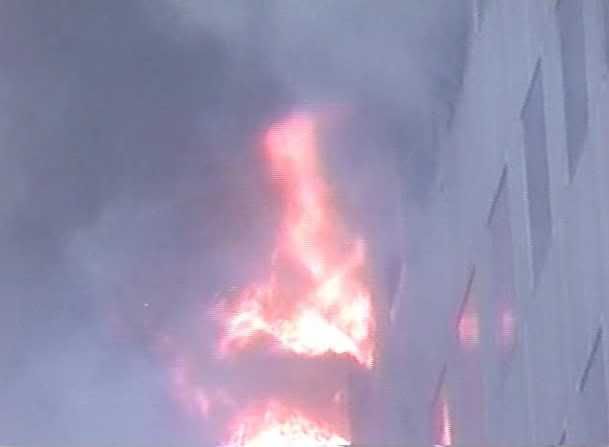
WTC 7, massive fires,
wtc7fire3.jpg

Simple proof, fire, fires not fought, no water for fire system. The extraordinary proof you require, is reality, you ignore, you prefer the idiotic claim of CD. CD by silent explosives.

CD is the extraordinary claim, and impossible claim since all evidence proves otherwise. Whining about NIST, supporting nonsense by wannabe internet engineers inspired by paranoid conspiracy is a waste of time. Engineers would present their earth shattering evidence to support the CD nonsense. Funny when 911 truth followers and leaders make up more fantasy, the paranoid claim people are working for the government, shills sent to ruin their fantasy when they are frustrated and exposed as frauds. If 911 truth had substance they would stick to the math and engineering, and ignore people exposing their CD claim is failed fantasy. 911 truth made up the CD claim which fools the uniformed and gullible. The claim of fire destroying WTC 7 is backed with many examples of buildings being totaled by fire; yet those building fires were fought.

When 911 truth drops the CD fantasy, they might realize their mistakes in your current never to be published attack on NIST.

We have three fires not fought, the buildings were totaled, they collapsed.

... I am debating the gentleman who created the video, "Shear Ignorance" and this is going to be one of his (and others) points as to why NIST's explanation is incorrect and why the girder couldn't have walked off. ...?

The video was made up because they think 911 was an inside job, CD. They made up their analysis, no engineering needed. If they were engineers and had something, they would publish it in an engineering journal. They made up their minds, it was CD and attack NIST. Who needs NIST to figure out fire destroys buildings? Not sure why 911 truth followers attack NIST when they need to present the engineering, etc,.

I made this video along with some other researchers from our 911 Truth chat-room. It addresses the issue of shear studs in WTC7 and NIST's denials and admissions of their existence. Comments/criticisms are welcome. I will include links and references in the description as soon as I can. http://www.youtube.com/watch?v=qGe0...DvjVQa1PpcFMk2aG3cV1kI3LW-CX1LZ3sRazv3m1pa7I=

The OP, a video made up by paranoid conspiracy theorists who meet in a chat-room. Instead of publishing their findings in a respected engineering journal, they do a youtube, the Justin biebers of 911 truth.

...
Post your analysis, Tony.

Drawings.
Assumptions.
Equations.
Calculations.
References.

It's what real engineers do.
Good advice for all 911 truth engineers, and youtube pretend engineers.

What if NIST was wrong about this detail? Fire destroyed WTC 7, 1, 2, 5, etc.
911 truth, 10 years of solid failure, now firmly in the eternal failure constant repetition mode with new gullible people magically "waking up to" the "truth", like Bigfoot, and Flat-Earth. Here is the proof a 2012 video, new people unable to figure out 911 fall for failed 911 truth claims of CD. http://www.youtube.com/watch?v=qGe0E9cjUbI

What is their claim on flights 77 and 93? When will they youtube, "the rest of the story"? More fodder for those teaching abnormal psychology classes.
 
Hey Animal,

Nice to meet you.

I take it you're an architect or structural engineer..?

Just adding a few additional points.....

Always welcome.

Especially if I've posted something wrong.

Another was the transfer beams/girders on the lower floors over the substation.

I wondered about this often. Along with the cantilever discontinuity of the outer columns.

NIST said "no impact". I'm not convinced.

True, but they also are used as bracing of columns, so removing even a single floor could cause a building to collapse without any other loading.

Absolutely.

Except in high rise buildings, where there are high lateral forces in the upper floors and not so much in the lower floors

This prompted the reply.

You're absolutely right that I was only considering gravity loads in what I wrote. And the wind loads are critical.

Certainly high rises are exposed to much higher wind loads, due to both greater surface area & higher wind speeds at higher elevations.

But, like any cantilever, the shear load & the stresses from those winds (assume distributed load) increase from the free end to the fixed end, reaching maximum shear, max moment & max bending stresses at street level.

[I am quite sure that this is the reason for all the damage to ceiling & marble in the lobby right after the plane crash. Not the fireballs in the elevators, but the stresses from the hit reached max right at street level.]

Also, in tall buildings, design for maximum wind load far exceeds the requirements for gravity loads, so columns tend to have far larger capacity for gravity loads than they actually carry.

I didn't realize that the design allowances were actually much greater than the gravity loads, but as soon as you said it, it makes perfect sense.

Considering the size of the sail & hurricane force winds …

And wind considerations make my statement of "approximately equal stress at all heights of the building" wrong. A nice ideal that you can never achieve.

You can easily design a building to have equal stresses due to gravity on all floors.

But there is nothing that I can see that an architect can do to make the bending stresses from wind equal at all floors. The lower floors will always need to have much more capacity to resist bending stresses.

So this appears to suggest that due to this reserve capacity, on a calm day, the stresses in the lower columns of a tall building are actually considerably less than they are in the upper portions of the building.

True?
Very counter-intuitive.

It is not only the expense, but the building codes that require multiple hour protection of building structures for LIFE SAFETY reasons. A high rise building requires much more time to evacuate than a low rise one. Thus, the building structure is required to have a lot longer fire protection rating, and sprinklers are required, unlike low rise builds that often require no sprinklers and rated protection of the structure.

Excellent point.

Everything does not reduce to just dollars.


Tom
 
63,

Sorry for the length. (once on a roll … :o)


[words]
I was speaking casually, not scientifically, but thanks for the info. I would've gone with a Ford Pinto joke/analogy myself instead of the Mercedes.
 
Hey Animal,

Nice to meet you.

I've been around a while, had not posted for about 6 months until last week.

I take it you're an architect or structural engineer..?

Architect, licensed for 22 years, been in the business for 33.


Always welcome.

Especially if I've posted something wrong.


I wondered about this often. Along with the cantilever discontinuity of the outer columns.

NIST said "no impact". I'm not convinced.

No direct impact, but the building structure would not have been designed as such if there had not been a sub station........transfer beams / girders are not very efficient.

This prompted the reply.

You're absolutely right that I was only considering gravity loads in what I wrote. And the wind loads are critical.

Certainly high rises are exposed to much higher wind loads, due to both greater surface area & higher wind speeds at higher elevations.

But, like any cantilever, the shear load & the stresses from those winds (assume distributed load) increase from the free end to the fixed end, reaching maximum shear, max moment & max bending stresses at street level.

[I am quite sure that this is the reason for all the damage to ceiling & marble in the lobby right after the plane crash. Not the fireballs in the elevators, but the stresses from the hit reached max right at street level.]

True, but much of the structure is there to prevent bending. (Can't have that building moving too much in the wind so you will get occupants motion sick) so stresses are will be distributed oddly across the structure........then there is the whole topic of sway dampers.....with oiled plates and large masses attached to springs etc.


I didn't realize that the design allowances were actually much greater than the gravity loads, but as soon as you said it, it makes perfect sense.

Considering the size of the sail & hurricane force winds …

And wind considerations make my statement of "approximately equal stress at all heights of the building" wrong. A nice ideal that you can never achieve.

You can easily design a building to have equal stresses due to gravity on all floors.

But there is nothing that I can see that an architect can do to make the bending stresses from wind equal at all floors. The lower floors will always need to have much more capacity to resist bending stresses.

So this appears to suggest that due to this reserve capacity, on a calm day, the stresses in the lower columns of a tall building are actually considerably less than they are in the upper portions of the building.

True?
Very counter-intuitive.

True.......a tall building is essentially a vertical cantilever.


Excellent point.

Everything does not reduce to just dollars.


Tom
 
Speechless.

At the implication that a fire that massive would have just what - cooled to the touch after a 1/2 hour of moving on? And that the damage it caused what - fixed itself?


These people can't be telling the truth about them believing this crap. It's bat(bleep) crazy.

And creep has been explain to the trooofers countless times
 
Status
Not open for further replies.

Back
Top Bottom