• Quick note - the problem with Youtube videos not embedding on the forum appears to have been fixed, thanks to ZiprHead. If you do still see problems let me know.

WTC7 and the girder walk-off between column 79 and 44

Status
Not open for further replies.

Gamolon

Master Poster
Joined
Dec 6, 2006
Messages
2,702
The NIST report on WTC7 states that the bearing seat at 79 for the girder was 11 inches wide and that the beam was pushed laterally 5.5" due to thermal expansion of the floor beams. According to NIST, this meant that the girder had walked off the seat.

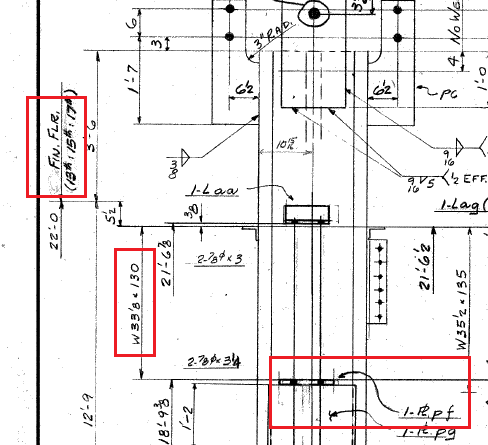
I am looking at the shop drawing from Frankel Steel (1091) for column 79 at the 13th floor, and the bearing seat is 12" wide, not 11" like NIST has in their report.

I am debating the gentleman who created the video, "Shear Ignorance" and this is going to be one of his (and others) points as to why NIST's explanation is incorrect and why the girder couldn't have walked off.

NIST states 600C, an 11" wide plate, and a lateral push of 5.5" to fit their explanation.

Any thoughts about this?
 
I can't contribute anything important to your question. But what format are you doing your debate in?
 
The NIST report on WTC7 states that the bearing seat at 79 for the girder was 11 inches wide and that the beam was pushed laterally 5.5" due to thermal expansion of the floor beams. According to NIST, this meant that the girder had walked off the seat.

I am looking at the shop drawing from Frankel Steel (1091) for column 79 at the 13th floor, and the bearing seat is 12" wide, not 11" like NIST has in their report.

I am debating the gentleman who created the video, "Shear Ignorance" and this is going to be one of his (and others) points as to why NIST's explanation is incorrect and why the girder couldn't have walked off.

NIST states 600C, an 11" wide plate, and a lateral push of 5.5" to fit their explanation.

Any thoughts about this?

links?
 
You are incorrect, NIST does not state the girder (I assume you're talking about W33) walked off its seat.

NIST states:
continued axial expansion of the floor beams pushed the girder laterally, where it came to bear against the inside of the column flange. Axial compression then increased in the floor beams, and at a beam temperature of 436C, the northmost beam began to buckle laterally. Buckling of the other floor beams followed as shown in Figure 8-27(a), leading to collapse of the floor system, and rocking of the gurder off its seat on Column 79 as shown in Figure 8-27(b).
NIST NCSTAR 1-9 pp 353-354

The expansion did not push the girder off its seat, after it was shifted on its seat, the buckling of the floor beams and the girder itself "rocked" the girder off its seat, therefore it doesn't really matter whether the seat was 11" or 12", it was still rocked off it.

edit: regardless, I cannot find where it states the seat was 11" or the girder was pushed 5.5".

Can you link where?
 
Last edited:
You are incorrect, NIST does not state the girder (I assume you're talking about W33) walked off its seat.

NIST states:
NIST NCSTAR 1-9 pp 353-354

The expansion did not push the girder off its seat, after it was shifted on its seat, the buckling of the floor beams and the girder itself "rocked" the girder off its seat, therefore it doesn't really matter whether the seat was 11" or 12", it was still rocked off it.

edit: regardless, I cannot find where it states the seat was 11" or the girder was pushed 5.5".

Can you link where?

NIST NCSTAR 1-9, page 527.

Walk-off occurred when beams that framed into the girders from one side thermally expanded and the resulting compressive forces in the beams pushed laterally on the girder from one side, sheared the bolts at the seated connection, and then continued to push the girder laterally until it walked off the bearing seat. The bearing seat at column 79 was 11 in. wide. Thus, when the the girder end at Column 79 had been pushed laterally at least 5.5 in., it was no longer supported by the bearing seat.
 

Screen shots of the Frankel Steel, 1091.TIF for column 79 details.

Here is the actual callout for finished floor 13, the W33 x 130 girder, and the seat labeled "pf".
frankelcolumn79a.png


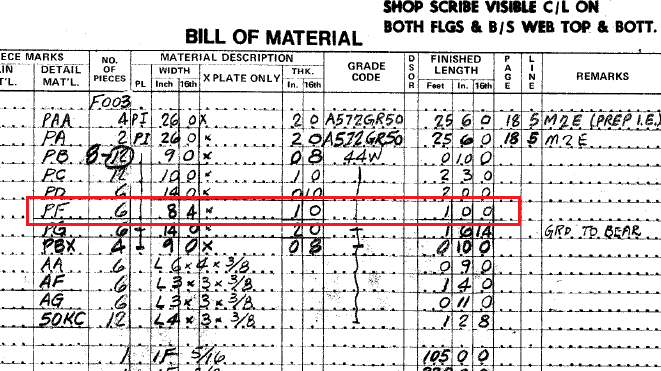
Here is a screenshot of the BOMs on the same drawing that show the dimension for the plate "pf". I only see 1 ft. x 8 in. for the plate. Nothing about 11 in.
frankelcolumn79b.png


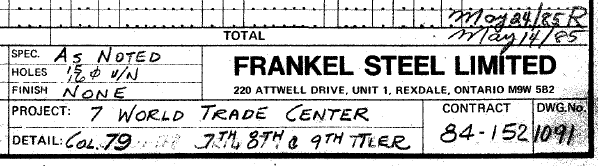
Drawing title block.
frankelcolumn79c.png
 
NIST NCSTAR 1-9 said:
The bearing seat at column 79 was 11 in. wide. Thus, when the the girder end at Column 79 had been pushed laterally at least 5.5 in., it was no longer supported by the bearing seat.

This is not a measurement or simulation of what happened, it's an estimate of what would need to happen. The 5.5 is directly inferred from the 11 in the previous sentence (note the "thus" and "at least").

If it was actually 12 inches, then the girder needed to be pushed an extra half inch. So what? Did the paper at some point say 5.5 inches was the most it could be pushed?
 
Joe was standing at the edge of a cliff, with his toes exactly at the edge. Frank came along and pushed him 5.5 inches. Joe fell off the cliff and died in the fall.

Frank, on trial for murder, pointed out that Joe's shoes were not 11 inches long as the DA had mentioned previously, but 12 inches long. That meant the 5.5 inches he'd shoved Joe were not quite enough to move Joe's center of gravity over the edge of the cliff. So, the prosecution's case against Frank fell apart and Frank was acquitted! The surprised police investigators rushed back to the crime scene, more determined than ever to discover the true culprit.

(This story is from the How Things Work In Truther World anthology. Any resemblance to any actual plausible story is unlikely.)

Respectfully,
Myriad
 
This is not a measurement or simulation of what happened, it's an estimate of what would need to happen. The 5.5 is directly inferred from the 11 in the previous sentence (note the "thus" and "at least").

If it was actually 12 inches, then the girder needed to be pushed an extra half inch. So what? Did the paper at some point say 5.5 inches was the most it could be pushed?

That is exactly how it reads to me. If NIST is incorrect about 11 in. its a minor detail and the 5.5 in. movement is only to illustrate that the girder need only move 1/2 the width of the seat to indeed fail.
 
Screen shots of the Frankel Steel, 1091.TIF for column 79 details.

Here is the actual callout for finished floor 13, the W33 x 130 girder, and the seat labeled "pf".
[qimg]http://i238.photobucket.com/albums/ff290/gamolon/frankelcolumn79a.png[/qimg]

Here is a screenshot of the BOMs on the same drawing that show the dimension for the plate "pf". I only see 1 ft. x 8 in. for the plate. Nothing about 11 in.
[qimg]http://i238.photobucket.com/albums/ff290/gamolon/frankelcolumn79b.png[/qimg]

Drawing title block.
[qimg]http://i238.photobucket.com/albums/ff290/gamolon/frankelcolumn79c.png[/qimg]

I admit I am not great at reading blueprints.

How does NIST fare with other measurements of parts on that list? Is it possible that the 12 inches was a rough cut size and that they were finished to a half inch less at each side, at the construction site?

Does NIST use dimensions for PA, PB, PC, or PD and if so how do they match up with the BOMS?
 
You are incorrect, NIST does not state the girder (I assume you're talking about W33) walked off its seat.

NIST states:
NIST NCSTAR 1-9 pp 353-354

The expansion did not push the girder off its seat, after it was shifted on its seat, the buckling of the floor beams and the girder itself "rocked" the girder off its seat, therefore it doesn't really matter whether the seat was 11" or 12", it was still rocked off it.

edit: regardless, I cannot find where it states the seat was 11" or the girder was pushed 5.5".

Can you link where?
NIST has the girder falling BOTH ways.

August 26, 2008 WTC 7 Technical Briefing
Page 32 is a graphic showing the beams pushing the girder off its seat to the west:


"Forces from thermal expansion failed the connection at Column 79, then pushed the girder off the seat." [to the west]

http://img7.imageshack.us/img7/1313/walkoff.jpg


http://www.nist.gov/el/disasterstudies/wtc/upload/WTC7TechnicalBriefing_082608-WEBCAST.pdf

NCSTAR 1-9 Vol.2 pg 527 [pdf pg 189]
"A girder was considered to have lost vertical support when its web was no longer supported by the bearing seat. The bearing seat at Column 79 was 11 in. wide. Thus, when the girder end at Column 79 had been pushed laterally at least 5.5 in., it was no longer supported by the bearing seat."

pg 488 [pdf pg 150]
Under such conditions, the beam would fall to the floor below under its self weight. When this occurred in the ANSYS analysis, the beam was removed. When a girder failed in this manner, the floor beams that it supported were removed at the same time.

* * * * *

NCSTAR 1-9 Vol.1 pg 352 [pdf pg 396]
Ramping of the temperatures for the beams and the girder then commenced at 1.1 s, as shown in Figure 8–25, leveling off at temperatures of 600 °C for the beams and 500 °C for the girder at 2.6 s.
pg 353 [pdf pg 197]
Axial compression then increased in the floor beams, and at a beam temperature of 436 °C, the northmost beam began to buckle laterally. Buckling of other floor beams followed as shown in Figure 8–27 (a), leading to collapse of the floor system, and rocking of the girder off its seat [to the east] at Column 79 as shown in Figure 8–27 (b)
http://img208.imageshack.us/img208/8979/figure827.jpg
 
Last edited:
NIST has the girder falling BOTH ways.

August 26, 2008 WTC 7 Technical Briefing
Page 32 is a graphic showing the beams pushing the girder off its seat to the west:


"Forces from thermal expansion failed the connection at Column 79, then pushed the girder off the seat." [to the west]

http://img7.imageshack.us/img7/1313/walkoff.jpg


http://www.nist.gov/el/disasterstudies/wtc/upload/WTC7TechnicalBriefing_082608-WEBCAST.pdf

NCSTAR 1-9 Vol.2 pg 527 [pdf pg 189]
"A girder was considered to have lost vertical support when its web was no longer supported by the bearing seat. The bearing seat at Column 79 was 11 in. wide. Thus, when the girder end at Column 79 had been pushed laterally at least 5.5 in., it was no longer supported by the bearing seat."

pg 488 [pdf pg 150]
Under such conditions, the beam would fall to the floor below under its self weight. When this occurred in the ANSYS analysis, the beam was removed. When a girder failed in this manner, the floor beams that it supported were removed at the same time.

* * * * *

NCSTAR 1-9 Vol.1 pg 352 [pdf pg 396]
Ramping of the temperatures for the beams and the girder then commenced at 1.1 s, as shown in Figure 8–25, leveling off at temperatures of 600 °C for the beams and 500 °C for the girder at 2.6 s.
pg 353 [pdf pg 197]
Axial compression then increased in the floor beams, and at a beam temperature of 436 °C, the northmost beam began to buckle laterally. Buckling of other floor beams followed as shown in Figure 8–27 (a), leading to collapse of the floor system, and rocking of the girder off its seat [to the east] at Column 79 as shown in Figure 8–27 (b)
http://img208.imageshack.us/img208/8979/figure827.jpg

By gum, I think he's cracked it! NIST's whole theory is bunk! This brings the conspiracy down around the government's ears! Victory! Triumph!

No, wait, they made some vague diagrams which you're desperately reading things into in an effort to find a contradiction.
 
NIST has the girder falling BOTH ways.

August 26, 2008 WTC 7 Technical Briefing
Page 32 is a graphic showing the beams pushing the girder off its seat to the west:


"Forces from thermal expansion failed the connection at Column 79, then pushed the girder off the seat." [to the west]

http://img7.imageshack.us/img7/1313/walkoff.jpg


http://www.nist.gov/el/disasterstudies/wtc/upload/WTC7TechnicalBriefing_082608-WEBCAST.pdf
Is this AUGUST 2008 information still included in the NOVEMBER 2008 final report?
If yes, can you point me to where this plays a role in the final assessment?
If no, can you explain why you think this superceded information is worthwhile reporting in 2012? Are you perhaps having problems with the concept of correcting oneself as newer, better information arises?


Other than that, thanks for providing page numbers and stuff in the final report.
 
NIST has the girder falling BOTH ways.

August 26, 2008 WTC 7 Technical Briefing
Page 32 is a graphic showing the beams pushing the girder off its seat to the west:


"Forces from thermal expansion failed the connection at Column 79, then pushed the girder off the seat." [to the west]

http://img7.imageshack.us/img7/1313/walkoff.jpg


http://www.nist.gov/el/disasterstudies/wtc/upload/WTC7TechnicalBriefing_082608-WEBCAST.pdf

NCSTAR 1-9 Vol.2 pg 527 [pdf pg 189]
"A girder was considered to have lost vertical support when its web was no longer supported by the bearing seat. The bearing seat at Column 79 was 11 in. wide. Thus, when the girder end at Column 79 had been pushed laterally at least 5.5 in., it was no longer supported by the bearing seat."

pg 488 [pdf pg 150]
Under such conditions, the beam would fall to the floor below under its self weight. When this occurred in the ANSYS analysis, the beam was removed. When a girder failed in this manner, the floor beams that it supported were removed at the same time.

* * * * *

NCSTAR 1-9 Vol.1 pg 352 [pdf pg 396]
Ramping of the temperatures for the beams and the girder then commenced at 1.1 s, as shown in Figure 8–25, leveling off at temperatures of 600 °C for the beams and 500 °C for the girder at 2.6 s.
pg 353 [pdf pg 197]
Axial compression then increased in the floor beams, and at a beam temperature of 436 °C, the northmost beam began to buckle laterally. Buckling of other floor beams followed as shown in Figure 8–27 (a), leading to collapse of the floor system, and rocking of the girder off its seat [to the east] at Column 79 as shown in Figure 8–27 (b)
http://img208.imageshack.us/img208/8979/figure827.jpg

IIRC Chris7 has made this claim over and over again and been shown where he has gone wrong.

IIRC NIST does NOT state [to the east] in any part of the report. If that phrase is not used in the NIST report then one wonders why Chris includes in in a quote of the report.
Instead it is strictly Chris's erroneous interpretation of the last diagram he links to.
 
Last edited:
Is this AUGUST 2008 information still included in the NOVEMBER 2008 final report?
Dammit I was gonna say something about this too. This is the second time I've seen Mr 7 do this and I called him out on doing the exact same thing basically in the Fe Micro-Spheres(?) thread and this was his response to me:
You should stop using that thread bear canard. NIST made a statement in a publication and I can quote them. The fires did not change even if they decided to change their characterization of them.
Is this your answer in this thread as well, Chris?

IIRC NIST does NOT state [to the east] in any part of the report. If that phrase is not used in the NIST report then one wonders why Chris includes in in a quote of the report.
Instead it is strictly Chris's erroneous interpretation of the last diagram he links to.
The phrase [to the west] is also not used. I figured C7 could get away with it cause he did put it in brackets, though he probably should have made it more clear that he added it in. But he did tell us the page links so meh.
 
IIRC Chris7 has made this claim over and over again and been shown where he has gone wrong.

IIRC NIST does NOT state [to the east] in any part of the report. If that phrase is not used in the NIST report then one wonders why Chris includes in in a quote of the report.
Instead it is strictly Chris's erroneous interpretation of the last diagram he links to.
I put the [to the east] in italics to indicate that I had added it. Is using the asterisk better?

NIST has the girder between columns 79 and 44 failing twice, in opposite directions.

Walk off occurred when expanding beams pushed the girder off its seat to the west. as shown in this graphic in the August 26, 2008 Technical Briefing:
Page 32
[FONT=&quot]http://img7.imageshack.us/img7/1313/walkoff.jpg[/FONT]
"Forces from thermal expansion failed the connection at column 79, then pushed the girder off its seat"

And described in NCSTAR 1-9 Vol.2 pg 488 [pdf pg 150]
Walk-off failure of beams and girders was defined to occur when [FONT=&quot](1) the end of the beam or girder moved along the axis of the beam until it was no longer supported by the bearing seat, or (2) the beam or girder was pushed laterally until its web was no longer supported by the bearing seat. … [/FONT]Under such conditions, the beam would fall to the floor below under its self weight. When this occurred in the ANSYS analysis, the beam was removed. When a girder failed in this manner, the floor beams that it supported were removed at the same time.

NCSTAR 1-9 Vol.2 pg 527 [pdf pg 189]
Walk off occurred when beams that framed into the girders from one side thermally expanded and the resulting compressive forces in the beams pushed laterally on the girder from one side,sheared the bolts at the seated connection, and then continued to push the girder laterally until it walked off the bearing seat. A girder was considered to have lost vertical support when its web was no longer supported by the bearing seat. The bearing seat at Column 79 was 11 in. wide. Thus, when the girder end at Column 79 had been pushed laterally at least 5.5 in., it was no longer supported by the bearing seat.


Buckling beams rocked the girder off of its seat
to the east.

NCSTAR 1-9 Vol.1 pg 353 [pdf pg 197]
Axial compression then increased in the floor beams, and at a beam temperature of 436 °C, the northmost beam began to buckle laterally. Buckling of other floor beams followed as shown in Figure 8–27 (a), leading to collapse of the floor system, and rocking of the girder off its seat* at Column 79 as shown in Figure 8–27 (b)
*to the east
[FONT=&quot]http://img208.imageshack.us/img208/8979/figure827.jpg[/FONT]
 
Last edited:
Status
Not open for further replies.

Back
Top Bottom