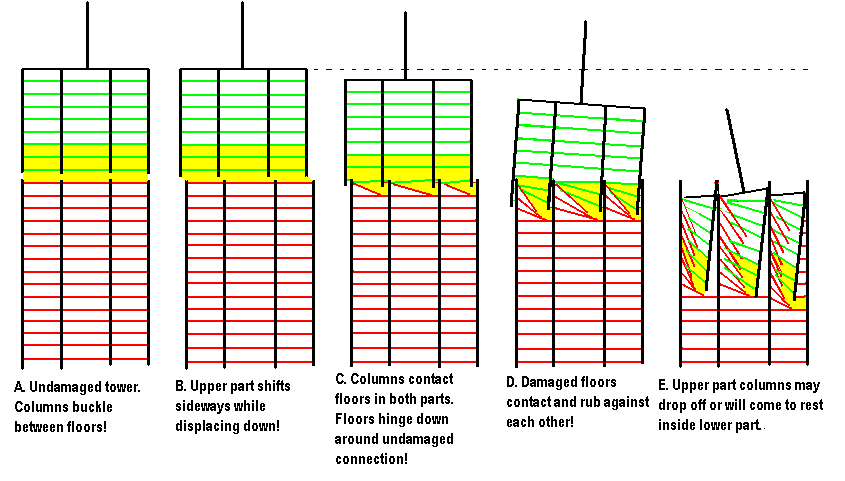
So you think that both columns of the section wouldn't fail and would support a huge amount of mass.
All columns of section A carry exactly the same - huge? - amount of mass before and after impact. No extra mass pops up when C drops. The compressive stresses in all the A columns are average 0.3 yield before/after impact. During impact stresses were higher due to dynamic effects but as you can, it was the weaker columns in section C that failed first.
It normally happens when you drop a weaker structure C on a stronger structure A (unless C just bounces or drops off).
One-way collapse C crushing A never takes place. Easy to show with a model!