• Security incident: ISF was recently accessed by intruders. Please change your password, and change it anywhere else you used it. Read more

Cont: Electric Vehicles II

If we add 300kWh going from 10%-70% that battery is a 500kWh pack, and would probably have a mass over 2500kg. That is what needs to absorb the 10MJ. So it has somewhere to go.
Your weights are a bit high lol as are your battery capacities...

The Gen 3 Atto 3 here in Australia doesn't weigh that much for the entire car- and the Premium version released here back in early 2026 already has the 800v battery pack voltage needed for 'full bore' megacharging...
(the 400v battery versions can 'use' a mega charger, but their charging speed is reduced to compensate- it will take a bit longer to charge the same amount of kWh- the 800v battery pack is essential to these charging speeds)
1791480207847.png
1791480360636.png

Hell the whole car doesnt weigh that much (1990kg/1.99 tonnes/4387 lbs)...
630km/391 miles range, under 9 min on a Flash charger to full, 6 mins to 80% from 10% with its 68.5kWh battery pack in the Premium version....
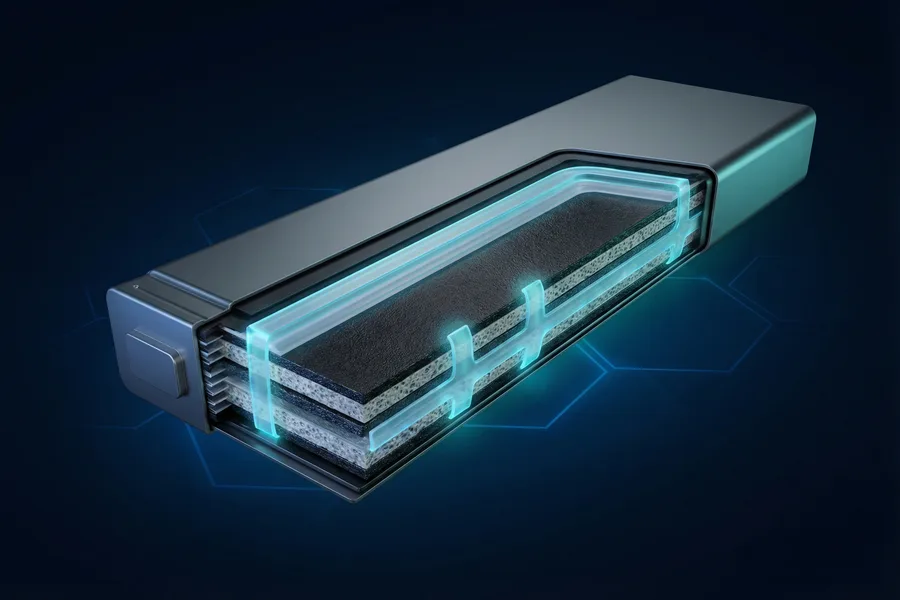
 
There's a lot of 'guessing' going on in this thread- BYD don't screw around (they have been building BEVs since 2009, and BYD trucks and buses started being sold in 2012- they build their own batteries themselves (in fact the non US made Teslas use their Blade 1 battery packs in their cars lol)

The new Blade 2 LFP is chemically doped, and can handle up to a 10C rating....
(and BYD is sold in most of the world save for 'one country' lol- if they were ◊◊◊◊◊◊◊◊◊◊◊◊ their figures, it would soon become apparent as they sell far more EVs than Tesla do worldwide...)

 
If we add 300kWh going from 10%-70% that battery is a 500kWh pack, and would probably have a mass over 2500kg. That is what needs to absorb the 10MJ. So it has somewhere to go.
Well, I'm just shooting from the hip based on the numbers in the press releases. They did mention reducing range anxiety, so I have no idea what the capacity and weight are. Maybe they did make a bigger battery for range. I don't know.

Still, if just the battery is two and a half tons? By Lucifer Morningstar. That car could plough straight through a schoolbus. Forget worrying about SUVs, that thing is gonna hit you like a tram.
 
Your weights are a bit high lol as are your battery capacities...
Absolutely - I'm just continuing the calculation from the post I quoted.

A 500kWh battery would go in a truck or bus.

But for a smaller battery, like that BYD you still would not have a problem with the temperature rise, since you would add propotionally less heat to it.
 
BYD also make Denza EVs (its the 'luxury' brandname for the BYD) and they DO have a 1000km range (well thats using the 'optimistic' CLCT range- in real world driving its closer to 800km from a 122kWh battery pack, but still with sub 9 minute charging...
1791481481751.png

Another thing to note- the Flash charging is capped by the battery capacity- so the smaller Atto 3 battery will not use the 'full' speed of the Flash chargers- its important to note that the 1.2/1.5/2/2.5MW is the MAXIMUM at which it can charge, not what it always WILL charge at- that maximum rate is set by the car itself (and its battery capacity)- nothing to do with the chargers maximum rate...
 
AFAIK, the BYD trucks still use the 400v/Blade 1 battery packs- this one for example is a 'short range' local city delivery 2x4 version, and its still only half your battery capacity lol
1791482009616.png
They have been on the market since 2023- that's a 2024 model...
(BYD do make larger 'semi' prime movers as well, sold tens of thousands around the world- they sold their 100th one just in the US alone in 2020... by that stage they had sold over 12000 worldwide (and the Tesla semi wasn't even off the design papers by that stage lol)
1791482431916.png
Be interesting to see what the Flash chargers could do on a BYD truck with Blade 2 battery packs...
 
Fastest charging EV by C rate

The fastest mass-produced electric vehicles by C-rate (the rate at which a battery can charge relative to its total capacity) reach up to 5.5C.

Top C-Rate EV Leaders

• Zeekr 007 and Zeekr 7X: These models (equipped with Zeekr’s second-generation Golden Battery LFP chemistry and 800V/900V architecture) support a 5.5C maximum charging rate. When plugged into a high-output ultra-fast charger (such as Zeekr's V3 piles), they can charge from 10% to 80% in about 9.5 to 10.5 minutes.
• CATL Shenxing-powered EVs (e.g., Zeekr 001 and select partners): Support 5.5C or 5C peak charging rates, delivering around 310 miles of range in roughly 12 minutes under ideal conditions.
• BYD New Platforms (Han L / Tang L): Utilizing upgraded blade batteries and high-voltage platforms, BYD models push high-rate flash charging up to 10C manufacturer-claimed peak tiers for brief windows, though typical production operating rates cluster around 5C+ speeds.

Western Market Comparison

For context, mainstream Western and North American EVs generally charge at lower C-rates:
• **Hyundai Ioniq 6 / Hyundai Ioniq 5: Peaks around 3.3C (~260–350 kW architecture), doing 10–80% in roughly 18–20 minutes.
• Porsche Taycan: Peaks around 2.7C (~270–320 kW), doing 10–80% in under 20 minutes.
• Tesla Model 3 / Model Y: Generally peak around 2.4C to 2.5C.

A 5.5C rate is impressive. But that is a very long ways away from 22 C.
 
Fastest charging EV by C rate

The fastest mass-produced electric vehicles by C-rate (the rate at which a battery can charge relative to its total capacity) reach up to 5.5C.

Top C-Rate EV Leaders

• Zeekr 007 and Zeekr 7X: These models (equipped with Zeekr’s second-generation Golden Battery LFP chemistry and 800V/900V architecture) support a 5.5C maximum charging rate. When plugged into a high-output ultra-fast charger (such as Zeekr's V3 piles), they can charge from 10% to 80% in about 9.5 to 10.5 minutes.
• CATL Shenxing-powered EVs (e.g., Zeekr 001 and select partners): Support 5.5C or 5C peak charging rates, delivering around 310 miles of range in roughly 12 minutes under ideal conditions.
• BYD New Platforms (Han L / Tang L): Utilizing upgraded blade batteries and high-voltage platforms, BYD models push high-rate flash charging up to 10C manufacturer-claimed peak tiers for brief windows, though typical production operating rates cluster around 5C+ speeds.

Western Market Comparison

For context, mainstream Western and North American EVs generally charge at lower C-rates:
• **Hyundai Ioniq 6 / Hyundai Ioniq 5: Peaks around 3.3C (~260–350 kW architecture), doing 10–80% in roughly 18–20 minutes.
• Porsche Taycan: Peaks around 2.7C (~270–320 kW), doing 10–80% in under 20 minutes.
• Tesla Model 3 / Model Y: Generally peak around 2.4C to 2.5C.

A 5.5C rate is impressive. But that is a very long ways away from 22 C.
BYD Blade 2 is up to 10C for extended time (nothing 'claimed' about it- theres literally tens of thousands of these chargers already in use in China, and Australia's are just about to start operating too lol)
No-one claiming 22C on charging...

Like ALL chargers- the actual charge rate will depend on battery state of charge (the higher the battery is in charge, the slower the charge rate becomes)- which is why seasoned EV owners don't charge to 100% on fast chargers on long trips- that last 20% takes as long as the previous 60% does!!!! on long trips, do the 20% to 80% and then start driving again...

The charger also monitors the battery pack temperature- if it starts to rise above its programmed limits, it will 'throttle' the packs charge rate down to keep the battery from overheating....
(The Atto 3 EVO (Gen 3) does 20-80% in 6 minutes, and to 100% in 9 minutes)- the older (2022-2026 in Australia) Gen 2 models with their 400v architecture do 20%-80% in 20 mins, to 100% in 40 minutes...)

1791491525775.png
from https://bydcarchina.com/byd-blade-b...y-behind-1000-km-range-and-9-minute-charging/
 
Last edited:
Issue in the UK is charging - many people will need to use on street charging and you don't control who can park in front of your house, that's even in areas in which you require a local residents permit to park. This is typical of UK towns - in the attached image each "house" is in fact 2 separate flats, so even if you made it only you can park in front of your home it wouldn't work because there are two homes sharing the same frontage. Sadly in the UK electrical vehicles and cheap charging at home are still generally for the better off.

View attachment 76554

(Just bought a new car and would have bought an electric car but will be moving within the year and won't have a driveway at my new home.)

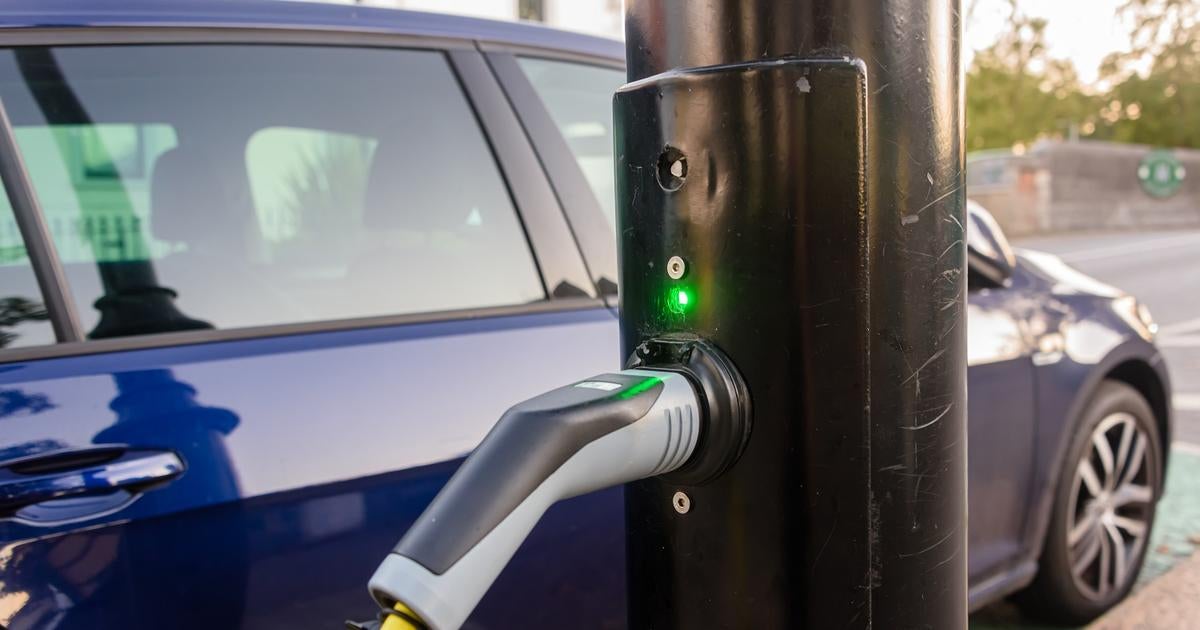
Eventually, these things will be on every lamp post...

 
You have made several 'assumptions' almost all of which are actually well off the actual published figures...
And yet all my assumptions are based on actual published figures. But that doesn't mean the published figures I have used are correct. I use math to cut through the bs. Which a lot of published figures happen to be.

Feel free to correct me. But please offer citations.
 
Last edited:
Your battery size and charge rates assumptions are the worst (you have been talking battery sizes hugely greater than any private 'residential' EV uses- hell its bigger than many commercial delivery trucks use!!!!) and also make understated charge rates (LFP is rarely limited to 1C, many are upwards of 3C hell my own here (which have been on the market since 2008 here) have a 3C rating!!!)- then make again misleading imho claims about charging speeds that are a mix of 'fact and fiction' ie like the BYD Flash chargers- which have a maximum power handling capability of (depending on model) 2-3MW - but fail to note that that is per PEDESTAL- which has provision for charging two vehicles at once.... and is the PEAK charging rate (which is only done at the lower end of the battery charge state- it tapers off as the charge rises)
I have repeatedly given you the battery sizes for the vehicles involved and corrected your fanciful 22C claims (which nobody except you has put forward)
AND with actual screen grabs of them to boot

And as these are not 'proposed' charger designs, but already have tens of thousands installed in China, and now being installed in various countries around the world- I suspect that your 'musings' can be readily dismissed as a result...
 
You have made several 'assumptions' almost all of which are actually well off the actual published figures...
It does seem strange that there is pushback on what is happening in the real world right now, installed in cars being sold commercially right now. This isn't like the Donut battery folk and their possible but highly doubtful in real life claims about technology they claim they have.
 
Yep- the Denza Z9GT sedan and B5 and B8 luxury SUVs are already on sale in Australia, as is the Atto 3 Evo- all of which already have 'Flash' charging capabilities- and the chargers that can utilise that capability to its fullest are literally weeks away from being available for public use here... (they aren't restricted to the Flash chargers of course, basically all EVs use the same CCS2 Combo charge port in 'most of the world' so the Flash capable cars can happily charge at any existing chargers- just not as fast as they can on a Flash charger...

The exact same chargers number in the tens of thousands already in China (they have been installing a thousand Flash chargers a month there :eek: ) and are being rolled out in quite a few countries right now besides Australia...

To argue that 'its not possible, prove me wrong' seems more than a little 'weird' lol- it's literally commercially available stuff you can buy and use right now!!!!

I mean, its like arguing that a refrigerator can't possibly work lol- when I can buy one....
 
Last edited:
It does seem strange that there is pushback on what is happening in the real world right now, installed in cars being sold commercially right now. This isn't like the Donut battery folk and their possible but highly doubtful in real life claims about technology they claim they have.
I'm not trying to push back in any way. I'm a strong believer in EVs as the future. I have been following closely the development of alternative resources since the 1970s. I geek out about this stuff. But it's frustrating reading the news on developments. 8 or even 9 out of 10 of the articles I read are exaggerations or are lab breakthroughs that for one reason or another fizzle out before the reach the market. I am always hopeful and skeptical at the same time. We tend more to see evolutionary developments that add up over time as opposed to radical improvements.
 

ISF - Join now!

Every member here is approved by hand. No bots, no spam, just people who care about evidence and honest debate.

Membership is free!

Create your free account

Back
Top Bottom