• Security incident: ISF was recently accessed by intruders. Please change your password, and change it anywhere else you used it. Read more

Cont: Electric Vehicles II

I'm not trying to push back in any way. I'm a strong believer in EVs as the future. I have been following closely the development of alternative resources since the 1970s. I geek out about this stuff. But it's frustrating reading the news on developments. 8 or even 9 out of 10 of the articles I read are exaggerations or are lab breakthroughs that for one reason or another fizzle out before the reach the market. I am always hopeful and skeptical at the same time. We tend more to see evolutionary developments that add up over time as opposed to radical improvements.
And yet you don't 'believe' in chargers and cars that already exist in the tens of thousands and are being used daily are doing what the manufacturers say they are doing...

Far from 'reaching for the market- these are ON the market now..
 
And yet you don't 'believe' in chargers and cars that already exist in the tens of thousands and are being used daily are doing what the manufacturers say they are doing...

Far from 'reaching for the market- these are ON the market now..
Who said that? I asked for citations that would confirm your points.
 
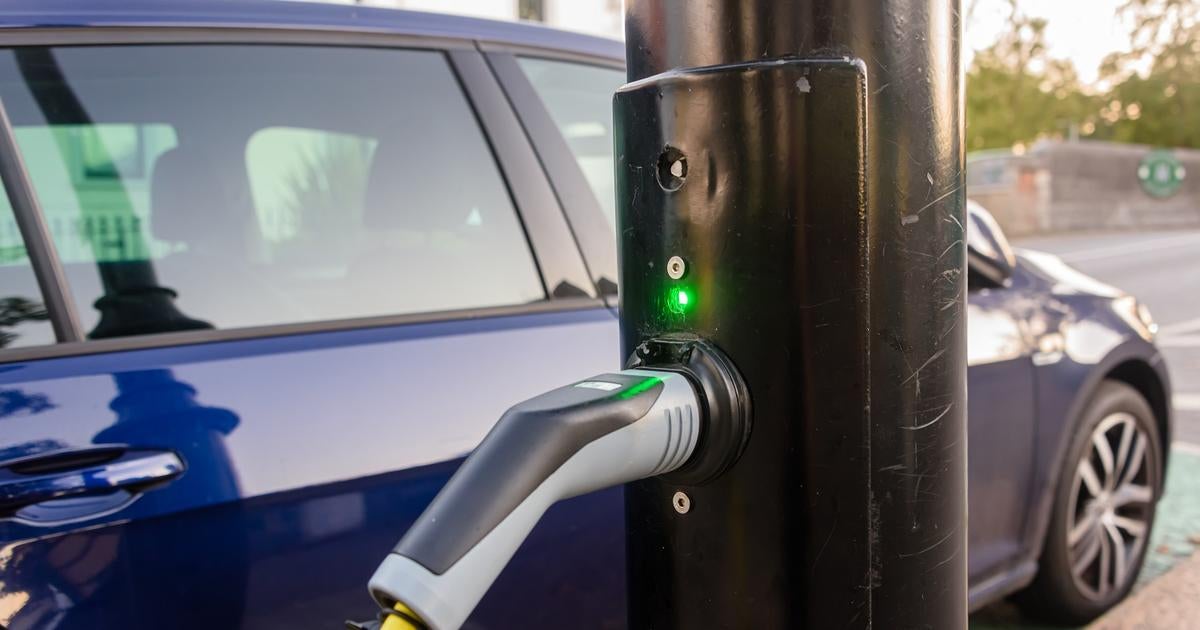
Eventually, these things will be on every lamp post...

Awesome idea.
Los Angeles, while half as dense as London, leads in U.S. EV ownership. With a high rental population and many living in multi-unit buildings, the city faces similar charging challenges. A significant push began in 2019, with the installation of 130 streetlamp charging stations, following an LED streetlight upgrade. The plan is to add 150 chargers annually, supported by grants and private investments.
So they installed LEDs which draw less power, making more available for EV charging. Brilliant!
 
Adding "150 annually" in a city that has millions of personal cars...
And the US 'anti EV' stance again shows up lol (not from you Darat, the US in general)- in Australia, they are planning on a total of 10000 street chargers in the inner Sydney suburbs alone... (the population of Sydney is approximately 7 million, but the vast majority have access to off street parking, either living in detached dwellings (often with rooftop solar) or in blocks of flats (units) where its been a legal requirement for decades that every unit has a minimum of one parking space... only the oldest inner city suburbs (often built prior to WW2) have no access to off street parking...

It's not as if there aren't solutions- they already exist and are being used in other places- the US just doesn't WANT to do it...

History will not look kindly on them.... (assuming that there are still any humans around to care about it...)
 
Every car has to be parked somewhere when it's not being driven. It should not be beyond the wit of man to install lowish-power AC chargers in whatever proportion of these locations as is necessary to allow everyone who needs to charge their car to do so.

EV adoption is not going to be instantaneous, so there is time for a planned roll-out. Very few people are going to need to charge every day, especially in urban areas, so coverage doesn't need to be 100% or even close.

When we consider how electricity was rolled out and installed in every home 100 years ago, with multiple power points in every room, lighting, water heating and so on, the idea that this task is beyond the capabilities of the 21st century is ludicrous.
 
I was a bit downhearted, well, shocked is a better word, to listen to an edition of More Or Less talking about the power demand of proposed data centres.

The goldrush for these things has project proposers staking claims which add up to several times the current size of the national power generation capacity. Some projects propose having their own natural gas powered generation and a transition to grid power when available.

And this at a time when what we actually need to do is shift all our fossil fuel load onto an expanded electric power grid. It seems like extra capacity for home charging is going to have to compete with AI cat videos.
 
In Copenhagen we have lots and lots of street chargers, and more are being built. This is an advantage because it is not difficult for me to charge my EV, but it is a disadvantage because I am only allowed to park at the charger for three hours during day time. This means that more and more parking spaces are only available during the night, and the car has to be moved before 11 AM. What do people do if they get ill, and can't move their car?
Fortunately there are a few exceptions, and quite close to where I live, there are eight chargers where you can park for as long as you need. They are of course very popular (in contrast to the normal chargers that are often vacant during daytime when people are at work), but being retired, I can often time my arrival to a time when at least one space is empty. And when my car is charged and I find an empty regular parking space, I often move my car in order to give others the opportunity of charging at the exceptional chargers.
 
Every car has to be parked somewhere when it's not being driven. It should not be beyond the wit of man to install lowish-power AC chargers in whatever proportion of these locations as is necessary to allow everyone who needs to charge their car to do so.

EV adoption is not going to be instantaneous, so there is time for a planned roll-out. Very few people are going to need to charge every day, especially in urban areas, so coverage doesn't need to be 100% or even close.

When we consider how electricity was rolled out and installed in every home 100 years ago, with multiple power points in every room, lighting, water heating and so on, the idea that this task is beyond the capabilities of the 21st century is ludicrous.

And it's not like there's ever been a petrol station in every home. EVs allow for a possibility that ICE cars never did - to refuel at home - which is obviously one of their biggest selling points, as it's both more convenient and reduces costs. But those who have to go to a charging station to refuel are (or soon will be as coverage increases) no more inconvienced than they were with an ICE car.
 
And it's not like there's ever been a petrol station in every home. EVs allow for a possibility that ICE cars never did - to refuel at home - which is obviously one of their biggest selling points, as it's both more convenient and reduces costs. But those who have to go to a charging station to refuel are (or soon will be as coverage increases) no more inconvienced than they were with an ICE car.
Not quite - yet - but as the faster charging cars and chargers are coming online it will be much more like the current petrol station model. Indeed if they can do a 60 to 80% charge in 10 minutes can't see why we can't replace the current pumps at petrol stations with electric stations. Which means any "range anxiety" should be done away with as you'll be able to treat your electric car like an ICE car, after all most people don't fill their ICE cars up to the top each and every time they use a petrol station. Can see people putting in a "tenners' worth" of electricity.

ETA: But this requires political will to make happen...
 
Indeed if they can do a 60 to 80% charge in 10 minutes can't see why we can't replace the current pumps at petrol stations with electric stations.
In Denmark every petrol station is being equipped with charging stations, and some have their petrol pumps removed. The petrol companies know that the bells are tolling for them. Currently, 90% of all new cars are EVs.
 
Every car has to be parked somewhere when it's not being driven. It should not be beyond the wit of man to install lowish-power AC chargers in whatever proportion of these locations as is necessary to allow everyone who needs to charge their car to do so.

EV adoption is not going to be instantaneous, so there is time for a planned roll-out. Very few people are going to need to charge every day, especially in urban areas, so coverage doesn't need to be 100% or even close.

When we consider how electricity was rolled out and installed in every home 100 years ago, with multiple power points in every room, lighting, water heating and so on, the idea that this task is beyond the capabilities of the 21st century is ludicrous.
While I agree on your main points here, I must interject that, having lived in a couple of older houses whose wiring dated back to the days of early rural electrification, "multiple power points in every room" etc. is not very accurate. It's more likely that every major room got a light fixture, and that some of those fixtures had an outlet on them. If you were lucky and had a few extra bucks you might get an actual outlet in the kitchen so you wouldn't have to plug the toaster into the ceiling light. This is not to say it would be impossible to accommodate electric cars properly, but I've lived in a couple of places with 60 amp services and lots of extension cords!
 

ISF - Join now!

Every member here is approved by hand. No bots, no spam, just people who care about evidence and honest debate.

Membership is free!

Create your free account

Back
Top Bottom