• Quick note - the problem with Youtube videos not embedding on the forum appears to have been fixed, thanks to ZiprHead. If you do still see problems let me know.
I think it's hilarious that the OP is talking about Formula One. Motor racing. That is (a) completely unnecessary, and (b) also fighting tooth and nail to keep electric cars out, because electric cars will obviously be able to leave ICE cars standing when specific development for racing performance is undertaken.
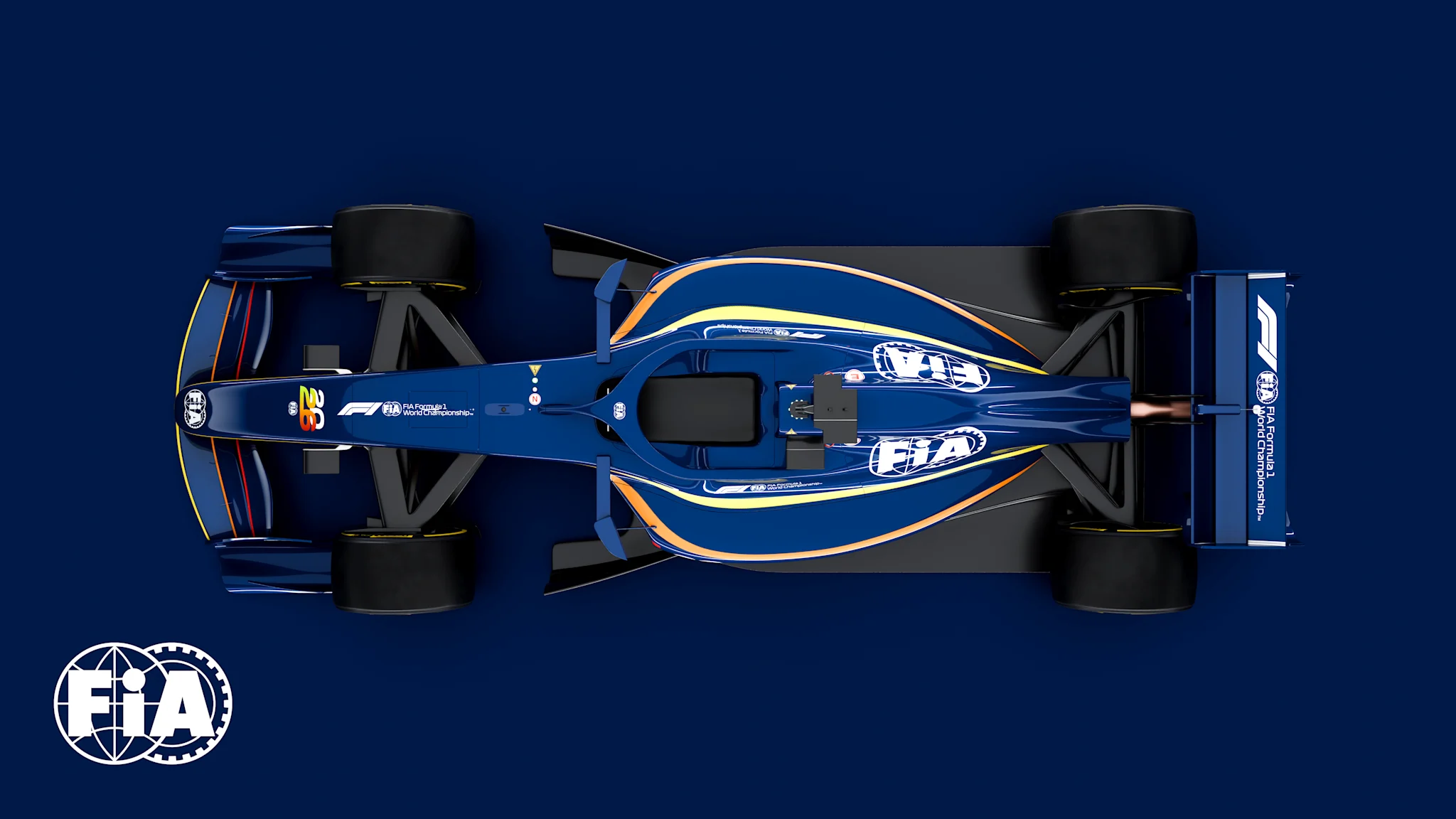
Formula One engines are going to be 50% electric next year.

They already have an electric component (40% IIRC).

Fighting tooth and nail, lol.
 
The electric part is entirely powered by the internal combustion part.
By electricity from braking and exhaust energy recovery systems.

If you want to keep splitting hairs, "electric" car batteries aren't sustainable as they're run on non renewable lithium.
 
Um, they're not "run on" lithium. They're made of lithium, which is not consumed. At the end of the battery's life it is recycled into new batteries. Someone calculated how long it will take before no more needs to be mined, and it was a surprisingly short time.
 
There are areas of land where no food crops can be grown, but plants for biofuel do work. And we have massive amounts of plant debris from things like grain and maize which are inedible and can be used.
A quick Google search suggests that there's hundreds of millions of tons of agricultural plant waste being generated every year.

You think there's maybe tens of millions of tons of unrefined ICE fuel stock in there? And nobody has noticed? That some idiot is investing millions of dollars in yet another offshore oil platform, instead of mining a vast mountain of bio-trash?

My hypothesis is that if the energy were there, the investment would be there. Maybe I'm wrong. If I am wrong, and you invest, you could end up being the wealthiest person in all of human history. All while feeding and powering the greatest civilization in human history.
 
Formula 1 themselves on their sustainable fuel:

"Before 2022, cars were running on fuel containing 5.75% bio-components. That ratio rose to 10% in 2022 through a move to E10 fuel (E stands for ethanol, 10 refers to the percentage in the mixture).

From 2026, following intense research and testing with Formula 1 partner ARAMCO, the fuel in every race car will be fully sustainable.

That means no new fossil carbon will be burned. Instead, the carbon will be derived from non-food sources, genuine municipal waste or even out of the atmosphere.

The fuel will also be ‘drop-in’, which means it can be used in almost any internal combustion engined vehicle around the world. By 2030, there will be around 1.2bn such cars on the road worldwide and thus fuel developed in Formula 1 could be used to reduce emissions."


I'll believe it when I see it. Sounds uncannily similar to the hydrogen hype that's finally, inevitably, falling apart.
 
Formula 1 themselves on their sustainable fuel:

"Before 2022, cars were running on fuel containing 5.75% bio-components. That ratio rose to 10% in 2022 through a move to E10 fuel (E stands for ethanol, 10 refers to the percentage in the mixture).

From 2026, following intense research and testing with Formula 1 partner ARAMCO, the fuel in every race car will be fully sustainable.

That means no new fossil carbon will be burned. Instead, the carbon will be derived from non-food sources, genuine municipal waste or even out of the atmosphere.

The fuel will also be ‘drop-in’, which means it can be used in almost any internal combustion engined vehicle around the world. By 2030, there will be around 1.2bn such cars on the road worldwide and thus fuel developed in Formula 1 could be used to reduce emissions."


The technical term for the above is bovine excrement. If only we could power the world on that...
 
Formula 1 themselves on their sustainable fuel:

"Before 2022, cars were running on fuel containing 5.75% bio-components. That ratio rose to 10% in 2022 through a move to E10 fuel (E stands for ethanol, 10 refers to the percentage in the mixture).

From 2026, following intense research and testing with Formula 1 partner ARAMCO, the fuel in every race car will be fully sustainable.

That means no new fossil carbon will be burned. Instead, the carbon will be derived from non-food sources, genuine municipal waste or even out of the atmosphere.

The fuel will also be ‘drop-in’, which means it can be used in almost any internal combustion engined vehicle around the world. By 2030, there will be around 1.2bn such cars on the road worldwide and thus fuel developed in Formula 1 could be used to reduce emissions."


At least they say what they mean by "sustainable".
 
There's this common unit called Joules. Combined with drivetrain efficiencies this could easily be calculated.

Electric motors will always outperform ICE. An electric motor can provide full torque from 0rpm. We already have electric cars that can out-accelerate an ICE F1 car.

F1 sticking with the ICE is because the companies involved want to sell more ICE-powered cars to (mostly) men.
Formula 1 races are around 200 miles (with no refuelling). Formula E cars only race about 60 miles. It's going to need a big leap in battery tech before that will be a level playing field.

Some of the F1 teams are also car manufacturers but others are not. They compete in F1 because it makes money in its own right, mostly from TV rights just like other popular sports. The cars have been hybrids for years.
 
ICE vehicles are not going to disappear tomorrow. But disappear they will. That 'm sure.

EVs keep getting incrementally better. Twenty years ago, a few thousand EVs sold worldwide. Ten years ago EVs consisted of .04 percent of the new passenger car market. Tody it is 8%. I'd be surprised if it doesn't reach 30% by 2035. And that very well may be a conservative estimate.
There are still some very legitimate reasons that some customers aren't buying. Price of the vehicle, lack of range, slow charging speed and the availability of charging locations. Improve those three things and EVs will win. And I expect improvements on all those issues. The range on the average EV in 2018 was 143 miles. Today the average range on this year's new EVs for sale is 300 miles.

The biggest problem slowing mass EV adoption is the availability of fast charging stations. It's not a problem everywhere. But I know of EV owners who loved their EV on the road but hated the long wait to use a supercharger.
 
It's not like that here. I haven't had to wait since Tebay a couple of days before Christmas last year. On that day I drove past the slower (but perfectly adequate) charger I had used the previous year, which I could see on my satnav was vacant, thinking, "Tebay had nothing last year now they have 18 chargers, that's the place to stop." Unfortunately everybody else obviously thought the same thing. Last month when I went on a road trip to the south coast and back I charged nine times, one way or another. Always a vacant charger (usually several, only once did I get the last one), no waiting. Same thing when I went up north last week. Perth, Inverness, Kilchuimein, An Gearasdan and Stirling, just drove up and plugged in every time.

That was my point, originally. Not that EVs can beat Formula One cars now, but that they will. The ICE has been developed and refined for over a century and there's really not a lot more to be got out of it. EVs are in an early stage of development with a long way to go. Further tinkering with the ICE is a short-term pastime with no future.
 
It's not like that here. I haven't had to wait since Tebay a couple of days before Christmas last year. On that day I drove past the slower (but perfectly adequate) charger I had used the previous year, which I could see on my satnav was vacant, thinking, "Tebay had nothing last year now they have 18 chargers, that's the place to stop." Unfortunately everybody else obviously thought the same thing. Last month when I went on a road trip to the south coast and back I charged nine times, one way or another. Always a vacant charger (usually several, only once did I get the last one), no waiting. Same thing when I went up north last week. Perth, Inverness, Kilchuimein, An Gearasdan and Stirling, just drove up and plugged in every time.

That was my point, originally. Not that EVs can beat Formula One cars now, but that they will. The ICE has been developed and refined for over a century and there's really not a lot more to be got out of it. EVs are in an early stage of development with a long way to go. Further tinkering with the ICE is a short-term pastime with no future.
Exactly, it's not a matter of if it will happen. It's a matter of how soon it will happen. Range kills EVs on the race track. Not speed. Electric motors can be far superior in terms of speed and responsiveness. The EVs crush the Pike's Peak hill climb. ICE vehicles can't compete.

But an F1 ICE racecar can fill its tank in seconds not minutes.

I know it's different everywhere. A friend of mine said he has to frequently wait for a charger and once waited almost an hour and a half for an available stall. But luckily more fast charging stations are being built.
 
I'm still hung up on the "three times more expensive" issue with sustainable aviation fuel.

To me this means it costs three times more to produce an equivalent volume or mass (or whatever) of stored energy.
 
Some have obviously not considered living far from areas with a charger network. Where I live there are zero public charge stations, and probably not a lot of incentive to get one installed.
PEMEX is literally state run oil from the wells up.
But then the electric grid is also state run.

If you have a plug in EV you also have a home charger here.

Traveling to the beach for a vacation may leave you stranded. But the gas/EV like the Prius makes a lot of sense here.

How they do it in Eastern Europe with a lot of EVs imported from China I am not sure.
 
I'm still hung up on the "three times more expensive" issue with sustainable aviation fuel.

To me this means it costs three times more to produce an equivalent volume or mass (or whatever) of stored energy.
You're right. If we're talking about some biofuel alternative in today's traditional turbine engine.

Some day I expect electric aviation. But it's not so much the cost as it is the weight. The batteries weigh far too much to offer the range of say a 737 for short haul flights. They need to triple to quadruple the energy density of today's batteries for that to become a reality.

Right now a long range Tesla Model 3 weighs about 4,054 pounds or 1837 kilograms.
The battery takes up about a quarter of the weight of the car
The battery's energy density is 260 watt hours for a kilogram of battery weight (think of 4ea 60 watt light bulbs running for an hour)
For the same 737 using electric motors to fly 1600 kilometers or a 1000 miles needs a battery energy density from about 850 to 1250 watt hours for a kilogram.of battery weight. Today's Tesla Model 3 with that kind of energy density would offer you a range of 980 miles (1578 KM) to 1440 miles (2317 KM) I have been reading about alternative battery chemistry that might be able to possible provide that in the future.
 
Some have obviously not considered living far from areas with a charger network. Where I live there are zero public charge stations, and probably not a lot of incentive to get one installed.
PEMEX is literally state run oil from the wells up.
But then the electric grid is also state run.

If you have a plug in EV you also have a home charger here.

Traveling to the beach for a vacation may leave you stranded. But the gas/EV like the Prius makes a lot of sense here.

How they do it in Eastern Europe with a lot of EVs imported from China I am not sure.
They have super chargers that charge a vehicle far quicker than you can at home.
At home if you use a standard 110V household outlet (Level 1 charging) it will add only a few miles of range per hour, potentially taking several days to fully charge a depleted battery.
At home using a 240V Outlet (Level 2):
This is the most common home charging method. (like those used for a dryer) It will chage much faster, typically adding 20-40 miles of range per hour. This can fully charge a Model 3 overnight (8-12 hours).
Superchargers: These are DC fast-charging stations. They are much faster than home charging. They can add 150-200 miles of range in less than 30 minutes
 

Back
Top Bottom