• Security incident: ISF was recently accessed by intruders. Please change your password, and change it anywhere else you used it. Read more

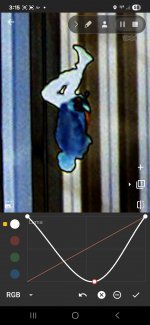
Ed Applying luma curve to photos and footage

Your AI talks about things that "shouldn't exist in an unaltered photo".

Is a photo which has been rescaled an unaltered photo or an altered photo?
 
Your AI response was helpful too. It shows that neither you nor your AI buddy have grasped the explanation which JayUtah posted ages ago and you ignored.
Since you are heavily invested in this and believe it will completely shut down this entire discussion. Go get it. Bring it here.

Get the post. That this member supplied. Ill evaluate it a second time for you.
 
I also think you will continue without understanding why you are wrong and wasting your time.
Jack. I feel very similar. I believe you have taken your preferred source and in no way applied your own research.

Maybe it is best we agree you dont agree with this subject and you carry on to another subject if you would like.

Also. Bring this post that you feel shuts this topic down conclusively, if you want to continue. Thanks jack.
 
Your AI talks about things that "shouldn't exist in an unaltered photo".

Is a photo which has been rescaled an unaltered photo or an altered photo

Jack. I am concerned you are not fully reading or grasping this.

The AI fully understands the luma curve has been applied to investigate.

I have posted replies to show and confirm this.


Thanks for the replies jack.
 
Hey. Ill leave it there. We could do this with any footage or photos or video.

I only see user level rebuttal. With a constant request to consult the two "in-house professionals"

Try it on your own. Get some results. Make a discussion out of it.
When you first started posting the pics, I googled your premise, that this was a method to reveal masking lines. All searches, by the editor creator, gave responses along the lines of:

"No, luma curves themselves do not directly reveal masking lines. Luma curves are a way to adjust the brightness and contrast of an image based on its luminosity (or brightness) values. While they can be used in conjunction with masking techniques, they do not provide a visual representation of where a mask is applied."

So that's pretty much the starting point. Your basic claim is wrong, and no one seems to agree with your interpretation, except your Chatty which you have assured us from the beginning is an utterly unreliable joke and you didn't even mean it to be taken seriously.

So that's your actual starting point. Repeating the same thing and encouraging others to "do their own research" and try it has been addressed. We have done our research, and believe your primary claim to be deeply flawed. You have presented no evidence to convince anyone otherwise.
 
No. Not every photo displays a halo effect.
The halo effect does not have to appear in every photo in order for your method not to be valid for its claimed purpose. What matters is that for the images in which it does appear following your errant manipulation of the luminance channel, we know why it appears and we can trace it conclusively and exclusively to the effect of your adjustment.

The effect appears in any image with poor resolution after oversampling—or as some have alternatively (and correctly) termed it, upscaling. This creates feature edges composed principally of midtones: pixels whose brightness lies in the middle of the image gamut (it's mathematical ability to represent brightness). Or put simply, the edges of the features in your low-resolution photos contain lots of grays.

Your images are RGB sampled. There is no luminance channel per se, but a pseudo channel can be manipulated by scaling each of the RGB channels through a weighting factor. For general radiometry, an energy (wavelength) weighting function is used. This accounts for shorter wavelengths (blue, in this encoding) having higher energies. For photography, a perceptual weighting vector is used. This accounts for the human eye's propensity to reckon brightness from the wavelengths closer to the center of the visible spectrum (i.e., green). I have applied your preferred tool Photo Curves to test images and I have determined that it is using perceptual weights to apply a "Luma" manipulation to the wavelength-specific channels.

Your adjustment curve does not magically reveal any prior retouching or image tampering. That is simply fantasy. It does not reveal anything about any prior alpha channel in the image. It does not reveal anything having to do with any layers that a prior image composition tool might have used to represent the image during editing. A layer as used in these programs is not a component of the image. It is a separate image with some metadata to describe how to combine it with adjacent layers. As I explain below, your adjustment is lossy. Rather than reveal distinctions in image data, it obscures them.

Your adjustment curve places a peak inexplicably in the center of the luminosity gamut and attenuates high luminosity (bright) and low luminosity (dark) portions of the image. Broadly speaking, this produces a false-color image, which you seem to understand. Without understanding what has been done to the image, an observer will correctly note that the lighting expressed in the image is "unnatural."

The effect of the peak will be similar to a poorly regulated band-pass filter. A band-pass filter preferentially amplifies a relatively narrow band of the signal. The "signal" in this case is the image luminosity, or brightness. The "band" being amplified are those pixels whose brightness corresponds to the x-axis of your curve at which the peak occurs: in this case, midtone grays. This corresponds to the fuzzy edges on features such as the airliner. In the false-color representation that results, the passed band is white (or very bright). This is akin to how edge detection works in image processing. Your adjustment does nothing more exotic than detect edges in favorable cases and falsely render them white.

Because your adjustment function is not monotonic, it is lossy. It will produce the same output for some number of different inputs. Specifically, near the peak value, midtone grays of different brightness in the input will be rendered as the same brightness in the output according to symmetry. On a normalized [0...1] luminosity scale and a gamut with the adjustment function peak at m, for some differential luminosity offset b, inputs with luminosity m+b and m-b will map to the same output value. Visually, this has the effect of creating a bright band composed of misleadingly adjusted values. It falsely conveys the impression that a bright band exists in the source image that is composed of a single brightness value.

This is the process by which your luminance channel maladjustment produces the illusion of anomaly.

Yes. All poorly constructed composite photos with inferior programs display artifacts edges that are unnatural.
No, you have neither shown nor explained how you think the artifacts you see in the images you manipulate are the result of "poorly constructed composite photos." Nor do you seem to have a correct understanding of the basic principles of digital image storage and representation. You keep alluding to things such as layers and alpha channels that are not present in the images, and you refuse to explain how your method purportedly exposes the role of those elements in any prior workflow.

The appearance of your images is indeed unnatural—because you have made them so.

I disagree with you.
The conclusion is mathematically certain. Your disagreement is irrelevant. Spamming the thread with more examples of your error is not probative or helpful.

 
"No, luma curves themselves do not directly reveal masking lines. Luma curves are a way to adjust the brightness and contrast of an image based on its luminosity (or brightness) values. While they can be used in conjunction with masking techniques, they do not provide a visual representation of where a mask is applied."
Specifically, @nt1 posted a video in which an operator created an alpha channel by manipulating the luminosity in the copy of the image. The source image was a human subject photographed against a black background. In television this is known as luma keying. Television signals in the analog world were not color-channel separated, but rather composed of luminance and chrominance information. Luminance was a single channel, interpreted by legacy black-and-white televisions as the only signal they would render. Color televisions interpret the chrominance information, which is represented as two additional channels that combine to create a rudimentary 2D color gamut. In the PAL system, we call this the YUV color representation: Y for luminance and UV for chrominance. It was quite simple electronically in the old days to set a brightness threshold that would key out a very dark background and preserve a well-lit foreground.

Photographically this has been used since the early days of cinematography (e.g., Méliès). It was the method used by Stanley Kubrick (or, more accurately, Douglas Trumbull) to photograph the spaceships for 2001: A Space Odyssey. It should be noted that no matting is contemplated in this method.

Chrominance keying ("chroma key") became possible later in television. Similarly, sodium screen and blue screen processes were developed for photographic film. If the keyer detected a passed band, the combiner would output the signal from the foreground signal, otherwise from the background signal. In television processes you simply used on-the-fly combiners with enable-disable lines toggled to the keyer input. In film processing this requires a holdout matte and a counter matte, which are produced from the keyed photograph using some very ingenious photographic techniques. In digital imaging processing, all the matting is accomplished via the alpha channel in the foreground element.

To produce the alpha channel using luma keying, you create an adjustment curve that is 0 (zero) everywhere below a certain interactively determined threshold and 1 above it. You set a near-vertical rise at your threshold brightness—near vertical because you want some softness to the edge. You then have an image that's white where the foreground should be and black where the background should be. You copy this to the Layer Mask of the original source image layer.

But as I've explained several times, once you flatten that image (i.e., combine the layers) the alpha channel is gone. It's not as if remnants of it are somehow preserved in the final image, to be detected in reverse by also manipulating the luminance channel. It's simply gone in its entirety. Its only function was to describe how to combine the foreground and background layers during editing. Once the combination has been accomplished, that information is no longer useful and is removed from the image.

@nt1 seems to have acquired the belief that what can be created by a luminance channel manipulation can be somehow detected by it in a different image. It's simply disconnected from reality to suppose that.
 
Sorry for getting here late,* but, as one westerner to another, Jay, let me ask: If some free-range navigator swung into your saloon (batwing doors don't give the barkeep much warning) wearing a paper clip, just one, tied down low as if he knew what it was all about, wouldnt you feel inclined to edge slow & natural-like over a little closer to that under-the-mahagony double barrel? I think any careful business owner would.

* I don't lather my team just for a routine trip to the settlement.
 
A little dose of the sober reality about this tragic and serious topic. Lest we forget.

"The Falling Man" photo was one of a series of eight photos taken by photographer Richard Drew, of an unknown man tumbling toward the ground after jumping from the North Tower. Drew was photographing a maternity fashion show in Bryant Park when his editors called to redirect him. He took the subway to Chambers Street and took the photo of this thread from the corner of West and Vesey streets. It's speculated that the subject of this was a pastry chef at the Windows of the World restaurant, but his family denies that it was him (possibly because of the Catholic stigma against suicide.)

From The New York Times, 9/10/2004
Police helicopter pilots have described feeling helpless as they hovered along the buildings, watching the people who piled four and five deep into the windows, 1,300 feet in the air. Some held hands as they jumped. Others went alone. As the numbers grew, said Joseph Pfeifer, a fire battalion chief in the north tower lobby, he tried to make an announcement over the building's public address system, not realizing it had been destroyed.

Over 1,300 people were trapped above the 91st floor of the North Tower and more than 600 above the 76th floor of the South. The heat was unbelievably intense. Have you ever burned your finger and reflexively pulled it back? What if that was your whole body, and you were standing by a cracked window with scores of your co-workers, with no escape? Various analyses of the original video taken at the scene and witness statements estimate about 200 people jumped or fell to their deaths on that day.

To trivialize this image by fabricating some evidence that it was all a hoax dishonors you and sickens me.
 
Jayutah is very popular and well liked by openai and chatgpt. Its an interesting conversation. Thank you for pointing it out jack. Im working on a response to the posts you asked to review.
 
A little dose of the sober reality about this tragic and serious topic. Lest we forget.

"The Falling Man" photo was one of a series of eight photos taken by photographer Richard Drew, of an unknown man tumbling toward the ground after jumping from the North Tower. Drew was photographing a maternity fashion show in Bryant Park when his editors called to redirect him. He took the subway to Chambers Street and took the photo of this thread from the corner of West and Vesey streets. It's speculated that the subject of this was a pastry chef at the Windows of the World restaurant, but his family denies that it was him (possibly because of the Catholic stigma against suicide.)

From The New York Times, 9/10/2004


Over 1,300 people were trapped above the 91st floor of the North Tower and more than 600 above the 76th floor of the South. The heat was unbelievably intense. Have you ever burned your finger and reflexively pulled it back? What if that was your whole body, and you were standing by a cracked window with scores of your co-workers, with no escape? Various analyses of the original video taken at the scene and witness statements estimate about 200 people jumped or fell to their deaths on that day.

To trivialize this image by fabricating some evidence that it was all a hoax dishonors you and sickens me.
I agree. it is an important image.
 

Attachments

  • Screenshot_20250528_224640.jpg
    Screenshot_20250528_224640.jpg
    254.7 KB · Views: 0
  • Screenshot_20250527_031459.jpg
    Screenshot_20250527_031459.jpg
    190.1 KB · Views: 0
  • Screenshot_20250527_031511.jpg
    Screenshot_20250527_031511.jpg
    187.5 KB · Views: 0
  • Screenshot_20250527_031533.jpg
    Screenshot_20250527_031533.jpg
    127.2 KB · Views: 0
A little dose of the sober reality about this tragic and serious topic. Lest we forget.

"The Falling Man" photo was one of a series of eight photos taken by photographer Richard Drew, of an unknown man tumbling toward the ground after jumping from the North Tower. Drew was photographing a maternity fashion show in Bryant Park when his editors called to redirect him. He took the subway to Chambers Street and took the photo of this thread from the corner of West and Vesey streets. It's speculated that the subject of this was a pastry chef at the Windows of the World restaurant, but his family denies that it was him (possibly because of the Catholic stigma against suicide.)

From The New York Times, 9/10/2004


Over 1,300 people were trapped above the 91st floor of the North Tower and more than 600 above the 76th floor of the South. The heat was unbelievably intense. Have you ever burned your finger and reflexively pulled it back? What if that was your whole body, and you were standing by a cracked window with scores of your co-workers, with no escape? Various analyses of the original video taken at the scene and witness statements estimate about 200 people jumped or fell to their deaths on that day.

To trivialize this image by fabricating some evidence that it was all a hoax dishonors you and sickens me.
Thank you for your wonderful input. It is greatly appreciated. I understand what a strong subject it is. I agree it deserves the correct amount of understanding and consideration. Again. Thank you for your reply.
 
Undeniable fact:

A luma curve adjustment does not delete or create pixels—it remaps existing luminance values, meaning the data being revealed was already present in the image.

That’s the base truth. claiming otherwise must demonstrate how tone mapping itself removes source image data—something not supported by how digital image processing actually works.

Its there. It cant be explained away.
 
Jack. Here is one of several incoming replies to the JU posts you want a reply to.

Applying a luma curve does not invent data or artifacts—it reveals the relative distribution of luminance already present in the image.
 
Undeniable fact:

A luma curve adjustment does not delete or create pixels—it remaps existing luminance values, meaning the data being revealed was already present in the image.

That’s the base truth. claiming otherwise must demonstrate how tone mapping itself removes source image data—something not supported by how digital image processing actually works.

Its there. It cant be explained away.

No-one has claims it creates or deletes pixels. All you're proving is that you don't understand JayUtah's explanation of what your photo app is doing.
 

ISF - Join now!

Every member here is approved by hand. No bots, no spam, just people who care about evidence and honest debate.

Membership is free!

Create your free account

Back
Top Bottom