The Atheist
Psychopath

- Joined
- Jul 3, 2006
- Messages
- 37,914
Many 'poor' people are caught in a trap of their own making.
Of course it's their own making. They should just not be poor.

Many 'poor' people are caught in a trap of their own making.

What's the relevance of that song?Of course it's their own making. They should just not be poor.
Oh, I get it now. The song's about:-National Guy
...
None are so blind as those who can’t see
that there’s a price to be paid if we want to be free
some people might suffer but I’m glad it’s not me
yeah I’m alright, Jackit don’t grow on trees
And if you want to share some of mine
you can get to the back of the line
with the looney-leftie Greenie swineyeah you can forget about that
‘cause man, we’re all just national guys
But that couldn't possibly describe anybody around here... right?
Many 'poor' people are caught in a trap of their own making.


Seriously? You wouldn't help a drowning person if it's their fault? You'd just let them drown. You would stand there on the shore and watch them drown.When you see a drowning person, first make sure that it isn't their own fault before thinking about helping them.
Seriously? You wouldn't help a drowning person if it's their fault? You'd just let them drown. You would stand there on the shore and watch them drown.
I don't believe you'd do that.
Many 'poor' people are caught in a trap of their own making.


The system that moves water around the Earth is off balance for the first time in human history
By Laura Paddison, CNN
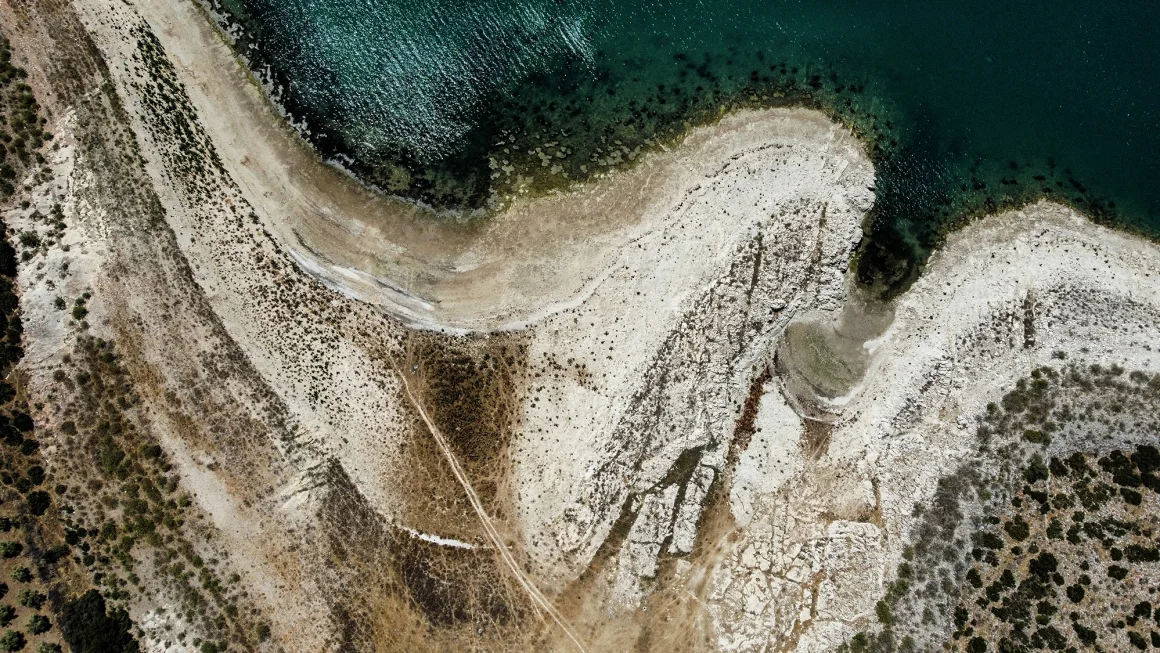
Published 6:00 PM EDT, Wed October 16, 2024
https://edition.cnn.com/2024/10/16/climate/global-water-cycle-off-balance-food-production/index.html
Ouch
Oh joy...doom approachs...
The report calculates that, on average, people need a minimum of about 4,000 liters (just over 1,000 gallons) a day to lead a “dignified life,” far above the 50 to 100 liters the United Nations says is needed for basic needs, and more than most regions will be able to provide from local sources.
Oh, terrifying.
I read an article until I get to an obvious error then give up.
In this case, the article states:
That is one of the most idiotic statements I've seen about anything climate-related and is so clearly and demonstrably wrong that there's no point reading further.
We live in a country with extremely abundant water and with one of the lowest prices in the world for clean, drinkable, water supplied by one of our 12 friendly taps.
Our family of 4 uses an average of 413 litres of water a day, and we do not stint on its use. The statistics we get monthly with our water bill tell me we're slightly higher than average, so I'm going to say for certain the authors of the piece are out by a magnitude of 10 and can be safely ignored.
Oh, terrifying.
I read an article until I get to an obvious error then give up.
In this case, the article states:
That is one of the most idiotic statements I've seen about anything climate-related and is so clearly and demonstrably wrong that there's no point reading further.
We live in a country with extremely abundant water and with one of the lowest prices in the world for clean, drinkable, water supplied by one of our 12 friendly taps.
Our family of 4 uses an average of 413 litres of water a day, and we do not stint on its use. The statistics we get monthly with our water bill tell me we're slightly higher than average, so I'm going to say for certain the authors of the piece are out by a magnitude of 10 and can be safely ignored.

It may be you are thinking about direct personal use, and the statement refers to the indirect use, how much water is needed in the food you eat, to grow the lettuce in your BLT, to cool the servers that provide your internet, the air conditioning at work, the concrete to build your house, the steel to build your car etc.
To add to the previous- much of that water is taken from the Great Artesian Basin (which most inland Australian towns and farms rely on for their water) and since records started being kept in the early 1900's- the basin (average thickness is 200m) the water level has dropped up to 61m in areas that water has been used in large scale activities (coal mines are the biggest user in much of Qld) with other areas experiencing a 10m to 30m drop in water levels...
That water resource has taken millions of years to accumulate, and once its gone- much of inland Australia will become unliveable without water being pumped from the wetter coastal regions ($$$$$) and we are chewing through it at a phenomenal rate....
Yeah, that's the ticket. Keep burning fossil fuels and cutting down rain forest - just drill holes in the arctic ice and pump the seawater out in the hope that it refreezes. Problem solved! Until the pumps aren't enough. Humans. We think we are so smart...Real Ice's plan for protecting this icy ocean landscape involves inserting electric-powered, submersible pumps under sea ice to pump seawater onto the surface... The ultimate plan is to automate the process using underwater drones, each about 6.5 feet long and powered by green hydrogen. These will melt holes in the ice from below using heated drills.
Ceccolini estimates around 500,000 drones would be used at full scale, and would be deployed carefully to avoid animal migration paths or shipping lanes, he said.
'Extremely questionable'
The scalability of Real Ice's solution is "extremely questionable," said Liz Bagshaw, associate professor in polar environmental change at the University of Bristol. She also warned of potentially wide-ranging ecological impacts on a vulnerable region. "Such interventions are morally dubious at best, and at worst, ethically irresponsible," she told CNN.
Dozens of scientists expressed concerns in a recent report about polar geoengineering projects, including ice thickening. They warned of "the possibility of grave unforeseen consequences," including the environmental impact of "an unprecedented level of human presence" in the Arctic.
 www.abc.net.au

Hottest summer weather in five years predicted for coming days
An oppressive heatwave stretching from Darwin to Victoria will send temperatures soaring up to 15 degrees Celsius above average during the coming days.


