Cont: Global warming discussion V

More 'gold',

Which I can only presume is a prelude to you screeching about climate change causing the problem.

Yet...


It rained even more that yesterday a whole 101 years ago, long before CO2 started warming the planet.

If climate change is to blame for these terrible floods, it can't be that bad if it was worse a century ago. You're writing the deniers' book for them.

You are the boy who called wolf.
 
ummm couple of corrections unless your tongue is welded in your cheek and you are mocking deniers points.

It rained even more that yesterday a whole 101 years ago, long before CO2 started warming the planet.
AGW started long before 1920s

If climate change is to blame for these terrible floods, it can't be that bad if it was worse a century ago. You're writing the deniers' book for them.
That's not the way it works 100 year floods become 25 year floods become 10 year floods but I suspect you know that.

Why are you on RamJet's case ???:confused:
 
Which I can only presume is a prelude to you screeching about climate change causing the problem.
Actually I was expecting you to once again haughtily put down the 'idiots' who live in low-lying areas - people who are too poor to afford a house on the hill.

Down Under: the community most exposed to sea level rise is also the poorest.
The rain started just before the sun rose, and didn’t stop for 24 hours.

It was one of those floods when, if you were exposed to it, you remember the year, the month, the day, a long time afterwards; one of those events that marks a change in the social fabric of a community, that only becomes apparent after the roads have re-opened, after the sodden carpets have dried.

They keep you on edge any time it rains, when the gutters start to pool and it threatens to start all over again.


What's he talking about, this was a once in a lifetime flood!

Oh wait...

For the southern suburbs of Dunedin, one of those floods began on the morning of June 3, 2015...

Most of Dunedin is hilly. Houses were built on the low, jagged slopes of an extinct volcano, from where they looked over the harbour and the freshwater marsh, the swamps and the dunes on the shore, an area that came to be known as “The Flat”.

As the city grew, primarily on the back of the gold rush, it repurposed those flat but swampy areas south of the city centre for housing. The housing was of low quality, with dubious foundation. The swamp was filled with whatever filling material was on hand, usually sand, and filled to only slightly above the water table.

The Flat became one of the most densely populated areas in New Zealand, and remains so; some of the old miners’ cottages, shoulder-to-shoulder on narrow streets, are still there on tiny sections.
So Dunedin has been 'at risk' of severe flooding since its inception, a result of planning decisions made a century ago.

And yet...
The threat of climate change, and how it is likely to affect South Dunedin, has exposed how little was known about a place that became home to more than 10,000 people and billions of dollars worth of infrastructure...

Under most climate projections, not only will the sea-level rise, but rainfall volumes are expected to become more intense, increasing the probability of events such as the heavy rain that caused the 2015 floods.
This article was published in November 2019. A mere 5 years later the prediction came true. How long before the next one?

I've seen a similar trend occurring in Hawke's Bay (where I have lived most of my life). 50 year floods became yearly, then twice yearly, 3 times in 2022, then an uncharacteristic summer flood in January 2023 followed a week later by Cyclone Gabreille.

Over the years a lot of infrastructure has been built around here to handle the increased flooding, but nobody was expecting this. Now we are... and the costs of preparing for the next one will be huge. My regional rates have gone up by 39%, with even more hikes expected in the coming years. Insurances are skyrocketing. Some areas are now classed as uninhabitable, and others are uninsurable.

Insurance companies know global warming isn't going away - and they are not going to be caught out again. In the US some of the biggest insurance companies are pulling out of at-risk states such as California and Texas. They lose a lot of business by doing so, but this a matter of survival. These are not tree-hugging greenies hyped up on climate change hysteria, just realists who know what's coming.

The Atheist said:
You are the boy who called wolf.
The wolf is here already, and it already started attacking us. Take your blinkers off and look around - you think councils and insurance companies around the World are just hyping climate change to justify rate increases?

The time to cry wolf was 30 years ago. Unfortunately nobody was listening back then.

Research shows that company modeled and predicted global warming with ‘shocking skill and accuracy’ starting in the 1970s
Projections created internally by ExxonMobil starting in the late 1970s on the impact of fossil fuels on climate change were very accurate, even surpassing those of some academic and governmental scientists, according to an analysis published Thursday in Science by a team of Harvard-led researchers. Despite those forecasts, team leaders say, the multinational energy giant continued to sow doubt about the gathering crisis.

In “Assessing ExxonMobil’s Global Warming Projections,” researchers from Harvard and the Potsdam Institute for Climate Impact Research show for the first time the accuracy of previously unreported forecasts created by company scientists from 1977 through 2003. The Harvard team discovered that Exxon researchers created a series of remarkably reliable models and analyses projecting global warming from carbon dioxide emissions over the coming decades. Specifically, Exxon projected that fossil fuel emissions would lead to 0.20 degrees Celsius of global warming per decade, with a margin of error of 0.04 degrees — a trend that has been proven largely accurate...

The researchers report that Exxon scientists correctly dismissed the possibility of a coming ice age, accurately predicted that human-caused global warming would first be detectable in the year 2000, plus or minus five years, and reasonably estimated how much CO2 would lead to dangerous warming.

The current debate about when Exxon knew about the impact on climate change carbon emissions began in 2015 following news reports of internal company documents describing the multinational’s early knowledge of climate science.
One would expect an oil company to accuse their own scientists of 'crying wolf', but what about the rest of us? Al Gore called it an 'inconvenient truth' - an inconvenience so great that the vast majority would seize on any excuse to deny it. Many still deny it today even as the wolf is biting into their flesh. What will it take to open their eyes? Sadly, a lot more pain for all of us. Some will never accept the reality of global warming, let alone their own part in it. Many more won't lift a finger to stop it - including many who are smart enough to know better.
 
ummm couple of corrections unless your tongue is welded in your cheek and you are mocking deniers points.

AGW started long before 1920s

Nope.

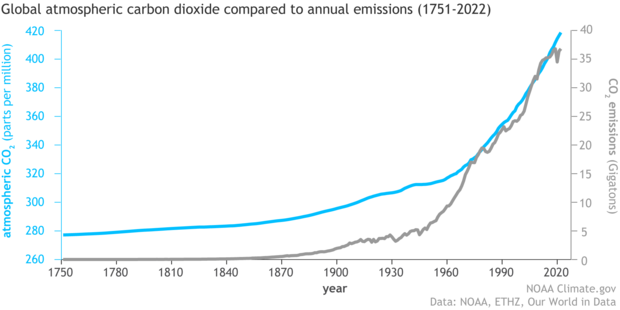
CO2 levels were exactly the same in 1920 that they were 300,000 years earlier.

The seeds had definitely been planted, but change had not started. In the real world, temperatures between 1880 and 1930 were actually quite a bit colder than average. To say AGW had started is false.

Why are you on RamJet's case ???:confused:

Screeching about climate change with every weather event relegates it to background noise.

Actually I was expecting you to once again haughtily put down the 'idiots' who live in low-lying areas - people who are too poor to afford a house on the hill.

I'd be more likely to put down people who live in Dunedin. I agree with Mick Jagger on very few things, but Dunedin is one of them.

It's a literal **** hole with no redeeming features of any kind. I find it hard to even explain what it's doing there and would have thought Abbotsford would have given people the clue to go live somewhere else. The gold ran out and still people stayed.


Swings and roundabouts - the poorest suburb in NZ, Otara, is in no danger from floods or volcanic events.

So Dunedin has been 'at risk' of severe flooding since its inception, a result of planning decisions made a century ago.

Thanks for making my point for me.

Next up, people in Welly will cry when they get hit by an earthquake.

My regional rates have gone up by 39%, with even more hikes expected in the coming years. Insurances are skyrocketing. Some areas are now classed as uninhabitable, and others are uninsurable.

Gosh, I wonder if any of those poor saps getting hit by rate and insurance increases ever thought about not living there.

Raetihi's cheap right now.

The wolf is here already, and it already started attacking us.

Obviously.

Crying about every weather event being climate change is as useful as tossing soup on the Mona Lisa.

COP 29 will sort it all out, I'm sure. They've made so much progress in the previous 28 that I reckon this time they'll nail it.

The time to cry wolf was 30 years ago. Unfortunately nobody was listening back then.

Very nearly 40 years, in fact. It was 1987 when I put a paper to the board of Trust Bank Wellington to the effect that the bank should take the lead in climate action and subsidise companies which were working towards green energy.

Amazingly, it wasn't picked up. Ho hum.

Many more won't lift a finger to stop it - including many who are smart enough to know better.

Quite right - if those of us who know about it all start wearing sackcloths and ashes, I'm sure the rest of the world will take note and follow us into climate sainthood.
 
if those of us who know about it all start wearing sackcloths and ashes, I'm sure the rest of the world will take note and follow us into climate sainthood.
Yet another straw man from The Atheist. I have never advocated austerity as a solution to the climate crisis.

But this is a typical denier tactic, arguing that anything less than total freedom to pollute regardless of the consequences is their God-given right, and any suggestion of putting themselves out to the tiniest extent (even if it would actually benefit them directly) is equivalent to giving up everything and wearing 'sackcloths and ashes'.

Here's nice little graph showing energy consumption in the US from 1776 to 2018 by source.

picture.php


After a slight dip during the Depression and WWII, oil and gas consumption continued its exponential rise until the mid 70's when OPEC's oil embargo and revolution in Iran restricted supply. Then people suddenly decided that fuel economy was a good thing. That didn't last long though, so consumption soon started rising again - until the 2009 financial crisis. However at no time was the average American living an austere life. More fuel efficient vehicles and appliances etc. and increased low carbon sources have managed to keep fossil fuel consumption relatively flat without plunging the country into a depression.

Now with the rise in renewables and even more efficient technologies (EVs, heat pumps etc.) fossil fuel consumption is set to decline dramatically - but only if people embrace them. The problem is that people like you equate wanting to reduce one's carbon footprint with 'sackcloths and ashes' when that's not true at all. It might cost a little more to buy an EV, heat pump, LED light bulb or rooftop solar, but over their lifetimes these products save a ton of money as well as improving quality of life. Similar benefits accrue from eating a healthy diet and doing physical activities like walking and biking.

Many 'smart' people eschew these things for 'reasons' when they know (or should know) that it would improve their lives as well as help save the planet. They are just too afraid of change. Which is a shame, because others do follow their lead. By holding out for emotional reasons they are holding the rest of us back too.
 
It might cost a little more to buy an EV,...

There's your problem, you talk a load of crap while riding your high horse. EVs are ridiculously expensive.

A family in Otara can no more afford an EV than I can afford a trip to the moon. You are 100% demanding those people wear sackcloth and ashes while driving around in a car you have no trouble affording.

Try taking a look outside your bubble every now and then.
 
There's your problem, you talk a load of crap while riding your high horse. EVs are ridiculously expensive.

A family in Otara can no more afford an EV than I can afford a trip to the moon. You are 100% demanding those people wear sackcloth and ashes while driving around in a car you have no trouble affording.

Try taking a look outside your bubble every now and then.

But how much does it cost to repair your house and life after a hurricane hits?
Your entire harvest has failed due to droughts?
The heavier monsoons cause mudslides washing away towns?

We keep hoping that if we dump more energy into the weather systems nothing will change. But no matter how much science is ignored, belittled, even forbidden to be taught, nature still works according to scientific patterns.
If you give things more energy, that will be spent.

Had our (grand)parents been willing to take an economic hit we'd be dealing with much less severe weather patterns today. They were not, so now we pay the economic price of undoing the damage that the more energetic weather patterns causes.
So far this has mainly hit poorer non-western countries, but the nice hurricanes this year, the now yearly heatwaves in the EU are starting to cause measurable damage, which I suspect will soon cost more that our (grand)parents would have had to pay, even adjusted for inflation.

And if we take the economic hit now, our grandchildren will be better off. But humanity is *really* bad at sacrifices now to help unknown people down the line.
And while individual attempts surely help, this should be forced from the top down as well imo.
 
If you give things more energy, that will be spent.

Yep.

Had our (grand)parents been willing to take an economic hit we'd be dealing with much less severe weather patterns today.

I don't know how old you and your grandparents are, but my grandparents were all born in the 19th century, so had no idea what they were doing was damaging the planet. I find it hard to blame them, and as far as I can work out, it's my generation - Boomers - who are the root cause of where we are now.

I pointed out that I raised the subject way back in the 1980s and nobody gave a damn, or even really believed it. Boomers were the ultimate consumers and introduced the throwaway culture capitalism thrives on. My parents fixed stuff, they didn't throw it away and buy a new one.

Regardless of who caused it, nobody wants to fix it. I repeat my question, what have all 28 COPs achieved so far? And what will COP 29 achieve?

Nothing.

The climate commitments actually made are woeful.

And if we take the economic hit now, our grandchildren will be better off. But humanity is *really* bad at sacrifices now to help unknown people down the line.

It's an SEP Field.

Humans are way too selfish to consider others. Dawkins pointed all that out in The Selfish Gene. What started as an evolutionary imperative is killing us all.

Ho hum, the next dominant species might not be as stupid, presuming there are any left when we've finished screwing the place up.

And while individual attempts surely help, this should be forced from the top down as well imo.

I'm going to guess that hurricanes and floods don't change people's votes, but taxing them does.

If we were serious about removing ICE cars from the road, EVs would be subsidised to a much greater extent than they have been, petrol would be double the current price and air travel ten times present costs*.

Who's going to vote for that?

* Inflation-adjusted air travel from NZ to UK is 80% cheaper now than in 1976. Our grandparents didn't cause that.
 
Regardless of who caused it, nobody wants to fix it. I repeat my question, what have all 28 COPs achieved so far? And what will COP 29 achieve?
More than many appreciate:

From Paris onwards, it has produced huge (but too slow) progress in the right direction.
 
More than many appreciate:
From Paris onwards, it has produced huge (but too slow) progress in the right direction.

Funny you should post that as I was coming to post Oxford University's 2024 State of the Climate paper: https://academic.oup.com/bioscience/advance-article/doi/10.1093/biosci/biae087/7808595

Despite six IPCC reports, 28 COP meetings, hundreds of other reports, and tens of thousands of scientific papers, the world has made only very minor headway on climate change, in part because of stiff resistance from those benefiting financially from the current fossil-fuel based system. We are currently going in the wrong direction, and our increasing fossil fuel consumption and rising greenhouse gas emissions are driving us toward a climate catastrophe.
 
Nope.

CO2 levels were exactly the same in 1920 that they were 300,000 years earlier.

In the graph in your first link, you can see temperatures beginning to rise from about 1880. This, I would argue, supports the claim that industrialisation began to contribute to global warming from the C19th onwards.
Your third link says this, too:
Air temperatures on Earth have been rising since the Industrial Revolution. While natural variability plays some part, the preponderance of evidence indicates that human activities—particularly emissions of heat-trapping greenhouse gases—are mostly responsible for making our planet warmer.

Then, you mention CO2 levels being the same as they were 300,000 years ago. That ignores the fact, as shown in your second link, that CO2 levels at that time were on a downward trend, whereas those from the early C20th are on a steep, and unprecedented, increase.
Your second link also states
Levels then dropped until they reached today’s concentrations during the Oligocene era, 33 to 23 million years ago, when temperatures were still 4 to 6 degrees C higher than today.
This is quite a worrying fact as the amounts of greenhouse gases we’ve emitted could already potentially take us back to similar conditions.

No room for complacency here.

The seeds had definitely been planted, but change had not started. In the real world, temperatures between 1880 and 1930 were actually quite a bit colder than average. To say AGW had started is false.

With all due respect, I think you're misinterpreting that animated graph. It does not show absolute temperature: it shows the changes from the norm. The norm is defined as the period between 1951 and 1980. In the period 1880-1930, many areas had very little change from the norm, but that doesn't mean temperatures were lower. It means (at least, as I'm reading it), that there wasn't much difference between those two periods. However, as temperatures in the latter period were already higher than before, that's no real comfort.
Similarly, with the graph (Last 9 years warmest on record), what that shows is the difference between the 1951-1980 average, not that absolute temperatures between 1880-1930 were lower overall.
Again, that same article states that
Air temperatures on Earth have been rising since the Industrial Revolution. While natural variability plays some part, the preponderance of evidence indicates that human activities—particularly emissions of heat-trapping greenhouse gases—are mostly responsible for making our planet warmer.

According to an ongoing temperature analysis led by scientists at NASA’s Goddard Institute for Space Studies (GISS), the average global temperature on Earth has increased by at least 1.1° Celsius (1.9° Fahrenheit) since 1880.
 
There's your problem, you talk a load of crap while riding your high horse. EVs are ridiculously expensive.

A family in Otara can no more afford an EV than I can afford a trip to the moon. You are 100% demanding those people wear sackcloth and ashes while driving around in a car you have no trouble affording.

Try taking a look outside your bubble every now and then.
You have no idea of my financial state. I haven't earned much more than minimum wage since 1991 when I was made redundant from Telecoms (thanks National!). I was employed by a software company that went bankrupt owing me thousands (not their fault, the home computer market was chaotic back then). So I opened a computer shop using most of my savings and ran it for 11 years, drawing just enough to live on (my manager was getting a lot more than me!). Then I worked in another shop for 13 years, before that closed and I was without a proper job for over a year. I 'survived' by doing odd jobs including farm work, electronic repairs and building model aircraft.

Finally I got a job with Plant and Food Research building and flying drones for 2~3 days per week during the summer months. Then Covid hit. Luckily I was offered a chance to do casual labor (potting plants etc.) during the level 3 lockdown, and that's what I have been doing since. This work is also very intermittent.

In 2019 I bought a Nissan Leaf 'sight unseen' from a dealer in Auckland for NZ$9990 (~US$6000), and had it shipped down to Hastings. A gas car of similar age and quality would have been about the same money, but would cost a lot more to run.

In 2022 my total income for the year was a little over NZ$12,000. I had to draw $2000 out of my dwindling savings just to pay the bills. Now I am getting the pension and have plenty of money. Over the last two years I have saved up enough to buy another Leaf if mine dies - or perhaps just replace the battery with a second hand one if the rest of the car is still good.

You talk about sackcloth. My father grew up during the Depression, when people were wearing literal sackcloth because they couldn't afford proper clothing. His father was a tailor so he did 'alright'. At 15 my dad became a shepherd and worked on various farms around the district. In case you didn't know, that was one of the few jobs that had no minimum wage set, so naturally farmers paid as little as they could.

We were dirt poor, living in a rented house on the station with no way to build up a major asset. The only up-side was low living costs from growing our own vegetables (common back in those days) and getting free meat (old ewes) which we had to slaughter and also supply to the other workers.

So don't talk to me about being poor. I have lived it most of my life. There was a period of 10 years when I was earning good money as a telephone exchange technician (a job requiring high intelligence and technical skills, which luckily I had), but it didn't last. I bought the cheapest most run-down house in Hastings because it was all I could afford. I then spent most of my spare time fixing it up. In 2015 I sold it for not much more than the land value (the house itself was valued at just NZ$6000) and bought a small flat - luckily just before prices starting zooming up. At that time I was out of a job.

Four years later I had just enough money to buy a good used car after my 1997 Nissan Sentra gave up the ghost. I bought the Leaf because a. I wanted one in 2011 but couldn't afford $60,000, and b. it would be much cheaper to run. Because someone who could afford it bought a new one in 2011, a poor person like me was able to afford one in 2019.

 
The bottom of the line EVs from China are suddenly getting a lot cheaper.
And not just 'bottom of the line' EVs. The Chinese are making cars that US and European manufacturers don't want to make. Big Auto has spent years and billions of dollars in advertising to convince us that we need gas-guzzling behemoths. Which we absolutely do oh yeah. I can't tell you how many times I hooked up the boat and jumped in the truck to go on an impromptu 3000 mile road trip at 70 mph all the way without a stop - including lots of high-speed off-roading too, just like in the ad!

But more and more young people are saying if that's what a car has to be, I don't want one. Many people just want something to take them to and from work cheaply, and be able to go the shops or visit friends in the local area. There's a market that's ripe for small cheap runabouts with a range of 200-300 miles and low running costs, which is what the Chinese are making.

Which is why Biden put a 100% tariff on Chinese EVs. He knows that letting them in would decimate the US auto industry, who have forgotten how to make a small cheap car that's any good - if they ever knew how. They've had decades to make the change and are still trying to pull back because they can't make an affordable EV that sells.

Why not? It's simple. Every one they sell is another gas-guzzling SUV they don't sell. So they are cannibalizing their own sales. As a result of not fully committing to EVs they will never be able to make them at scale, which they need to in order to get the price down. They would rather pay fines - or worse - buy carbon credits from Tesla ($1.79 billion in 2023), than ramp up EV production.

Having said that, it's pleasing to see that GM intend to restart production of the Chevy Bolt in late 2025. The new model will have faster charging (suggesting a better battery than the original Bolt) and purportedly will 'be a moneymaker' for them at around $30,000. That's not cheap, but it's a step in the right direction. If they really can make money on them at that price it could be a winner - provided they don't have to compete against the Chinese.
 
Last edited:
The bottom of the line EVs from China are suddenly getting a lot cheaper.

Still nowhere near the price a Samoan family with one income can afford.

They have a choice between buying an ICE vehicle for $10-15 grand, or a used EV with questionable battery for $25k.

They know that if the petrol model breaks down, the absolute worst is a new motor at maybe $2000 from the wrecker, while a new battery might be ten grand.

EVs are fine for people with capital.
 
Y'all need to stop bickering about what car to buy and just get off your arses and walk to where you need to go--like I did as a youngin, 10 miles through 6 feet of snow (with drifts to 20) in the bitter winds just to get to school... :)
 
Still nowhere near the price a Samoan family with one income can afford.

They have a choice between buying an ICE vehicle for $10-15 grand, or a used EV with questionable battery for $25k.
A used EV for $25k will probably still have a warranty on the battery if it was NZ new.

EVs are generally more reliable than gas cars, as well as needing much less maintenance. I pay $125 per year to get my Leaf serviced, which I could do myself but I would rather let the 'experts' deal with it.

They know that if the petrol model breaks down, the absolute worst is a new motor at maybe $2000 from the wrecker, while a new battery might be ten grand.
Absolute worst? My friend had to replace the engine in his old Mitsubishi Ute. The used engine cost $9000.

Used Leaf batteries typically sell for 2-$6,000 depending on condition (there's a '9 bar' battery in better condition than mine on Trade Me right now for $2,200).

EVs are fine for people with capital.
When my Ford Laser was condemned due to rust, I took it to the wreckers and biked for 3 months until I had saved enough money to afford a 'new' car. This also gave me time to find a cheap one that wasn't junk. The Nissan Sentra that replaced it had done 156,000 km and cost $6,000. It went to the wreckers at 230,000 km. At current petrol prices that equates to ~$18,500 worth of fuel.

Many 'poor' people are caught in a trap of their own making. Those who don't have capital should seriously consider accumulating some before they need it. This will save them a bundle compared to hire purchase or personal loans, as well as improving their financial security and mental health.

I started by saving my $0.50 per month pocket money (earned by doing chores) in my Post Office 'Squirrel' account, then as a teenager I earned $5 per week mowing the neighbor's lawns (a 5 hour job). I didn't buy a car until I had been working for 2 years. You don't have to be rich to amass capital.

Cars are expensive whether you buy new or old. Don't buy one if you can't afford it. If you don't know whether you can afford it because you haven't calculated the costs - don't buy one. This attitude that you must have a car regardless is half the problem. People talk about how we should have more public transport and 15 minute cities that are more friendly to cyclists and pedestrians should consider why we don't - the problem is us. We'd rather drive ourselves into poverty than bike or take a bus or get a job that's closer to home.
 
Australian coal plant in 'extraordinary' survival experiment as solar, funding woes stalk industry

tl;dr For the first time, Australia has shut down one of its coal-fired power plants, for a whole five hours. That may not seem like much, but it's progress.

After years of setbacks, bad news and mounting obstacles, Australia's coal-fired generators must have felt they had something to celebrate.

AGL, the giant energy company backed by tech billionaire and climate evangelist Mike Cannon-Brookes, revealed it had pulled off a first.

At its huge Bayswater power station in the Hunter Valley north of Sydney, AGL successfully switched off an entire unit before switching it back on again just five hours later – a feat until recently considered unthinkable.

Actually it's a little more complicated than that. The experiment was to see if it was feasible to shut down the coal plant during the middle of the day, when renewables peaked, and restart it for the night shift. And it worked.
 
Last edited:

Back
Top Bottom