Again, nobody is contesting that. When you say "floor" you mean literally just the flat span of poured concrete and truss that people walk upon. When I say "floor" I mean the entirety of the space that the elevator moves through from level to level, thus including the exterior and interior support columns which your side like to pretend didn't exist. The "floor" that resists and diminishes the momentum of the falling floor above it includes all of those features, the stairwells, the machinery, the articles, etc.
If I actually believed you could somehow consolidate all of the upper tower's momentum onto weak floor joints while miraculously bypassing the outer box columns, stairwells, inner columns, etc we wouldn't be having this discussion.
As you've been already told, the stairwells, the machinery, the articles, all these things are not structural elements. Columns, beams, girders, trusses are. From the point of view of the collapses, it only matters how much load each floor was carrying. It doesn't matter if there were stairwells, elevators, machinery, wallboard or wallpaper. Out of the structural elements and the per-floor load, it makes no difference what was on each floor with respect to the collapses.
Now, vertical elements (columns) need the support of horizontal elements (trusses, beams, girders) in order to perform their function. A long, high column without intermediate horizontal supports can resist much less weight without buckling than one which has these supports. This comes from Euler's formula, which for both ends fixed it can be expressed as:
F=4π²EI/L²
The relevant bits for this discussion are L, which is the length of the span between the ends of each section of the column, and F, which is the maximum (critical) vertical load on the column. The shorter the length, the more force (load) the column can resist without becoming unstable, and the proportion is inversely quadratic: double the length means a quarter of the force.
By "section" I mean the span between laterally supported ends; in buildings that's typically one floor, because that's where the horizontal elements are usually placed.
The building's stability depends on these lateral supports. More so on tall buildings. For the towers, the floors collapsed first, in pancake. That deprived both the core and the perimeter of lateral support. The perimeter peeled away like a banana; most of it toppled laterally. The core lost stability and also gave way, presumably also having a good amount of internal horizontal supports affected the same way as the outer floors. Part of both cores remained standing for a bit before they finally collapsed too, and we can see many horizontal elements missing in one of them.
For WTC7 the situation is a bit more complicated because horizontal progressive collapse comes into play. But the very same mechanism is what's believed to have caused column 79 to fail (lack of horizontal support for several floors, after they collapsed). Horizontal spread roughly works like this: when a column buckles, the horizontal elements it's attached to no longer support the columns next to it. That causes them to lose their lateral support and buckle in turn, and so the collapse spreads horizontally.



 )"
)" 

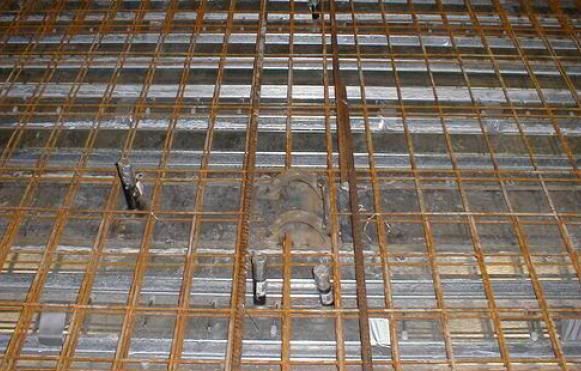

 ) But the odds are IMO against a clear tank outline cut by shear right at the tank outline AKA a "Wile E Coyote" silhouette.
  )
)


