Gamolon
Master Poster

- Joined
- Dec 6, 2006
- Messages
- 2,702
Interesting, because I would never use revisions per sheet and have always used them per revision issue.
In my experience, it was both.
I'll give an example.
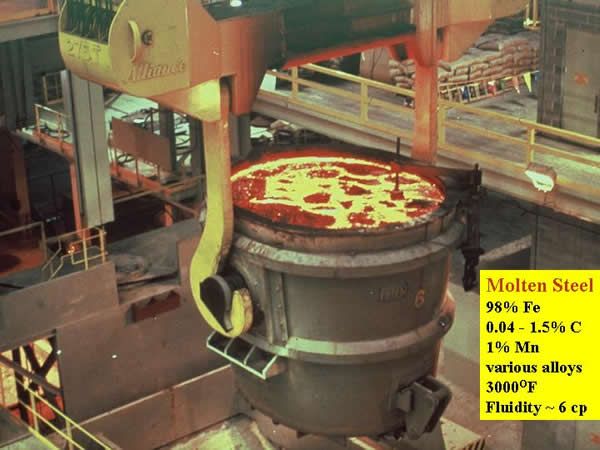
A steel mill client comes to us and wants to have a new ladle dryer installed in an area which currently has none present. Ladles have a refractory lining that needs to be replaced at times. The dryers are used to dry the lining after installation (in addition to also preheating ladles).
Ladle:
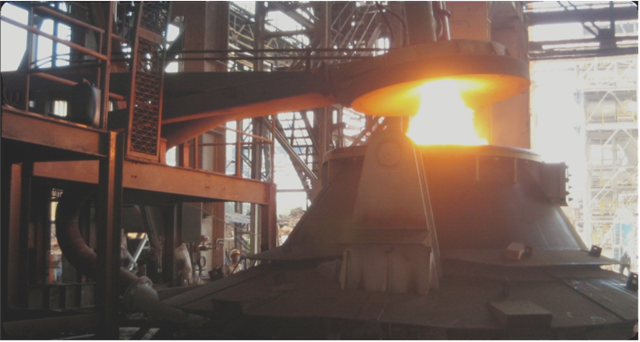
Ladle dryer/preheater. This unit is lowered over the top of the ladle to dry it or preheat it:
We need to supply the dryer with natural gas for example. As a designer, I would go to the client's drawing storage room and pull all the existing drawings which are associated with this area. I find one plan drawing of the area the dryer where the actual dryer will be be installed, drawing #1000. I find out that the existing natural gas line I need to tap into in order to supply the dryer is in an adjacent area to the left (west) of drawing #1000 and is drawing #900. I also need to create a new drawing for a couple of details. This will be drawing #3000.
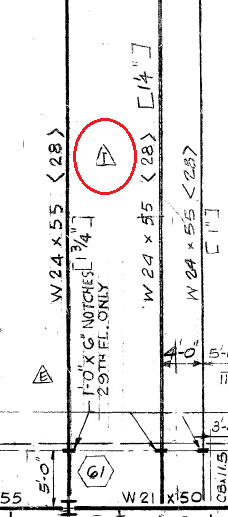
I pull both existing drawings (#900 and #1000). I find that drawing #900 with the existing natural gas supply line I need to tap into has an existing revision "J" with a cloud around it that was done in 1985.
First, I erase the cloud around the area pertaining to revision "J", leave the triangle designation touching the cloud showing the letter "J" for the revision. I then draw my natural gas line, connecting to the existing natural gas line, and route it towards the adjacent drawing (#1000) which contains the area of the new ladle dryer. Each plan drawing will have a border line on the edge with a note saying which drawing to go to to see the adjacent area. The gas supply line I am routing will go to the border line and end there.The note on the border says "For continuation, see drawing #1000", or something of that sort.
I then cloud around my new line, including all dimension and notes, draw a triangle touching the new cloud, and then put the letter "K" in the triangle as that is the next letter in line. I then go to the title block and write a description for revision "K", date it with the current date, and then initial it.
I then go to drawing #1000. It's last revision was "D" due to a client change in 1967. That's the last time it was touched. I again erase the cloud, leave the triangle showing revision "D", draw my new dryer, the gas line coming from drawing #900, etc. I then draw a new revision cloud around everything new on that drawing and label it revision "E", since that is the next letter on the drawing proper.
I create my detail drawing, and then issue all three of them to the client for approval/construction.
It's all the same "revision issue" (the new ladle dryer), but the new, revised material is labeled on each drawing with the next letter in sequence on that particular drawing, hence revision "K" on one drawing and revision "D" on the other.
I'm not saying this is the way it is for every project, but how I did things when I was designing things for an engineering firm.
This was the same for me regarding something brand new which didn't use any existing/old drawings. If the drawings were issued for construction and the client came back a week later and wanted to change something, we would sequentially label each drawing affected with the next revision letter on that drawing. We would never use one revision letter per project. It was one revision letter per drawing, in sequence, whenever something changed on that drawing.
Sorry for the long winded post.