Hey Stray Cat, I was just looking through
ICCRA reports, and I came across an interesting claim. I was wondering if you know of any evidence to contradict it.
ICCRA Report – Beloit, Mitchell County, Kansas Crop Circle, Sept. 9, 2006
[...]
ICCRA – Beloit, Kansas – Growth Node Elongation Analysis
The primary identification test for determining the difference between mechanically man-made (hoaxed) and non-man made (authentic) crop circles remains the growth node elongation analysis test developed by biophysicist W.C. Levengood and published in the peer reviewed science journal Physiologia Plantarum (“Anatomical anomalies in crop formation plants”, Physiologia Plantarum 92:356-363).
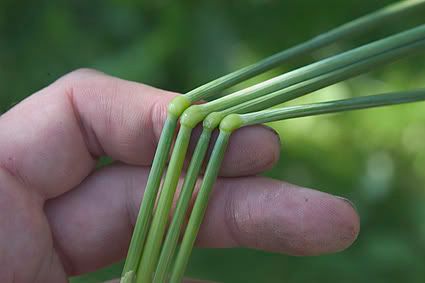
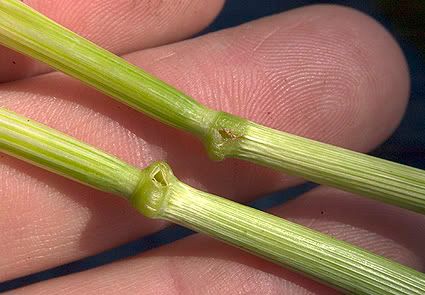
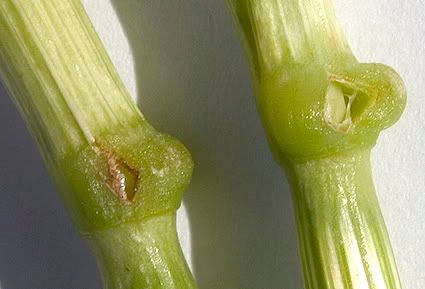
The ICCRA uses this node elongation test (where applicable) in the crop circles it investigates. Simply put, the “L-NEAT” (Levengood Node Elongation Analysis Test) that the ICCRA conducts collects a statistically-significant number of plant samples from a crop circle formation and compares them to a comparable amount of “control” plants taken at some distance away from the crop circle but in the same field. We measure the growth nodes on these plants and compare the two populations to determine if any difference exists.
Since Levengood published his original paper, well over 200 crop circle formations have been tested in this fashion by Levengood, Dr. Eltjo Hasselhoff of the Netherlands (The Deepening Complexity of Crop Circles, 2002), the ICCRA, and others.
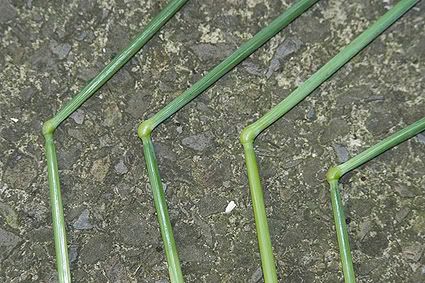
No tested mechanically man-made formations have ever exhibited any change to the growth nodes of flattened plants using any of the typical hoaxer methods from a variety of crops. Authentic crop circles, on the other hand, do exhibit anomalous growth node elongation which can range from 15%-300% elongation to the nodes, depending upon the crop, moisture content of the plants, and time of the growing season.
In the Beloit, Kansas crop circle, every node group comparison resulted in overwhelming statistical evidence that the growth nodes measured from plants inside the Beloit, Kansas crop circle were elongated as compared to measured growth nodes from control plants gathered from standing plants in the same field. This evidence of plant changes shows that the Beloit, Kansas crop circle was not mechanically man-made, as these plant changes cannot be produced by typical hoaxer mechanical-flattening methods (i.e. using a board, garden roller, rope, or feet as tools for flattening the plants). As shown in the chart below, the formation plants’ growth nodes were elongated between 54%-78% more than the standing control plants."
[...]
ICCRA – Beloit, Kansas – Conclusions
The Beloit, Mitchell County, Kansas single crop circle in Sorghum-Sudan grass was one of the largest, single crop circles ever recorded in the United States.
The growth nodes measured on the flattened plants inside the crop circle were 55%-78% elongated as compared to the plants left standing in the field. This primary measurement is considered by the ICCRA to be “L-NEAT” positive, and determines this crop circle to be “Authentic” (not mechanically man-made). Additional secondary characteristics, including geological, meteorological, and forensic evidence also support this conclusion.
[...]
Stray Cat, what do you think of the elongation analysis and the conclusion? Have you ever witnessed a difference between plants you have flattened with your stomperboard and plants just outside the formation? Have you ever made one that didn't have a tram line leading to it? Ever heard of one with double or triple centers?