• Quick note - the problem with Youtube videos not embedding on the forum appears to have been fixed, thanks to ZiprHead. If you do still see problems let me know.

The Electric Revolution

Yep, 14 panels at 450-480 kW each - newer technology than the 250 kW panels you have. The system is officially rated at 7.5 kWh, but we have seen over 8 coming off the panels occasionally. The solar inverter is limited to 6 kWh, so that's our max "harvest". It isn't a big system by most standards, as you say. We are in the Blue Mountains outside Sydney. It may be colder up here, but sunshine is sunshine to solar panels!

Our installer told us of a local factory at Bathurst who covered their roof with 400 kW panels - something like 100 kWh coming in, as I recall. For a few years, they pumped most of that back into the grid for a decent income. Then the arse fell out of the payback scheme. ;)
You are definitely mixing and matching your units- panels would be 400W- not 450kW...
A 450kW panel would be- impressive......
:jaw-dropp
Half a megawatt from a single panel???
WOW....

So you have 14 x 450w or 480w panels (there's a difference there- its one or the other...) and the total array rating is 7.5kW (not kWh- thats a totally different measurement...)
Think of it like- kW isn't the same as kWh, in the same way that kilometres isn't the same as kilometres per hour (km isn't the same as kph...)
You wouldn't say its 150kph to Sydney from the range would you???- or that you drove into Sydney at 80 kilometres in your car down the freeway?????

Units matter...
:cs:

Panels are rated at STC or Standard Test conditions- and although they are 'usually' under the rated output- in certain weather conditions you can indeed go well above them (as many a DIY homeowner has found out as the smoke escapes from their controllers lol)
1760682160757.jpeg
There they are- right above the warning triangle- AM=1.5 (thats Atmospheric Mass)- 1AM is the height from sealevel to space vertically- the higher you get in the atmosphere, the smaller the AM and the higher the output...
Then you have E=1000W/m^2... thats the light level and its usually around that near the equator, dropping off as you get further away from it (BUT- in certain weather conditions you can zoom right past it- reflected light from snow or nearby water can punch you past it, as can having scattered intermittent clouds- thats the 'perfect storm' of conditions that can blow a charge controller up...

The third one is TC=25C- thats the killer for my system up here- it only generates that 250w at 25C (thats the Temperature of the solar Cell or TC lol)- and what many don't know is that PV panels DROP in output the hotter they get- in fact mine here lose 0.4% of their output for every degree Celsius the cells rise in temp... And in summer my panels are sitting in 40-45C air temps- black panels sitting in the sun...- they get to over 80C (measured btw by IR temp gun)- and so in summer- those '250w' panels are down to under 200w (closer to 190w actually) Thats why I actually get more power in spring and autumn, and summer drops down almost to winter levels...

Those well into the polar regions can actually get a LOT more power than many expect- sub zero temps, surrounded by reflective snow- thats a PV panels dream conditions lol
Which is why...
1760682958915.png
1760682993593.png
Those are panels standing vertically in both cases- because the sun is low on the horizon (bad- means higher AM grrr) but the reflected light from the surrounding snow pushes the light up well above 1000W/m^2 (so output goes up yay) and the TC is well below 25C (so again output goes up as it gets colder again- double yay)
 
Last edited:
One of these comes with a BYD as a standard fitting. We used this until the 10A charger was installed. Took about 40 hours to fully charge the car from about 10%. So the driving/charging regime took some management, but it was usually quite OK. We keep it now as an emergency charger.

We have the 8kW charger on a dedicated 10A circuit, just like the oven. More than enough speed for us since we charge directly off the panels.

Yep, volts times amps equals watts. A typical 4 to 6 burner range oven in the US uses a 40 or 50amp 230 to 240 volt circuit. We're looking a range oven using a maximum of 8 to 10,000 watts. People with EVs usually are installing a circuit comparable to that. They can fully charge most cars from empty to full in a day. But most of them are charging using the grid.
 
One of these comes with a BYD as a standard fitting. We used this until the 10A charger was installed. Took about 40 hours to fully charge the car from about 10%. So the driving/charging regime took some management, but it was usually quite OK. We keep it now as an emergency charger.

We have the 8kW charger on a dedicated 10A circuit, just like the oven. More than enough speed for us since we charge directly off the panels.
Um no, no you don't...
A 8kw charger needs a 32A MCB (miniature circuit breaker)- there's no way you got one on a 10A MCB...

Watts = Volts x Amps...
in this case we know the watts, and the voltage, and want the MCB rating- so A=W/V, or 8000W/230v = 34A but the nearest breaker rating is 32A, which is why EV chargers are rated at 7000w or 7kw, not 8kw...
1760683569368.png
7000W/230v = 30.43A- perfect for a 32A MCB....
A 8kw/8000w one would need a 40A MCB...

A 10A MCB would be (as the Mask says)
1760683731749.jpeg
 
My solar system, went in in 2008.

8 x 188W panels for a total of 1.5 kW.

On average it generates around 5.5 kWh per day.

My car has a 10 kWh battery and it is sufficient for most of my trips around town.
(For country runs, I use it in hybrid mode.)

If I was charging from zero, I'd need two or more days of solar output.

The solar system paid for itself in the first three years, because of the incredibly generous feed-in tarriff put in place by the government and the price set by Origin energy.

I'm thinking of upgrading the system with a larger set of modern panels and a 10 kWh battery.

:)

The energy companies are facing a 'death spiral' as more people are generating their own electricity, which causes the suppliers to increase the price, which encourages more people to generate their own electricity...
 
Yep, volts times amps equals watts. A typical 4 to 6 burner range oven in the US uses a 40 or 50amp 230 to 240 volt circuit. We're looking a range oven using a maximum of 8 to 10,000 watts. People with EVs usually are installing a circuit comparable to that. They can fully charge most cars from empty to full in a day. But most of them are charging using the grid.
Thats where we have the advantage that most houses have 3 phase running right past them in the street- and in fact many houses already have 3 phase run into them (older ones had it when ducted AC was a thing)
So where your 240v 50A supply can give up to 12kw charge rates, here, we hook up a 3 phase Zappi or similar like just above up there- and get basically almost double that from the 400v 3 phase supply.... a cool 22kw charge rate....

A three phase fusebox in Australia...
1760684268665.jpeg
You can readily tell by the three 'main street fuses' top left... A single phase house only has one of them... (you can even see the three pole MCB marked AC on circuit 7 in there...)

A single phase house... a single 'main street fuse' bottom left this time...
1760684430954.png
 
My solar system, went in in 2008.

8 x 188W panels for a total of 1.5 kW.

On average it generates around 5.5 kWh per day.

My car has a 10 kWh battery and it is sufficient for most of my trips around town.
(For country runs, I use it in hybrid mode.)

If I was charging from zero, I'd need two or more days of solar output.

The solar system paid for itself in the first three years, because of the incredibly generous feed-in tarriff put in place by the government and the price set by Origin energy.

I'm thinking of upgrading the system with a larger set of modern panels and a 10 kWh battery.

:)

The energy companies are facing a 'death spiral' as more people are generating their own electricity, which causes the suppliers to increase the price, which encourages more people to generate their own electricity...
I'm surprised- by 2008, 3kw was the normal sized array in most of Australia....
(yours is exactly the same size as my temporary array at the shed lol 1.5kw!!!!)
I got my grid installation design/install ticket back in 2004 in Sydney, and at that time 3kw was the norm for new installs there- I dont think I ever installed a 1kw system that wasn't offgrid lol
 
Thats where we have the advantage that most houses have 3 phase running right past them in the street- and in fact many houses already have 3 phase run into them (older ones had it when ducted AC was a thing)
So where your 240v 50A supply can give up to 12kw charge rates, here, we hook up a 3 phase Zappi or similar like just above up there- and get basically almost double that from the 400v 3 phase supply.... a cool 22kw charge rate....
I didn't realize you have 3 phase power. The typical modern US home has split phase, not three phase power.
That makes more sense now.
 
We are undergoing an electric revolution. It is disruptive to established industries and individuals. And those individuals and industries are fighting it through political protectionism.
Fossil fuels are more profitable, even though they are more expensive.
 
I didn't realize you have 3 phase power. The typical modern US home has split phase, not three phase power.
That makes more sense now.
Not all have three phase already fitted- single phase 230v is more common, but almost all houses can readily have three phase run to them (usually costs about $1500 for aerial lines, bit more if they are buried underground to have it connected...) as the three phase lines run right outside in the street
1760687062354.png
Thats a typical power pole-with (from left to right) A3, A2, Neutral/earth, A1...
(you can tell the Active phases because of the disconnects under then (the black box looking thing) thats a 'knife switch'- they can reach up with a long insulated pole and pull them down, killing the power on those lines if needed....

Heres another (Neutral/earth, A1, A2, A3) and in this case, you can see the switches have been opened to cut the power...
1760687318296.png
 
Sunshine, and space for lots of solar panels.
When I finish the house- and put all the panels up on its roof- thats 72x 250w panels- 18kw worth- the total cost was under $2000- pulled out $2k from the bank, put 40 bucks of diesel in the tilt tray, and the rest went on panels....
1760687502582.png
At best, those would generate about 90-95kWh a day.... even in winter, still up over 70kwh a day...

So I could get a long range Tesla (not that I would lol) drive it in dead flat, and fully charge it for most of the year and still have some excess left over...

As that would be a very unlikely occurrence indeed, it can safely be ignored as a likely scenario lol
 
You are definitely mixing and matching your units- panels would be 400W- not 450kW...
A 450kW panel would be- impressive...... :jaw-dropp
Half a megawatt from a single panel???
WOW....
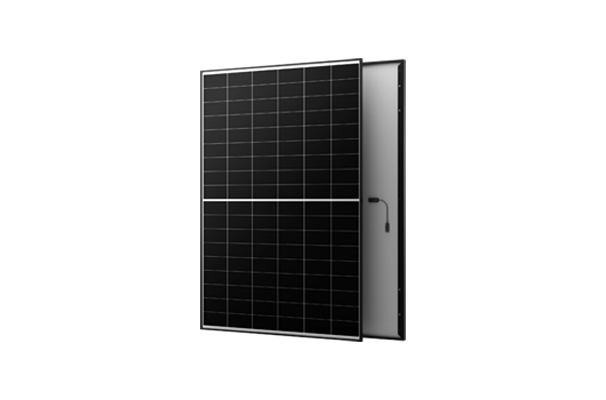
Yup. 475, akshully.

NEOSTAR 2P54
Mono-Glass
450W-485W

So you have 14 x 450w or 480w panels (there's a difference there- its one or the other...) and the total array rating is 7.5kW (not kWh- thats a totally different measurement...)
Think of it like- kW isn't the same as kWh, in the same way that kilometres isn't the same as kilometres per hour (km isn't the same as kph...)
You wouldn't say its 150kph to Sydney from the range would you???- or that you drove into Sydney at 80 kilometres in your car down the freeway?????

Units matter...
:cs:
Yeah, I know. ;) Usually I don't bother with the units designation, because of the confusions. :)
Panels are rated at STC or Standard Test conditions- and although they are 'usually' under the rated output- in certain weather conditions you can indeed go well above them (as many a DIY homeowner has found out as the smoke escapes from their controllers lol)

The third one is TC=25C- thats the killer for my system up here- it only generates that 250w at 25C (thats the Temperature of the solar Cell or TC lol)- and what many don't know is that PV panels DROP in output the hotter they get- in fact mine here lose 0.4% of their output for every degree Celsius the cells rise in temp... And in summer my panels are sitting in 40-45C air temps- black panels sitting in the sun...- they get to over 80C (measured btw by IR temp gun)- and so in summer- those '250w' panels are down to under 200w (closer to 190w actually) Thats why I actually get more power in spring and autumn, and summer drops down almost to winter levels...
We are at 1000 metres up, average 32C in summer, with cool breezes most of the time. Winter is...somewhat colder. ;) The cloud cover we get occasionally does put a crimp in generation. That's when we can occasionally run flat.

The polar sites have a lot of wind generators too...for obvious reasons.
 
I do. But most of my reading about small wind turbines is that they don't produce enough power for the cost.

My friend lives yards from the Atlantic coast in the far north of Scotland and has enough space for a reasonably-sized turbine. It seems to work well for him.

I should say he uses lead-acid batteries because these were the cost-effective option at the time he set up his system. Now I think he'd just get one salvaged from a wrecked EV.

There's a farm I often pass about 20 miles from here that's on an exposed location at about 1,000 feet. They sprouted one wind turbine some years ago and not long after that two more appeared, in the field next to the farmhouse. I guess it was working for them. But I understand the thing you really need is non-turbulent wind and a lot of places don't have that.
 
Last edited:
Yup. 475, akshully.


Yeah, I know. ;) Usually I don't bother with the units designation, because of the confusions. :)

We are at 1000 metres up, average 32C in summer, with cool breezes most of the time. Winter is...somewhat colder. ;) The cloud cover we get occasionally does put a crimp in generation. That's when we can occasionally run flat.

The polar sites have a lot of wind generators too...for obvious reasons.
475w- not quite the same as 475kw...
;)

Oh believe me, I KNOW what the Blue Mountains feels like in winter... I lived up the Putty Rd for several years...

Most of them have at least some wind generators (Australia pioneered the use of wind generators for large scale generation in Antarctica- we installed the first one to be used in Antarctica at Mawson in 2003...)
This week at Mawson: 29 November 2019 - Australian Antarctic Program

Wind Turbine against the Aurora Australis at Mawson station, Antarctica ...
Spooky lol
 
We have such schemes here too. Called "Virtual Power Plants". Only problem is that, in the case of a local outage, the "VPP authority" owns your power, not you. So they will take some of it about the same time that you need to use it!

I don't think it's even possible to do that to me. At the moment my system won't work in a power cut, although I'm planning a small upgrade so that I have limited emergency capability from the home battery. Right now I'd just run an extension lead through the window and use the car battery, which would be fine for some lights, the wifi, the computer, the TV and so on, also limited cooking, but it isn't capable of powering the (kerosene) central heating boiler because that's hard wired, so the house wouldn't be livable in if the weather was cold. Hence the proposed upgrade.

But I control the system and I don't see how they could possibly force me to export power I wanted to keep for myself. Of course if your car has VtG part of the deal is that the grid can take power from the car. (I only have VtL.) But even then you can set limits on how low you're prepared to let the battery go. And they pay good money for power they take when there's a high demand.
 
I'm a liberal but I've been pro nuclear for 50 years. I care about what works. Nuclear works. But costs are out of hand. What matters to me is making the most economical energy.(preferably as clean as possible). I generally don't care if it is nuclear fission, fusion, ocean thermal gradients, tidal, wave power, wind, hydrogen,solar etc. Make it cheap and you improve lives.

One issue with nuclear is that the lead-in time for a nuclear power plant is very long. By the time a new one is planned, built and commissioned it's perfectly likely that wind and solar will have advanced to the point where it's redundant.
 
I don't think it's even possible to do that to me. At the moment my system won't work in a power cut, although I'm planning a small upgrade so that I have limited emergency capability from the home battery...

A friend who just retired to Orkney has such a system. As business resilience had been his work, he knew exactly what he wanted and was able to get the installer to do more than offer a single isolated socket which could stay live. Instead he has a changeover breaker which isolates their house from the mains and enables their inverter to run with no mains to synch to.

Isolation is the big problem of course. If your inverter ran in a power cut, for one thing it would be trying to power the whole district and for another when the mains came back on the two systems wouldn't be in phase and sparks would fly.
 
A friend who just retired to Orkney has such a system. As business resilience had been his work, he knew exactly what he wanted and was able to get the installer to do more than offer a single isolated socket which could stay live. Instead he has a changeover breaker which isolates their house from the mains and enables their inverter to run with no mains to synch to.

Isolation is the big problem of course. If your inverter ran in a power cut, for one thing it would be trying to power the whole district and for another when the mains came back on the two systems wouldn't be in phase and sparks would fly.

Last week my supplier asked if he could bring a potential customer to look at my system. She lives in a small village a few miles from here that gets quite frequent power cuts and it turns out that she was considering a bigger all-in-one system that will simply switch itself over automatically to run from the battery in a power cut. These seem to be quite standard now, although I imagine a bit more expensive. I'm not so fussed because our power supply was upgraded some years ago and power cuts are few and far between.

Orkney is a special case because it has more power than it knows what to do with, literally. There simply isn't the grid capacity to export it, because it was imagined that Orkney would always be an importer. People are heating empty cattle sheds, while pensioners in Kirkwall who are reliant on the grid can't afford their electricity bills.
 
Last edited:

Back
Top Bottom