The Electric Revolution

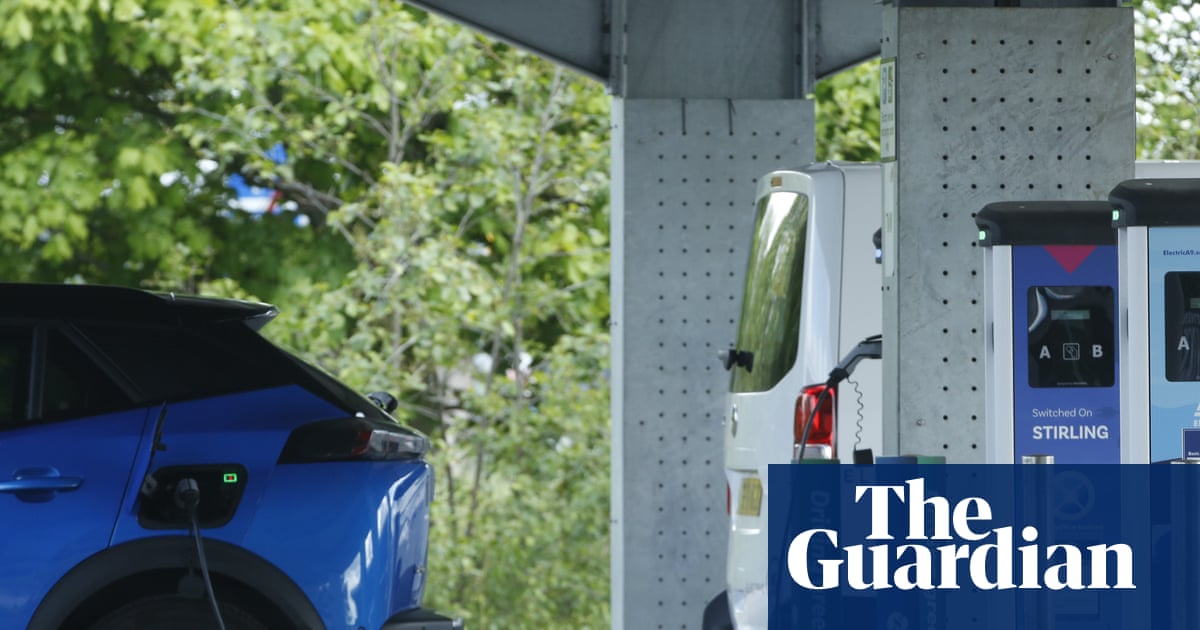
In Copenhagen, the the most important bus line in terms of passengers transported (line 2A for those who need to know) has come into severe trouble. It is all electric, and the buses are charged at both end of the line by the means of overhanging wires and pantographs on the buses (I can't see the pantographs on the street - they can probably only be seen from above.
But at both ends, the ground has sunk so that the pantographs often can't reach the wires, and the buses have turned out to have structural problems probably unconnected to the electrical drive systems
Politicians are demanding that the problems are corrected immediately, but the operator thinks that the problems will take half a year to solve.

In the meantime, diesel buses are again to be seen on the line.

I find it interesting that pantograph charging is so vulnerable, and that nobody knew that buses parked for hours on the same spot makes the ground sink considerably.

I thought the pantograph was a solved problem. They've been in common use since I was at school. This sounds like a very niche, local issue.
 
I thought the pantograph was a solved problem. They've been in common use since I was at school. This sounds like a very niche, local issue.
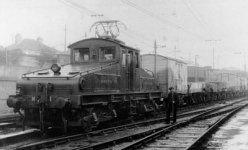
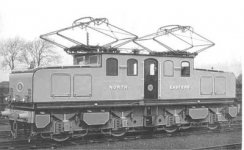
Since the 1900s on electric trains.

1902 North Eastern Railway ST1 and EB1 locomotives1772289736502.jpeg1772289854479.jpeg
 
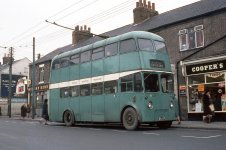
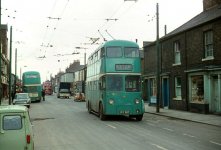
I just remember them being rolled out on our local trains in the 1960s. But of course trolleybuses were running in Glasgow before that, I remember them. Oh wait, these weren't pantographs as far as I remember. A sort of ring round the overhead wires.
 
Last edited:
I thought the pantograph was a solved problem. They've been in common use since I was at school. This sounds like a very niche, local issue.
These are not the pantographs that we know from trains and trams with wires above them, but a column at the end station where a pantograph is lowered from above down to the bus while it charges. I have seen some nice photos, but they are all copyrighted.
 
I just remember them being rolled out on our local trains in the 1960s. But of course trolleybuses were running in Glasgow before that, I remember them. Oh wait, these weren't pantographs as far as I remember. A sort of ring round the overhead wires.

U shaped 'shoe' on top of the pole.

1772316779435.jpeg1772316831669.jpeg
 
I miss the old trams that used that system.

They were great fun, particularly at night, when you'd see them throwing showers of sparks as they went past joints in the overhead cables.

(Fond memories.)
 
I remember the old 'Trackless' as the Trolley Buses were called, running in to Middlesbrough.
The Trams stopped just after the war.
In some places the old tram tracks are still in place under the road surface and are exposed when they are doing repairs.

The last trolleybus ran in 1971. Operated by the Teesside Railless Traction Board, on the North Ormesby, South Bank and Redcar route.
It was notable for being the only post-WWII trolleybus system that was not converted from a former tramway.

1772317930017.jpeg


1772317858125.jpeg1772317991284.jpeg
 
Last edited:
There are good Tram museums with operating trams at the National Tramway Museum at Crich near Matlock, Beamish in County Durham and the Transport Museum near Lowestoft.

The last one tmy favourite.
 
I remember the old 'Trackless' as the Trolley Buses were called, running in to Middlesbrough.
The Trams stopped just after the war.
In some places the old tram tracks are still in place under the road surface and are exposed when they are doing repairs.

The last trolleybus ran in 1971. Operated by the Teesside Railless Traction Board, on the North Ormesby, South Bank and Redcar route.
It was notable for being the only post-WWII trolleybus system that was not converted from a former tramway.

View attachment 69332


View attachment 69331View attachment 69333
Ushuaia, Patagonia/Argentina , has two double-deckers for city tours, boasting the southernmost Routemasters in the world. My photo is on my “big” camera, so here’s one from www.
1772323001069.png
 
Here's the Electric Viking piling on the abuse of Aberdeen council.


The critics are absolutely right. This wasn't a good idea at the time. It was already a blatantly obviously bad idea when they made the "investment". What happened was predictable and indeed inevitable. Huge amounts of money have been lost, and I'd like to know where that all went. How much did BP benefit?

And they're still talking about how do they go forward with their partnership with BP. OK it's Aberdeen, but even they might be expected to smell the coffee at some point.

ETA: The electric Ember intercity buses were mentioned. According to that video these were already in operation when Aberdeen decided to splurge a fortune on hydrogen buses. These buses actually serve Aberdeen. I didn't know they existed until last year when I happened to see a couple of them on charge at Fort William when I had my car on the Tesla superchargers there. I thought they were tourist coaches until someone said no, they're intercity service buses. I didn't ever see gushing write-ups of the Ember project, they seem just to be getting on with it, no fuss, no drama.

So many critics of electric power don't have the slightest idea what's possible and being done NOW, and are susceptible to glossy-brochure pipe dreams from vested interests desperate to cling on to fossil fuel burning as long as possible. The successful enterprises are those who realise they have to do things differently, and ask how, and figure out how to adapt their operation to work with new technology. The failures insist that the new technology must fit in with the way they've always done things - like, we must be able to fuel the bus up in five minutes - and so reject the technology that would work, chasing after one that never will.
 
Last edited:
In Copenhagen, the the most important bus line in terms of passengers transported (line 2A for those who need to know) has come into severe trouble. It is all electric, and the buses are charged at both end of the line by the means of overhanging wires and pantographs on the buses (I can't see the pantographs on the street - they can probably only be seen from above.
But at both ends, the ground has sunk so that the pantographs often can't reach the wires, and the buses have turned out to have structural problems probably unconnected to the electrical drive systems
I commiserate on the sinking ground. My house was built in 1983 on landfill that wasn't packed down properly. By the time I bought it in 2014 the front patio and concrete paths had sunk to crazy angles. Last week I noticed a wet patch in the lawn, dug down and discovered the plastic cold water pipe had a pinhole in it. On the way down I found all kinds of junk buried in the ground, including a meter long iron bar which I had to dig out. I hate to think what else might be down there.

People today complain about the stringent geoengineering standards that now have to be met before you can build. they call it unnecessary red tape, but there's usually a good reason for it. New Zealand's libertarian/conservative government promised to 'fast track' housing developments if we voted for them, so we can expect more shoddy work in the future.
 
They had a test track for trolley trucks on a motorway in Germany for the last 5 years.
EV Trucks get charged while driving, giving them enough power for pickup & delivery off the motorway, making it possible to have much smaller and lighter batteries - in theory.

In practice, the necessary technology was quite expensive and there was no capital or political will to go Big to get the necessary economies of scale.

Guess you should just move more cargo by train.
 
Last edited:
They had a test track for trolley trucks on a motorway in Germany for the last 5 years.
EV Trucks get charged while driving, giving them enough power for pickup & delivery off the motorway, making it possible to have much smaller and lighter batteries - in theory.

In practice, the necessary technology was quite expensive and there was no capital or political will to go Big to get the necessary economies of scale.

Guess you should just move more cargo by train.
That will was probably extinguished by cheaper, more energy dense batteries
 
Just wandering in to say that I woke up this morning to an email to say that my (off-peak) electricity tariff is being cut in half on 1st April. That is, it's going down from 7p/unit to 3.5p/unit. (It was 7.5p/unit when I opened my account in 2024.)

Yes, it's the off-peak tariff, but that's the one that matters to me because it's the only one I use, for all my electricity, because I have a home battery. This is just insanely cheap. And on top of it all, while I'm also getting 12p/unit for energy I export (that came down by 3p/unit), so I make 8.5p on anything I arbitrage from the grid this way (I reckon a real 6.7p accounting for transmission losses), I've also signed up to a scheme which will pay me £1 a unit every time they ask me to export from my home battery at a peak period. Since I usually export late in the evening for convenience this is no problem, it's just shifting the export to the time when the grid really needs it.

This is taking the fuel cost for my car to about 1.5p/mile. Roughly. Give or take.

Last year the system I installed in 2024 powered my house (apart from heating) and my car for a year, and I was £350 in credit at the end of it. Unless the sun goes behind a big cloud all summer, the same thing is likely to happen again.

This is all happening at the time when petrol and diesel prices are skyrocketing. Observe my smug smile. All these taunts about how the grid can't take it and so on, and what is actually happening is that I'm being handed a ridiculous sweetener to support the grid by taking my power in overnight and give some back when demand is really high, and provide my surplus solar too. The more such systems are installed, the more EVs there are, especially with VtG so that the whole thing can be done on a much larger scale, the cheaper electricity will be for everyone, and we can stop caring about the Straits of Hormuz.

If only.
 
Something weird is happening in New Zealand:-

EV and PHEV demand surges as new vehicle registrations jump 25% in March
Toyota remained the leading new passenger brand with 1258 registrations, but that was down 26.5% compared with March 2025 when the brand recorded 1711 units. The result gave Toyota a 12.5% market share, continuing its recent trend of declining share...

MG and Tesla tied for fifth with 538 units each. MG was up 33.2%, while Tesla’s result represented a 271% increase year-on-year... The Tesla Model Y was the best-selling new passenger model in March with 480 registrations, taking the top spot from the Toyota RAV4 which came second with 295 units, down sharply from 703 a year earlier.
New Zealand has no EV incentives, and penalizes EVs with a 7.6 cents/km road user charge (hybrids only pay 3.8 cents/km). Yet for some reason EV sales are surging here. I have to tip my hat towards our conservative/libertarian government for making the prescient decision to drop the Clean Car Discount and other EV incentives. They must have known something we didn't...
 
Something weird is happening in New Zealand:-

EV and PHEV demand surges as new vehicle registrations jump 25% in March

New Zealand has no EV incentives, and penalizes EVs with a 7.6 cents/km road user charge (hybrids only pay 3.8 cents/km). Yet for some reason EV sales are surging here. I have to tip my hat towards our conservative/libertarian government for making the prescient decision to drop the Clean Car Discount and other EV incentives. They must have known something we didn't...
Have to pay for roads maintenance in some fashion.
 

ISF - Join now!

Every member here is approved by hand. No bots, no spam, just people who care about evidence and honest debate.

Membership is free!

Create your free account

Back
Top Bottom