The Electric Revolution

I don't get the hate on for solar. And don't you live in the Pacific Northwest and benefit greatly from the power from the massive amount of hydroelectric power here?
To be clear: I have no hate for solar in principle. What I have hate for is the double standard and special pleading, when it comes to Politically Correct power solutions.

I'm in favor of exploiting natural resources to benefit humanity. I also think this exploitation should be careful, thoughtful, and consistent with principles of good stewardship of the resources available to us. Hydro, solar, nuclear... They all have their place in our civilization. What bugs me is how quickly the conservationist narrative goes out the window when it's solar terraforming instead of hydro.

I can see putting solar on rooftops, because you've already paved wilderness to accommodate human activity, and what else can you really do to add power generation there? It makes much less sense to me to just pave over tens of thousands of acres of desert with solar, when you could flood a river valley instead. Less mining of rare materials. Less incredibly-polluting manufacturing processes. Concrete for dams is much less polluting than PV cells for solar farms. But for some reason the conventional "wisdom" seems to deprecate the former and celebrate the latter. That's what pisses me off about the "electric revolution".
 
This is a view near where I live. Looks fairly wild, doesn't it?

1770417160330.png

The whole damn lot is man-made, not just the few fields surrounding the farm buildings and the road. The loch is a reservoir formed by damming a glen, and the bare hillsides are the result of grazing sheep stripping the temperate rainforest that ought to be there.
 
To be clear: I have no hate for solar in principle. What I have hate for is the double standard and special pleading, when it comes to Politically Correct power solutions.

I'm in favor of exploiting natural resources to benefit humanity. I also think this exploitation should be careful, thoughtful, and consistent with principles of good stewardship of the resources available to us. Hydro, solar, nuclear... They all have their place in our civilization. What bugs me is how quickly the conservationist narrative goes out the window when it's solar terraforming instead of hydro.

I can see putting solar on rooftops, because you've already paved wilderness to accommodate human activity, and what else can you really do to add power generation there? It makes much less sense to me to just pave over tens of thousands of acres of desert with solar, when you could flood a river valley instead. Less mining of rare materials. Less incredibly-polluting manufacturing processes. Concrete for dams is much less polluting than PV cells for solar farms. But for some reason the conventional "wisdom" seems to deprecate the former and celebrate the latter. That's what pisses me off about the "electric revolution".
I have no problem with solar farms in the desert. Or agrivoltaics. I do have issue displacing farmland for solar. I'd like to see floating solar farms and wind farms close to hydroelectric dams. Let them make use of the transmission lines. As for dam removal. Some of them should be removed. Some should never have been built.

It does bother me a bit that the greatest salmon fishery in the Western Hemisphere perhaps the world was devastated. But what was done was done. I don't blame the indigenous tribes wanting to see some dams removed. Removing the Klamath and the Elwha dams made a hell of a lot of sense. Neither produced much electricity and their removal was mostly a good thing.

Removing the Snake River dams is much more problematic since their real benefit is the barge traffic.
 
Last edited:
In general, I'm of the opinion that "wildnerness" is a kind of hoax, and that terraforming all the things is perfectly acceptable. My only quibble is that if we're going to do terraforming well, then we probably shouldn't do too much of it.

Space Core Directive 723: Terraformers are expressly forbidden from recreating Swindon.
 
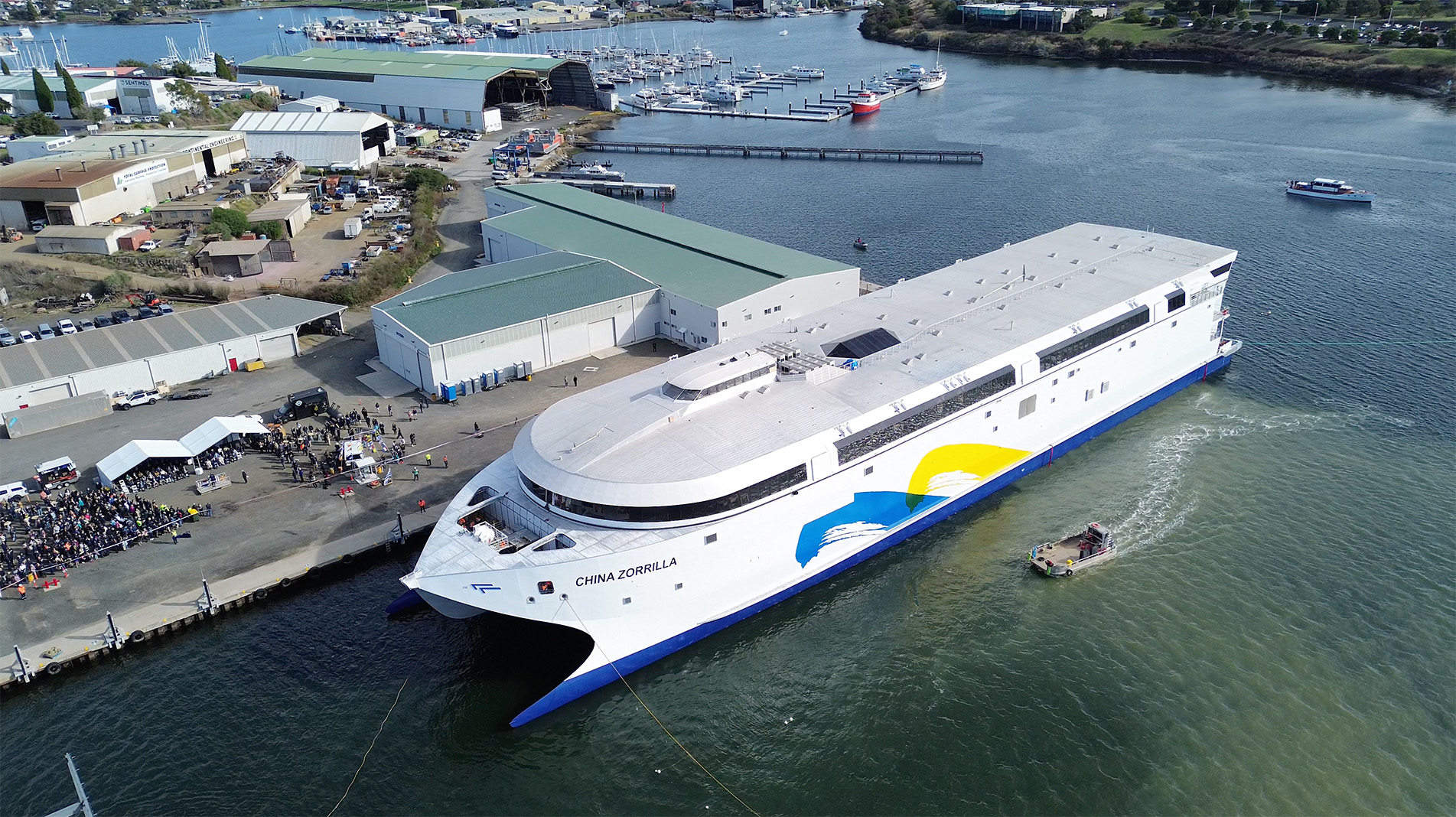
Electrifying shipping.


The ship in that second link is destined to be a ferry on the Plate river estuary. Buenos Aires to Montevideo isn't that far. It was the biggest thing last May though. The former one, just having its sea trials now, seems like a bigger deal.

I think we're just looking at the beginning here, and that electrification of shipping is the next big thing.
 
Last edited:
Well, I didn't see that coming.
Neither did I four years ago when this project was put on the road, but the politician in the article claims that you did not need to be a rocket scientist to know that it would end like this.
What are you when you can't see what you don't have to be a rocket scientist to see?
 
I just completed a 20KW solar installation for/with a new neighbor. It started with a frank conversation on what he could expect. It was going to cost him $70,000 US to hook up to the grid. I had to explain to my new neighbor the benefits and drawbacks of living off grid in the Pacific Northwest

Now, where we live, which is about 47 degrees North is not Australia or Arizona or Southern California. It is in the middle of a temperate rainforest. In November, December and January, there are not only fewer Sun hours, their quality is severely diminished by how cloudy it gets. It is simply not dependable for heating in the winter. Resistance heating draws too much power.
 
Last edited:
Neither did I four years ago when this project was put on the road, but the politician in the article claims that you did not need to be a rocket scientist to know that it would end like this.
What are you when you can't see what you don't have to be a rocket scientist to see?
Yep. Not everything can be a risk free success, we often have to have the failures to make progress. Slightly connected I was in Gateshead yesterday (yes I had my shots) and they have electric double deckers, I was walking past one when it was moving off, it seemed very unnatural not to hear a straining diesel engine, it set off almost silently, plus no belching hot fumes.
 
Neither did I four years ago when this project was put on the road, but the politician in the article claims that you did not need to be a rocket scientist to know that it would end like this.
What are you when you can't see what you don't have to be a rocket scientist to see?

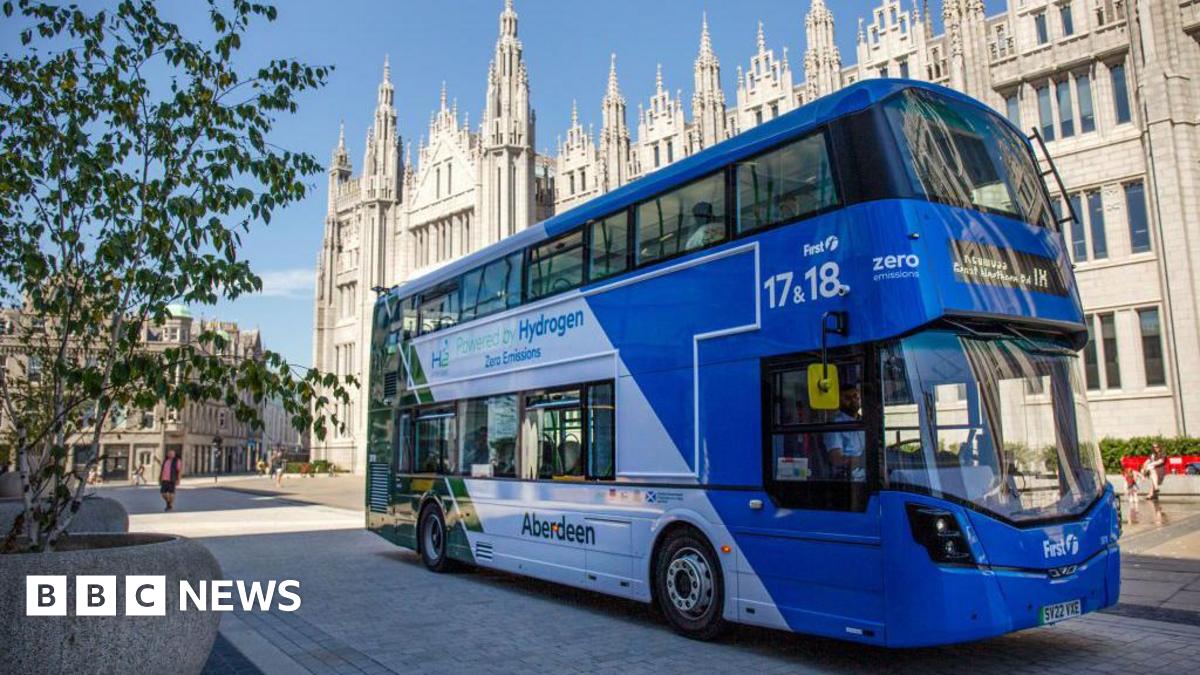
I have always seen this. OK, slight correction. When I first came across a brief description of the process I thought, there must be some amazing, laws-of-physics-defying technology in here that I'm not aware of, to make this obviously batcrap crazy idea viable. Then I discovered there wasn't.

"It had to be tried," people call, as always when some obviously mental idea goes tits-up on cue. No it didn't. Stop falling for the lies of the "oil and gas giants" (yes, Aberdeen, I'm talking to you) and the fantasies of people who think that refuelling time is the only metric for choosing a vehicle, and actually think through what is being claimed. Then walk away.

Yep. Not everything can be a risk free success, we often have to have the failures to make progress. Slightly connected I was in Gateshead yesterday (yes I had my shots) and they have electric double deckers, I was walking past one when it was moving off, it seemed very unnatural not to hear a straining diesel engine, it set off almost silently, plus no belching hot fumes.

There are a lot of electric double-deckers in Edinburgh, they look just like the diesel buses but shinier (because newer, I suppose). They also go on fire much less frequently. I suspect people don't really clock what they're on unless they look at the green stripe on the number plate. I'm not sure the improvement in noise and pollution fumes is really obvious yet, there are still too many ICE venicles in the city, but every little helps.
 
Last edited:
I've got to say, on the list of places I'd expect solar to work out, Scotland is not on that list.

And yet, it works extremely well. With a bit of an edge provided by the fact that solar panels work more efficiently at lower temperatures. I'm not claiming it won't work even better in places with less cloud, obviously it will, but in the first year of operation my panels powered the house and the car, and left me with £350 in my pocket. So no electricity bills and no petrol bills - the £350 got spent on public charging on road trips.
 
And yet, it works extremely well. With a bit of an edge provided by the fact that solar panels work more efficiently at lower temperatures. I'm not claiming it won't work even better in places with less cloud, obviously it will, but in the first year of operation my panels powered the house and the car, and left me with £350 in my pocket. So no electricity bills and no petrol bills - the £350 got spent on public charging on road trips.
Solar panels are quite popular in the (very) far north of Sweden as well - not much light in winter (and loads of snow to get rid of), and still they supply enough power to make it worth it. And as Rolfe said, they work more efficiently, and last longer, in colder climes.
 
Fortunately the 45° pitch of my roof and the fact that the panels themselves run slightly warm mean that the snow sheds itself. Right on to the path from my front door to my garage, and right in front of the garage doors. Oh well.

Of course, in summer, the cool temperatures and the 15-16 hours of daylight are very favourable to good generation. Especially when the clouds stay away.
 
In Copenhagen, the the most important bus line in terms of passengers transported (line 2A for those who need to know) has come into severe trouble. It is all electric, and the buses are charged at both end of the line by the means of overhanging wires and pantographs on the buses (I can't see the pantographs on the street - they can probably only be seen from above.
But at both ends, the ground has sunk so that the pantographs often can't reach the wires, and the buses have turned out to have structural problems probably unconnected to the electrical drive systems
Politicians are demanding that the problems are corrected immediately, but the operator thinks that the problems will take half a year to solve.

In the meantime, diesel buses are again to be seen on the line.

I find it interesting that pantograph charging is so vulnerable, and that nobody knew that buses parked for hours on the same spot makes the ground sink considerably.
 
Neither did I four years ago when this project was put on the road, but the politician in the article claims that you did not need to be a rocket scientist to know that it would end like this.
What are you when you can't see what you don't have to be a rocket scientist to see?
I went to a talk about "green" hydrogen production a while ago. There was some honesty about using "spare" renewable generation, but I don't think anyone asked, "why not store the electricity instead?" I guess no one in the room foresaw the drop of battery prices
 
Yep. Not everything can be a risk free success, we often have to have the failures to make progress. Slightly connected I was in Gateshead yesterday (yes I had my shots) and they have electric double deckers, I was walking past one when it was moving off, it seemed very unnatural not to hear a straining diesel engine, it set off almost silently, plus no belching hot fumes.
When I get my bus pass in less than a fortnight, I might try out the new electric double deckers in Reading.
 
I went to a talk about "green" hydrogen production a while ago. There was some honesty about using "spare" renewable generation, but I don't think anyone asked, "why not store the electricity instead?" I guess no one in the room foresaw the drop of battery prices

That's the least of the problems to be honest.
 

ISF - Join now!

Every member here is approved by hand. No bots, no spam, just people who care about evidence and honest debate.

Membership is free!

Create your free account

Back
Top Bottom