TFian
Graduate Poster

- Joined
- Apr 3, 2010
- Messages
- 1,226
This is "nonsense" to you?
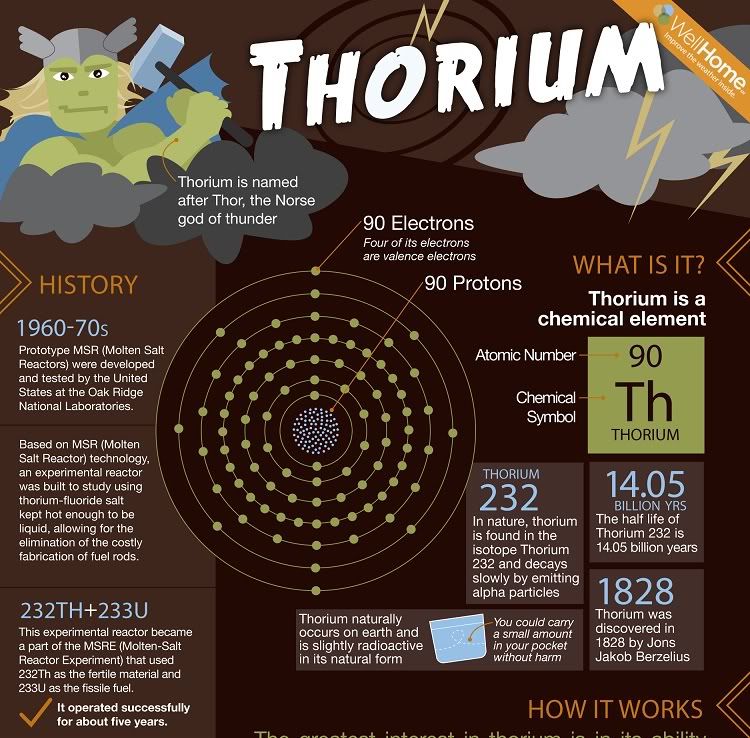
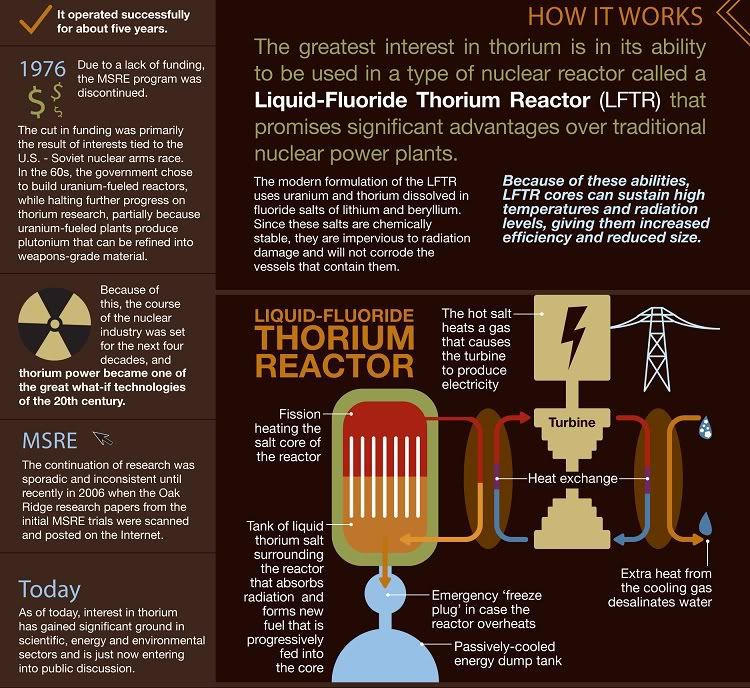
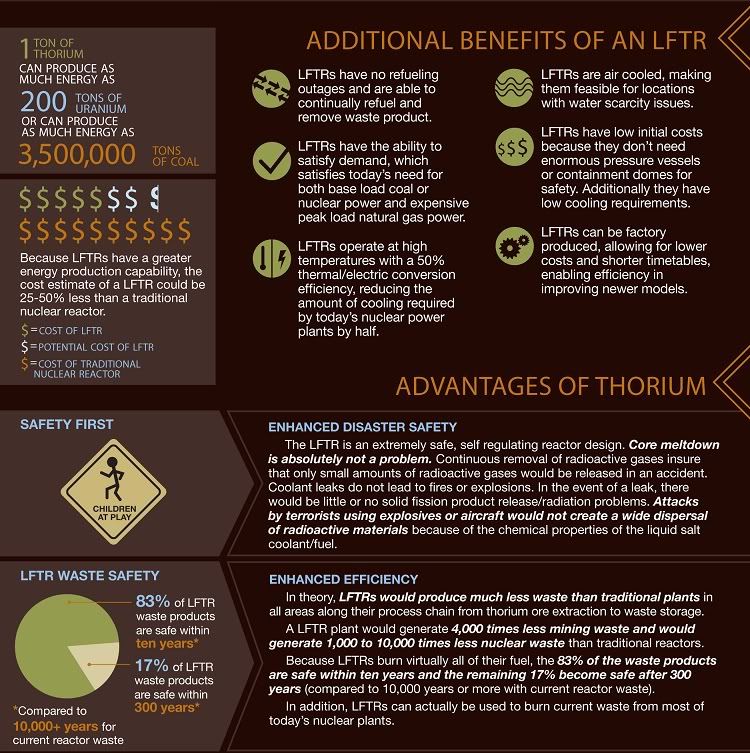
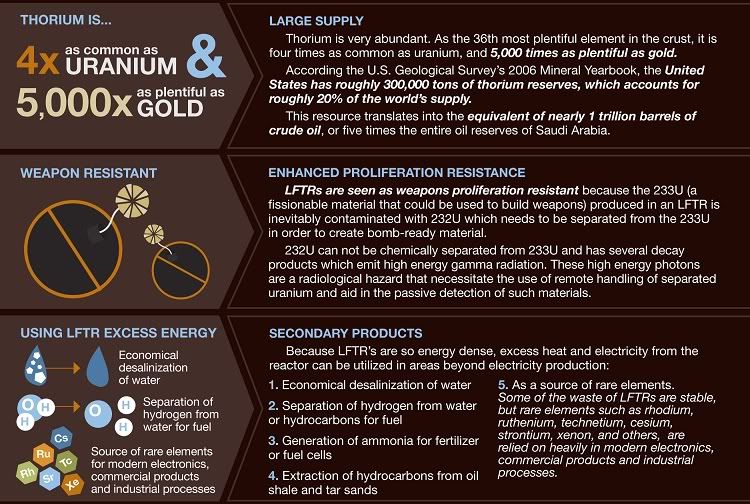
Vaporware my dear boy, vaporware. I'll let Greer do the talking for me here http://www.energybulletin.net/stories/2011-03-24/trouble-vaporware

This is "nonsense" to you?
Vaporware my dear boy, vaporware. I'll let Greer do the talking for me here http://www.energybulletin.net/stories/2011-03-24/trouble-vaporware
Nonsense

And where does he say this?Nope. Greer's "Vaporware" analysis fits Thorium perfectly.
No he doesn't.

I'm not talking about TVs

Thanks for pointing out that post; I hadn't seen it before.Hey, TFian, did you see my post I made on Greer? You might be interested in it.

I'm not talking about TVs

Thanks for pointing out that post; I hadn't seen it before.
In the interview you quote, Greer says, "The interesting thing is that nobody ever actually proved scientifically that magic doesn't work...." This is funny because recently I was reading about John Dee, who had one foot in science and one in magic. He was working early enough that he didn't even see a conflict, but rather a continuum between divine truths and mundane truths. And yet, we don't see that alleged complementarity anymore, except in the claims of eccentric subcultures.
Does anyone know of any good books about this transition in our thinking, the process by which science showed magic to be superfluous? Perhaps one that disproves Greer's contention above?
Professor Courtenay Raia lectures on science and religion as historical phenomena that have evolved over time. Examines the earlier mind-set before 1700 when into science fitted elements that came eventually to be seen as magical. THe course also question how Western cosmologies became "disenchanted." Magical tradition transformed into modern mysticisms is also examined as well as the political implications of these movements. Includes discussion concerning science in totalitarian settings as well as "big science" during the Cold War.
Yes, I think that will cover it, in spades. Thank you for the link. Have you seen the whole series?UCLA Science, Magic and Religion. 20 hours of lectures. ...
Pretty much exactly what you wanted to know?


Unconventional uranium resources include up to 4,000 megatonnes (8,800×109 lb) of uranium contained in sea water.
In 2006 the same research group stated: "If 2g-U/kg-adsorbent is submerged for 60 days at a time and used 6 times, the uranium cost is calculated to be 88,000 yen/kg-U, including the cost of adsorbent production, uranium collection, and uranium purification. When 6g-U/kg-adsorbent and 20 repetitions or more becomes possible, the uranium cost reduces to 15,000 yen. This price level is equivalent to that of the highest cost of the minable uranium. The lowest cost attainable now is 25,000 yen with 4g-U/kg-adsorbent used in the sea area of Okinawa, with 18 repetitionuses. In this case, the initial investment to collect the uranium from seawater is 107.7 billion yen, which is 1/3 of the construction cost of a one million-kilowatt class nuclear power plant."
Thanks for pointing out that post; I hadn't seen it before.
I watched a lecture with a psychic who had gotten some credibility and believers behind him, had to be 200 people watching, when he got to the point about the doomsday scenario where the sun's ejects some stuff and we all go back to the stone age, the room erupted with applause and adulation. They were so happy that there fantasy is going to come true. That's really want they want, for life to be like "The Lord of the Rings"No problem. I think it can be demonstrated a lot of the "Peakniks", both leaders and followers, oftentimes have a reason outside pure empirical observation for their beliefs. Many many I've talked to over the years often have underlying Luddite/naturalist fantasies, or in the case of people like Derrick Jensen, primitivist fantasies. Of course not all are like this, I believe Sharon Astyk (a rising figure in the Peaknik community) is *mostly* simply concerned about the rise of poverty in the United States, and how best for individuals to alleviate it (I don't really agree with her, but I don't think she's as misleading as the "Archdruid"
Sheldrake repeats all of the same old crap about Randi probably not having the money or offering an objective test. There was something Randi said about his dog experiments, I found a post to explain. There many posts and threads on sheldrake if you use the search functionAlso, apparently the person Greer recites as his "evidence, Rupert Sheldrake has actually had a feud with Randi himself, or at least the institute. Anyone here more knowledgeable about him care to shed some light on it?
From your link:
http://en.wikipedia.org/wiki/Peak_uranium#Seawater
Of course the article goes on to say that extraction of uranium from sea water has only been done in the lab. But that's the thing, it has been done in the lab, and while the cost is more than the current cost of mining uranium from conventional resources, it's not prohibitively high:
I watched a lecture with a psychic who had gotten some credibility and believers behind him, had to be 200 people watching, when he got to the point about the doomsday scenario where the sun's ejects some stuff and we all go back to the stone age, the room erupted with applause and adulation. They were so happy that there fantasy is going to come true. That's really want they want, for life to be like "The Lord of the Rings"
Sheldrake repeats all of the same old crap about Randi probably not having the money or offering an objective test. There was something Randi said about his dog experiments, I found a post to explain. There many posts and threads on sheldrake if you use the search function
Two factors work very much in favor of uranium being economically viable at much higher prices. The first is that energy content per unit of weight is very high. For example, 1 kg of uranium has as much potential energy as 2,300,000 liters of gasoline.
The second is that the price of uranium when converted to other forms of energy, such as electricity, is a very small part of the retail price. For example, at a U3O8 (yellow cake) price of about US$70/kg [UC, Oct 2005] the raw material cost of the uranium to produce electricity in thermal reactors is about US$0.0015/kWh [Pendergast, 1990]. If the price of U3O8 were to increase 100 fold to US$7,000/kg, the price of electricity would increase by about US$0.15/kWh, which compares with the current retail price of electricity in North America being US$0.05 to US$0.15/kWh. Thus, if the current price increased even that dramatically, the price of electricity would increase to US$0.20 to US$0.30/kWh, which would be manageable.
However, with fast reactors that “burn” virtually all of the uranium, even if U3O8 increased in price about 200 times from US$70/kg to the current price of gold at US$14,000/kg, the fuel cost for electricity generated by nuclear fission breeder reactors would be less than US$0.003/kWh.
At US$14,000/kg, immense quantities of uranium in crustal deposits would become economically viable. For example, one tonne of current low grade ore [WNA, 2004] at 1,000 parts per million (ppm) of uranium would contain 1 kg of uranium with a selling price of US$14,000. It is likely that enough uranium would be available to power the world for as far into the future as today is from the day more than 10,000 years ago when civilization dawned. This would require about 40-50 times more uranium than the IPCC estimate in Line 2 of Table 2.