
-
Security incident: ISF was recently accessed by intruders. Please change your password, and change it anywhere else you used it. Read more
You are using an out of date browser. It may not display this or other websites correctly.
You should upgrade or use an alternative browser.
You should upgrade or use an alternative browser.
Suddenly, A Flat Earther Appears!
- Thread starter 332nd
- Start date

Jrrarglblarg
Unregistered
- Joined
- Nov 15, 2010
- Messages
- 12,673
Failed to answer what??
Can you please Explain.... let's say someone in California @ High Noon has the Sun pretty close to directly overhead but someone let's say on the East Coast 3100 miles away (3hr time difference) has an Elevation Angle to the Sun of 45 Degrees (ROTFLOL) ??
Can you put that into a2 + b2 = c2 scenario and solve...?
Can't wait to see this....?
regards
lolz. Every example you post makes me laugh, because the moment one exits moms basement and looks at the world with both eyes one sees that the question itself is false.
Speaking of the Sun...
The Standard Model pretty much states that the Sun is more or less a Nuclear Reactor (rotflol).
"Allegedly, it has an Inner Core Temperature of 15 Million Kelvin.
So...
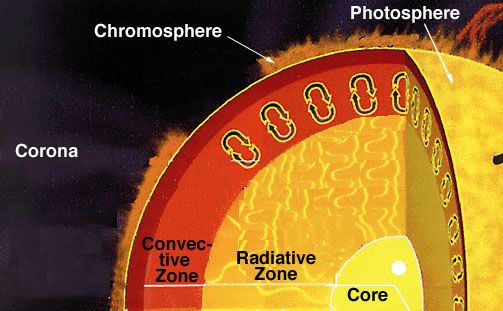
ROTFLOL...
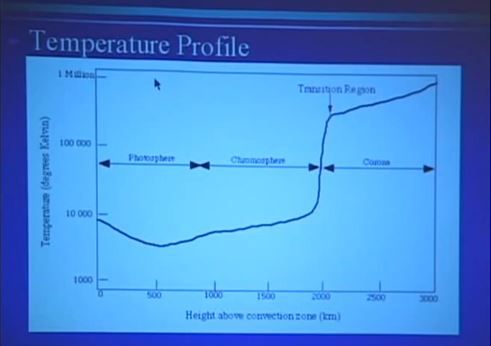
Ahh LOL, see the problem??
So the Inner Core Temp of the Sun is 15 Million Kelvin. The outer surface of the Sun (PhotoSphere) is ~ 5800 Kelvin. On it's way to and through the Chromosphere, the temp slowly rises THEN... GOES PARABOLIC 10,000 K to 150,000 K when nearing the Corona.
I suppose the fairytale Pseudo-Science Priests collectively missed the Lectures on the 2nd Law of Thermodynamics. Heat really does flow UP 'parabolic' HILLS
This is tantamount to standing near a Wood Stove then moving back 300 meters because it's too hot...then you Spontaneously Combust!!!!!
The really scary thing is, most of you never even look @ these Formica Deep "Hammer meet c4 Fires"... just take their word for it without the least bit of scrutiny, like the "Spinning Ball" fiasco...then Parrot this Buffoonery.
oy vey
ps. ...
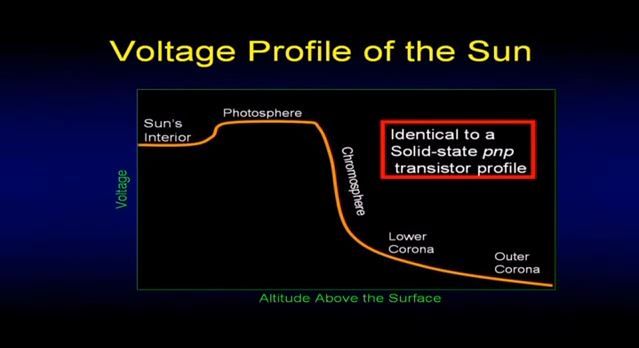
Probably just a coincidence
The Standard Model pretty much states that the Sun is more or less a Nuclear Reactor
(rotflol)."Allegedly, it has an Inner Core Temperature of 15 Million Kelvin.
So...
ROTFLOL...
Ahh LOL, see the problem??
So the Inner Core Temp of the Sun is 15 Million Kelvin. The outer surface of the Sun (PhotoSphere) is ~ 5800 Kelvin. On it's way to and through the Chromosphere, the temp slowly rises THEN... GOES PARABOLIC 10,000 K to 150,000 K when nearing the Corona.
I suppose the fairytale Pseudo-Science Priests collectively missed the Lectures on the 2nd Law of Thermodynamics. Heat really does flow UP 'parabolic' HILLS
This is tantamount to standing near a Wood Stove then moving back 300 meters because it's too hot...then you Spontaneously Combust!!!!!
The really scary thing is, most of you never even look @ these Formica Deep "Hammer meet c4 Fires"... just take their word for it without the least bit of scrutiny, like the "Spinning Ball" fiasco...then Parrot this Buffoonery.
oy vey
ps. ...
Probably just a coincidence
Jrrarglblarg
Unregistered
- Joined
- Nov 15, 2010
- Messages
- 12,673
Gish Gallop For Teh Win!
"nasa" filing reports for flying in a "stationary atmosphere over a flat, nonrotating earth"...
"Concluding Remarks:
This report derives and defines a set of linearized system matrices for a rigid aircraft of constant mass, flying in a stationary atmosphere over a flat, nonrotating earth."
NASA Reference Publication 1207, 1988.
Duke, E.L. et al: Derivation and Definition of a Linear Aircraft Model: Ames Research Center Dryden Flight Research Facility National Aeronautics and Space Administration Edwards, California, January 8, 1987; pg. 30
http://ntrs.nasa.gov/archive/nasa/casi.ntrs.nasa.gov/19890005752.pdf
Why would "nasa" sponsor/FUND a 100 page report (including appendices) regarding flying in a stationary atmosphere over a FLAT, nonrotating earth if we live on a "Spinning Ball" pray tell??
What's next, a 150 page report flying a rigid aircraft of constant mass over a wobbling Dodecahedron ?
FAA also getting in on the act:
Please Explain why the FAA is discussing (FLAT EARTH) in: ASSESSING THE VALIDITY OF USING ACTUAL NAVIGATION PERFORMANCE (ANP) INFORMATION FOR SUPPORTING DESIGNATED FLIGHT INSPECTION OPERATIONS; TECHNICAL MEMORANDUM OU/AEC 08-12TM15689/0004-1, pg. 32 & 33
www.faa.gov/air_traffic/flight_info/avn/flightinspection/onlineinformation/pdf/TM_08-12_AVN_ANP_Final_Report.pdf
??
"Concluding Remarks:
This report derives and defines a set of linearized system matrices for a rigid aircraft of constant mass, flying in a stationary atmosphere over a flat, nonrotating earth."
NASA Reference Publication 1207, 1988.
Duke, E.L. et al: Derivation and Definition of a Linear Aircraft Model: Ames Research Center Dryden Flight Research Facility National Aeronautics and Space Administration Edwards, California, January 8, 1987; pg. 30
http://ntrs.nasa.gov/archive/nasa/casi.ntrs.nasa.gov/19890005752.pdf
Why would "nasa" sponsor/FUND a 100 page report (including appendices) regarding flying in a stationary atmosphere over a FLAT, nonrotating earth if we live on a "Spinning Ball" pray tell??
What's next, a 150 page report flying a rigid aircraft of constant mass over a wobbling Dodecahedron ?
FAA also getting in on the act:
Please Explain why the FAA is discussing (FLAT EARTH) in: ASSESSING THE VALIDITY OF USING ACTUAL NAVIGATION PERFORMANCE (ANP) INFORMATION FOR SUPPORTING DESIGNATED FLIGHT INSPECTION OPERATIONS; TECHNICAL MEMORANDUM OU/AEC 08-12TM15689/0004-1, pg. 32 & 33
www.faa.gov/air_traffic/flight_info/avn/flightinspection/onlineinformation/pdf/TM_08-12_AVN_ANP_Final_Report.pdf
??
Hans
Philosopher

- Joined
- May 10, 2007
- Messages
- 9,266
Fairytale Gravity?
Well, this thread was entertaining but now it's just too silly.
..what would you expect from a thread about FE?
I mean its getting REALLY Silly.

Hans
Philosopher
- Joined
- May 10, 2007
- Messages
- 9,266
Daniel,
+10 Points for using sciency words! I am indeed ROTFLOL.
I particularly love the use of the word "tantamount" - it's a signal that the post has no actual science content. Saves a lot of pointless reading of word salad....
I wonder if he could work the 'electric universe' into his hysterics?
Jack by the hedge
Safely Ignored

- Joined
- Oct 14, 2009
- Messages
- 27,427
Yes and Anna Nicole married for Love and Pol Pot was her Florist.
If you Invoke "Coriolis Effect" with Bullets THEN, LOL... to remain Logically Consistent, you MUST Invoke it here ...
Any object FIXED to the ROTATIONAL FRAME OF REFERENCE will immediately "Slip Out" of that frame of reference when it's no longer Physically Fixed/Restrained to that Rotational Body and is compelled to a direction contrary to that of the Center of Rotation, Hard Stop!!
Did they teach you about 'slipping out ' of reference frames at sniper school or did you make it up yourself?
Here's one for you: You're on the flat earth express, going nowhere, obviously, but heading East at 100mph. You have a toy balloon, which you release inside the carriage. Having been released does it 'slip out' of the train's reference frame and shoot backwards up the carriage at 100mph?
Have you considered the possibility that you really haven't got a clue what you're talking about?
If the Moon is a Sphere (Convex), How in the World can it Reflect Sunlight/any light uniformly?
It is impossible for a convex object (The Moon "allegedly") to uniformly reflect light equally in all directions (i.e., to have any angle of incidence), only FLAT or concave surfaces can do so. If a surface is convex, then every ray of light points in a direct line perpendicular to the surface resulting in ZERO Reflection!
Furthermore, How in the World can Moon Light (that CAN'T be reflected uniformly: SEE Above) be Colder than Moon Shade ?? Here's one TEST of literally thousands...
www.youtube.com/watch?v=7L_0TD-E2Zg
regards
It is impossible for a convex object (The Moon "allegedly") to uniformly reflect light equally in all directions (i.e., to have any angle of incidence), only FLAT or concave surfaces can do so. If a surface is convex, then every ray of light points in a direct line perpendicular to the surface resulting in ZERO Reflection!
Furthermore, How in the World can Moon Light (that CAN'T be reflected uniformly: SEE Above) be Colder than Moon Shade ?? Here's one TEST of literally thousands...
www.youtube.com/watch?v=7L_0TD-E2Zg
regards
Jack by the hedge
Safely Ignored
- Joined
- Oct 14, 2009
- Messages
- 27,427
More importantly, try this one: You're swinging a ball around your head on a long string. Let's say you're swinging it clockwise. While you're swinging it, the string snaps. At the instant it breaks free, the ball is due North of you so it's moving due East.
Okay so far?
Now that it's 'slipped out' of the rotating reference frame, what does the ball do next?
Does it 1) stop, 2) fly off due North or 3) fly off due East?
Completely serious question for you.
Okay so far?
Now that it's 'slipped out' of the rotating reference frame, what does the ball do next?
Does it 1) stop, 2) fly off due North or 3) fly off due East?
Completely serious question for you.
Erock
Muse

Failed to answer what??
Well everything and we both know why.
Excellent. So when it is 2,500 miles up at Zenith it is setting 6,000 miles away. Can you explain to me what angle will be formed on a flat earth with those two parameters?
Can you please Explain.... let's say someone in California @ High Noon has the Sun pretty close to directly overhead but someone let's say on the East Coast 3100 miles away (3hr time difference) has an Elevation Angle to the Sun of 45 Degrees (ROTFLOL) ??
Sadly that would be close to the case on a flat earth. The very fact that it is not even remotely true, should trigger brain cells to start whirring around to wonder why not
Explain why there is a sunset in the first place without the Sun getting smaller and disappearing. It's almost as though it disappears over the curve
Read this, particularly the last section:
http://www-rohan.sdsu.edu/~aty/explain/atmos_refr/models/flat.html
Do you have any scientific observations to make on that?
Whilst you are here, explain and defend why the Moon phases invert in the Southern hemisphere.
Hubble's orbital decay "worked out" by you at "110 yards per orbit". Defend that claim, it isn't my place to refute this. Show your work.
Gravity according to you is "density and electrostatic dipoles". So why can't people jump higher up a mountain? And what causes higher density in the first place?
I await your answers like looking forward to piles.
Here's one for you: You're on the flat earth express, going nowhere, obviously, but heading East at 100mph. You have a toy balloon, which you release inside the carriage. Having been released does it 'slip out' of the train's reference frame and shoot backwards up the carriage at 100mph?
My word, your arguments are child-like: Remove the Roof and the Walls on the carriage...then retry.
Have you ever heard of "Open" and "Closed" Systems, by chance?
So are you saying that if you stand on opposite sides of a Merry-Go Round with a friend and have a passerby start spinning you (It's ROTATING, see the connection?) ....THEN, if you start playing catch, there is No Effect ??
If so, Goony Goo Goo.
regards
Jack by the hedge
Safely Ignored
- Joined
- Oct 14, 2009
- Messages
- 27,427
I wonder if he could work the 'electric universe' into his hysterics?
Full of tantamount capacitors, no doubt.
Jack by the hedge
Safely Ignored
- Joined
- Oct 14, 2009
- Messages
- 27,427
My word, your arguments are child-like: Remove the Roof and the Walls on the carriage...then retry.
Have you ever heard of "Open" and "Closed" Systems, by chance?
So are you saying that if you stand on opposite sides of a Merry-Go Round with a friend and have a passerby start spinning you (It's ROTATING, see the connection?) ....THEN, if you start playing catch, there is No Effect ??
If so, Goony Goo Goo.
regards
Au contraire, the Coriolis effect would be quite evident. I thought you didn't believe in it, so it's odd that you keep bringing it up.
Jack by the hedge
Safely Ignored
- Joined
- Oct 14, 2009
- Messages
- 27,427
: Remove the Roof and the Walls on the carriage...then retry.
Would you agree that with the carriage walls removed there are other forces acting on the balloon which tend to dominate?
What if the train was being followed by a 100mph tail wind? That starts to become analogous to your airliner example.
Yes and Anna Nicole married for Love and Pol Pot was her Florist.
If you Invoke "Coriolis Effect" with Bullets THEN, LOL... to remain Logically Consistent, you MUST Invoke it here ...
Any object FIXED to the ROTATIONAL FRAME OF REFERENCE will immediately "Slip Out" of that frame of reference when it's no longer Physically Fixed/Restrained to that Rotational Body and is compelled to a direction contrary to that of the Center of Rotation, Hard Stop!!
(If you're unsure of this phenomenon, grab: a friend, merry-go-round, and a ball then have a passerby spin you around.... then play catch.)
So with the unproven "presupposition" of the Earth spinning from West to East @ roughly 1,000 mph, How on Earth can you have a Plane Take Off (NOT FIXED to the ROTATIONAL FRAME OF REFERENCE) from New York to Los Angeles (~5hrs 45 min) --- traveling in the opposing direction of rotation, have the same Flight Time as the return trip (LA to NY) -- traveling with the rotation??
The westbound flight from NY to LA, say @ 500 mph typical cruising speed, would have a higher relative speed --- i.e., you need to add the speed of the opposing ROTATIONAL FRAME OF REFERENCE of the Earth 1,000 mph to the Plane's Speed; i.e., 500 mph + 1000 mph = 1500 mph.
The eastbound flight from LA to NY will immediately "Slip Out" of the ROTATIONAL FRAME OF REFERENCE upon Take Off/climbing to cruising altitude --- and @ the same 500 mph ---which has to be subtracted from the ROTATIONAL FRAME OF REFERENCE since that's the same direction; i.e., 1000 mph (Earth's Rotational Speed) - 500 mph (Plane's Speed) = 500 mph, will not only "Conceptually" take 3 TIMES as long, but Practically, "In Reality"..... NEVER CATCH UP to it's Destination (NY) before it gets BUM RUSHED by said Destination @ 500 mph!!!
Furthermore, why couldn't East Coasters not just hop in a Air Balloon or a Helicopter and hover (Not FIXED to the ROTATIONAL FRAME OF REFERENCE) for 3 hours and catch a Dodger Game...?
Here that sound (??)...that's your World-View circling the drain @ light speed
regards

What I hear is the sound of yet another flattie that doesn't understand momentum.
smartcooky
Penultimate Amazing

Full of tantamount capacitors, no doubt.
Clever! very, very clever!
Would these be Tungtied Tantamount Capacitors by any chance?
Well everything and we both know why.
Oh goodness another one with Special Mind Powers. Let's TEST your Blind Conjecture Acumen...what's my favorite color?
Excellent. So when it is 2,500 miles up at Zenith it is setting 6,000 miles away. Can you explain to me what angle will be formed on a flat earth with those two parameters?
Oh brother
The very fact that it is not even remotely true, should trigger brain cells to start whirring around to wonder why not
Not True, eh? So a "Na'ahh" is basically your position... along with a 'cherry on top' mind numbing commentary?
This is tantamount to saying Peanut Butter and Jelly Sandwiches made from Peanut Butter and Jelly are NOT TRUE.
Explain why there is a sunset in the first place without the Sun getting smaller and disappearing. It's almost as though it disappears over the curve
Well let's take a look (42:00-46:30)...
www.youtube.com/watch?v=xxtKlZihEB4
Thanks for that WaterMelon sized Hang'n Curve Ball
 . Got any more I can Jack YARD!!!
Read this, particularly the last section:[/I]
http://www-rohan.sdsu.edu/~aty/explain/atmos_refr/models/flat.html
Do you have any scientific observations to make on that?
Scientific Observations, eh? How do they differ from just ole run-o-the-mill observations...? These...


Whilst you are here, explain and defend why the Moon phases invert in the Southern hemisphere.
Perspective.
Hubble's orbital decay "worked out" by you at "110 yards per orbit".
Ahh no, that was a response to another mind numbing claim; here's what I worked out...
So the Hubble Telescope (HST) @ ~340 Miles above the Earth. "Hubble doesn't even have a Propulsion System so it can't possibly change it's orbit by itself" (HST Deputy Missions Operation Manager --- Mike Myslinski NASA)-- Planate Veritas Phone Interview.
Even though its about 100 miles above the ISS, HST still suffers from Orbital Decay (Atmospheric Drag). There are many variables to consider (Sun Cycle ect); however, we can reasonably calculate a "Ball Park" figure. I've seen a few approximations for the ISS orbital decay....it comes in about 1-2 miles every 95 minutes or so (1 Orbit). Both ISS and Hubble orbit the Earth roughly 15 times/day ( www.heavens-above.com/orbit.aspx?satid=20580 )
The last servicing mission for HST was 11 May 2009 (STS-125). So from then until this year 11 May 2016 is 7 Years.
Let's give an EXTREME benefit of the doubt and say HST only suffers Orbital Decay @ a Quarter of a Mile per Orbit. So....
Hubble Telescope Altitude: 340 Miles
Loss in altitude per day (15 orbits): 3.75 miles
Loss in altitude per year: 1368 miles !!!
Loss in altitude in 7 YEARS: 9,581 Miles !!!!
The Hubble Telescope should be 9,574 Miles beneath the Mariana Trench !!!!!!!!!!!!!!!
1/8th of a Mile 'Orbital Decay' per orbit...
Loss in altitude per day: 1.87 Miles
Loss in altitude per year: 684 Miles
Loss of altitude in 7 Years: 4,790 Miles
The Hubble Telescope should be 4,784 Miles beneath the Mariana Trench !!!!!!!!!!!!!!!
1/16th of a Mile 'Orbital Decay' per orbit ...
Loss in altitude per day: .93 Miles
Loss in altitude per year: 342 Miles
Loss of altitude in 7 Years: 2,395 Miles
The Hubble Telescope should be 2,389 Miles beneath the Mariana Trench !!!!!!!!!!!!!!!
Savvy?
Gravity according to you is "density and electrostatic dipoles".
No, gravity according to me is a Demonstrable Fairytale here...I 'Showed My Work'
 : www.internationalskeptics.com/forums/showpost.php?p=11365069&postcount=203
So why can't people jump higher up a mountain?
oh brother
And what causes higher density in the first place?
What causes tightly packed atoms/molecules ?? Can you please stop wasting my time?
regards
Au contraire, the Coriolis effect would be quite evident.
Then why isn't it evident with Bullets and Aircraft?
I thought you didn't believe in it, so it's odd that you keep bringing it up.
 ahhh, I never said I didn't 'believe' in the Coriolis Effect, it's a well established FACT; Ergo...I don't know what you're talking about.
It's quite apparent, Remember the 'Merry-Go-Round'. However, it's not EVIDENT whatsoever in regards to the EARTH... where it should be if it were "Spinning". Follow?
regards