Moderated Steel structures cannot globally collapse due to gravity alone

what burns through faster in your home fireplace, a log of wood or the steel grate that supports the wood?

that one was easy enough...NEXT!

Only an ass thinks we are talking about the steel BURNING. We are talking about the steel losing strength. Which is why fireplace grates are so very much thicker than they need to be to hold up the fire.

In steam locomotives we have a thing called the crown sheet that is the top of the firebox. You have to be very very careful to make sure that sufficient water is in the boiler to keep the crown sheet covered at all times. If you do not, the steel of the crown sheet can heat to the temperature of the fire, soften, and fail under the pressure of the boiler. Only the phase change of the boiling water carrying off the heat prevents that. If the crown sheet fails, you have a boiler explosion and those are very frightening and deadly.

And it doesn't really matter what you make the crown sheet out of. You CAN use copper if the boiler is a lower pressure (around 50 lbs) and many early locomotives did. But copper or iron or steel, all crown sheets fail if not kept covered by water.

But we DO see in locomotives another effect; Burning though of the grates. This happens when you run your fire bed too thin and instead of the grates being covered in a layer of ash with the influx of cool air from the bottom keeping the metal from rapidly oxidizing (burning) we have combustion gases in constant contact with the metal, and they burn out pretty fast. Of course when you build the fire initially, there is some of this effect in a clean firebox, that can't be helped, but you want to make sure you have a deep enough bed in there out on the road.
 
Come on, Bob. You've been caught out. Admit it. One of us designs tall buildings for a living, and it ain't you.


Still waiting, Bob. Tell you what, let's have another picture while we're waiting.
 

Attachments

  • libp6970.jpg
    libp6970.jpg
    55 KB · Views: 1
What part of "more or less horizontal" don't you understand?

Chris? what part of "more or less horizontal" don't you understand? Does this look horizontal in the least to you?

chandlersdots.jpg
 
I know this is very deep and very technical for a layman or someone like you that is very inexperienced in steel workings, design, chemistry, but I still have hope to straighten and enlighten people like you that have a biased and tunnel visioned approach to the wtc collapse

helpful Bob

Are these things you learned designing that space elevator?
 
is this like one of those self stroage bins?

I think that you need to look at the big field here, not a shed like structure, we're talking massive steel beams and girders of immenses size and strength, steel specifically designed and tested to withstand forces 10 times greater in heat and energy that the steel faced in the wtc.

think big, real big, you can do it, ask for help and direction

Bob, I'm gonna try to think big, but I don't understand this. I mean the building he's talking about is a little more than a "shed," right? Aren't you exaggerating when you say "shed"? I mean, technically, isn't he right that this is an example of a steel structure that collapses due to just fire and gravity?

I don't really know you that well, Bob. Maybe you're completely right. But, he seems to have a pretty good answer to me. I'm gonna ask you for help and direction on this. What do you think?
 
Well, since Space Elevator man isn't having a good day then let's press him on this point too.

Bob, are you specifically and categorically saying the steel framed buildings can't fail due to fire?
 
well, have a good day architect, go back and lick your wounds, no you see how the old christians did in the arenas of ancient rome when the were fed to Bob the Lion...it wasn;t pretty then and it has been very gory for all to tach you get slaughtered in here today by me and every one else


maybe you can be canonized - the patron saint of silence...st. put up or shut up
 
The one you'll be specifically interested in is/are the Eurocodes. Unfortunately, they cost a packet. These were then adopted into national standards across Europe progressively. In particular they place emphasis on the need to design in sufficient redundancy to limit the risk of what they term "disproportionate collapse" in the event of an event such as fire or explosion.

If your work subscribes to one of the online information archvies such as Barbour then you should be bale to track down a copy. I think - but don't quote me on this - that it was part 3. If that fails, let me know and I'll speak to one of the engineers on my own projects.

Muchas gratitude. :thanks

Hey, the guy must be a genius, he designs space elevators for a living.

Like I said above: I'd say from his posts he can "design" space elevators like those guys on TV can "design" interiors.

Hope he picks out a good carpet for the walls. :eek::D;)

... Tell you what, let's have another picture while we're waiting.

Hey, buddy, you screwed up there. There be some floors missing underneath that one on the front side! ;):D:p

Or are you going to blame that on the engineers?? :D:D
 
Ah Bob, I'm impressed. You claimed I wasn't an architect, you've now got to face a pretty damned watertight proof that I am, and you still try to claim you've somehow seen me off. Have you managed to come up with something on your space elevator designs yet?

And - just to line you up for another kick in the nuts - are you sure that you want to claim that steel is magically fireproof? Be specific, now.....
 
Did he just compare a fireplace fire to the WTC fires?

Jesus...
and did you know that construction grade steel is designed and manufactured for being able to conform and hold steady and not lose strength for up to 4400 degrees fahrenheit was used in the wtc?


I mean, that's only 8 to 10 times the highest on-going temperature of the wtc fires that was recorded

this is why you shills are wrong,,,very very wrong...you would never design, test and build a structure that could not easily and readily survive the worst case scenraio and disaster times a ten factor...take a guess what the seismic rating was designed, test and built into the wtc for survivability was...

we're talking richter scale kids...then what was the largest richter scale recorded event on the eastern seaboard and for NY?
 
good for you, great find, do you understand wht this chart means and what it says...you see, the steel would have to start looking in this fashion as it broke down, in an element basis, yet the NIST reports what...all areas and facets have to have shown the steady and progressive breakdown for steel, joint, truss and member failure


I might be getting through to you, if you take the time to read, analyze and allow you, not force you, to understand


this is what is called red x, you see a failure, you ask why and in how many ways the failure could occur, then you prove that failure out in testing and analysis...repeatedly...with all tenets of the same chemistry of the steel as well as the grades involved


I know this is very deep and very technical for a layman or someone like you that is very inexperienced in steel workings, design, chemistry, but I still have hope to straighten and enlighten people like you that have a biased and tunnel visioned approach to the wtc collapse

helpful Bob

You did not answer Sunstealer's post. Instead you asked me to interpret the chart for you. Is that so difficult for you to answer his post? It appears you are doing a dance Bob and avoiding answers. Lurkers can all see that. Answer of admit you cannot. You claimed in a previous post that the fire sprinkler system should have had a specific effect on the steel. Do you still believe that given the limitations Sunstealer has put to you above? Are you intentionally missing his post again?
 
Bob, I'm gonna try to think big, but I don't understand this. I mean the building he's talking about is a little more than a "shed," right? Aren't you exaggerating when you say "shed"? I mean, technically, isn't he right that this is an example of a steel structure that collapses due to just fire and gravity?

I don't really know you that well, Bob. Maybe you're completely right. But, he seems to have a pretty good answer to me. I'm gonna ask you for help and direction on this. What do you think?
i dunno skippy, the building to me, appears to be in the area of 10 to 15 feet long, shed size, such as in your backyard, where you keep your lawnmower, snowblower, leaf blower, maybe a roto-tiller, rakes, shovels, etc.
 
You did not answer Sunstealer's post. Instead you asked me to interpret the chart for you. Is that so difficult for you to answer his post? It appears you are doing a dance Bob and avoiding answers. Lurkers can all see that. Answer of admit you cannot. You claimed in a previous post that the fire sprinkler system should have had a specific effect on the steel. Do you still believe that given the limitations Sunstealer has put to you above? Are you intentionally missing his post again?
interpret what..that the temperatures of the fire in the wtc never got to the point and stayed constant to develope the need and rapid progression of failure with in the steel?

This was proven by the charts and the NIST report in itself, they admitted that the fires never attained the needed temperatures and constant heat need for steel failure.
 
and did you know that construction grade steel is designed and manufactured for being able to conform and hold steady and not lose strength for up to 4400 degrees fahrenheit was used in the wtc?


I mean, that's only 8 to 10 times the highest on-going temperature of the wtc fires that was recorded

this is why you shills are wrong,,,very very wrong...you would never design, test and build a structure that could not easily and readily survive the worst case scenraio and disaster times a ten factor...take a guess what the seismic rating was designed, test and built into the wtc for survivability was...

we're talking richter scale kids...then what was the largest richter scale recorded event on the eastern seaboard and for NY?

Oh Bob, I'm afraid it's not your day. I hope you weren't supporting the Italians at the rugby. Anyway, let's look at fire performance of steel. I'd like you to tell me if there are any errors that I make. And be specific.

Testing Criteria

Firstly, the lay reader may be interested to learn that there are, of course, formal standards to test the fire performance of structural steelwork.

The general procedures used for determining the fire resistance of load-bearing elements of structure are specified in BS476 series. In assessing the performance of fire protection materials the relevant parts are:

Part 20 Method of determination of the fire resistance of elements of construction (general principles)

Part 21 Method of determination of the fire resistance of load-bearing elements of construction

Whilst BS 476 Part 20 is concerned with general principles and covers requirements which are common to the other parts of BS 476, the BS 476 Part 21 fire resistance testing covers load-bearing elements of construction, such as steel beams, columns or walls, whilst BS 476 Part 22 fire resistance tests are intended for non load-bearing elements of construction.

European fire testing standards have also been published. In assessing the performance of fire protection materials the relevant part is presently ENV 13381-4 “Test methods for determining the contribution to the fire resistance of structural members Part 4: Applied protection to steel members”. This standard makes reference to the EN 1363 Series of standards which contain general information about conducting fire resistance tests. However, as all the procedures for assessing fire protection are currently specified in ENV13381-4, it is this standard which is generally referred to.

Performance of Steel in Fires

Hot finished carbon steel begins to lose strength at temperatures above 300°C and reduces in strength at steady rate up to 800°C. The small residual strength then reduces more gradually until the melting temperature at around 1500°C. This behaviour is similar for hot rolled reinforcing steels. For cold worked steels including reinforcement, there is a more rapid decrease of strength after 300°C (Lawson & Newman 1990). In addition to the reduction of material strength and stiffness, steel displays a significant creep phenomena at temperatures over 450°C. The phenomena of creep results in an increase of deformation (strain) with time, even if the temperature and applied stress remain unchanged (Twilt 1988).

High temperature creep is dependent on the stress level and heating rate. The occurrence of creep indicates that the stress and the temperature history have to be taken into account in estimating the strength and deformation behaviour of steel structures in fire. Including creep explicitly within analytical models, is complex. For simple design methods, it is widely accepted that the effect of creep is implicitly considered in the stress-strain-temperature relationships.

For those who require further information or, as the case may be, persuasion regarding the actual performance of steelwork under such conditions we are fortunate that a predictably large numbers of leading bodies have looked at the issue in depth.

http://www.shef.ac.uk/fire-research/..._meetings.html (http://www.shef.ac.uk/fire-research/..._meetings.html)

http://www.corusconstruction.com/page_1416.htm (http://www.corusconstruction.com/page_1416.htm)

http://www.bfrl.nist.gov/866/CIB_W14/workprog.htm (http://www.bfrl.nist.gov/866/CIB_W14/workprog.htm)

http://www.civil.canterbury.ac.nz/fi...rts/KLewis.pdf (http://www.civil.canterbury.ac.nz/fire/pdfreports/KLewis.pdf)

Note in particular the strength/temperature/yield grading charts in the final link, which have obvious implications for the structure of any steel framed building exposed to fire conditions.

Practical Implications - Design Codes and Building Regulations

The fire design codes BS 5950-8, Eurocode 3 Part 1-2 and Eurocode 4 Part 1-2 provide the framework for designers to calculate the temperature at which a given steel member will fail in a fire situation. These design methods incorporate more realistic estimates of the applied load during a fire and include the effects of non-uniform heating through and along the member. The design methods are based on either fire
resistance, which is a measure of an element to withstand given criteria in a standard furnace test, or natural fires where the size of the fire compartment, available combustible material, characteristics of the compartment boundaries andair supply are considered.

The requirements and calculations so arising are necessarily complex.

As the reader might anticipate, because structural steelwork is at risk of failure in a fire building regulations also introduce fireproofing requirements.

The Scottish Regs, section D, are a bit detailed - http://www.scotland.gov.uk/build_regs/sect-d.pdf (http://www.scotland.gov.uk/build_regs/sect-d.pdf) - but you'll notice do flag up the need for fire protection in structural components and steelwork.

In England, Part B of the Regs flags up a similar position - its not available on-line free but Corus (who do know a thing about steel) have a useful and relatively non-technical summary at http://www.corusconstruction.com/leg...s_section1.pdf (http://www.corusconstruction.com/legacy/fire/images/fireres_section1.pdf) . Some of you will note on page 5 the admission that most unportected steel sections only have fire integrity for about 15 minutes.

The Canadian Regs aren't available on-line free either, but their national buildings institute flags up across all their documents the risk posed by fire and the need for protection - see, by way of example, http://irc.nrc-cnrc.gc.ca/cbd/cbd071e.html (http://irc.nrc-cnrc.gc.ca/cbd/cbd071e.html) .

The New Zealand and Australian steel codes, (SNZ, 1997 and SAA 1990) are very similar to each other. The NZ regs section C4 requires....wait for it......structural protection of steel in fire ( http://www.building.govt.nz (http://www.building.govt.nz/))

Summary

It is recognised through empirical analysis across a recognised series of standards that structural steelwork weakens significantly under normal fire conditions, and as a consequence codes require additional protection through (for example) the incorporation of passive fire protection systems.

There is no evidence that such tests are wrong, or that fire protection can be safely omitted due to (for example) the efects of heat conduction throughout the affected members.

 
Last edited:
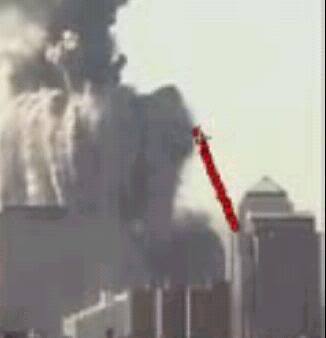
Chris? what part of "more or less horizontal" don't you understand? Does this look horizontal in the least to you?

http://i294.photobucket.com/albums/mm89/AWSmith1955/chandlersdots.jpg
The object is about 100 feet from the tower. It is falling as it moves away at 72 mph. Do you know what a parabola is? Watch the video again and listen to what Chandler says about where the object left the building.

You are still ignoring the point.

The object is moving away from the building at 72 mph!

The energy created by gravity cannot be redirected to hurl 4 ton objects at 72 mph sideways.
The 'flicker factor' is absurd. tfg does not explain how the potential stored energy is used to eject 4 ton objects laterally.
 

Back
Top Bottom