Moderated Steel structures cannot globally collapse due to gravity alone

bill,

It wasn't very nice to the good people over here to bring Bob out of the sock drawer.

Well done Teddy. Just a few remarks though. 5.3'' of beflection in a 37 foot long beam does not seem like a whole hell of a lot to me.

The reason it doesn't seem like a lot to you is that you don't appreciate the implications of the moment of inertia for a 14" square box column and a 37' long beam.

How much of that 4.900 in/lbs PE would actually be converted into linear motion that would carry the entire beam away at 54 mph and how far would it travel horizontally ?.

"in/lb" is NOT a unit of energy, bill. It's 4900 in-lb. I know that seems inconsequential to you ... <eyes roll>

Conservation of energy does not tell you how much WOULD be converted into linear motion. It simply puts an UPPER BOUND on how much COULD be converted into linear motion.

The velocity any particular beam might attain by this method would depend on the fine details of how much energy it lost while "disassembling" from it attachments.

You'll also note that this upper bound is a direct consequence of the assumptions built into the calculation.

A uniformly arced beam instead of a cantilever could store twice as much PE. A beam that was arced until it reached its ultimate stress instead of its yield stress could perhaps store an additional 30%. A beam that was bent until it went fully plastic on both sides of the neutral axis could store twice as much as this, again. Each of these condition are iNDEPENDANT multipliers, so that the max of all those factors would be 2 x 1.3 x 2 = 5.2 x greater than the number I gave. This amount of stored energy could return 2.3 times as much linear velocity.

The last two stress conditions would leave the beam seriously bowed when it came to rest, tho. So I don't think that this condition was ever realized.

Do you mean one end fixed at the bottom ?

You must not have noticed the part about me starting with a cantilever assumption.

tk
 
why would I get back into the NIST report once again? it is old news and the world's engineering community has dismissed it as not being worthy of any more discussion, that is why the NIST has decided to re-do and re-submit their report because of their many false assumptions, unlikelyhoods, unpredictabilities of their their math models, the NISt's refusal to hear of the ASQC steel questions as well as the NIST's refusal from the mentorship of the american society of civil engineering

the NISt knew that they lost face with the respected members of the world's engineering societies and that the crdeibility of the NIST is not what people once thought it was

the NISt has become a nest, a cave for mindless shills, sort of like the warren commission

This almost made me spit out my drink it was that funny.

What is with the sudden in rush of wannabe "scientists" claiming that the NIST report is junk?

I smell a rat.

TAM:)
 
so you found a picture of thin gauged steel that was bent by force...give the guy a happy meal somebody,, you npicture means nothing...the grade of steel used in rise is speficically designed and manfucature and rolled so that in no way, shape or form, can a hydro-carbon fire ever harm that steel


just look at the Beijing hotel fire from 2 weeks ago or any high or medium rise fire in the last 850 years

thos all started in or around 1250 ADm, the official start of the iron age...doubt that many of you have heard about it yet..the rest of us learned about it around the 3rd or
4th grade

so they put fire proofing on it...for fun? To waste money? Cause it looks good on the steel?

Welcome to ignore wannabe.

TAM:)
 
56 to 76 MPH?? Seriously? That much speed imparted? Huh... I never would've guessed.

Thanks for the calculation! :thanks

If I may bother you further, here's a question: Consider a column that came from the North tower. Presume that it originated from somewhere around the impact zone (floors 94-98; this is of course arbitrary, but I'm trying to establish a hypothetical scenario, so it'll do for now). At 56 MPH, how far out horizontally would it go before reaching around 200 feet above ground level? And how far out would it travel at 76 MPH? Since it's just a query for a rough number, any simplifications necessary to avoid serious headaches are no problem.

Obviously, I'm trying to gain a feel for what happened to the column that embedded itself in roughly the 20th floor of World Financial Center 3 (the column that Christopher7 keeps on going on about). The speeds you note make decent boundary conditions, so it will be interesting to see how that works out when considering a real scenario from the collapse.

If you choose to do this - and it's of course strictly voluntary, so don't feel obligated - thank you! Even if you don't: Thanks for the calc so far!
Easy.
 
....
Converting this entirely into linear velocity gives about 83 ft/sec = 56 mph.
...

Which, according to my cunning Excel spreadsheet gives us a horizontal range of approx :
500' when starting from a height of 700'
400' when starting from a height of 500'

i.e. in the general area of the Winter Gardens debris. The above based on no air resistance, just basic calculations.
So, Chris7, stop panicking.

eta: whoops! tfk just said "easy" so I hope my ancient maths and physics is up to scratch :)
 
Last edited:
Read this and weep liar.
Been there, read that, LMAO :D

They have all the floors above the first intact floor to be impacted arriving at the same time. That is not what happened.

The floors above the collapse zone were attached to the core and perimeter columns. When the collapse started, the weight of all but one of those floors was on the exterior and core columns, not the truss seat connections between the primary floor trusses and the exterior wall columns or core columns.

NIST did NOT explain how the towers collapsed.


I bet you are not man enough to admit you are wrong.
I am the only person here man enough to admit when I am wrong.
Gravy said:
To humor Chris, here's a photo that should show minimal distortion...you know, the kind they use for maps.
http://www.internationalskeptics.com/forums/imagehosting...4ce0ec48fc.jpg

C7 said:
Excellent find. This is clear and conclusive. I will change my position accordingly.

4 ton framing sections were ejected up to 500 feet.

http://www.internationalskeptics.com/forums/showthread.php?postid=4462055#post4462055


hydro carbon fire, certainly has no affect on steel, as a long time member of the engineering community in the transportaion field, when have you ever seen a car caught on fire or has been burnt on fire?

the steel--chassis-powertrain.steering and suspension all remain whole and intact, despite the fuel tank exploding

you people should be beyond this level or point by now...fire can not and will not harm steel as the wtc saw it


it takes over 4,000 dgerees of consstant and fed temperatures to make steel unstable and this takes numerous hours, over 12 hours in an electric arc, gas or ingot oven.
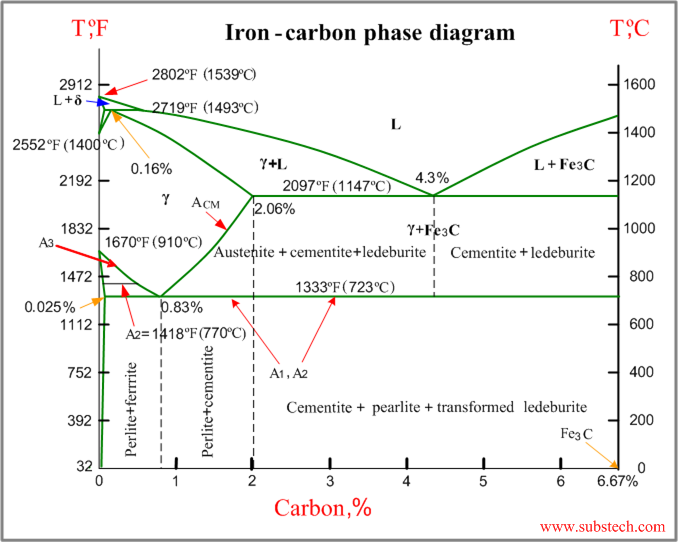
Absolute rubbish! 4000°F is 2204°C. :jaw-dropp Pure Iron melts at 1539°C.

Instead of making things up or repeating rubbish that you read on a truther site please learn about the iron-carbon system.

Please estimate, using the following diagram, the melting point of
0.26C plain steel. Infact I'm actually willing to bet that you can't even do that bearing in mind the answer is staring you in the face. How can you possibly think that you are right? You are ignorant, you know nothing! I dare you to answer my question, what's more I dare you to send an email to 10 metallurgical departments at the universities of your choice with that (bolded) statement and see the responses you generate. ROFLMFAO. Why are truthers soooooo stupid? /facepalm.

fetch.php
 
bill,

It wasn't very nice to the good people over here to bring Bob out of the sock drawer.


The reason it doesn't seem like a lot to you is that you don't appreciate the implications of the moment of inertia for a 14" square box column and a 37' long beam.

How much of that 4.900 in/lbs PE would actually be converted into linear motion that would carry the entire beam away at 54 mph and how far would it travel horizontally ?.

"in/lb" is NOT a unit of energy, bill. It's 4900 in-lb. I know that seems inconsequential to you ... <eyes roll>

Conservation of energy does not tell you how much WOULD be converted into linear motion. It simply puts an UPPER BOUND on how much COULD be converted into linear motion.

The velocity any particular beam might attain by this method would depend on the fine details of how much energy it lost while "disassembling" from it attachments.

You'll also note that this upper bound is a direct consequence of the assumptions built into the calculation.

A uniformly arced beam instead of a cantilever could store twice as much PE. A beam that was arced until it reached its ultimate stress instead of its yield stress could perhaps store an additional 30%. A beam that was bent until it went fully plastic on both sides of the neutral axis could store twice as much as this, again. Each of these condition are iNDEPENDANT multipliers, so that the max of all those factors would be 2 x 1.3 x 2 = 5.2 x greater than the number I gave. This amount of stored energy could return 2.3 times as much linear velocity.

The last two stress conditions would leave the beam seriously bowed when it came to rest, tho. So I don't think that this condition was ever realized.


You must not have noticed the part about me starting with a cantilever assumption.

tk
I've told you many many times before hat I am a lone poster. If you insist on believing that I am also other posters so be it. On the other forum I think you hought I was simultaneously around six or seven other posters.

So all in all it looks to me like our 37 foot beam will not travel very far at all. Perhaps a few dozen feet- a negligibe distance not to be confused with 200,300 400 or even 500 feet away. You can always give a more exact assessment if you want.
 
Last edited:
El Mondo,

Ignore the last post. I hit the "post reply" button accidentally.

56 to 76 MPH?? Seriously? That much speed imparted? Huh... I never would've guessed.

Thanks for the calculation!

If I may bother you further, here's a question: Consider a column that came from the North tower. Presume that it originated from somewhere around the impact zone (floors 94-98; this is of course arbitrary, but I'm trying to establish a hypothetical scenario, so it'll do for now). At 56 MPH, how far out horizontally would it go before reaching around 200 feet above ground level? And how far out would it travel at 76 MPH? Since it's just a query for a rough number, any simplifications necessary to avoid serious headaches are no problem.

Obviously, I'm trying to gain a feel for what happened to the column that embedded itself in roughly the 20th floor of World Financial Center 3 (the column that Christopher7 keeps on going on about). The speeds you note make decent boundary conditions, so it will be interesting to see how that works out when considering a real scenario from the collapse.

If you choose to do this - and it's of course strictly voluntary, so don't feel obligated - thank you! Even if you don't: Thanks for the calc so far!


But your calculation is easy.

Given: 1 story = 12.3 feet. "g" = 32.2 ft/sec^2. Convenient conversion: 60 mph = 88 ft/sec.


1. Take whatever floor you want, times 12.3'/story. This is the start height. (say 90th floor = 1107')
2. Choose your final height. (say 200')
3. subtract it. difference is 907'.
4. time to fall that distance is given by d= 0.5 g t^2.
5. solve for t = (2 * d / g) ^ 0.5 In this case, t = 7.5 sec.

6. Choose your horizontal speed. (say 56 mph = 56 * (88/60) = 82 ft/sec.
In your calculated fall time (7.5 sec), it can travel the horizontal speed (in feet per second) times t (in seconds)

h = 82 ft/sec * 7.5 seconds = 610 feet.
___

At 76 mph, the drop distance & drop time are the same, so the horizontal distance becomes:

h = 76 mph * (88 ft/sec / 60 mph) * 7.5 seconds = 830 feet.
___

Note the round offs. There is nothing more embarrassing to an engineer than a person doing BOTEs (Back Of The Envelope estimations) and then quoting results to 5 significant digits....
___

Important point: As I said before, I don't believe this to be a PROBABLE mechanism for throwing the beams these long distances. The concepts of collisions & levers seems to me to be far more probable.

Second point: again, energy conservation is simply an upper bound. I would have no problem whatsoever in finding that, even tho an accurate calc said that it could be thrown 76 mph, the fastest one found was only 20 mph.

I would have a HUGE problem if a RIGOROUS energy calc, that included all possible mechanisms and an error analysis, said that the absolute fastest it could be thrown was 76 mph, and I found one that was going 77 mph.

Hope it helps.

tom
 
you people should be beyond this level or point by now...fire can not and will not harm steel as the wtc saw it

Epic ignorance.

Fire Safety Engineering and the Performance of Structural Steel in Fires, Building Code Changes

What harmed the steel in these structures, Bob? Explosives? Thermite? Why do building codes require that steel structures have fire insulation covering the steel? I await your reply.

it takes over 4,000 dgerees of consstant and fed temperatures to make steel unstable and this takes numerous hours, over 12 hours in an electric arc, gas or ingot oven.
Utterly bizarre, utterly false. Also, please learn to use spell check and proper grammar. It is rude to compound ignorance with illegibility.
 
Last edited:
hydro carbon fire, certainly has no affect on steel, as a long time member of the engineering community in the transportaion field, when have you ever seen a car caught on fire or has been burnt on fire?

the steel--chassis-powertrain.steering and suspension all remain whole and intact, despite the fuel tank exploding

you people should be beyond this level or point by now...fire can not and will not harm steel as the wtc saw it


it takes over 4,000 dgerees of consstant and fed temperatures to make steel unstable and this takes numerous hours, over 12 hours in an electric arc, gas or ingot oven.

This is so wrong I don't know where to begin. Anyone who has ever taken Firefighter I training, to say nothing of courses in Fire Behavior and Building Construction for the Fire Service knows better. I've seen plenty of sagging steel beams and twisted car parts in hydrocarbon fulled fires over the years. But, hey, don't take my word for this. Head on down to your local fire department and ask one of the Brothers there about how steel behaves in a fire. Any of them would be glad to correct your errors.
 
Please do not make accusations such as this on the forum. If you believe there is a sock puppet on the forum, report it to the mods, then leave it alone. Furthermore, do not personalise arguments in threads - keep your posts civil, and on topic.
Replying to this modbox in thread will be off topic  Posted By: chillzero


So all in all it looks to me like our 37 foot beam will not travel very far at all. Perhaps a few dozen feet- a negligibe distnace not to be confused with 200, 300, 400 or even 500 feet away. You can always give a more exact assessment if you want.

My calculations put the upper bound on a beam thrown in this manner from an upper story somewhere over 1000'.

And, knowing how you operate, I am not in the SLIGHTEST surprised that this is the conclusion that you've drawn after reading my postings.

As I said above, "IF you were someone with integrity ..."


bill,
 
Last edited by a moderator:
This is so wrong I don't know where to begin.

That's what he is counting on. In truther world, it's called a debate technique. It means that if he has us speechless due to the sheer volume of crap that is spewed, he somehow wins the debate.

I'm sure he's high-fiving his truther buddies right now claiming how he defeated the evil JREF'ers, while never suspecting that to the 100 or so lurkers to this thread he's managed to look like an idiot. Which, actually, is one of the very reasons the truth movement is heading right down into the historical toilet.
 
Last edited:
more cut and paste nonsense,,,just what we need another guy that knows how to use wikipedia..<rolls eyes> and laughs

has anyone ever uncovered a FMEA--failure mode effect analysis..both pre and post 9/11 from the NIST.... no report could not be done without one being performed

FMEA can provide an analytical approach, when dealing with potential failure modes and their associated causes. When considering possible failures in a design – like safety, cost, performance, quality and reliability – an engineer can get a lot of information about how to alter the development/manufacturing process, in order to avoid these failures. FMEA provides an easy tool to determine which risk has the greatest concern, and therefore an action is needed to prevent a problem before it arises.The development of these specifications will ensure the product will meet the defined requirements.

post failure FMEA's would also have to be performed.... it is a requirment for analysis....you see the NIST has never done this and it becomes heresy to the world enginnering community at large

You are a laugh riot Bob

I'm from the manufacturing industry, did quality and ISO. A FMEA is a method of applying a structured, scientific approach to problem solving (Made big by FORD if memory serves). There is no concrete guidleline to FMEA, as long as you say what you are going to do, and do what you say you are going to do. NCSTAR and its 10 000 pages, including FEA is in fact a FMEA.
 
Last edited:
Funny you'd say that, since the hilited portion of your post above is cut and pasted directly from Wikipedia.

Note to self: Read posts above before posting.

Sorry Mr.S :(

DGM said:
First of all the NIST report IS a FMEA. Second hydrocarbon is one word. Your pathetic.

Note to self: Read ALL posts above before posting.

Sorry DGM.

I should have known better than to think you guys would let that slip by.
 
Last edited:
You are a laugh riot Bob

I'm from the manufacturing industry, did quality and ISO. A FMEA is a method of applying a structured, scientific approach to problem solving (Made big by FORD if memory serves). There is no concrete guidleline to FMEA, as long as you say what you are going to do, and do what you say you are going to do. NCSTAR and its 10 000 pages, including FEA is in fact a FMEA.
I've done a couple of FMEA's myself on a hydrogen fueled scramjet project and I also did a Fault Tree Analysis (FTA).

These are one or two methods of safety/risk analysis, but by no means the only ones.

3bodyproblem, if memory serves, it was Boeing, not Ford, but I could be wrong. Anyhow, a FMEA follows a specific format so you may not be technically accurate in saying it's a FMEA, but for all intents and purposes, I believe you are correct in saying NCSTAR is a FMEA.
 

Back
Top Bottom