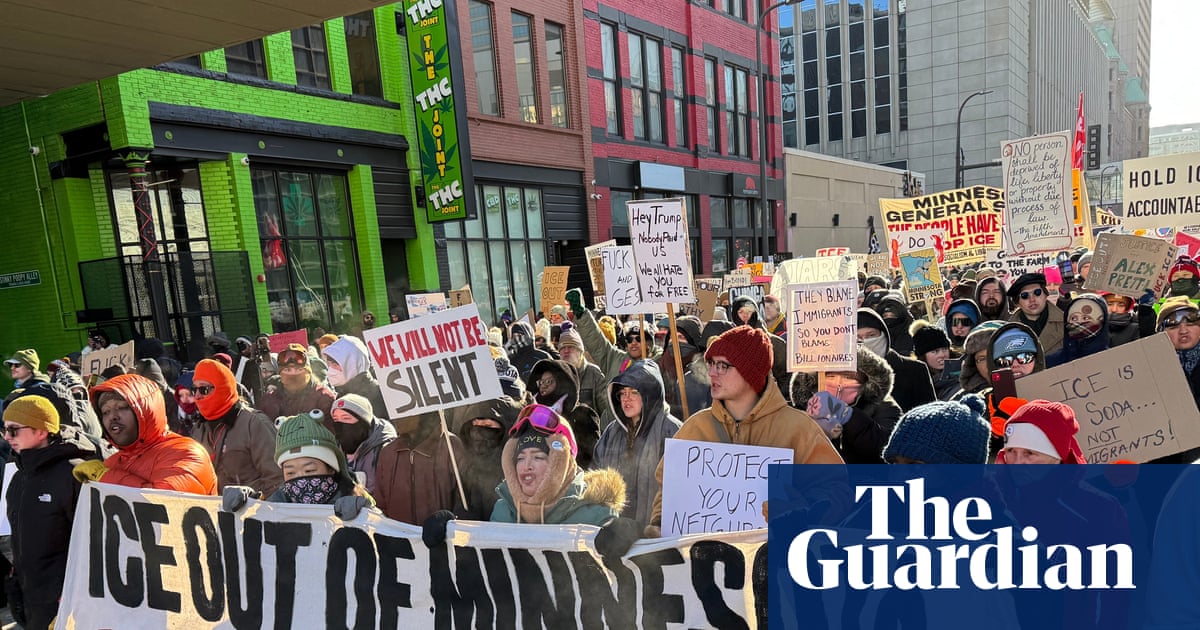
Minneapolis residents should continue to show up and participate in their neighborhood’s rapid response networks, pick up whistles and get trained on how to be legal observers, she said. For people outside the state, it helps to amplify what is actually happening on the ground and dismantle the federal narrative about Pretti and the city, and find ways to donate to organizations and people helping locally.
“The only thing that’s within our control as individuals right now is that we continue to show up, to resist, to be in the streets, to be in our neighborhoods, and continue calling for ICE to to leave our city, to leave our state,” she said. “I think our state and local officials are unified in wanting to see that outcome, and we have to keep pushing until we get our city back, our state back.”
Even if ICE leaves tomorrow – and the Trump administration has given no signs so far it will soon pull its forces out of the state – the impacts of this period in Minneapolis will be felt for much longer. Residents, including children, have been traumatized, witnessed deaths, violence and family separations. But that recovery can’t even begin until ICE leaves, Chughtai said.
But, Chughtai said, “I don’t think that we can even begin to rebuild or recover from this grief and trauma that we’ve been experiencing now for two months until these people leave our state.”