Okay. I can set you straight here - cuz I know all about this. There is a limit to how small a nuclear weapon can be because of the critical mass issues and such. This can be reduced somewhat from a standard critical mass by using such things as a "neutron reflector" which reduces the amount of fissile material necessary, but depending on the design, may increase the size of the weapon. Also, the process of boosting, which involves adding a tritium capsule to the center of the fission component can help reduce the weapon's size. The tritium creates a small amount of fusion when the weapon is triggered. Although this does not increase the yield by much directly, it provides neutrons to assure that the fission component does not "fissile"
The thing is there are two ways of looking at it. By small do you mean in size or in mass. In some cases, these may not be the same thing. Adding a beryllium neutron reflector can decrease the weight, by allowing for less uranium or plutonium, which is much heavier, but will increase the diameter of the device.
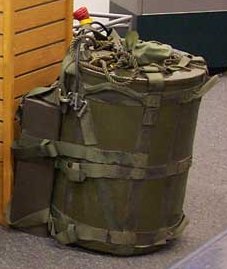
The W-54 was mentioned here. The W-54 is considered the smallest weapon the US ever created in both mass and yeild and is probably approaching the limits of how small you could make a weapon. The W-54 weighed about 50 pounds and was a very managable size.
The first variation was used on the "Davy Crockett" which was a man-portable launcher. This version was limited to the sub-kiloton range of about 100T-30T. However, that's only explosive yield. It reportedly had a decent kill radius from neutron dose.
But the W-54 is actually capable of considerably higher yields. The variable yeild weapon. It's sometimes known as "Dial-a-yield." The W-54 would later be the basis for the Special Atomic Demolition Munition. This variation allowed for a maximum yeild of at least 1 kiloton, although some reports put it higher: possibly 5 kilotons or so. The highest I've heard is that it could do 10 kilotons but I'd be highly skeptical of that.
So the W-54 takes the prize as the lightest weight weapon and the lowest-yield weapon, or at least, has an option for the lowest yield of any nuclear weapon.
The W48 however was a bit smaller. The W48 nuclear artillery shell was a 6.1 inch diameter artillery shell. It was tested at a yield of about 72T or .0072 kilotons. That's pretty damn small. Later variations with additional boosting may have been able to have a somewhat higher yield, but the design is certainly limited to sub-kiloton yields.
the W-48 was small but heavy. The sucker weighed in at a good 130 pounds. The thing about the W-48 is that it used something called "Linear implosion" this method of triggering is rather ineffecient. It actually needed three times the fissile material than a standard multi-point implosion weapon. The linear implosion system has only one advantage: it allows for smaller diameters. But because so much material is wasted, and ultimately can contribute to fallout, and because the yeild is so unimpressive, the design only went into limited production.
There is actually a considerable amount of effort which must be put into creating reliable weapons that function at such low sizes and yields. It's beyond the capabilities of any besides major nuclear powers like the US or Russia.
Could a smaller bomb be made? Perhaps the W-54 could be lightened a bit if the safeties exterior shell and other incidental non-critical parts were stripped off.
I doubt many of these exist anymore (if any). The W-54 was taken out of active duty in 1989. Whether they still exist or not, I do not know. But the whole disassembly of nuclear weapons is a bit backed up and behind schedual. I have little doubt that the soviets made similar weapons. However they probably do not have them in active service anymore either. They're just not that useful. Too small to do much other than esculllate a conflict.