Simple Challenge For Bigfoot Supporters

Status
Not open for further replies.
*kitakaze slams hand down on large adjacent red button* TREKKIE!!! Where's my goddamn lightsaber!? TREKKIE!!!:D

You gotta a problem with Trek, dude?


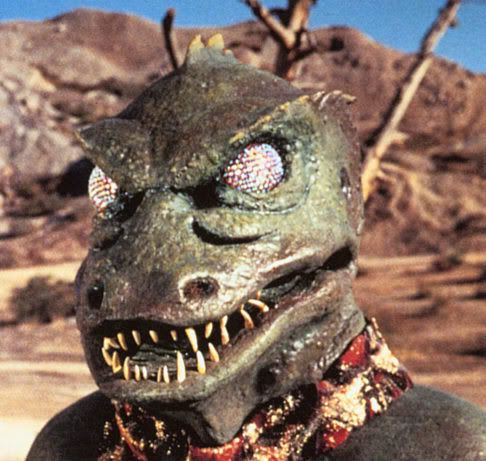
gorn1.jpg
 
What about areas where there are no logging roads?
LAL, thank you for another lovely anecdote and landscape (seriously, I almost feel homesick). I'm quite used to similar scenery. I was, however, hoping that you might endeavour to actually address the VIM issue.
 
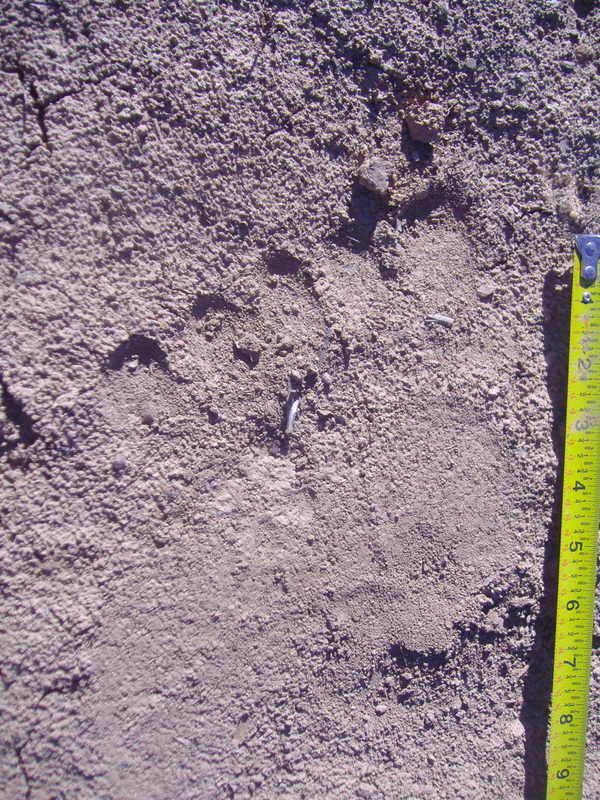
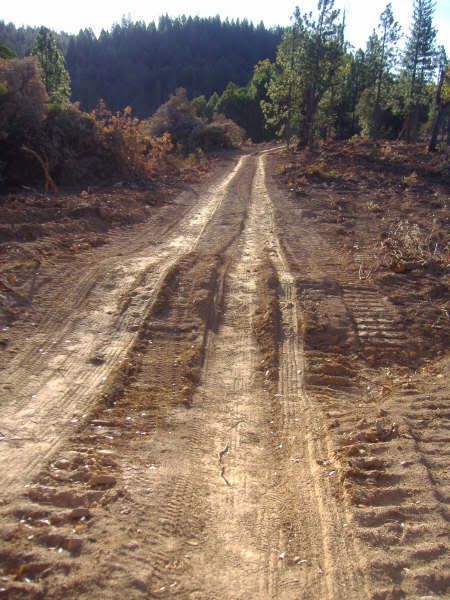
Daniel Perez sent me some photographs of the recent Northern California track find. Here are two photos that I don't think have been seen before:

Nov9th_2006_152.jpg


As we can see in the photo, some sort of heavy equipment left tread marks, most likely earth moving equipment.

I don't know why I should have to spell it out, but it seems obvious to me that fresh dirt on remote forest roads is an optimum canvas for Bigfoot track hoaxing. We see this as far back as 1958 with the tracks found on Ray Wallace's own worksite, again in 1967 with the Blue Creek Mountain - Onion Mountain tracks, and recently with these tracks.

But suppose I'm totally wrong, and all these are REAL Bigfoot tracks. Well then, it tells you that Bigfoot, for whatever reason, just loves to walk in fresh dirt on man's roadways. If so, WHY NO ROADKILL????

Numerous high profile Bigfoot "traces" are associated with roads. If the Skookum elk cast were really made by a Bigfoot, it would suggest that Bigfoot is comfortable wallowing in the mud 25 feet from a roadway. We are not talking about an animal that lives 10,000 feet down in the ocean, 1000 miles off the coast of Easter Island, we are talking about an animal that is comfortable with man's roadways, a recipe for roadkill if there ever was one.

toedetailleftfoot2195.jpg


Note how there is almost no pressure on the ball of the foot in this track, and how the toes are unusually "dug in", especially at the most distal portions, a feature totally consistent with a fake, rigid foot.

No, I'm convinced that fresh dirt on lonely mountain roads is a perfect canvas for the Ray Wallaces of the world, just as clear, still, night air is perfect for launching "dry cleaner bag" style hot air balloon UFOs...

And by the way Kitakaze, I have 3 words for you; Jar Jar Binks...
 
Wow Tube, that was low...:D

Live long and prosper, Kitakaze and Tube, enjoying infinite diversity in infinite combinations!

And some people still seem not to understand that absence of evidence some times is evidence for absence...

Absence of specimens (recent or fossil)
Absence of DNA
Absence of reliable photos or stills
Absence of reliable evidence

But plenty of gullibility, naïvety, ignorance, dishonesty, etc.

BTW, have you guys ever noticed how you can see muscles bulging underneath the scales of that Gorn?
 
Oh, dirt roads. Yep, dusty, lots of loose clay or mud if wet. Excellent for hoaxing, but also eventually for mistaken IDs. Someone steps on wet mud, foot creates a deep print. Mud dries, someone else finds the print, compares with the depth of his/hers own prints and says "Wow, that must have been created by a very heavy creature, since my feet barely left a mark on the soil!".

BTW, is that silver thing a nail? It seems there are some circular impressions to its "south"... The fingers of someone who tried to pick or place it?
 
Wonder why foot isn't thriving there?
I'm going to beat the proponents to the punch and say that it's because the grizzlies are. Meanwhile...

2000 BFRO Report # 6441. Located in the Grand Teton National Park, which is part of the Greater Yellowstone Ecosystem.

Map of Grand Teton National Park.

Report:

Report # 6441 (Class A)
Submitted by witness on Tuesday, June 03, 2003.
--------------------------------------------------------------------------------
Party of five campers observe 7 foot creature outside their RV
--------------------------------------------------------------------------------
(Show Printer-friendly Version)
YEAR: 2000

SEASON: Summer

MONTH: June

DATE: 12

STATE: Wyoming

COUNTY: Teton County

LOCATION DETAILS: it was very frightening.

NEAREST TOWN: Jackson Hole,Wyoming I believe

NEAREST ROAD: near entrance to Teton park

OBSERVED: Dear BFRO Persons,
My family and I were staying in beautiful Grand Teton National Park for a few nights and one night a mysterious yet real thing happened. One night when we were all asleep the family dog started violently barking. Everyone sprang to their feet to discover a large,hairy creature standing about 10ft. from our R.V. It turned around and looked at the R.V. and started jogging off in a humanly way. We were so amazed that nobody in the camper said a word until the next morning. We went outside and there were huge footprints since it was damp and rainy. We didn't get a "good" look at the animal but we still saw something that was hairy and very large. The color was and still is unknown. Thank you for your time.
Sincerely
(name edited)

ALSO NOTICED: There was a very strong stench that we could smell through the R.V. when the creature was present.

OTHER WITNESSES: there were 5 witnesses including myself that were sleeping before the incident.

OTHER STORIES: No, i have not.

TIME AND CONDITIONS: It was night when the incident occured and rainy,a slight drizzle. Hardly no light was visible just a little moonlight when the clouds let it shine.

ENVIRONMENT: The environment was very urban but yet rural. There was one part of the road that was occupated by many people. The othjer was endless wildlife. We saw it on the rural/urban margin area.


--------------------------------------------------------------------------------

Follow-up investigation report by BFRO Investigator Dr. Steven Coy:

I interviewed the witness on September 7, 2003. He has become very interested in the sasquatch mystery since he experienced this incident in Wyoming. The following reported facts can be added to the written report:
The witness was on vacation with his grandmother, grandfather, aunt, and uncle. They were planning to drive into Yellowstone Park, but because of inclement weather camped in a campground in Teton National Park. There were only perhaps two or three RV's in the campground on this particular night in early June. The campers had gotten snowed off of Jackson Lake that day, so there was snow on the ground making it easy to observe the large, dark figure from the windows of their RV.
He estimated the creature to be about 7' tall with 4' wide shoulders and a conical, hairy head. It was reaching up into a tree as they could see the bough moving. They could hear it grunting before it turned toward the RV and then ran off in long strides. "Huge" tracks were seen in the snow the following morning.


--------------------------------------------------------------------------------

About BFRO Investigator Dr. Steven Coy:

Former wildlife biologist - US Department of Interior
 
LAL, thank you for another lovely anecdote and landscape (seriously, I almost feel homesick). I'm quite used to similar scenery. I was, however, hoping that you might endeavour to actually address the VIM issue.


From your first link:

"The Vancouver Island Marmot (Marmota vancouverensis) is found only in the high mountainous regions of Vancouver Island, in British Columbia, Canada. The species can be distinguished from other marmots by its rich, chocolate brown fur and contrasting white patches. Individuals live in small colonies in subalpine meadows on steep, avalanche-prone slopes, preferring those with a southern exposure. It usually hibernates 8 months out of the year.'

Does that sound like sasquatch habitat to you? If you want the researchers to find sasquatch evidence they might have better luck lower down where there are no Marmots.

Marmots tend to stay put, comparatively.

Why didn't wildlife biologists stumble over evidence for wolverines while researching Golden Mantled Ground Squirrels? They "should" have found out Wolverines weren't really extinct in the southern Cascades after all.

Bindernagel had around 100 reports from Vancouver Island, as I recall.

"Vancouver Island is roughly divided between a rugged, wet west coast and a drier, more rolling east coast by the Vancouver Island Ranges, which run down most of the length of the island. The highest point in these ranges and on the island is the Golden Hinde, at 2195 m or 7200'. Located near the centre of Vancouver Island in the 250,000 ha or 620,000 acre Strathcona Provincial Park, it is part of a group of peaks that include the only glaciers on the island, the largest of which is the Comox Glacier. The west coast shoreline is rugged, and in many places mountainous, characterised by its many fjords, bays, and inlets. The interior of the island has many lakes (Kennedy Lake, northeast of Ucluelet, is the largest) and rivers. Vancouver Island formed when volcanic and sedimentary rock scraped off the ancient Kula Plate and plastered against the continental margin when it was subducting under North America 55 million years ago.

The rain shadow effect of the island's mountains, as well as the mountains of Washington's Olympic Peninsula, creates wide variation in precipitation. The west coast is considerably wetter than the east coast. Average annual precipitation ranges from 6,650 millimetres or some 260 in at Henderson Lake on the west coast (making it the wettest spot in North America) to only 635 millimetres or 25 in at the driest recording station in the provincial capital of Victoria on the southeast coast's Saanich Peninsula. Precipitation is heaviest in the autumn and winter. Temperatures are fairly consistent along both coasts, however; winters are mild, and summers are cool to moderately warm, depending on location. The yearly average temperature hovers around 10°C (50°F). Snow is rare at low altitudes but is common on the island's mountaintops in winter.

Vancouver Island lies in the temperate rainforest biome. On the southern and eastern portions of the island, this is characterized by Douglas-fir, western red cedar, arbutus, Garry oak, salal, Oregon-grape, and manzanita. This is the heavily populated region of Vancouver Island, and a major area for recreation. The northern, western, and most of the central portions of the island are home to the coniferous "big trees" associated with British Columbia's coast — hemlock, western red cedar, amabilis fir, yellow cedar, Douglas-fir, grand fir, Sitka spruce, and western white pine. It is also characterised by broadleaf maple, red alder, sword fern, and red huckleberry.

The fauna of Vancouver Island is similar to that found on the mainland coast, with some notable exceptions and additions. For example, grizzly bear, porcupine, moose, skunk, and coyote, while plentiful on the mainland, are absent from Vancouver Island. The island does contain Canada's only population of Roosevelt elk, however, and one species — the Vancouver Island Marmot — is endemic to the region. The island's rivers, lakes, and coastal regions are renowned for their fisheries of trout, salmon, and steelhead. It has the most concentrated population of cougars in North America."

http://en.wikipedia.org/wiki/Vancouver_Island

Again, what are the standard ways of discovering a new species?
 
Again, what are the standard ways of discovering a new species?
.
LAL should read Krantz. In Big Footprints (page 8), Krantz wrote:

"In all these cases, and with most other animals, there has been a series of steps that we have gone through in recognizing and dealing with them:

Stage 1. Local residents describe the animal, occasionally outsiders do so too; sometimes other evidence is found, like footprints, feces, or nests. At this stage it may be described as "cryptozoological."

Stage 2. Skeletal material is brought to the attention of scientists, usually a skull and sometimes more; other material like a skin might also be recovered. At this point the animal is studied, classified, and becomes a scientific reality.

Stage 3. A complete body is recovered, maybe several, for more detailed anatomical studies and comparisons.

Stage 4. The first live specimen is captured.

Stage 5. The species is studied in its native habitat to learn (among other things) if it is endangered and, if so, what might be done to assist its survival...

Sasquatch is presently at Stage 1 of this sequence, thus it is cryptozoological and not a scientific reality."
.
My italics.

Sometimes Krantz was just bang on. :cool:

RayG
 
Quote

"Why didn't wildlife biologists stumble over evidence for wolverines while researching Golden Mantled Ground Squirrels? They "should" have found out Wolverines weren't really extinct in the southern Cascades after all."


LAL,

You got anything more than a couple of unconfirmed sightings and one dead one 17 years ago (which was probably starved in captivity) when it comes to them there Gulo Gulo south of U.S. 2 ? As of 7 months ago I thought that's all we had here. Myself and others sure would appreciate any info.


Edited to keep my mouth shut!


m
 
Mangler, the wolverine lives in the Cascades and is studied there. However, I don't know about south of US Highway 2.

The new question then becomes: Why don't wildlife biologists stumble over evidence for Bigfoot while researching Gulo gulo in the Cascades?
 
I find Kitakaze's recent posts interesting. Last summer we drove through Yellowstone and by the Grand Tetons. A great deal of wildlife about, including a bison that walked down the center of the road we were on! The beast walked so close to the truck we could have literally reached out and touched it.

I was greatly impressed by how many tourists had video and still cameras. In fact, impromptu traffic jams would occur when someone would spot an interesting animal and pull over to the side of the road, and others would follow, herd-like, in an attempt to see and photograph the same thing.

My point being that everyone has cameras these days! In a place like Yellowstone, everyone is a Roger Patterson, ready to bail out of their car, camera in hand, to get that cool footage. Why no footage of Sasquatch?

By the way, are people able to capture short lived, unexpected events on camera, including video, if the phenomena is real in the first place? Yes:

http://www.youtube.com/watch?v=KLM1pfgv9IE
 
Grizzlies thriving in Yellowstone. No longer endangered.

http://www.sciencedaily.com/releases/2007/03/070323102911.htm

Wonder why foot isn't thriving there?


LT, Your posts are pithy. My posts are often verbose, obtuse, meandering, digressive, and occasionally ostentatious. In a valiant attempt to emulate your zen-like style, and avoid unnecessary digressions and obfuscations, I should like to offer the following rejoinder:

It's too cold.
 
Ya, Methow Valley but that's North End. They finally got a Sat Collar on one last year (Aubry's team I think). I have only seen one set of tracks up there myself but I have never actually got dirty with them. Ever hear the story about Lloyd Beebe? He actually trained wild ones. True story.


"Why don't wildlife biologists stumble over evidence for Bigfoot while researching Gulo gulo in the Cascades?"


See, you guys are far wittier than I. I am simply not a funny person.:duck:


m
 
Status
Not open for further replies.

Back
Top Bottom