Merged Relativity+ / Farsight

What I really keep insisting on is that we don't have any evidence for an infinite universe. Or for a toroidal universe. The flat finite universe is what you're left with, but it doesn't seem to feature in contemporary cosmology.

Given nothing except GR as a guide, a perfectly flat universe is exceedingly unlikely.

GR says the geometry of space is determined by the mass density. There is 1 unique mass density that results in a perfectly flat universe. A razor edge. A myriad of other possibilities would appear flat unless the method of measurement is flawless.

The confidence level of the current flatness measurement is +/- 0.4%

If he'd given a coherent explanation that made physics sense, I'd be only too happy to accept it. He didn't, he just gave abstraction with no connection to reality that I could see. Could you?

Not sure. If I'm visualizing it right, I suppose a flat triangle might be drawn on a doughnut-shaped surface. "Flat" in the sense that the internal angles sum to 180*.

But I'm not a fan of a toroidal universe. There is no data that calls for it.

I don't like it because my understanding of relativity makes me think that a homogeneous universe is a flat universe. That's what the FLRW metric starts with, and in that universe (setting expansion aside) light goes straight.

My understanding of GR is that the mass density determines the curvature.

And "straight" is relative to the geometry of the space it's moving through, being the shortest path through the space.

It doesn't alter its nature, it just ends. Waves can't propagate beyond it. So I speculate that they'll undergo total internal reflection.

Reflect off of what? Nothing?

I think you've just invented a new something. A something called nothing. And that's been the problem with edged space all along.

I don't think it is. The universe is thought to have started as something small and dense, even a "singularity".

If the universe is infinite, then it was never "small". Dense I'll grant, but never small. Just tightly packed.

I'm not keen on singularities myself, but nevermind.

A "singularity" is not necessarily a point, though it could be. "Singularity" means oneness - a singular entity. Size doesn't define what "singularity" means. A singularity can be infinite in size, as long as it's a singular entity - a oneness.

With a finite age of 13.8 billion years, it just can't be infinite. I see no method by which it can be some kind of "Asteroids" universe. So I'm left with finite space beyond which there is no space, so there is no beyond it.

Sure, if you keep insisting that it started as a point singularity, in which case I suppose, given current observations, you need infinite expansion velocity or a replacement for GR.

But the truth is, IF the universe is infinite, and if GR holds, then the universe did NOT begin as a point singularity - unless something wierd beyond my comprehension happened. A singularity, perhaps, in the "oneness" sense, but not a point. Meaning, in essence, that what changed was it's density, not it's size. And it transformed from oneness to a multiplicity of things.

The "point singularity" was a speculation, not a necessity.

Nice track.

Half the Beatles were in it.
 
With regards to what Farsight is insinuating about my opinions - I find them presumptive and insulting. I think what GR states is unambiguous and I do not have any particular problem with how some parties choose to express how that relates to conservation of energy. I think energy conservation is at a minimum an extremely important principle is almost all situations and is at worst something one should consider carefully in certain contexts by careful consideration of Noether's theorem and the rather clear cut laws of physics one would assume for them.

I simply recognise why some parties may wish to encourage a, as I said initially, more nuanced view.
 
I don't think any infinite universe is a possibility, ctamblyn, because I don't think an infinite universe can undergo inflation or expand thereafter.

Such a viewpoint is incompatible with GR, the infinite FLRW solutions being among the counterexamples to your claim.

And how come a flat finite universe isn't in your list?

"Finite universes with interesting topologies" includes several types of flat, finite universe.

So how does it actually work?

I think that makes about as much (and as little) sense as asking how a sphere "actually works", or finite flat space "actually works". Can you rephrase that question in a way that doesn't use the words actually or work?

Because an infinite universe can't expand.

That's your opinion, but that's not a prediction of GR, and it looks like your position is inconsistent. On no evidence at all, you positively reject infinite models, yet on no evidence at all (and with considerably less theoretical support), you accept a finite flat model. I put it to you that your preferences on this matter are illogical, and based on nothing more than aesthetics.

Note that I said you might die a terrible death. This "edge" isn't going to be like some invulnerable mirror you can bounce cannonballs off. If we say the particle is a photon I suggested it would behave like a ripple reaching the edge of a droplet. I imagine whatever happens re momentum there would apply here.

So you don't know whether momentum is conserved in your model, you merely imagine that it might be. This is just the tip of the iceberg, too. I think that there may be a rather serious issue with your model regarding this boundary. For starters:

1. What boundary conditions apply to various fields (e/m, gravity, the various fermions, etc.)?
2. What shape does this boundary have, and why?
3. How does its shape and size vary with time, and why, and how is its shape and size influenced by interactions with matter?
 
I don't like it because my understanding of relativity makes me think that a homogeneous universe is a flat universe. That's what the FLRW metric starts with, and in that universe (setting expansion aside) light goes straight.
The highlighted part is false. Given Farsight's extraordinarily limited understanding of relativity, however, it's entirely possible he believes his false statements to be true.

Ricci curvature "represents the amount by which the volume of a geodesic ball in a curved Riemannian manifold deviates from that of the standard ball in Euclidean space". The ball doesn't have a negative volume.
The sentence I've highlighted exemplifies Farsight's inability to understand general relativity. The Ricci scalar appears within Einstein's most important equation for general relativity, but Farsight can only guess the meaning of that scalar by applying his usual hermeneutical scholasticism to a Wikipedia page.

Had Farsight understood the technical details of that Wikipedia article, he'd have learned that a negative value for the Ricci scalar means the volume of a ball with (sufficiently small) radius is larger than it would be in Euclidean space, while a positive value means the volume is smaller than it would be in Euclidean space.

Both positive and negative values are possible with FLRW metrics. All nonzero values for the Ricci scalar imply non-flatness. Farsight's incorrect guess concerning the Ricci scalar may therefore be related to his oft-repeated false claim that homogeneity implies flat spacetime, and to his oft-repeated false claims about the FLRW family of solutions to Einstein's field equations.

I know all that, and when it comes to general relativity I am the expert here. Take a look at The Foundation of the General Theory of Relativity at Doc 30, 3.6 Mbytes
Farsight got lost at equation (3) of that paper.

The two equations Farsight may have understood are only 1% of the equations in that paper. Combining that fact with the many basic errors Farsight has persisted in making throughout this thread and others, it's fair to conclude that Farsight understands maybe 1% of what Einstein called The Foundation of the General Theory of Relativity.

W.D.Clinger said:
Farsight also believes himself to be the expert on general relativity. :popcorn2
I've just given you a lesson, now haven't I?
Farsight also believes he's giving me lessons on general relativity.
:popcorn2
 
Last edited:
You have replied only to this part of my post:

You're talking about extrinsic curvature. The intrinsic curvature of both bent rods is zero (assuming you mean to treat them as one-dimensional manifolds).

I have to go, but very quickly:

No, the rods were relevant to charge and chirality and curl and electromagnetism, not to intrinsic curvature. Look at an electromagnetic wave.

What you actually said was this:
Dropping a dimension think of a thin spring steel rod, then bend it into this shape U. Call that positive curvature. Then bend it into this shape . This isn't less curved than the straight rod, you merely call it negative curvature by convention.
(My highlighting.)

You are clearly talking about curvature of some type in your rod example. If you didn't mean extrinsic curvature, as I originally thought, then all that is left is either (a) intrinsic curvature or (b) your private definition of curvature.

If (a), then you are wrong. You are wrong if you take the rods as 1D objects, because they both have an intrinsic curvature of zero, and you are wrong if you take them to be 2D surfaces, as they'd have the same intrinsic curvature at corresponding points (one is just a mirror image of the other). If you take them to be 3D objects in some way, then you must be using a private definition of curvature (see below).

If (b), then you should make your private definition public so we can properly understand what you're saying.
 
Phooey, edd. I'm with conservation of energy, you're not. And when it comes to GR, I'm the expert, not some guy who thinks the total energy of the universe is zero. If you'd like to beg to differ, I'll be only to happy to hear your views on the brick.

Now do excuse me while I humiliate Clinger. Best if you don't look, because as on previous occasions, it ain't going to be pretty.

My opinion on the brick? It's boringly classical for the purposes of this discussion - in other words I think a conserved quantity can be easily defined for it for energy.

Also, you aren't the expert. I would not wish to paint myself as a good cosmologist but I am not poorly educated in that way, and you persistently make extremely, quite plainly, basic errors.
 
You have replied only to this part of my post:


What you actually said was this:

(My highlighting.)

You are clearly talking about curvature of some type in your rod example. If you didn't mean extrinsic curvature, as I originally thought, then all that is left is either (a) intrinsic curvature or (b) your private definition of curvature.

If (a), then you are wrong. You are wrong if you take the rods as 1D objects, because they both have an intrinsic curvature of zero, and you are wrong if you take them to be 2D surfaces, as they'd have the same intrinsic curvature at corresponding points (one is just a mirror image of the other). If you take them to be 3D objects in some way, then you must be using a private definition of curvature (see below).

If (b), then you should make your private definition public so we can properly understand what you're saying.

Farsight has in the past shown a clear misunderstanding of extrinsic and intrinsic curvature and the role of the former in GR. Notably, shown two embedding diagrams that were identical but inverted he identified them as gravitational potentials of the opposite sign, despite them showing the same intrinsic geometry.
 
Last edited:
Farsight has in the past shown a clear misunderstanding of extrinsic and intrinsic curvature and the role of the former in GR. Notably, shown two embedding diagrams that were identical but inverted he identified them as gravitational potentials of the opposite sign, despite them showing the same intrinsic geometry.

I remember it well (it was a t = const., equatorial slice through the Schwarzschild geometry like this one), though I can't find the post.

ETA: Found it.
 
Last edited:
Do you now understand the meaning of Space-time interval and its values

I've just given you a lesson, now haven't I?
Yes you have - you have taught us that you remain ignorant of the basics of Special and General Relativity :eek:!
You have taught us that you cannot even read!
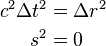
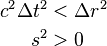
The space-time interval can be negative, zero or positive
Space-time interval
The interval, s2, between two events is defined as
...
Time-like interval
7d40606e17197f22c8343aa6fd354115.png
...
Light-like interval
01c44bf0ebe255781c049339e27028f5.png
...
Space-like interval
36c24ff1c4a2d6564ac46e804382e12f.png

Farsight
Do you now understand the meaning of Space-time interval and that it can be positive, zero or negative?
First asked 26 July 2013 - 0 days and counting.
 
Last edited:
Farsight: Do you now understand the meaning of Ricci curvature

Ricci curvature "represents the amount by which the volume of a geodesic ball in a curved Riemannian manifold deviates from that of the standard ball in Euclidean space". The ball doesn't have a negative volume.
Wow - now you cannot tell the difference between the words curvature and volume, Farsight :eek:!
The standard ball in Euclidean space does not have negative volume. The deviation from the positive volume can negative, zero or positive!

Ricci curvature explicitly states that it can be positive or negative (zero is a trivial case).
...
Thus, if the Ricci curvature Ric(ξ,ξ) is positive in the direction of a vector ξ, the conical region in M swept out by a tightly focused family of short geodesic segments emanating from p with initial velocity inside a small cone around ξ will have smaller volume than the corresponding conical region in Euclidean space, just as the surface of a small spherical wedge has lesser area than a corresponding circular sector. Similarly, if the Ricci curvature is negative in the direction of a given vector ξ, such a conical region in the manifold will instead have larger volume than it would in Euclidean space.

Farsight
Do you now understand the meaning of Ricci curvature and that it can be positive, zero or negative?
First asked 26 July 2013 - 0 days and counting.
 
I know all that, and when it comes to general relativity I am the expert here. Take a look at The Foundation of the General Theory of Relativity at Doc 30, 3.6 Mbytes See page 185. Einstein says "the energy of the gravitational field shall act gravitatively in the same way as any other kind of energy".
We see you continuing with this irrelevant derail, Farsight!
Anyone who knows about GR knows that it is non-linear, i.e. the energy includes the energy of the gravitational field which generates more gravity which added more energy, etc.
That does not make you an expert - it makes you a parrot of obvious facts.

That is positive energy, Farsight :eye-poppi.

But the topic is gravitational potential energy which is always negative. And yes - that is a convention, Farsight. It is a sensible convention that allows calculations to be done.
 
Farsight: Do you now understand the meaning of infinity

That merely highlights a problem with black holes. An infalling body can be treated in a symmetrical fashion. It doesn't magically acquire infinite speed and infinite energy.
This merely highlights a problem with your understanding of mathematics and physics. It could be the "infinity is an actual number" fallacy or just ignorance about the concept of infinity, Farsight.

A body falling into a black hole never acquires an infinite speed or infinite energy. The meaning of infinity means that it can never be "acquired"
Infinity (symbol: ) is an abstract concept describing something without any limit and is relevant in a number of fields, predominantly mathematics and physics.

Farsight
Do you now understand the meaning of infinity and that it is not actually a number?
First asked 26 July 2013 - 0 days and counting.
 
Farsight: Source for "a homogeneous universe is a flat universe"

I don't like it because my understanding of relativity makes me think that a homogeneous universe is a flat universe. That's what the FLRW metric starts with, and in that universe (setting expansion aside) light goes straight.
So this is your understanding of GR and the FLRW metric, Farsight?


Farsight
  • Can you cite your source for your assertion that a homogeneous universe is a flat universe in GR?
  • Can you cite your source for your assertion that the FLRW metric starts with a homogeneous universe which s a flat universe?
First asked 26 July 2013 - 0 days and counting.
Remember - "The statements are wrong" is an answer!
Better yet - use your great knowledge of GR to derive these 2 assertions.


If you have no sources and cannot show that GR states this then we have to conclude that you are ignorant or deluded about GR. This very likely because:
 
Last edited:
Not sure. If I'm visualizing it right, I suppose a flat triangle might be drawn on a doughnut-shaped surface. "Flat" in the sense that the internal angles sum to 180*.

The trick is to avoid thinking of it as a curved surface, like a normal doughnut, otherwise you'll get incorrect intuitions about the geometry. The flat 2-torus is essentially a flat square with opposite sides identified, and the flat 3-torus a cube with opposite faces identified. You just have to learn how it fits together, how it behaves, how things within it behave.

For example, as a visualisation exercise: start with a definition of a flat 2-torus as a square with opposite sides identified and convince yourself that there are two types of closed curve: those which can be shrunk continuously to a point, and those which can't. There are also two disjoint families of the latter type: those which go mostly "horizontally" across the square, and those which go mostly "vertically". Unlike the doughnut, which is a specific curved 2-torus, the flat 2-torus is symmetric under 90 degree rotations about any point. It is also homogeneous: every point of it looks the same (it is invariant under a translation of all its points in any direction), while the doughnut only has rotational symmetry about a single axis. That last point means that if you lived within a flat toroidal space, you could not tell where the "edges" were, even though you could detect which orthogonal directions were the "special" ones.

You may not be able to directly visualise a flat 2-torus (or flat 3-torus) floating in front of you, but you can understand most if not all of its properties.

But I'm not a fan of a toroidal universe. There is no data that calls for it.

Agreed.

But the truth is, IF the universe is infinite, and if GR holds, then the universe did NOT begin as a point singularity - unless something wierd beyond my comprehension happened. A singularity, perhaps, in the "oneness" sense, but not a point. Meaning, in essence, that what changed was it's density, not it's size. And it transformed from oneness to a multiplicity of things.

The "point singularity" was a speculation, not a necessity.

A pretty common conclusion is that if you run time backwards and watch the universe get ever denser, you eventually reach a stage where the density and particle energies are so high that we can't in all honesty say how stuff works any more.
 
Last edited:
Farsight: Can you list the evidence for a finite universe

What I really keep insisting on is that we don't have any evidence for an infinite universe
What you still do not realize, Farsight, is that we do not have evidence for either an infinite or a finite universe.
The only evidence that we have is for a lower limit to the size of the universe and hints that it may be infinite (flat homogeneous isotropic universe = infinite universe).

Perhaps this needs to be a question:
Farsight
Can you list the evidence for a finite universe?
What is the size of that finite universe?
First asked 26 July 2013 - 0 days and counting.
 
Farsight: Support your assertion that GR conserves energy

Sigh. Only by Newtonian convention.
Sigh. I see that you cannot understand what you read, Farsight :eek:.
Gravitational potential energy is negative in Newtonian gravitation and GR
In general relativity, the gravitational potential is replaced by the metric tensor. When the gravitational field is weak and the sources are moving very slowly compared to light-speed, general relativity reduces to Newtonian gravity, and the metric tensor can be expanded in terms of the gravitational potential.[3]
The same convention is applied - the gravitational potential is zero at infinity.
The same consequences happen - at a specified distance gravitational potential energy is less than the value at infinity. That value is zero, Farsight. Take a value from zero and you get a negative value.

What Einstein is saying is:
In GR, gravitational fields add to the energy of the gravitational field.
Einstein is not talking about the gravitational potential energy

It isn't a dumb example. What's dumb is thinking that the brick in front of you has any kind of negative energy at all.
...more ignorance of basic physics snipped...
Then it is extremely dumb to think that, Farsight. That brick has negative gravitational potential energy.

And every schoolkid knows that it's merely a convention
Yes schoolkid knows that it's a convention. It is still a negative gravitational potential energy.
Are you going to whine next about electrons having negative charge being "merely a convention", Farsight :rolleyes:?
Whoops - I see that you are doing that, Farsight. So I will change to
Are you going to whine next about protons having positive charge being "merely a convention", Farsight :rolleyes:?

That was me demolishing Clinger's argument.
That was you ignoring basic physics and going on an irrelevant rant:
gravitational potential energy is negative.

Which as I said to Clinger, highlights a problem with black hole singularities. When you drop a 1kg brick into a black hole, the black hole mass increases by 1kg.
That is not a problem. How do you think supermassive black holes get to be millions of solar masses - they essentially eat stars :jaw-dropp!

LOL A fantasy about what I wrote, Farsight :p. I made no assertion.
I stated that your assertion is that energy is always conserved (you keep going on about conservation of energy and the expanding universe).
My evidence that energy is not known to be conserved in GR is:
But if you want we can make this a question, Farsight
Please support your assertion that energy is conserved in cosmological models (such as the Big Bang model) which are based on GR.
First asked 26 July 2013 - 0 days and counting.
 
Last edited:
Farsight Show mathematically that an infinite universe in GR cannot expand.

Because an infinite universe can't expand.
Endlessly repeating an unsupported and false assertion is not wise, Farsight - it indicates that not only are you ignorant about the topic but that you are determined not to learn about it.

That bald statement makes you seem so ignorant that you think that an expanding universe is expanding into something (which an infinite universe cannot do).

Next question then:
Farsight
Show mathematically that an infinite universe in GR cannot expand.
First asked 26 July 2013 - 0 days and counting.
Remember that "The assertion is wrong and an infinite universe can expand" is an answer.

Maybe start by showing how you will measure the size of this infinite universe so that you can see that it is expanding but Farsight: Do you now understand the meaning of infinity?

You will really have to start with an infinite universe and some way of defining space-time intervals ("distances" between points) in that universe. Wait there is some guy who did all of this work before, Farsight - do you know his name :eek:?
 
The trick is to avoid thinking of it as a curved surface, like a normal doughnut, otherwise you'll get incorrect intuitions about the geometry. The flat 2-torus is essentially a flat square with opposite sides identified, and the flat 3-torus a cube with opposite faces identified. You just have to learn how it fits together, how it behaves, how things within it behave.

For example, as a visualisation exercise: start with a definition of a flat 2-torus as a square with opposite sides identified and convince yourself that there are two types of closed curve: those which can be shrunk continuously to a point, and those which can't. There are also two disjoint families of the latter type: those which go mostly "horizontally" across the square, and those which go mostly "vertically". Unlike the doughnut, which is a specific curved 2-torus, the flat 2-torus is symmetric under 90 degree rotations about any point. It is also homogeneous: every point of it looks the same (it is invariant under a translation of all its points in any direction), while the doughnut only has rotational symmetry about a single axis. That last point means that if you lived within a flat toroidal space, you could not tell where the "edges" were, even though you could detect which orthogonal directions were the "special" ones.

You may not be able to directly visualise a flat 2-torus (or flat 3-torus) floating in front of you, but you can understand most if not all of its properties.

What?? Exercise?! Now you're scaring me. I'm retired. I ride a bike for exercise. I didn't sign up for this. :wwt:

A pretty common conclusion is that if you run time backwards and watch the universe get ever denser, you eventually reach a stage where the density and particle energies are so high that we can't in all honesty say how stuff works any more.

And there may be a stage where it's all just one singular blob of undifferientiated hotness. A singularity. But not necessarily a "point" singularity. It could be any size.
Not that anyone knows what it is at that stage, since nobody can say how stuff works any more at that stage.
 
Last edited:
What?? Exercise?! Now you're scaring me. I'm retired. I ride a bike for exercise. I didn't sign up for this. :wwt:

Ah, er, I mean "a visualisation-based relaxation session". :)

And there may be a stage where it's all just one singular blob of undifferientiated hotness. A singularity. But not necessarily a "point" singularity. It could be any size.
Not that anyone knows what it is at that stage, since nobody can say how stuff works any more at that stage.

Could be. Maybe we'll know one day.
 

Back
Top Bottom